Spaghetti Bolognese
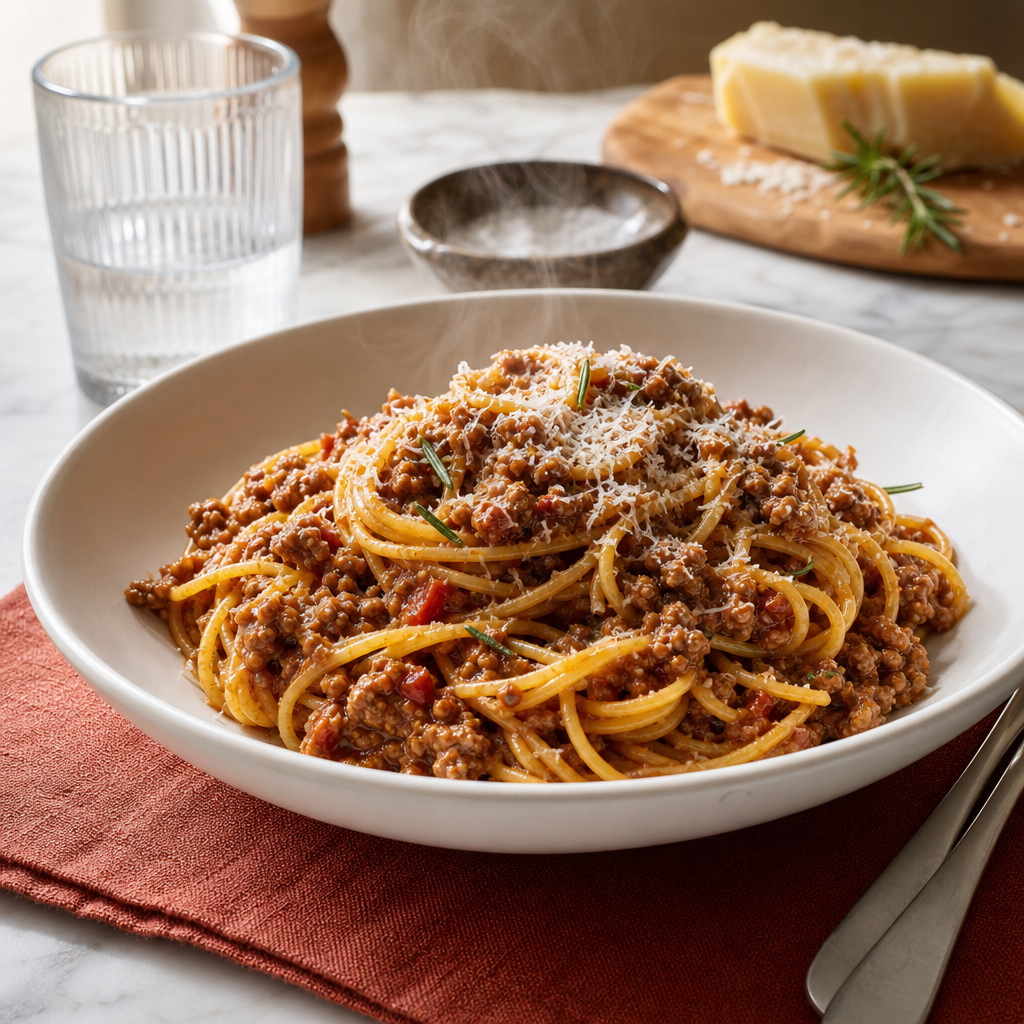
The dish in context
Ragù alla Bolognese is the meat ragù of Bologna: soffritto, minced meat, wine, milk, tomato in restraint, and a long simmer. The canonical pasta in Emilia-Romagna is fresh tagliatelle, whose rough egg surface holds a dense meat sauce better than round dried spaghetti. Spaghetti Bolognese is internationally entrenched, especially in Britain and other anglophone kitchens, but it is not the standard Bolognese service. This version keeps the ragù grammar close to Bologna and applies it to spaghetti without turning it into tomato mince sauce.
Method 11 steps · 210 min
Cut the soffritto fine
Dice the onion, carrot, and celery as finely as possible, about 2-3 mm pieces. A food processor is acceptable if pulsed, not puréed; the vegetables should look like confetti, not wet paste.
Render the pancetta
Heat the olive oil in a heavy pot over medium-low heat. Add the pancetta and cook until the fat has rendered and the pieces look translucent with light golden edges, 6-8 minutes; do not crisp it hard.
Sweat the soffritto
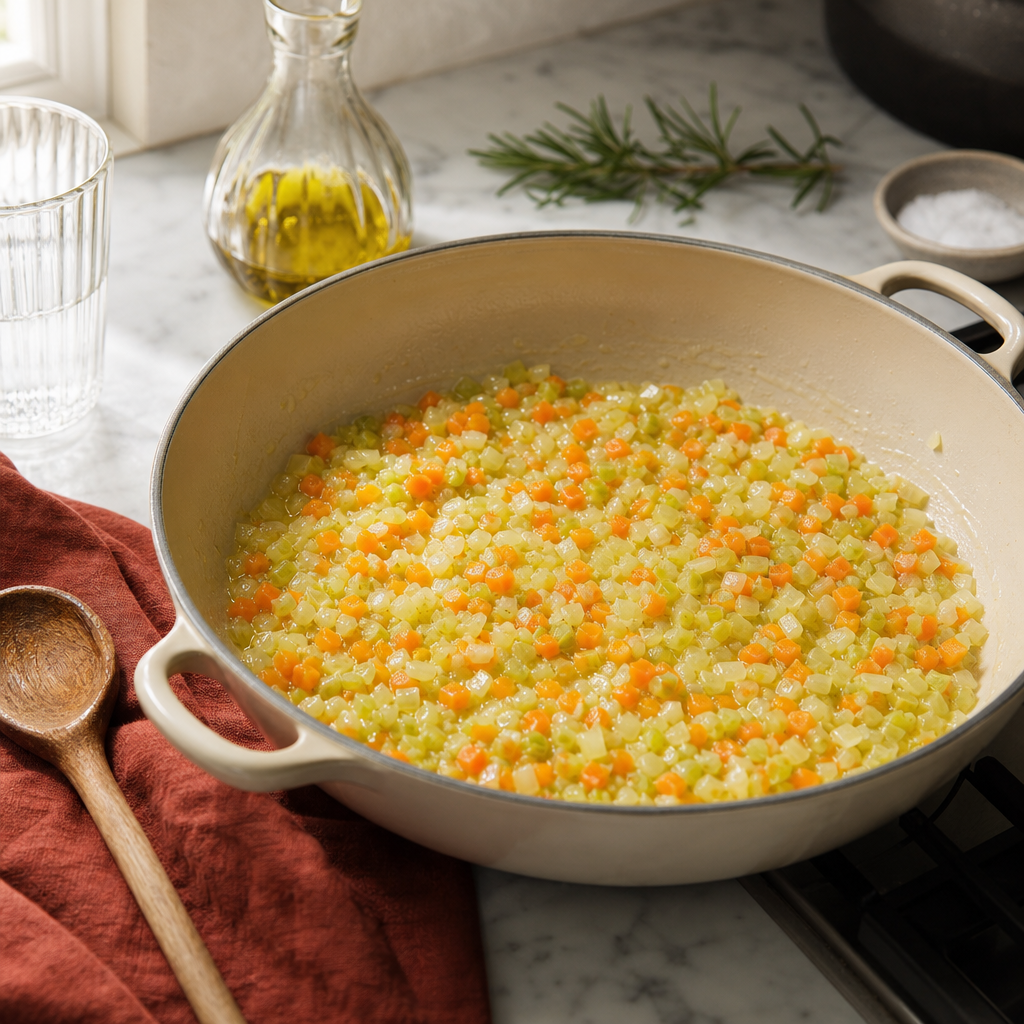
Add the onion, carrot, celery, butter, and a pinch of salt. Cook over medium-low heat until the vegetables are soft, glossy, and beginning to stick lightly to the pot, 10-12 minutes.
Brown the meat without rushing
Add the beef and pork, season with 4 g salt, and raise the heat to medium. Break the meat into small pieces and cook until it loses raw color and starts to leave browned residue on the pot, 12-15 minutes.
Reduce the wine dry
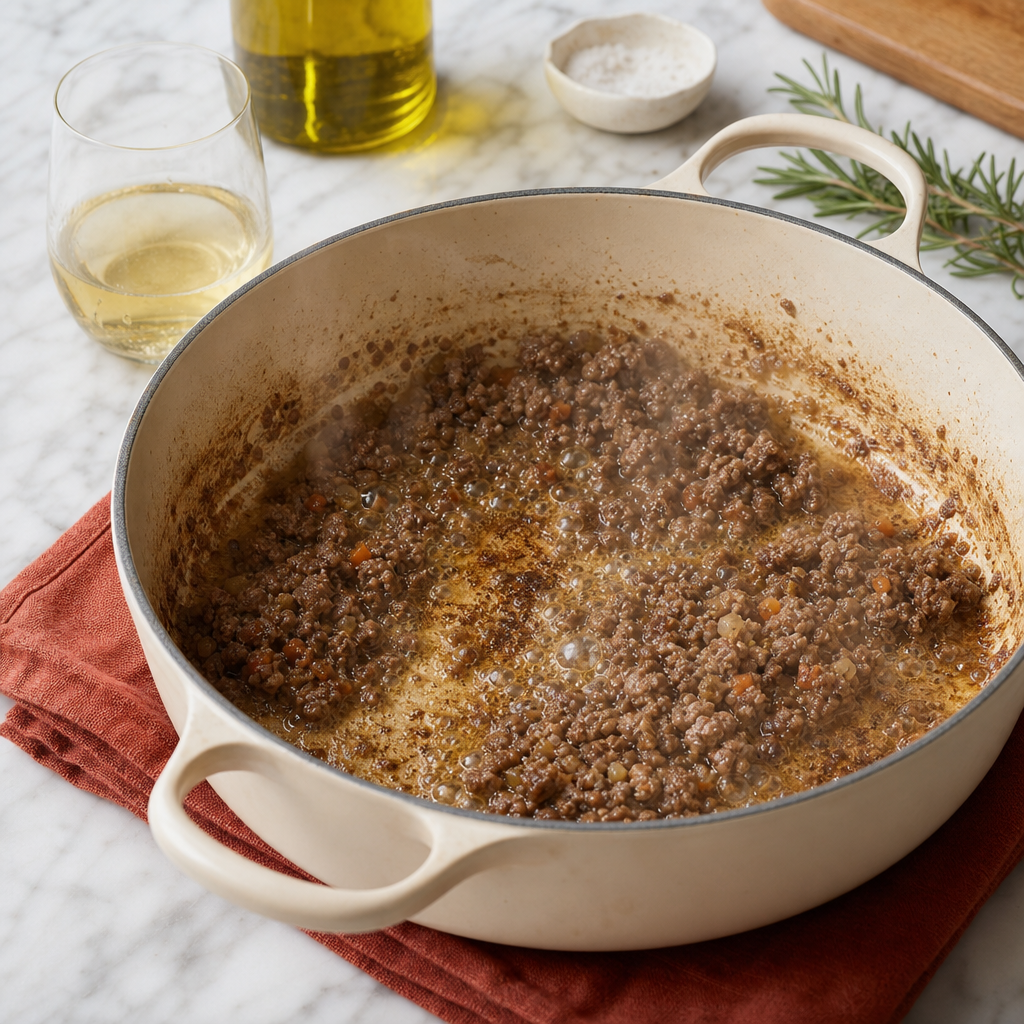
Add the white wine and scrape the browned residue from the pot. Simmer until the wine has almost fully evaporated and the pot sounds like frying again, 10-12 minutes.
Cook the tomato paste
Stir in the tomato paste and cook for 3-4 minutes, pressing it through the meat until it darkens slightly from bright red to brick red.
Add milk, passata, and stock
Add the warm milk, passata, hot stock, black pepper, and another 3 g salt. Stir thoroughly and bring the pot to the gentlest simmer.
Simmer low for three hours
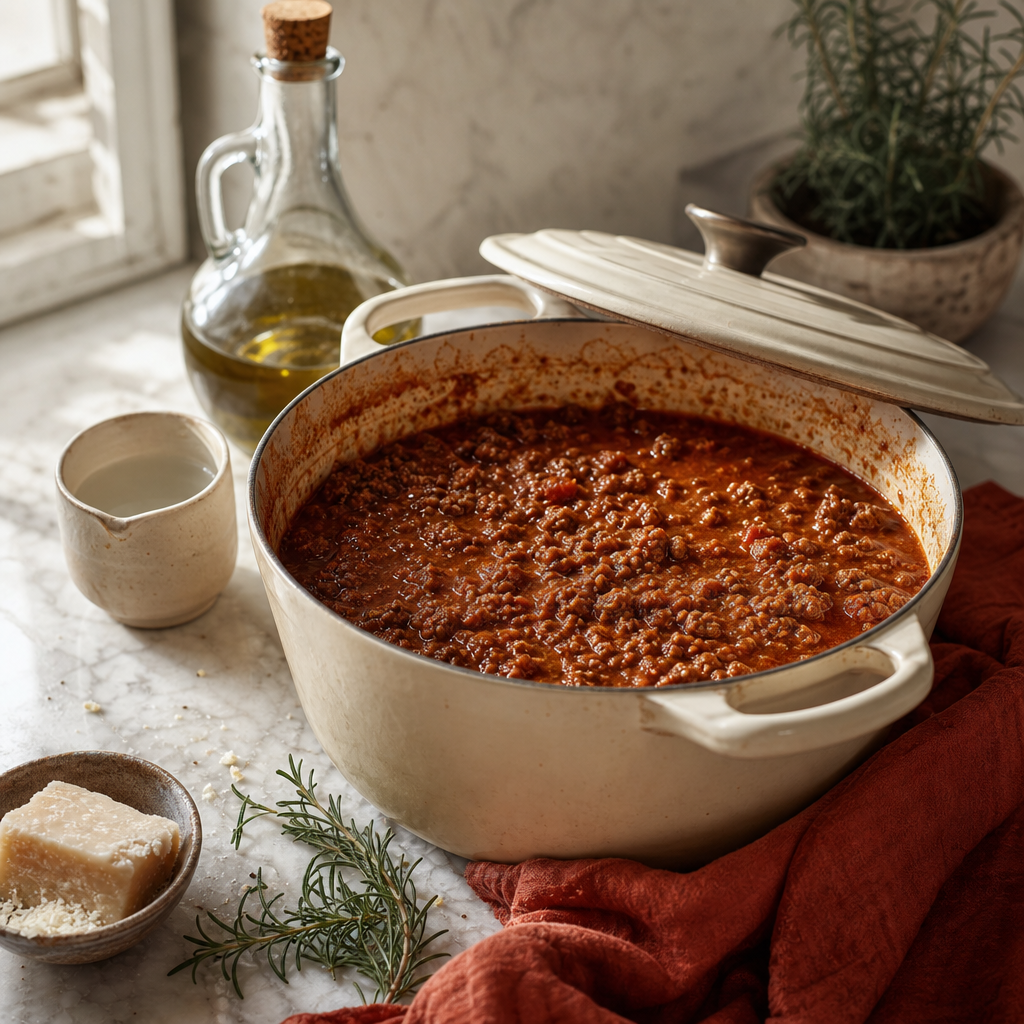
Cook uncovered or partially covered at the lowest steady simmer for 2 1/2 to 3 hours, stirring every 20-30 minutes. Add small splashes of hot stock or water if the bottom threatens to catch; finished ragù should be thick, glossy, and mostly meat, with no watery tomato pooling at the edges.
Cook the spaghetti
Boil the spaghetti in heavily salted water until 1 minute short of al dente. Do not break the strands and do not rinse them.
Bind pasta and ragù
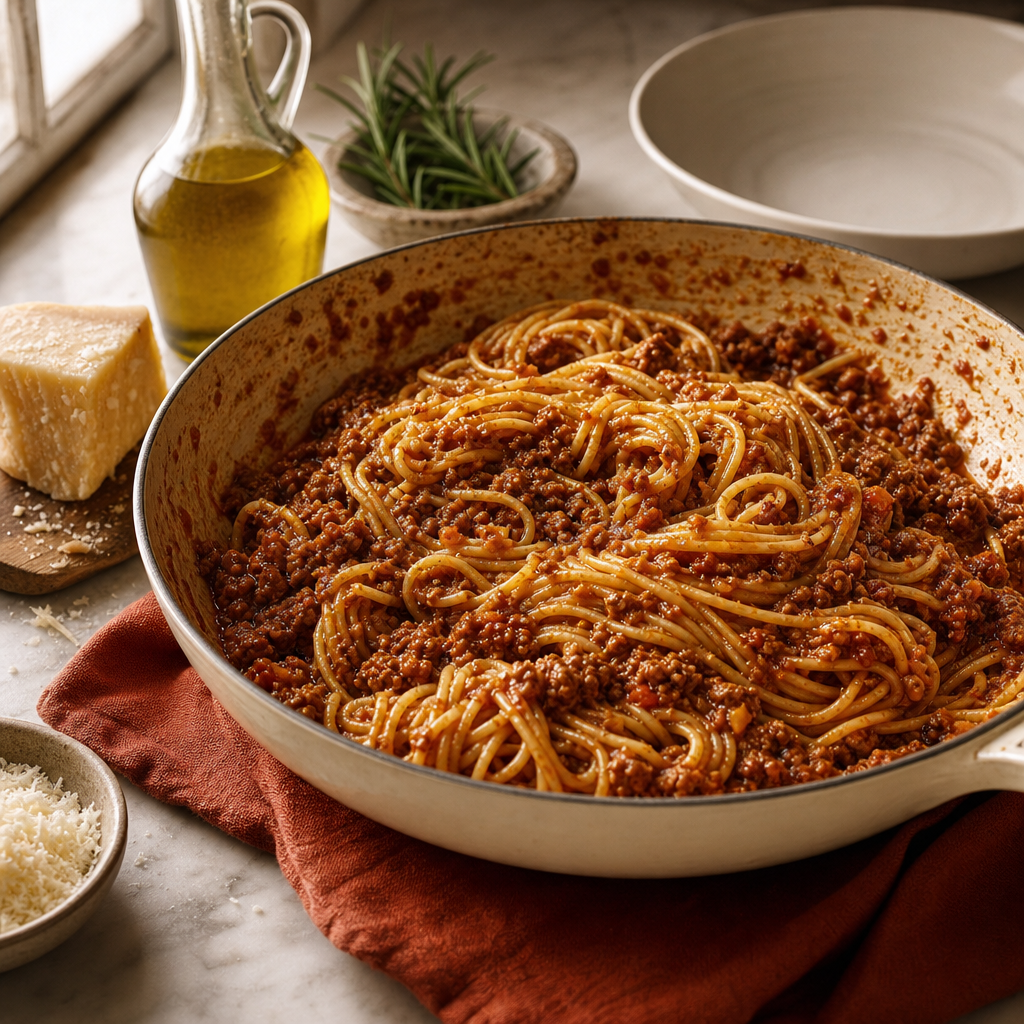
Transfer the spaghetti to a wide pan with about 650 g of ragù and 120 ml pasta water. Toss over medium heat for 60-90 seconds until the sauce clings in a thin coating with meat caught along the strands; add more pasta water in small splashes if it tightens.
Serve with Parmigiano-Reggiano
Plate immediately and finish with Parmigiano-Reggiano and a little black pepper. Serve extra ragù separately if needed; do not drown the spaghetti.
Common mistakes
- {'mistake': 'Making the sauce tomato-heavy.', 'fix': 'Use tomato paste and a measured amount of passata. Ragù alla Bolognese is a meat sauce with tomato, not tomato sauce with meat.'}
- {'mistake': 'Boiling the ragù hard.', 'fix': 'Hold it to occasional small bubbles. Hard boiling toughens the meat and drives off the dairy softness.'}
- {'mistake': 'Leaving the meat in large clumps.', 'fix': 'Break it down during browning until it looks fine and even. Spaghetti exposes coarse texture more than tagliatelle.'}
- {'mistake': 'Serving sauce on top of plain spaghetti.', 'fix': 'Finish the pasta in a pan with ragù and pasta water. The starch bind is the difference between coated pasta and a bowl of separate components.'}
- {'mistake': 'Using smoked bacon as if it were pancetta.', 'fix': 'Use pancetta or unsmoked pork belly. Smoke dominates the sauce and pulls it away from Bologna.'}
What does not belong
- {'item': 'Oregano', 'reason': 'Oregano does not belong in canonical Bolognese ragù. It signals southern-style tomato sauce, not Emilia-Romagna meat ragù.'}
- {'item': 'Basil', 'reason': 'Basil does not belong here. The aromatic base is soffritto, not fresh herbs.'}
- {'item': 'Bay leaf', 'reason': 'Bay leaf is common in many meat sauces, but it is not part of the Bolognese grammar used here.'}
- {'item': 'Garlic', 'reason': 'Garlic does not belong in this version. Onion, carrot, and celery carry the aromatic work.'}
- {'item': 'Cream', 'reason': 'Cream is not the same as milk. Milk cooks into the meat during the simmer; cream added late makes the sauce heavy and blunt.'}
- {'item': 'Sugar', 'reason': 'Sugar does not belong. Carrot, milk, and slow reduction provide enough sweetness.'}
- {'item': 'Chili flakes', 'reason': 'Heat is not part of Bolognese ragù. Chili turns it into another sauce.'}
- {'item': 'Garlic bread as a required side', 'reason': "Garlic bread belongs to Italian-American and anglophone restaurant habits, not to this pasta's Bolognese logic."}