Spaghetti Cacio e Pepe
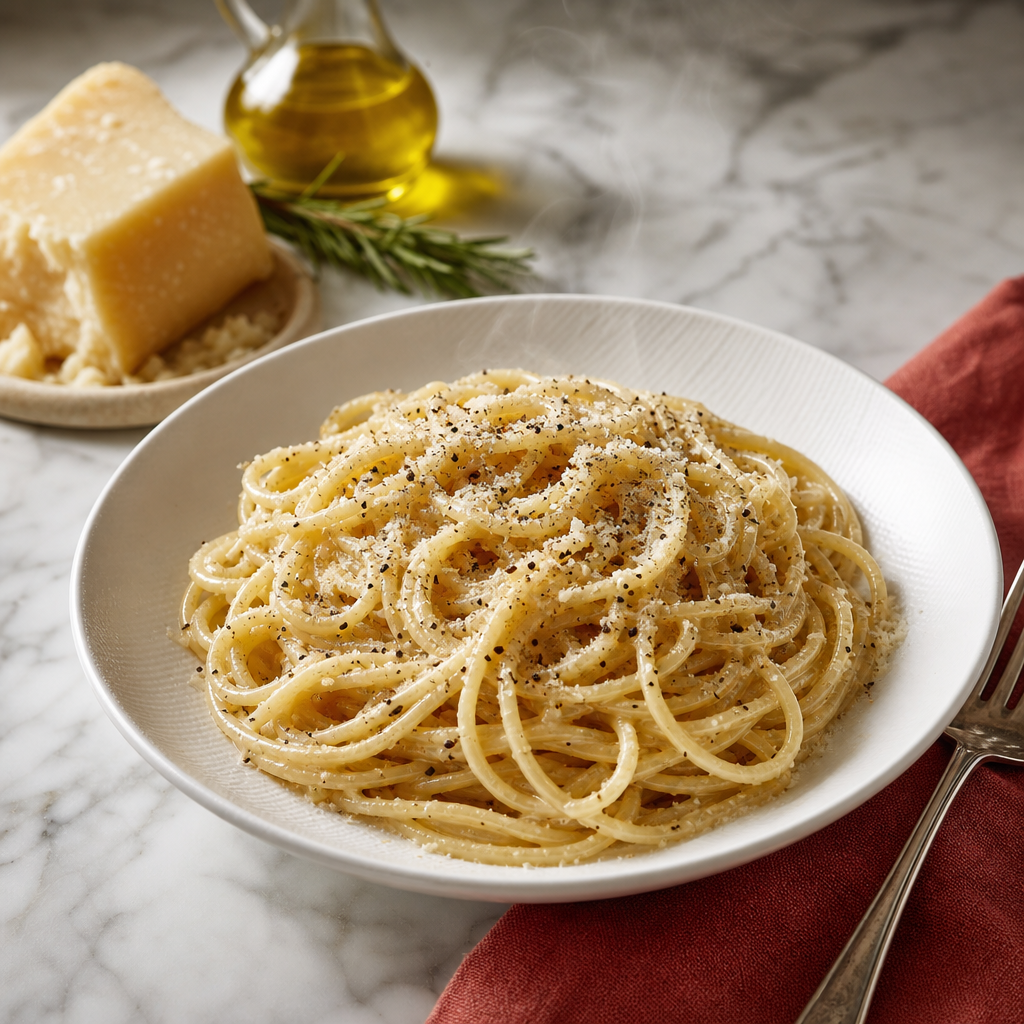
The dish in context
Cacio e pepe is one of the core Roman pastas, built from pasta, Pecorino Romano, black pepper, and the starchy water that binds them. The name means “cheese and pepper” in central Italian usage, and the dish is strongly associated with Lazio and Roman trattoria cooking. Modern sources disagree on helper fats such as butter or olive oil, but Roman restaurant associations and traditional Italian references are clear: the canonical structure does not need them. The technical problem is not ingredient scarcity; it is controlling heat so aged sheep’s-milk cheese emulsifies instead of seizing into grains.
Method 7 steps · 20 min
Grate the cheese into powder
Grate the Pecorino Romano on the small holes of a box grater until fine and sandy. Do not use pre-grated cheese; anti-caking starches and dry surfaces make the sauce grainy.
Crack and toast the pepper
Crack the peppercorns coarse with a mortar, spice mill pulse, or the bottom of a pan. Toast the pepper in a dry wide skillet over medium heat until fragrant, 45-60 seconds, then turn off the heat.
Cook the spaghetti shy of al dente
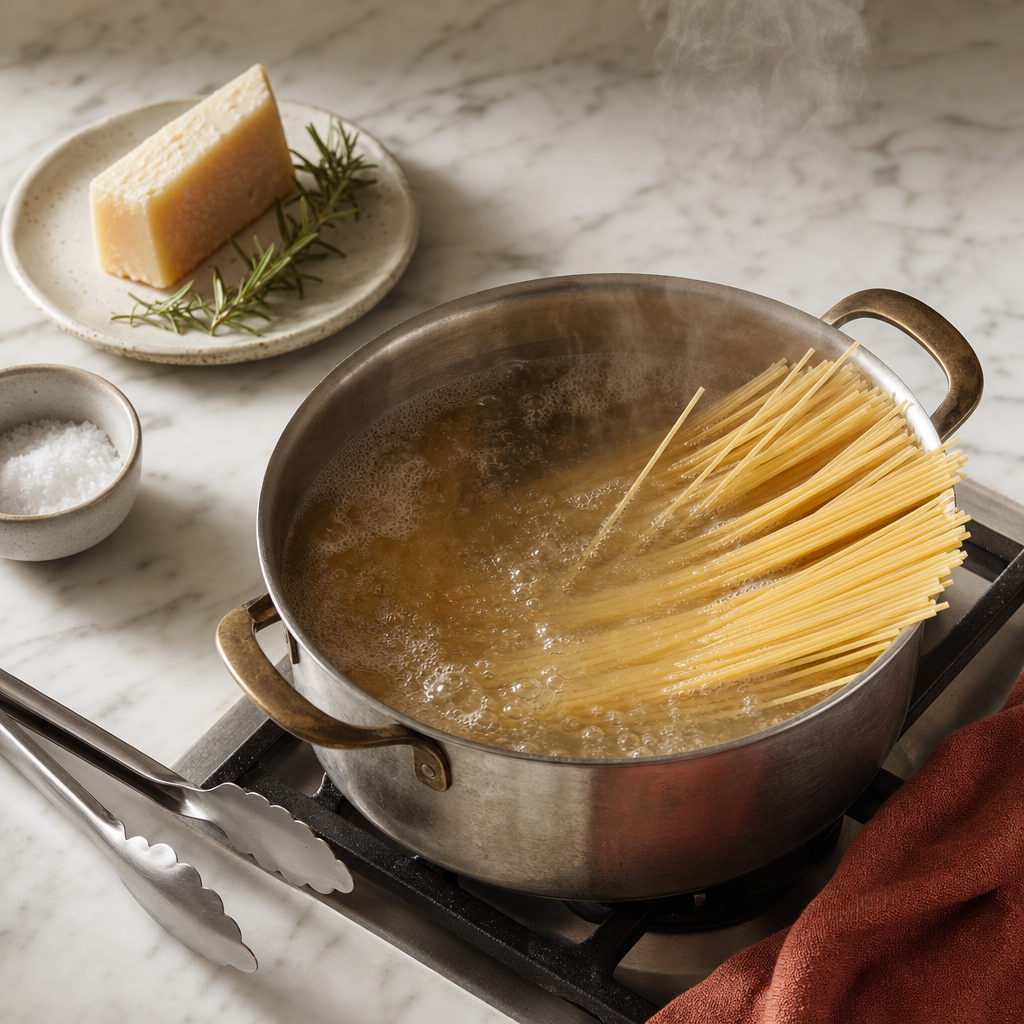
Bring the water to a boil, add the salt, then add the spaghetti without breaking it. Cook until 2 minutes short of the package time, stirring during the first minute so the strands do not fuse.
Build a pepper-starch base
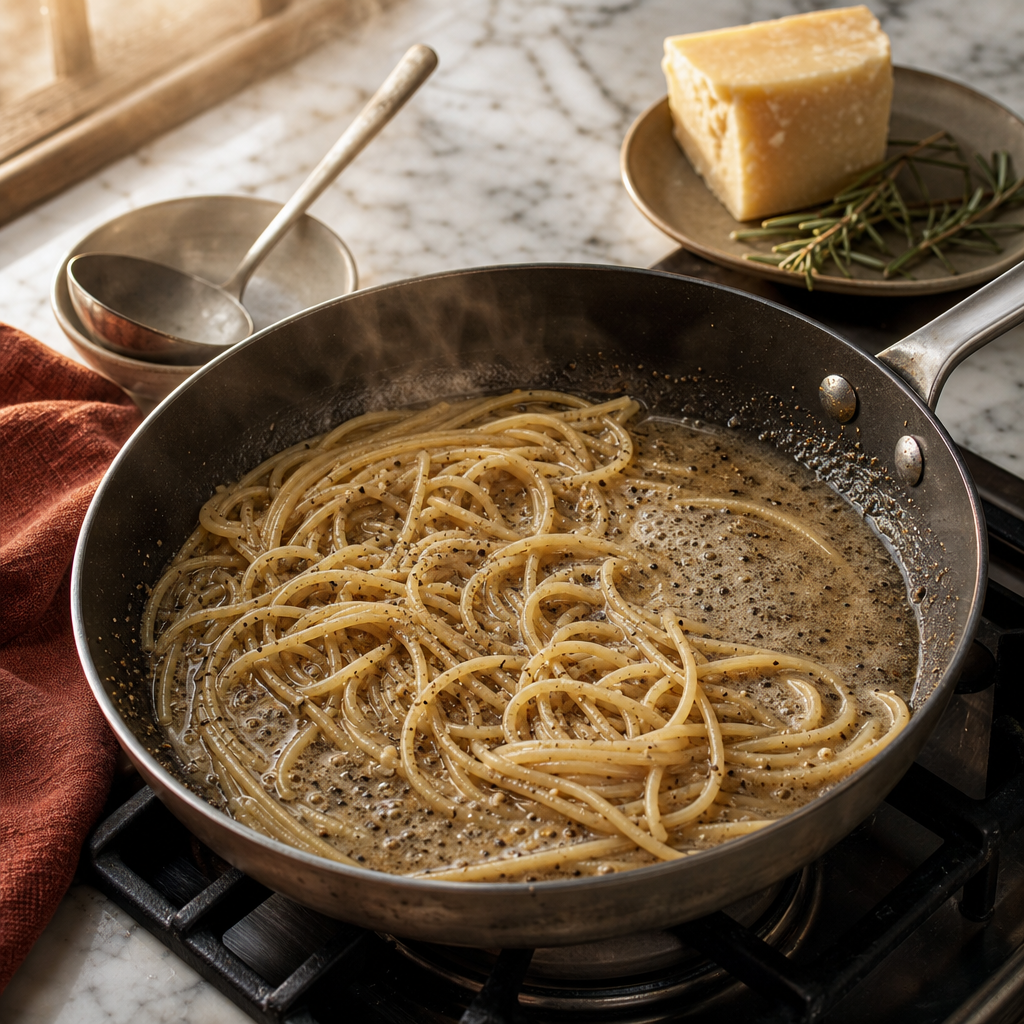
Ladle 120 ml hot pasta water into the skillet with the toasted pepper and bring it to a simmer. Transfer the spaghetti directly into the skillet and toss over medium heat until the water looks lightly cloudy and reduced, about 60-90 seconds.
Cool the pan before adding cheese
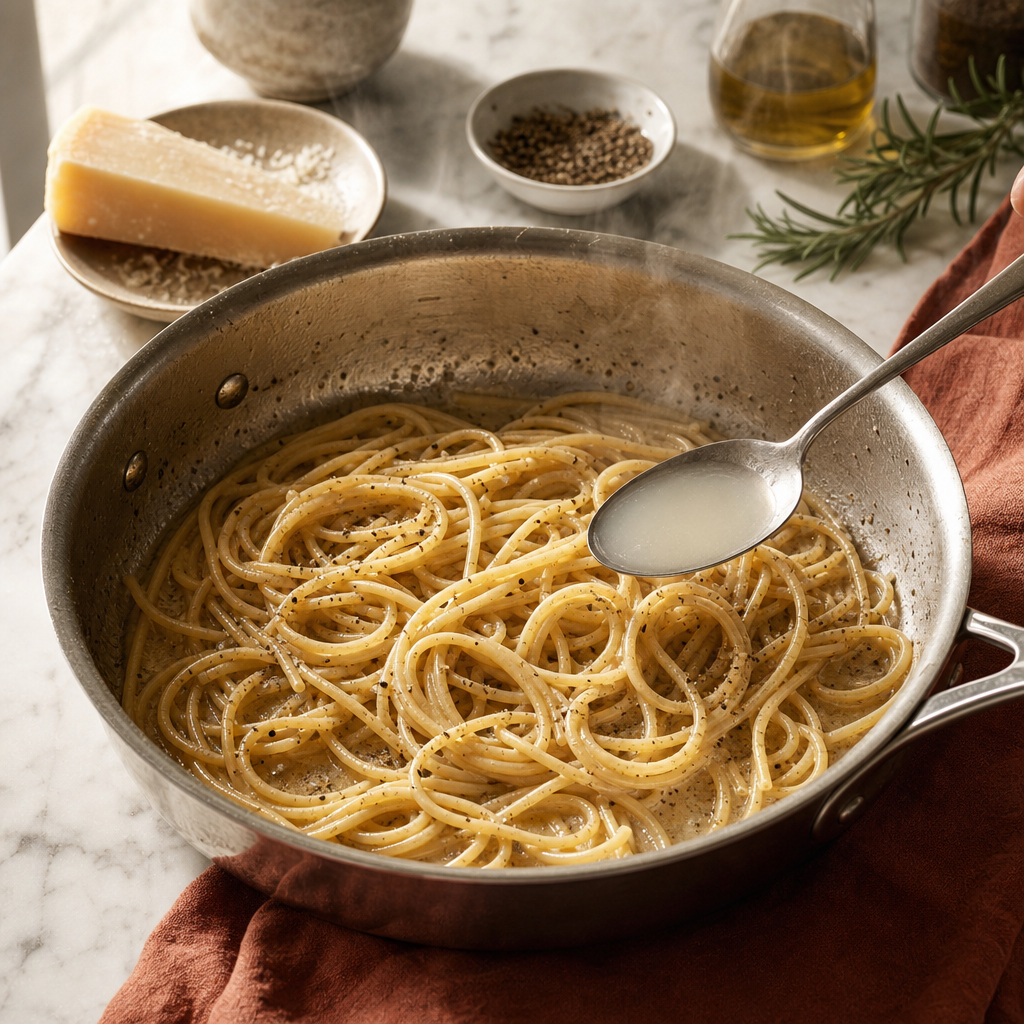
Turn off the heat and wait 45 seconds. The pan should still be hot enough to steam lightly but not hiss when a spoonful of pasta water hits it.
Emulsify off heat
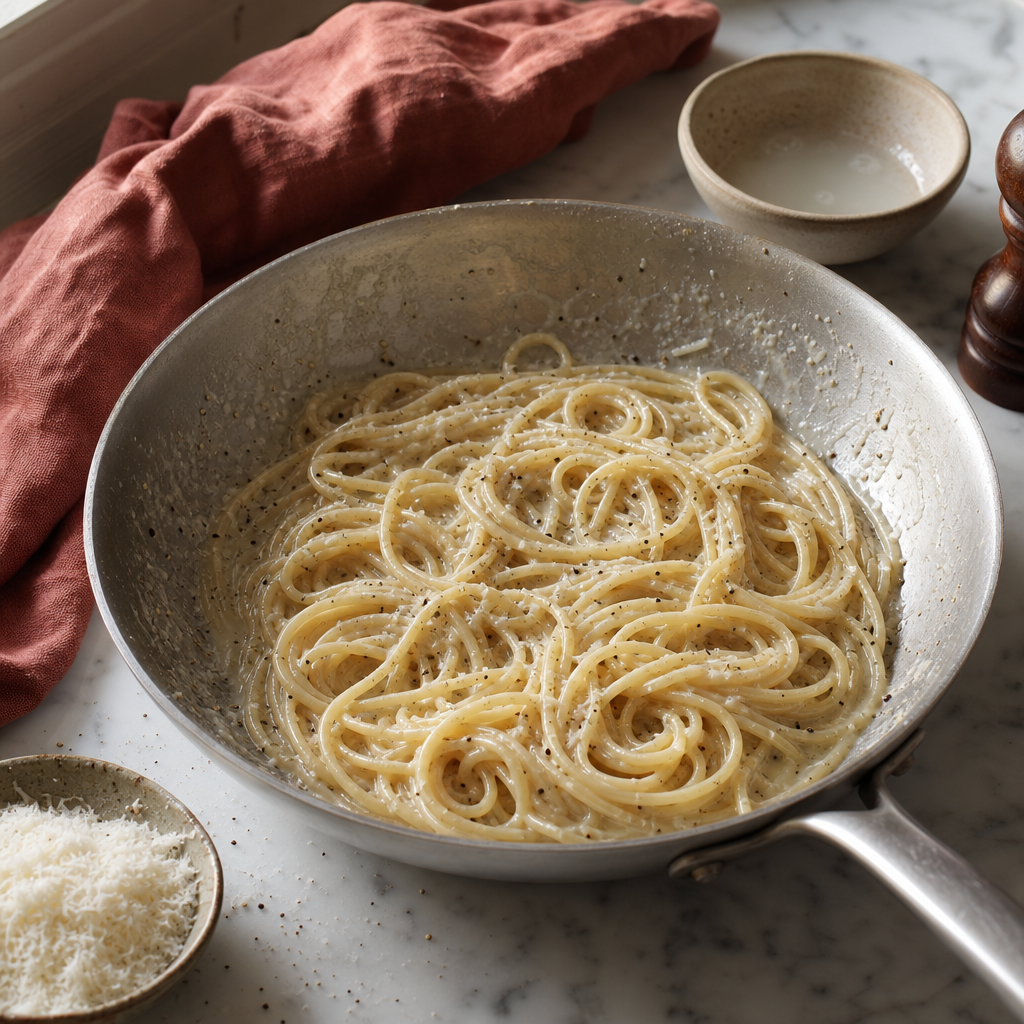
Add the grated Pecorino in three additions, tossing hard after each one and loosening with 1-2 tablespoons hot pasta water as needed. Stop when the spaghetti is coated in a thin, glossy ivory sauce that clings to the strands.
Plate immediately
Twirl onto warm plates and finish with a small pinch of Pecorino and a few cracks of black pepper. Serve at once; the sauce tightens as it cools.
Common mistakes
- {'mistake': 'Adding cheese over active heat.', 'fix': 'Kill the heat and let the pan calm down before the Pecorino goes in. Aged cheese clumps when its proteins are shocked.'}
- {'mistake': 'Using pre-grated Pecorino.', 'fix': 'Grate from a block. Pre-grated cheese is drier and often coated to prevent clumping in the package, which is exactly the opposite of what the sauce needs.'}
- {'mistake': 'Using too much pasta water at once.', 'fix': 'Add water in spoonfuls once the cheese starts going in. A flooded pan makes peppery cheese water, not sauce.'}
- {'mistake': 'Salting the water aggressively.', 'fix': 'Use moderate salt. Pecorino Romano carries enough salinity to push the final dish over the edge.'}
- {'mistake': 'Letting the pasta wait.', 'fix': 'Set plates before cooking. Cacio e pepe is finished and served in the same narrow minute.'}
What does not belong
- {'item': 'cream', 'reason': 'Cream does not belong in cacio e pepe. It masks the technique instead of solving it.'}
- {'item': 'butter', 'reason': 'Butter makes a stable sauce more forgiving, but it changes the Roman three-part structure. This version does not use it.'}
- {'item': 'garlic', 'reason': "Garlic does not belong here. The aroma should be sheep's-milk cheese and black pepper, not soffritto."}
- {'item': 'olive oil', 'reason': 'Olive oil is not needed for the emulsion. Dry-toast the pepper and let starch plus Pecorino do the work.'}
- {'item': 'Parmesan as the main cheese', 'reason': 'Parmigiano-Reggiano does not give the same salty, sharp Roman profile. It makes a different pasta.'}
- {'item': 'parsley', 'reason': 'Parsley garnish does not belong. The finished plate should be pale cheese, black pepper, and pasta.'}