Frittata Pasta
The dish in context
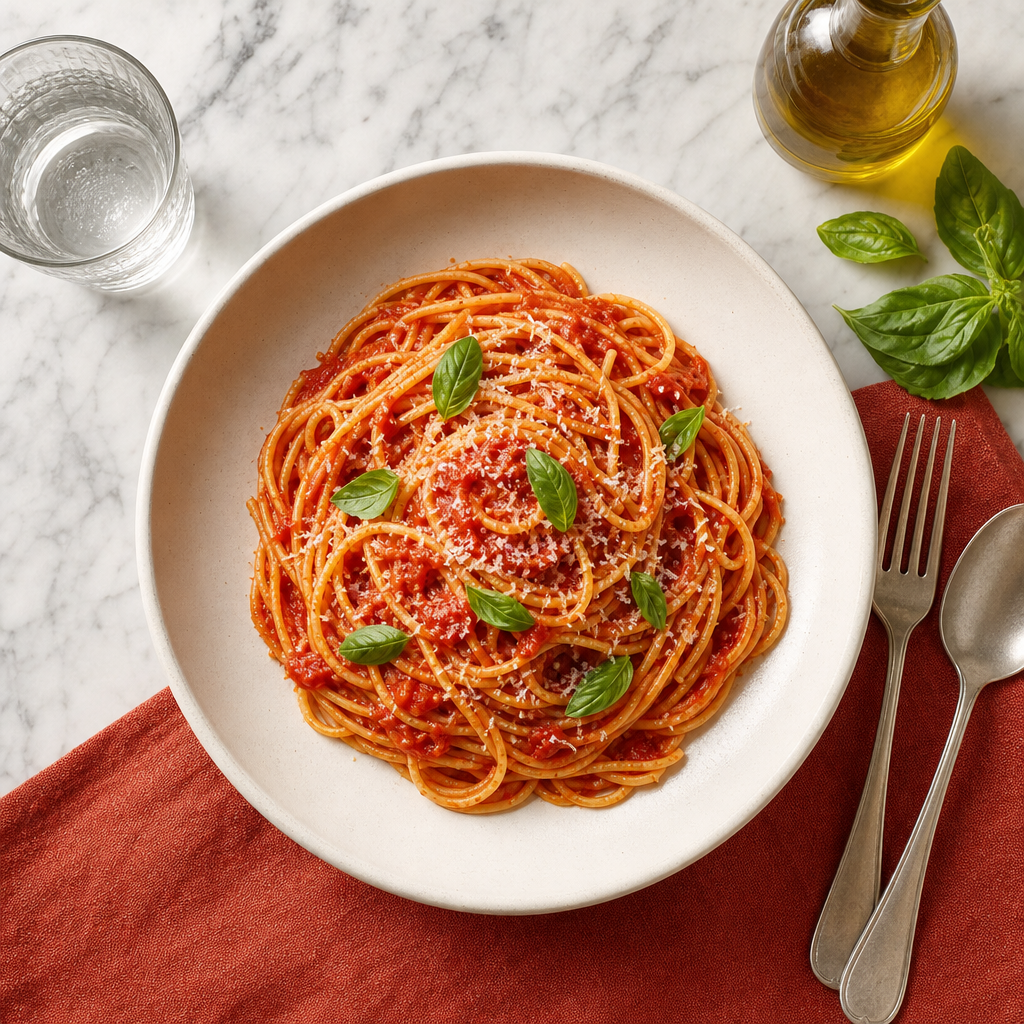
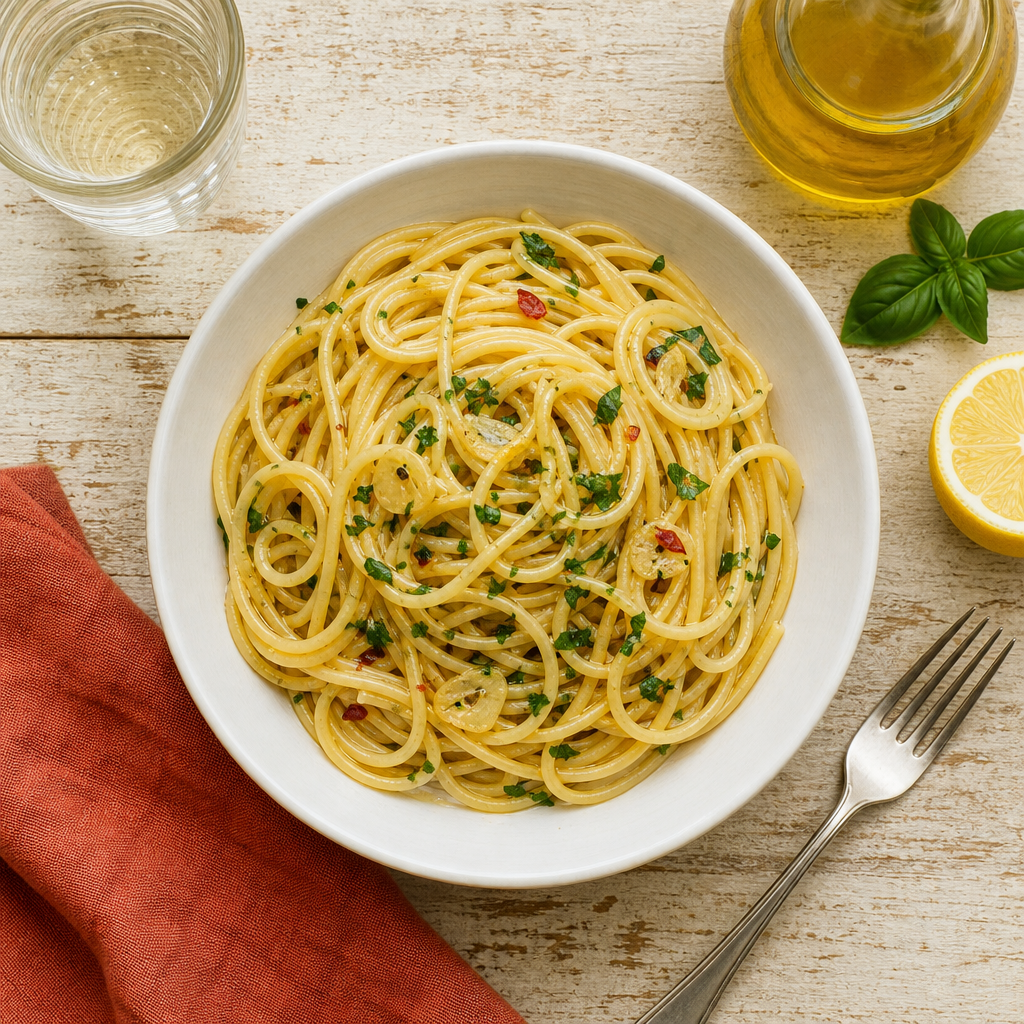
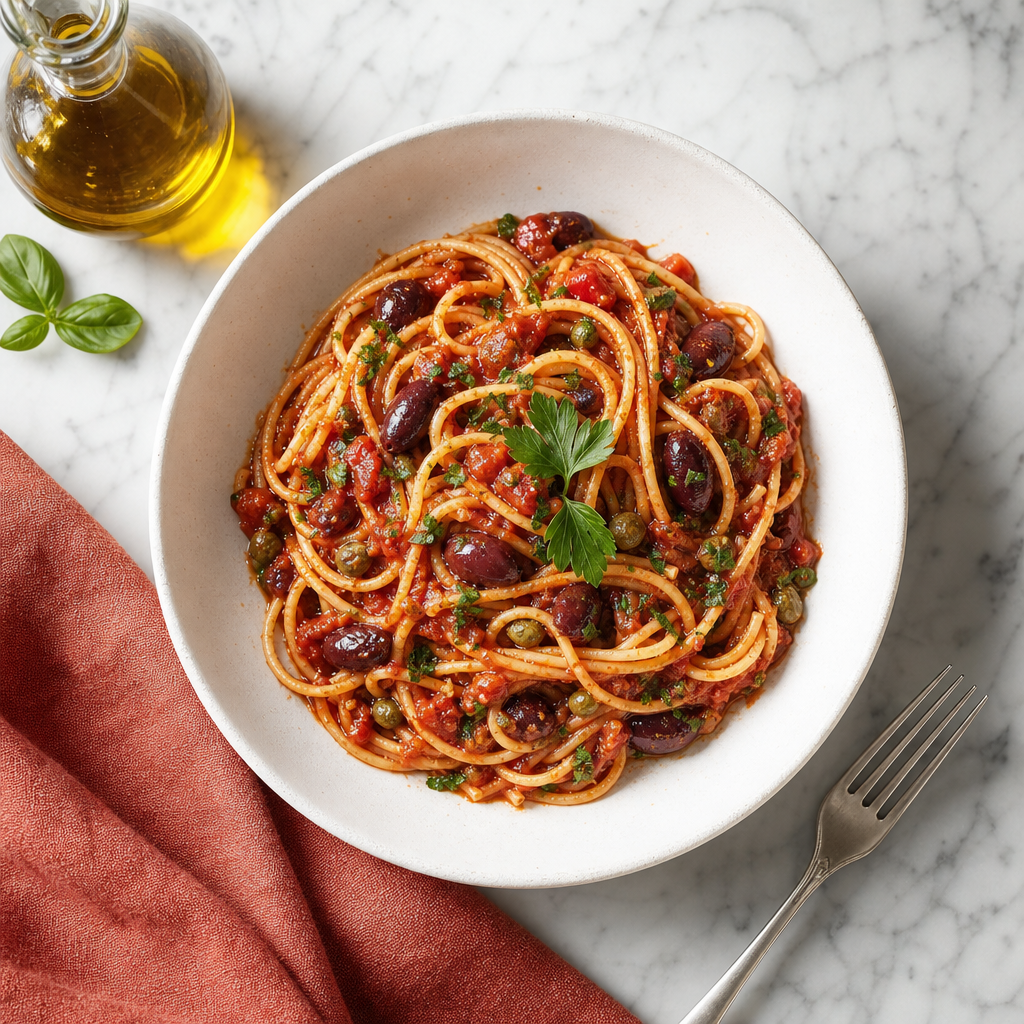
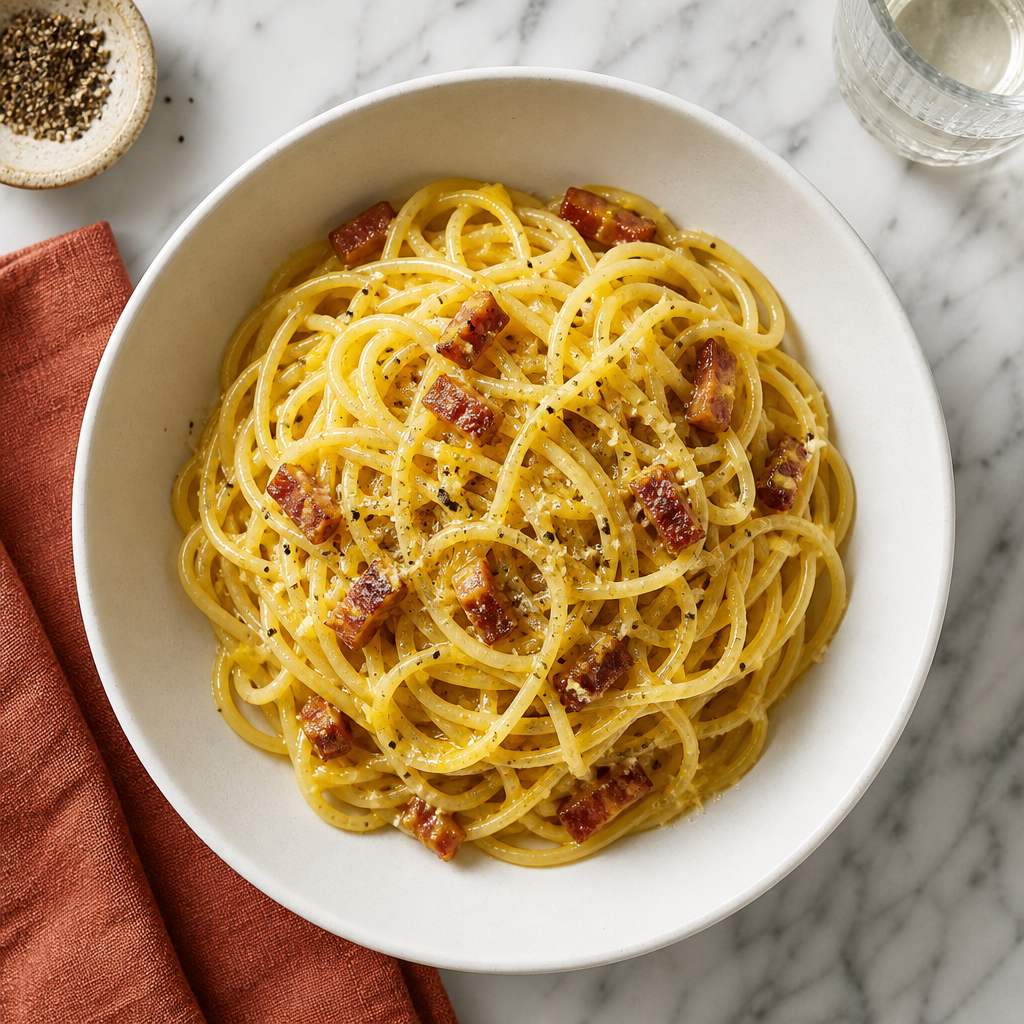
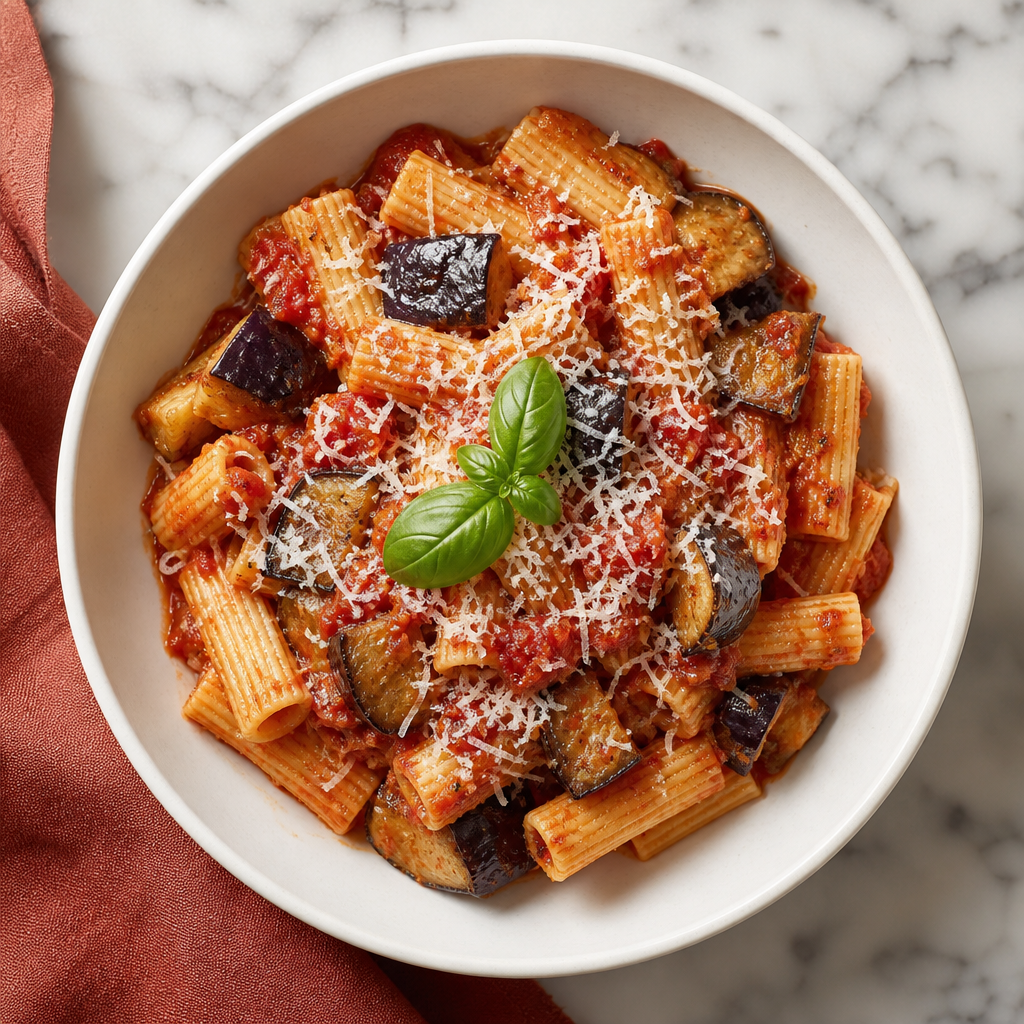
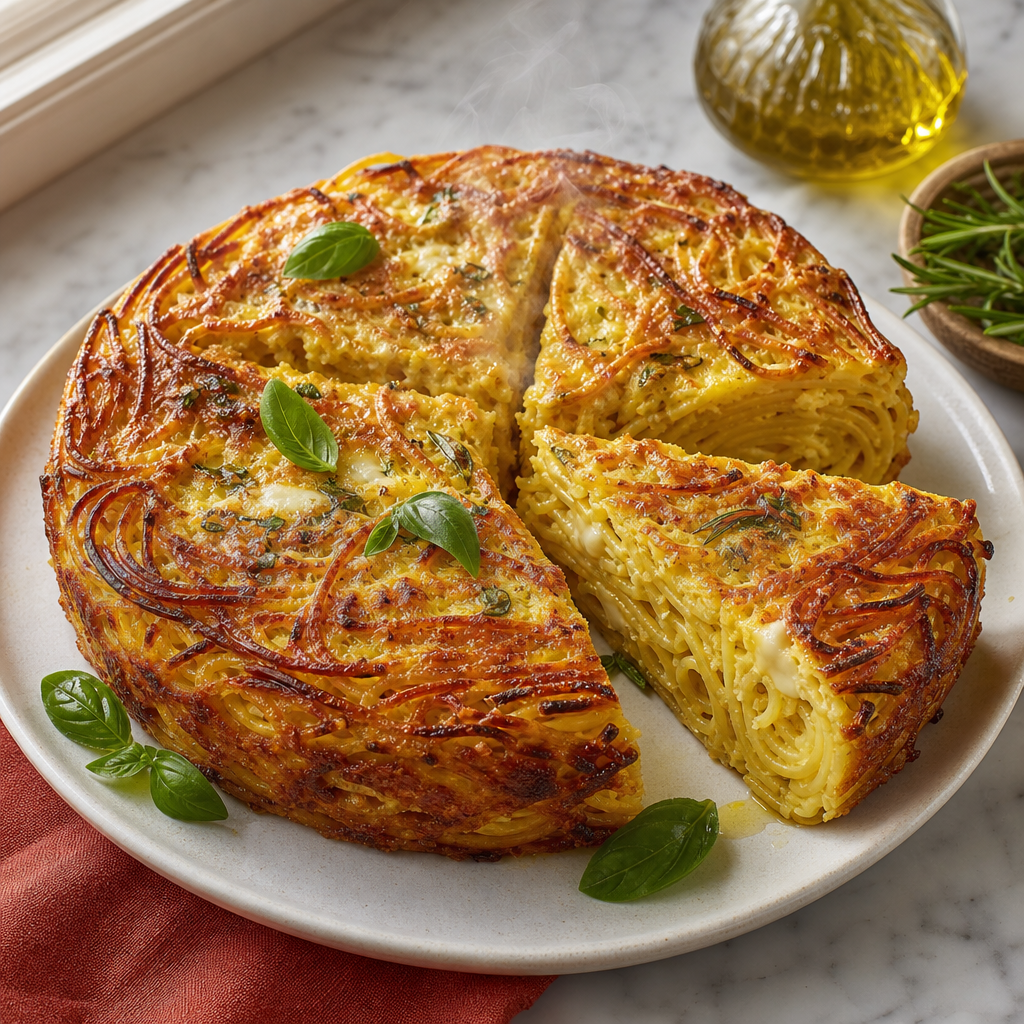
Frittata di pasta, also called frittata di maccheroni or frittata di spaghetti in Naples, is a Campanian reuse dish built around cooked pasta from the previous meal. It belongs to the practical Neapolitan habit of turning leftovers into portable food for work, picnics, the beach, or Easter outings. Sources split the dish into bianca, made without tomato sauce, and rossa, made from already sauced pasta; both are recognized forms. The fixed grammar is pasta plus beaten egg fried into a single round cake, not pasta served with eggs stirred through it. Cheese, salami, ham, peas, and provola are household variables, not requirements.
Method 8 steps · 25 min
Loosen the pasta
Separate the cooked spaghetti with your fingers or tongs. If it is refrigerator-cold and clumped, let it stand 10 minutes or warm it for 30 seconds in a microwave; it should bend without breaking.
Beat the egg base
Beat the eggs with the Parmigiano-Reggiano, salt, pepper, and parsley until no streaks of white remain. Fold in the provola and salami if using.
Coat the spaghetti
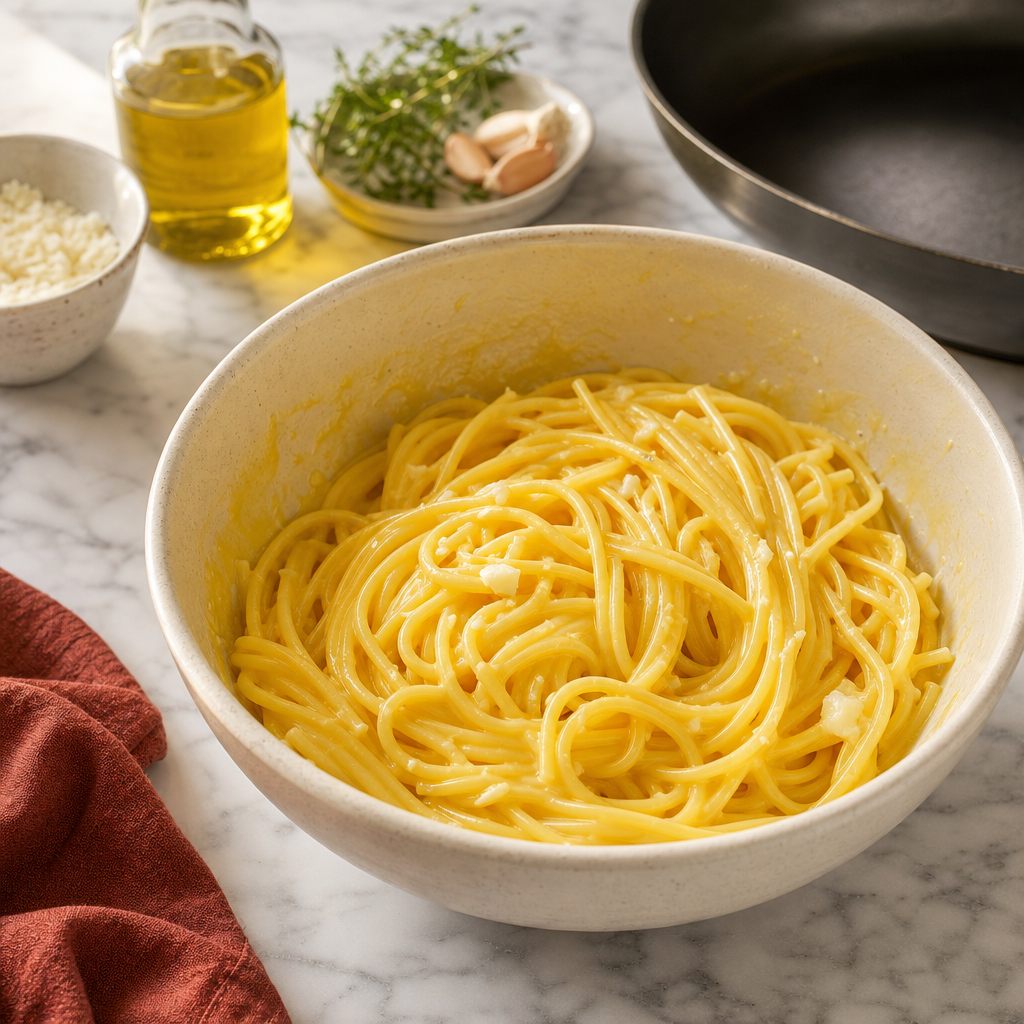
Add the spaghetti to the egg mixture and turn it until every strand is glossy and yellow. Let it sit for 2 minutes while the skillet heats.
Start the crust
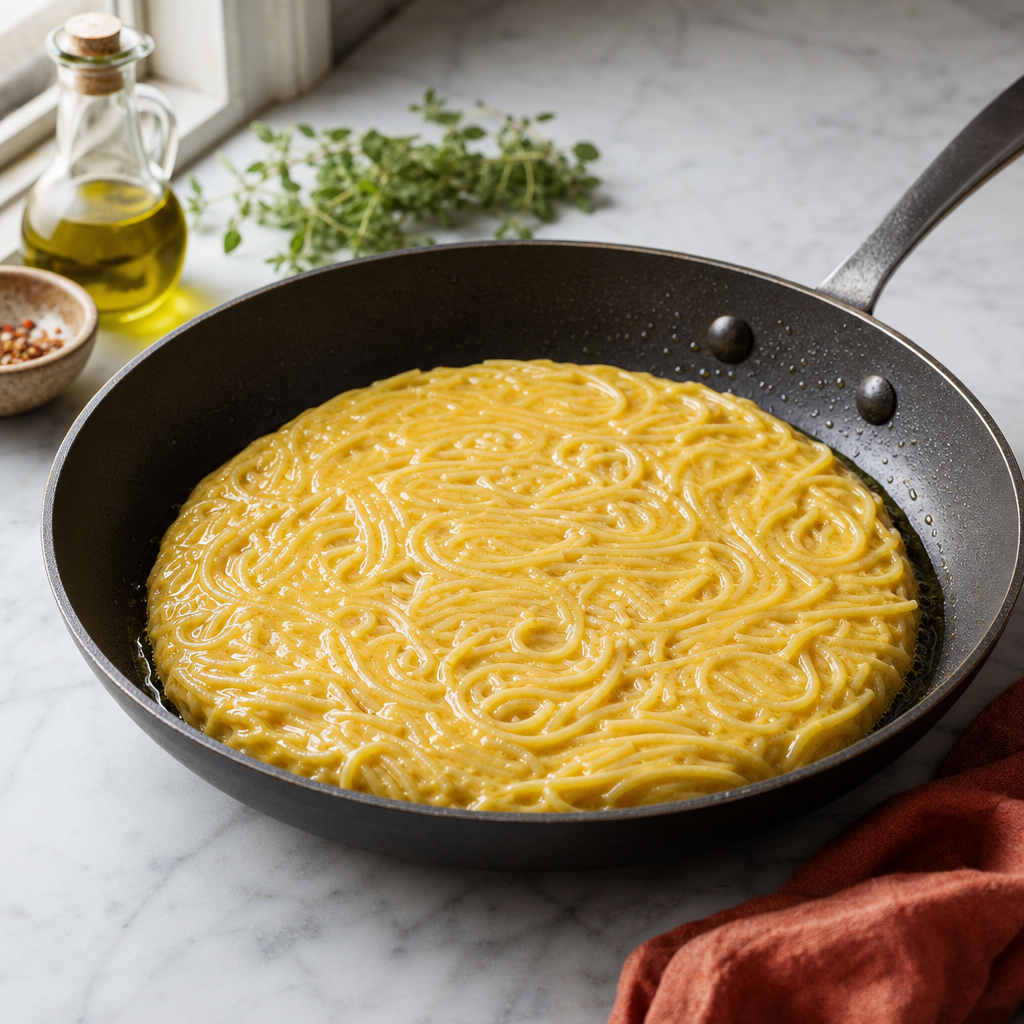
Heat the olive oil in the skillet over medium heat until it shimmers. Add the pasta mixture, spread it to an even thickness, and press the surface lightly with a spatula.
Fry the first side
Cook over medium-low heat until the edge is browned, the sides pull slightly from the pan, and the top is mostly set but still damp in the center, 7 to 9 minutes. Rotate the skillet once or twice if one side browns faster.
Flip the frittata
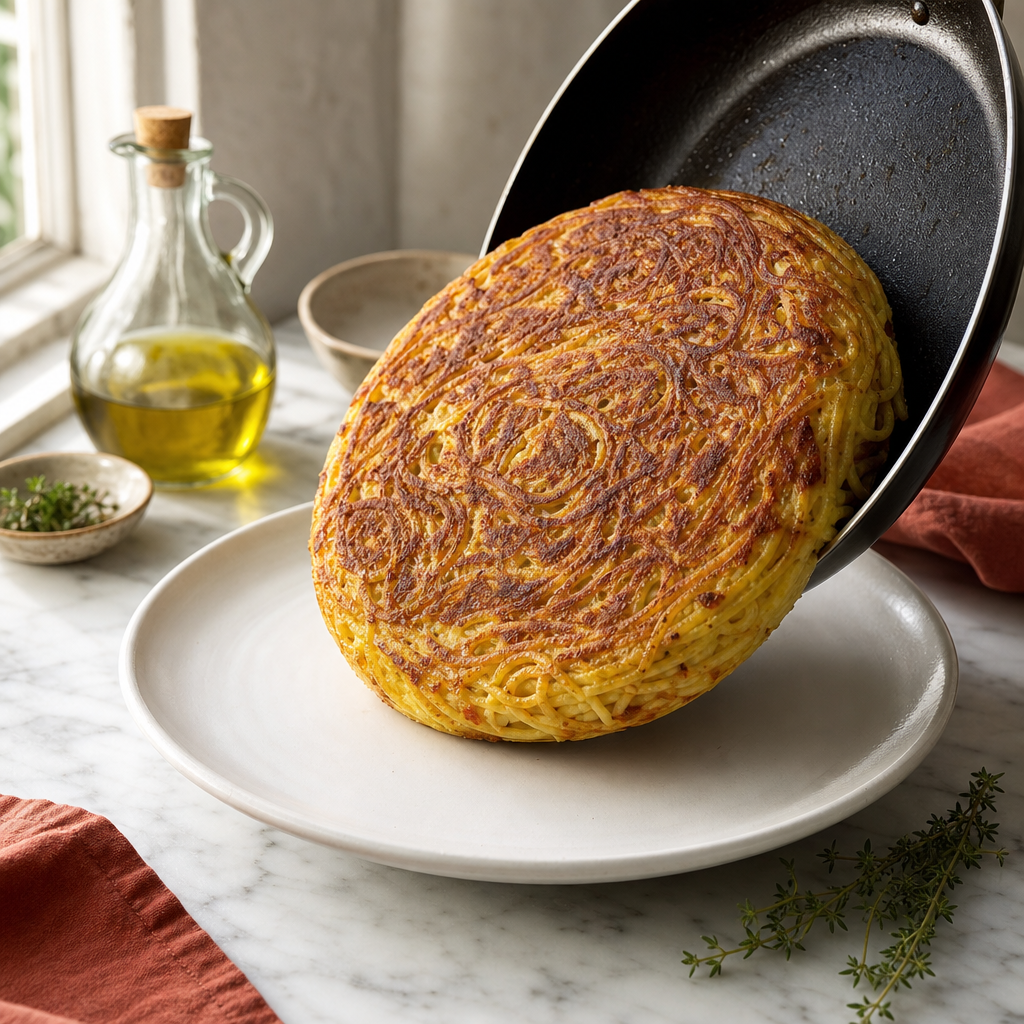
Slide a wide spatula around the edge and under the bottom. Cover the skillet with a flat plate larger than the pan, invert in one confident motion, then slide the frittata back into the skillet browned-side up.
Fry the second side
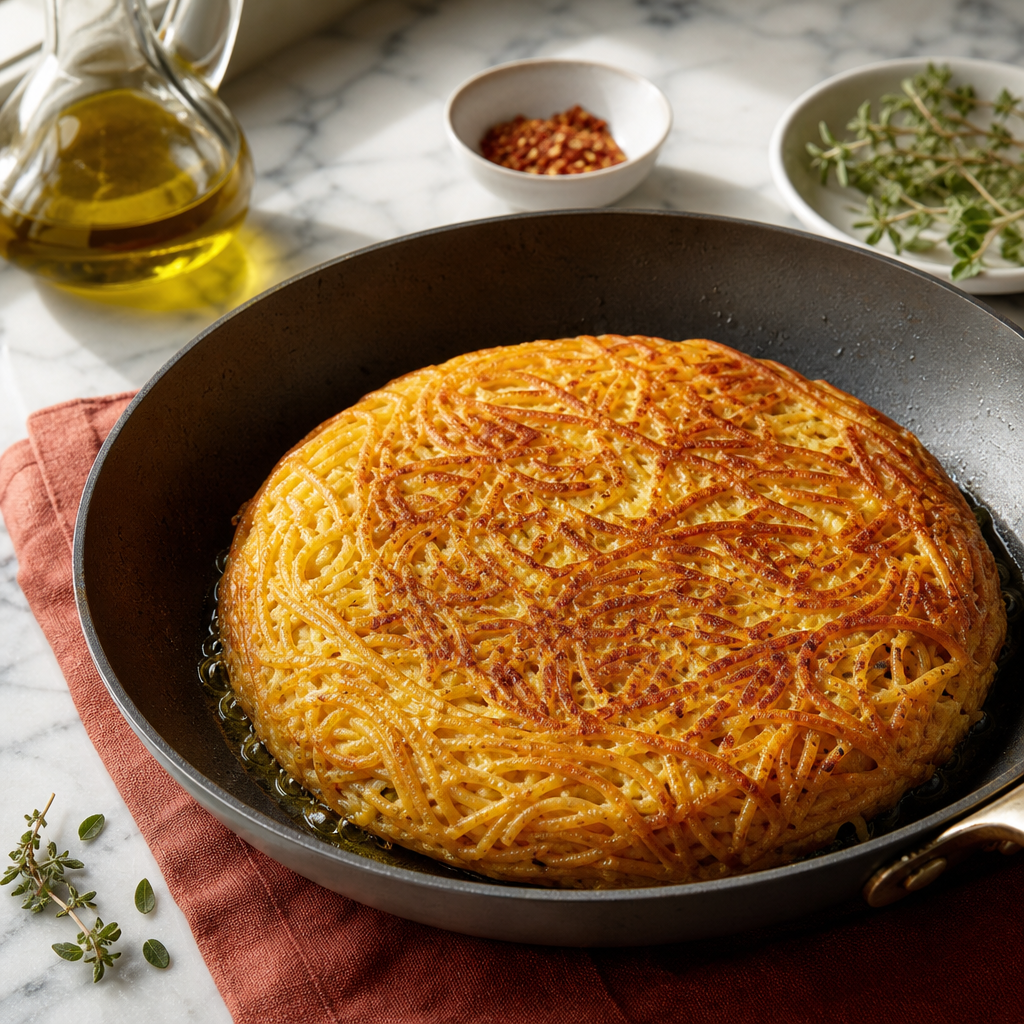
Cook the second side over medium-low heat until browned and firm through the center, 4 to 6 minutes. Press the center gently; it should spring back, not slosh.
Rest and slice
Transfer to a board and rest 5 minutes before cutting into wedges. Serve warm, room temperature, or packed once cooled.
Common mistakes
- {'mistake': 'Stirring after the eggs hit the pan.', 'fix': 'Spread once, press lightly, then leave it alone until the bottom crust forms.'}
- {'mistake': 'Using too little oil.', 'fix': 'Use enough oil to coat the skillet in a visible film. Dry frying sticks before it browns.'}
- {'mistake': 'Adding wet fresh mozzarella.', 'fix': 'Use smoked provola or low-moisture mozzarella. Fresh mozzarella leaks water and weakens the center.'}
- {'mistake': 'Flipping before the first side is set.', 'fix': 'Wait for browned edges and a top that is mostly set. A runny top spills during the plate flip.'}
- {'mistake': 'Treating sauced pasta and plain pasta the same.', 'fix': 'For frittata rossa, reduce added salt and keep the heat moderate; tomato sugars brown faster than plain egg.'}
What does not belong
- {'item': 'Cream', 'reason': 'Cream does not belong. It softens the egg and pushes the dish toward baked pasta custard instead of a fried pasta cake.'}
- {'item': 'Raw watery vegetables', 'reason': 'Raw zucchini, tomato, mushrooms, or spinach do not belong unless cooked dry first. Water breaks the sliceable structure.'}
- {'item': 'A heavy layer of sauce on top', 'reason': 'Sauce on top turns the crust soggy. If making the red version, the sauce is already on the leftover pasta before the eggs are added.'}
- {'item': 'Broken spaghetti by design', 'reason': 'Broken strands do not belong in the canonical long-pasta version. Whole strands tangle and give the frittata its clean wedge structure.'}
- {'item': 'Oven-only cooking', 'reason': 'An oven-only bake can be practical, but it is not the same fried Campanian structure. The browned skillet crust is the point.'}