Babà Al Rum
The dish in context
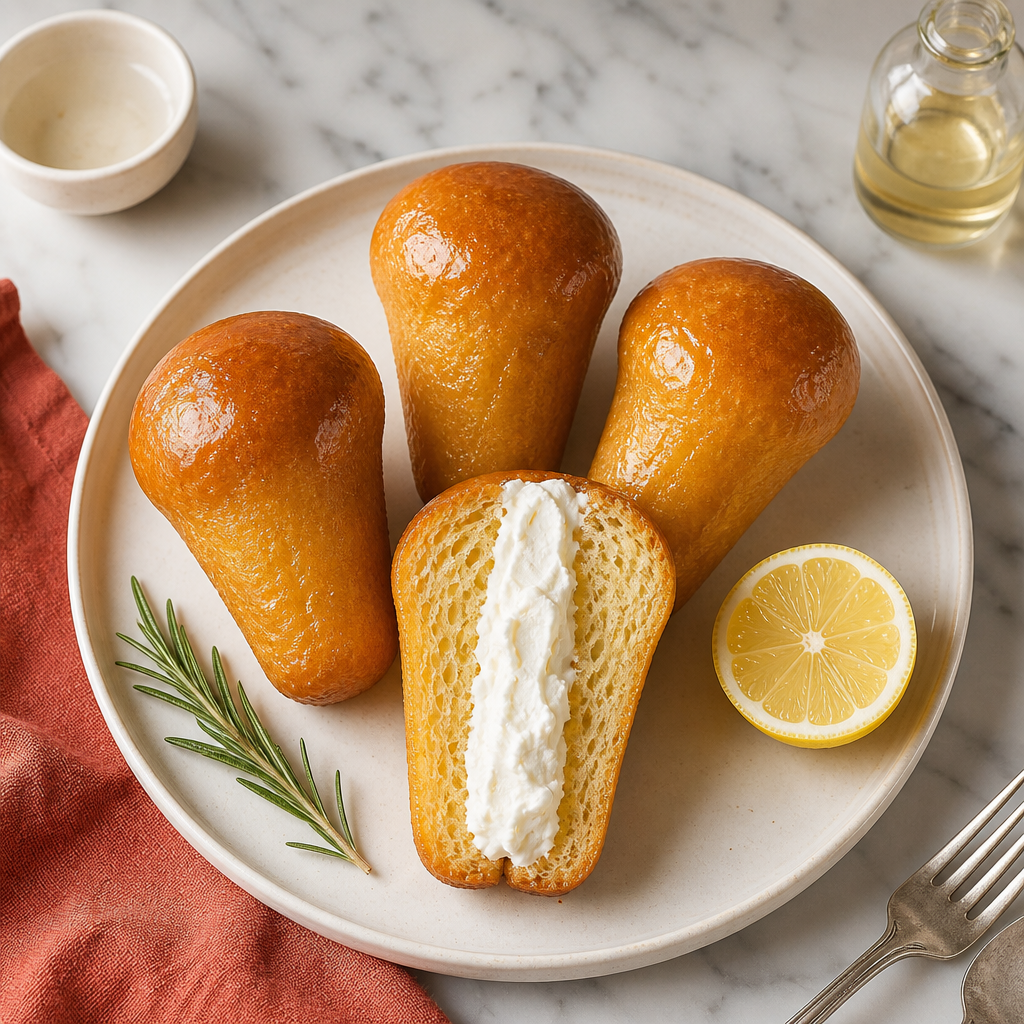
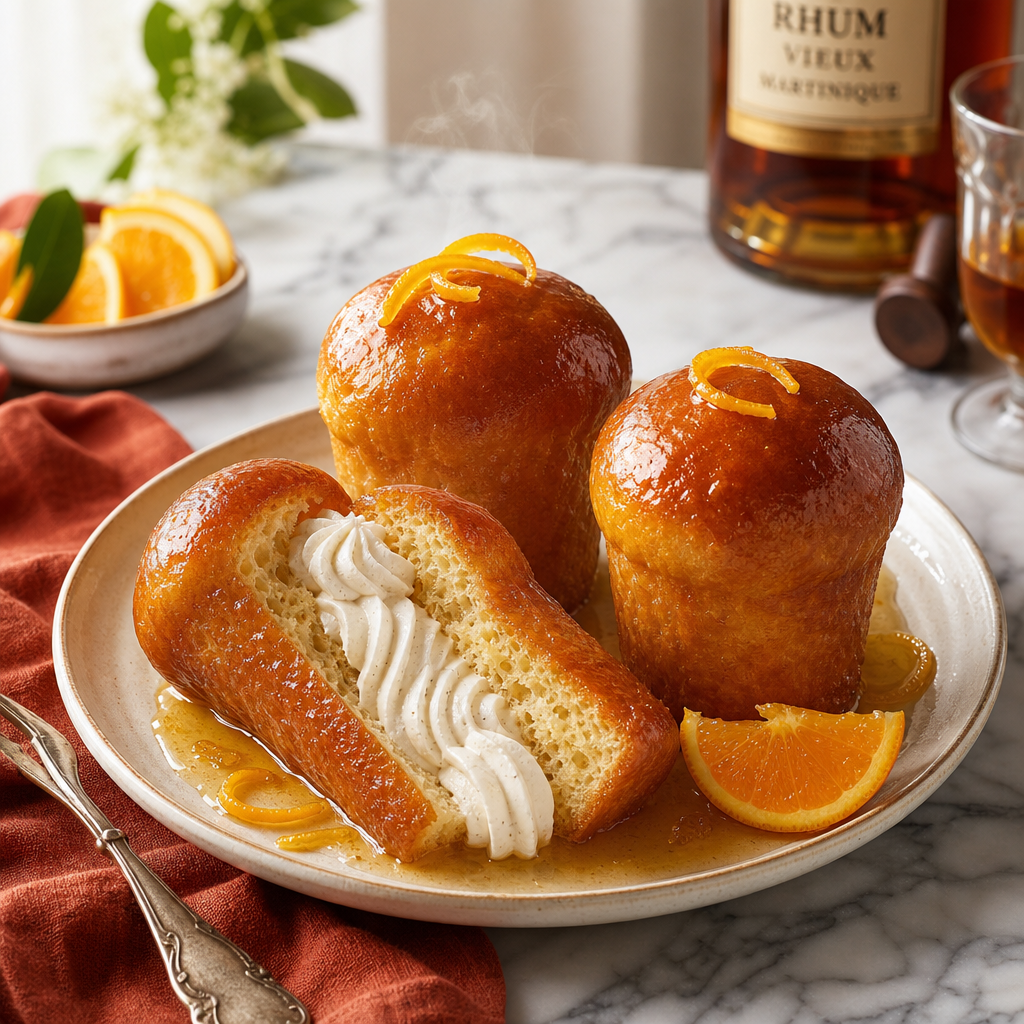
Babà al rum is now a Neapolitan pastry-shop standard, although its route runs through Central Europe and France before Campania. The older baba family is related to kugelhopf and babka; French pâtissiers refined the soaked yeast cake, and Naples made the rum-soaked version its own in the nineteenth century. In Campania, the benchmark is not a dense rum cake but a springy, almost elastic dough that can drink syrup without collapsing. Large savarin-style rings exist, but the individual mushroom-shaped babà is the visual language of Naples.
Method 12 steps · 285 min
Grease the molds
Brush 12 baba molds with a thin, complete layer of soft butter. Chill the molds while mixing the dough so the butter sets instead of pooling at the bottom.
Start the dough
Combine flour, sugar, yeast, milk, and eggs in the bowl of a stand mixer. Mix with the paddle or dough hook on low until no dry flour remains, then beat on medium until the dough stretches in sticky strands and begins to pull from the bowl, 8-12 minutes.
Add salt and butter late
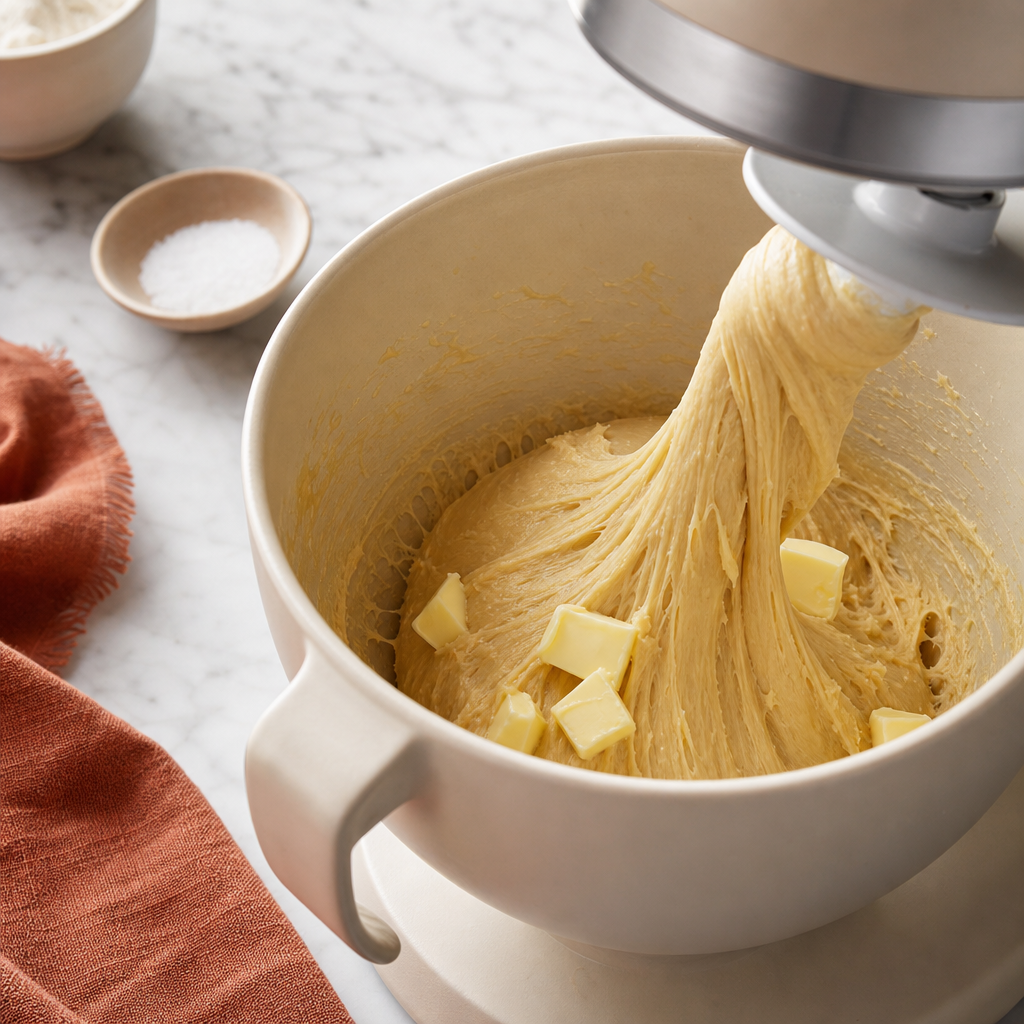
Add the salt, then add the soft butter in 5 or 6 additions, beating until each piece disappears before adding the next. Continue mixing until the dough is glossy, stretchy, and slaps the bowl in thick ribbons, 8-10 minutes.
First rise
Scrape the dough into a lightly buttered container, cover, and let rise at 24-26°C until swollen by about 70%, not fully doubled, 60-90 minutes.
Fill the molds
Degas the dough with a wet hand. Divide about 55-60 g dough into each mold, filling them one-third to halfway; press the dough down so there are no trapped gaps.
Proof in the molds
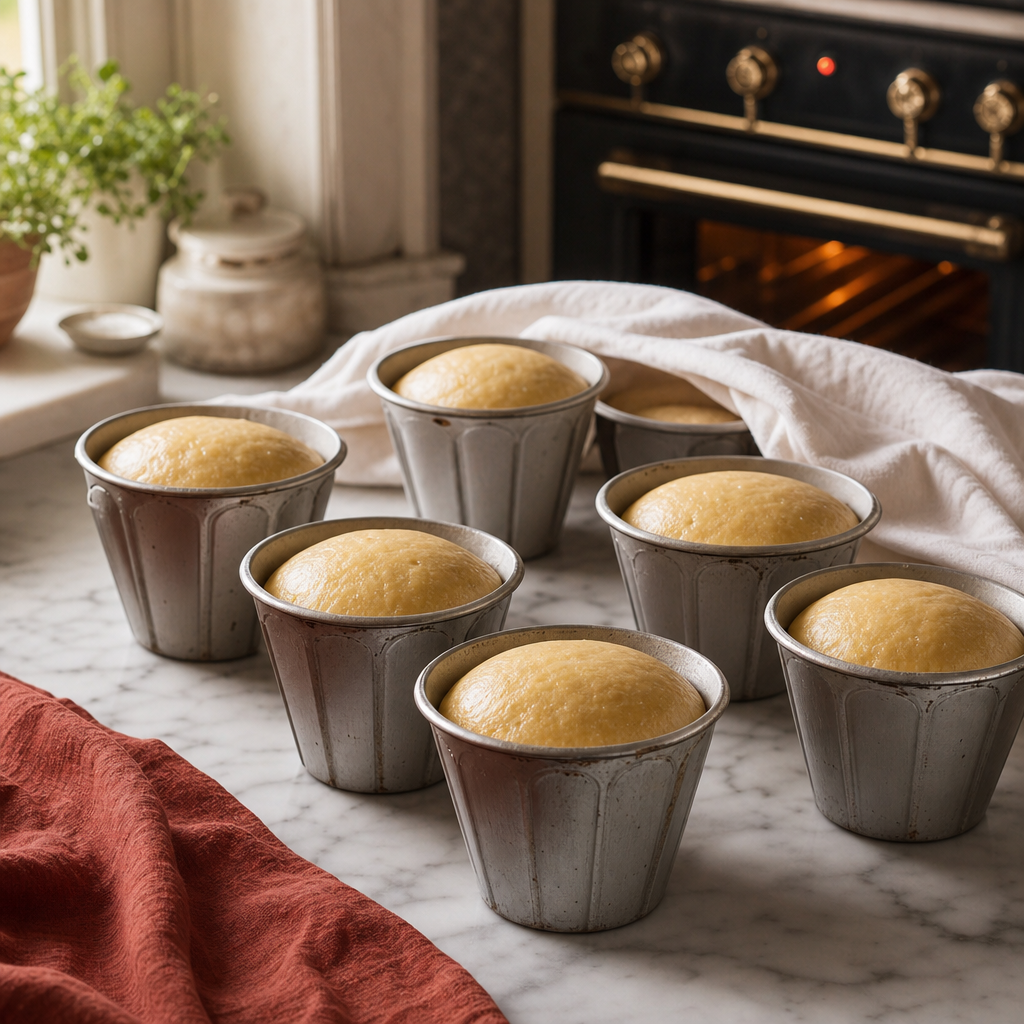
Cover loosely and proof until the dough reaches just below the rim of each mold, 45-75 minutes. Preheat the oven to 180°C during the final 20 minutes.
Bake dry and golden
Bake at 180°C until the babà are deep golden and feel light for their size, 18-22 minutes. Unmold while warm and cool on a rack.
Dry the crumb
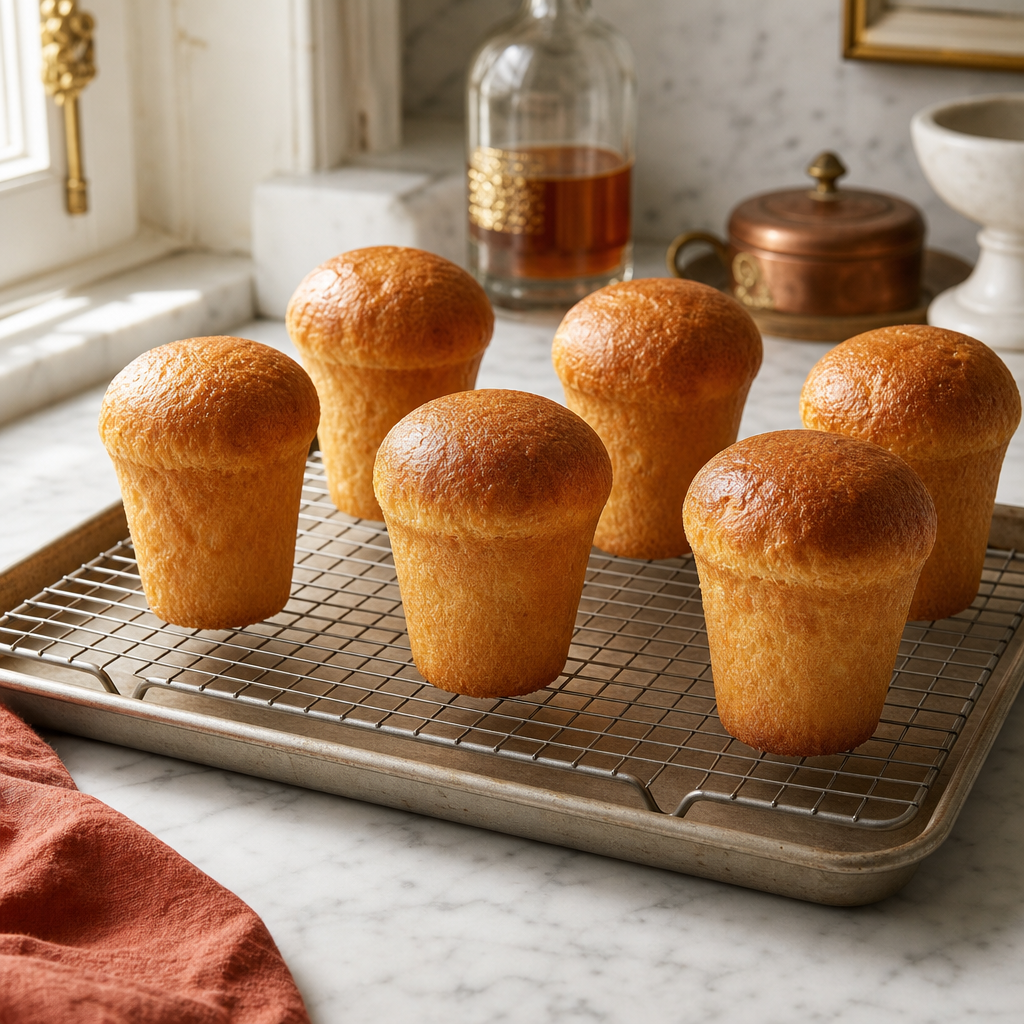
Let the babà stand uncovered for at least 2 hours, or overnight if time allows. They should feel springy and slightly dry on the surface.
Make the citrus syrup
Bring water, sugar, lemon zest, and orange zest to a boil. Simmer 2 minutes, remove from heat, cool to about 60°C, then stir in the rum.
Soak the babà
Warm the babà briefly if they are cold. Submerge them in warm syrup, turning until they feel heavy and saturated but still hold their shape, 45-90 seconds each depending on dryness.
Drain and glaze
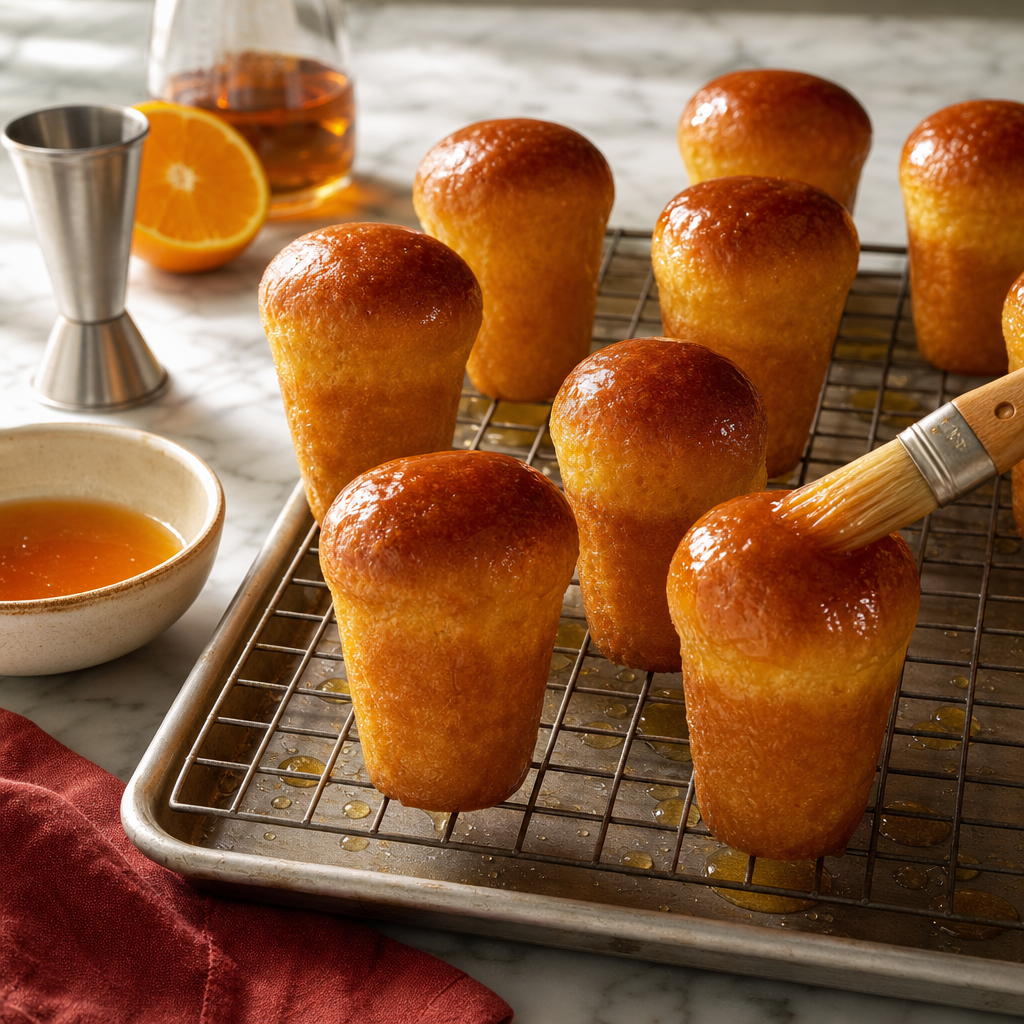
Set the soaked babà on a rack over a tray for 10 minutes. Warm the apricot jam with 1-2 tablespoons of syrup, strain it if chunky, and brush a thin coat over each babà.
Serve or fill
Serve plain with a spoonful of syrup, or split each babà lengthwise without cutting through the base and pipe in whipped cream. Keep chilled if filled; unfilled babà can stand at cool room temperature for several hours.
Common mistakes
- {'mistake': 'Using cake flour or all-purpose flour with weak protein.', 'fix': 'Use strong bread flour. The crumb needs chew and elasticity so it can absorb syrup without breaking apart.'}
- {'mistake': 'Adding butter before the dough has developed.', 'fix': 'Build gluten first, then add butter in stages. A greasy dough at the start rarely recovers.'}
- {'mistake': 'Baking the babà pale because they look done.', 'fix': 'Bake to deep golden. The crumb must be dry enough to take syrup all the way through.'}
- {'mistake': 'Pouring cold syrup over cold cakes.', 'fix': 'Use warm syrup and room-temperature or gently warmed babà. Matching temperatures gives faster, cleaner absorption.'}
- {'mistake': 'Boiling the rum in the syrup.', 'fix': 'Add rum off heat at about 60°C. Boiled rum tastes blunt and sugary.'}
- {'mistake': 'Soaking by sprinkling syrup over the top.', 'fix': 'Submerge and turn the babà. Surface brushing leaves a dry center.'}
What does not belong
- {'item': 'Baking powder', 'reason': 'Babà is a yeasted dough. Chemical leavening gives cake texture and the wrong crumb.'}
- {'item': 'Vanilla-heavy pastry-cake flavoring in the dough', 'reason': 'The identity is egg-rich dough, citrus syrup, and rum. Vanilla can flatten the rum profile.'}
- {'item': 'Pre-mixed rum essence as the main flavor in classic babà', 'reason': 'Rum essence does not replace the alcohol, aroma, and solvent effect of real rum in the syrup.'}
- {'item': 'Thick buttercream filling', 'reason': 'Buttercream is too dense for a soaked baba. It turns the pastry heavy and hides the syrup work.'}
- {'item': 'Chocolate glaze', 'reason': 'Chocolate glaze belongs to another dessert. It masks the amber shine and citrus-rum structure.'}