Trippa Romana
The dish in context
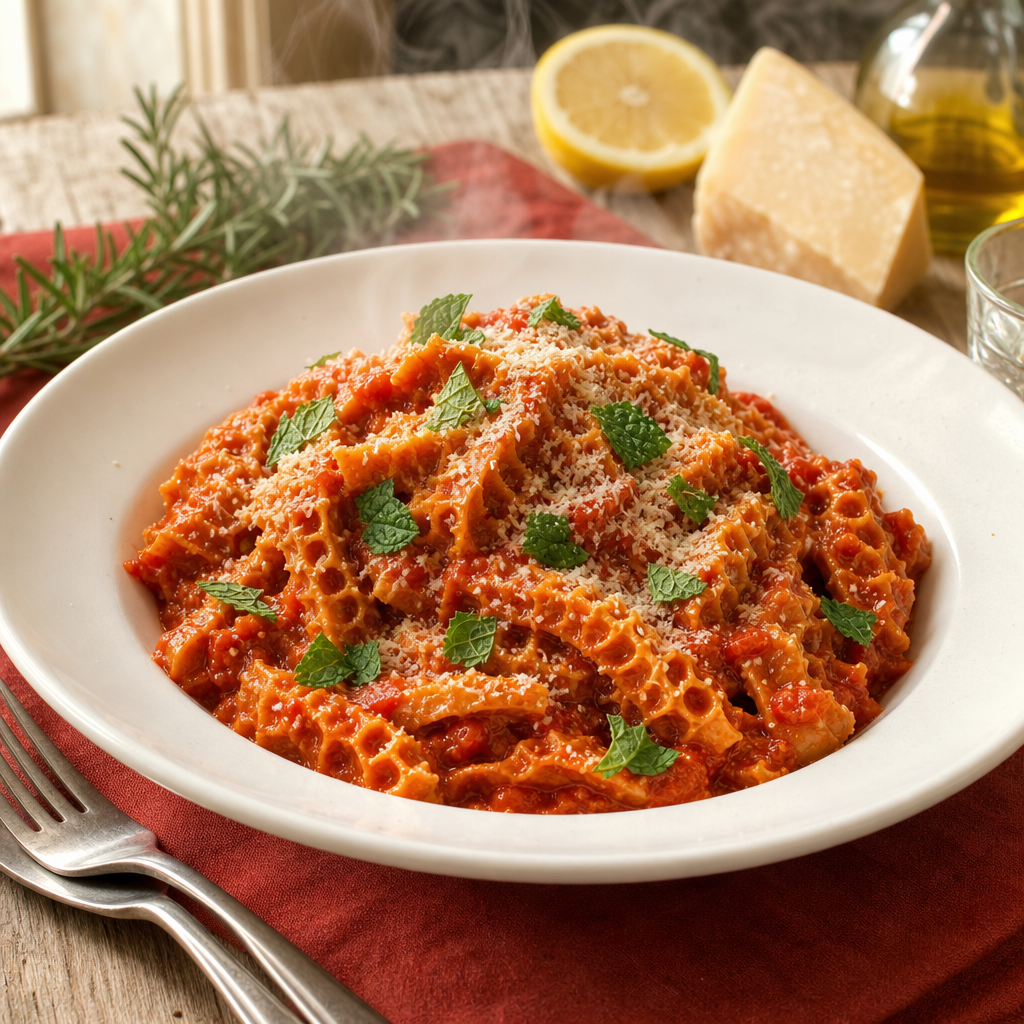
Trippa alla Romana belongs to Rome's quinto quarto, the "fifth quarter" cooking associated with the parts left after the prime cuts were divided. Testaccio, Rome's slaughterhouse district, is central to that history: workers and butchers turned offal into dishes with clear local identity. Roman sources consistently frame this dish around pre-cooked beef tripe, tomato, onion or soffritto, mint or mentuccia, and Pecorino Romano. It is traditionally tied to Saturday lunch in Roman trattorie, where signs for trippa still mark the day. The dish is a secondo, not a soup, even though it is wet enough to demand bread.
Method 7 steps · 150 min
Blanch the tripe hard enough to clean it
Put the sliced tripe in a pot, cover with cold water by 5 cm, and add the vinegar and bay leaf. Bring to a steady simmer and cook for 30 minutes, skimming any gray foam. Drain, rinse under hot water, and discard the bay leaf.
Build a restrained soffritto
Heat the olive oil in a wide Dutch oven over medium heat. Add onion, celery, carrot, garlic, chile, and half the salt; cook 12-15 minutes, stirring often, until the vegetables are soft and glossy but not browned.
Cook out the tomato paste
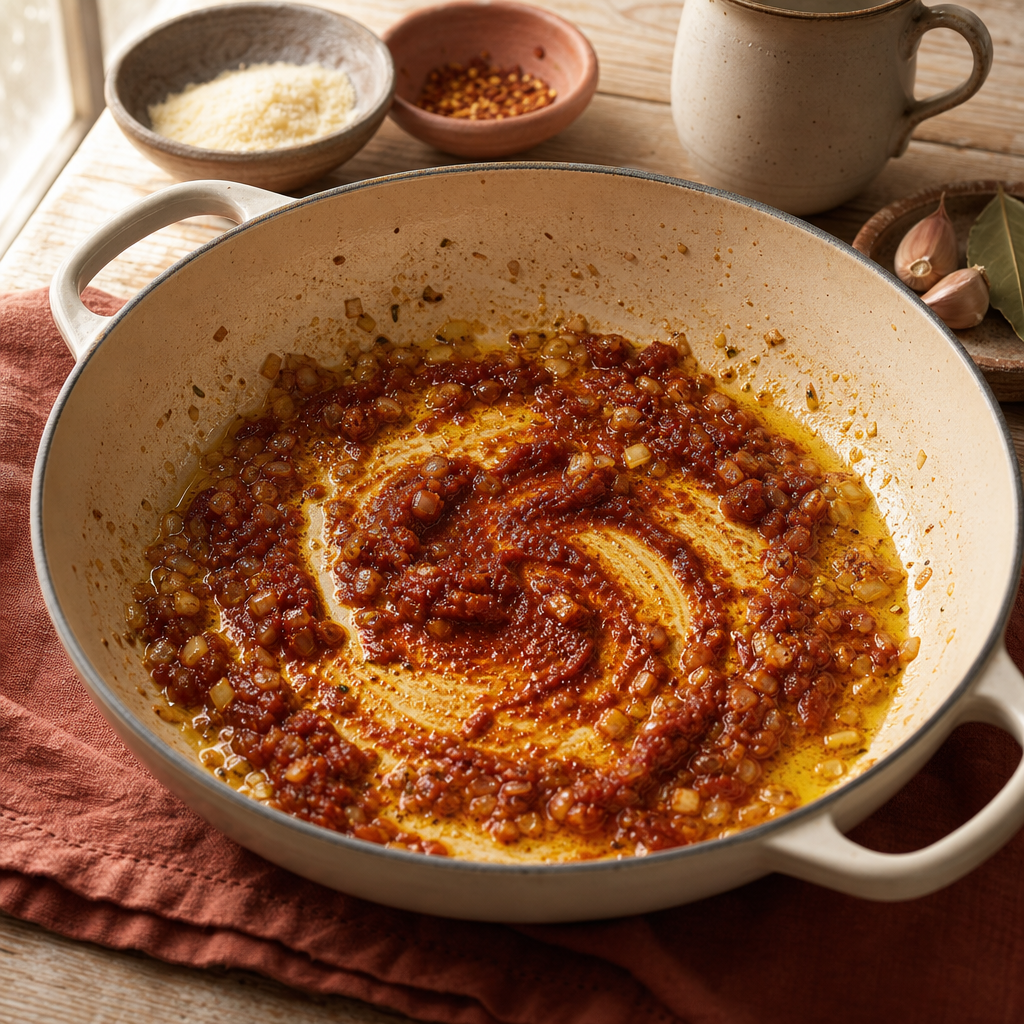
Add the tomato paste and cook for 2 minutes, smearing it through the oil until it darkens one shade and no longer smells raw.
Deglaze with wine
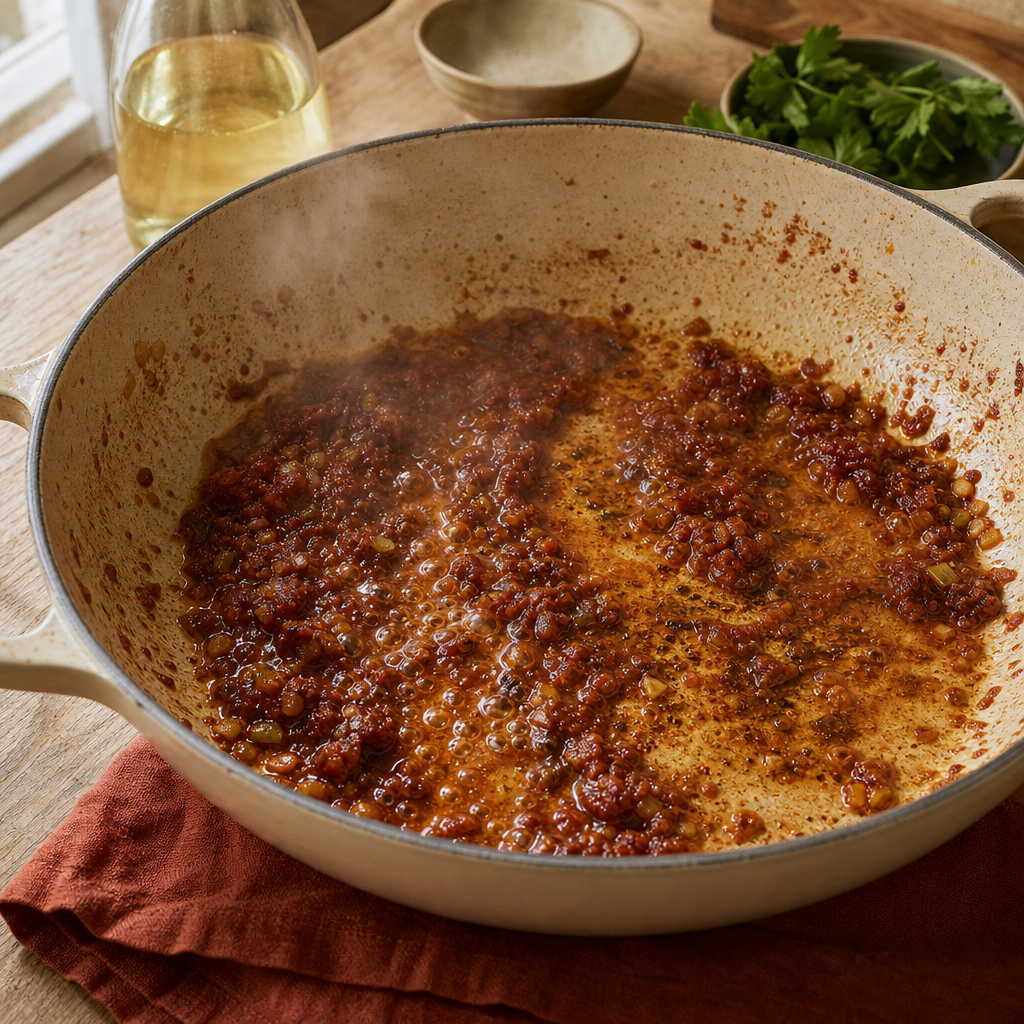
Add the white wine and scrape the bottom of the pot. Simmer until the wine is reduced by about half and the sharp alcohol smell has gone, 3-5 minutes.
Braise the tripe in tomato
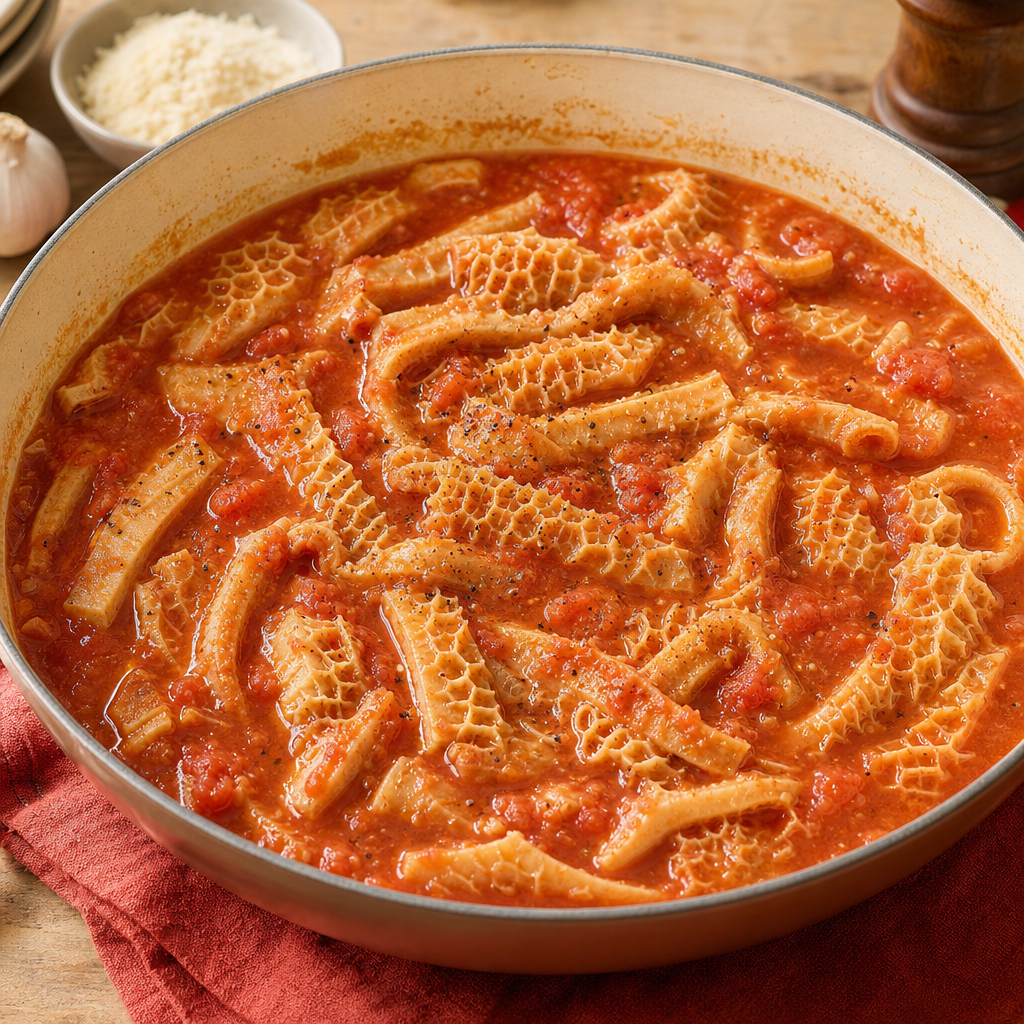
Add the drained tripe, crushed tomatoes, black pepper, and enough water to bring the liquid just level with the tripe if needed. Bring to a simmer, then lower the heat, cover with the lid slightly ajar, and cook 75-90 minutes. Stir every 15 minutes and add small splashes of water only if the sauce threatens to catch.
Reduce to a clinging sauce
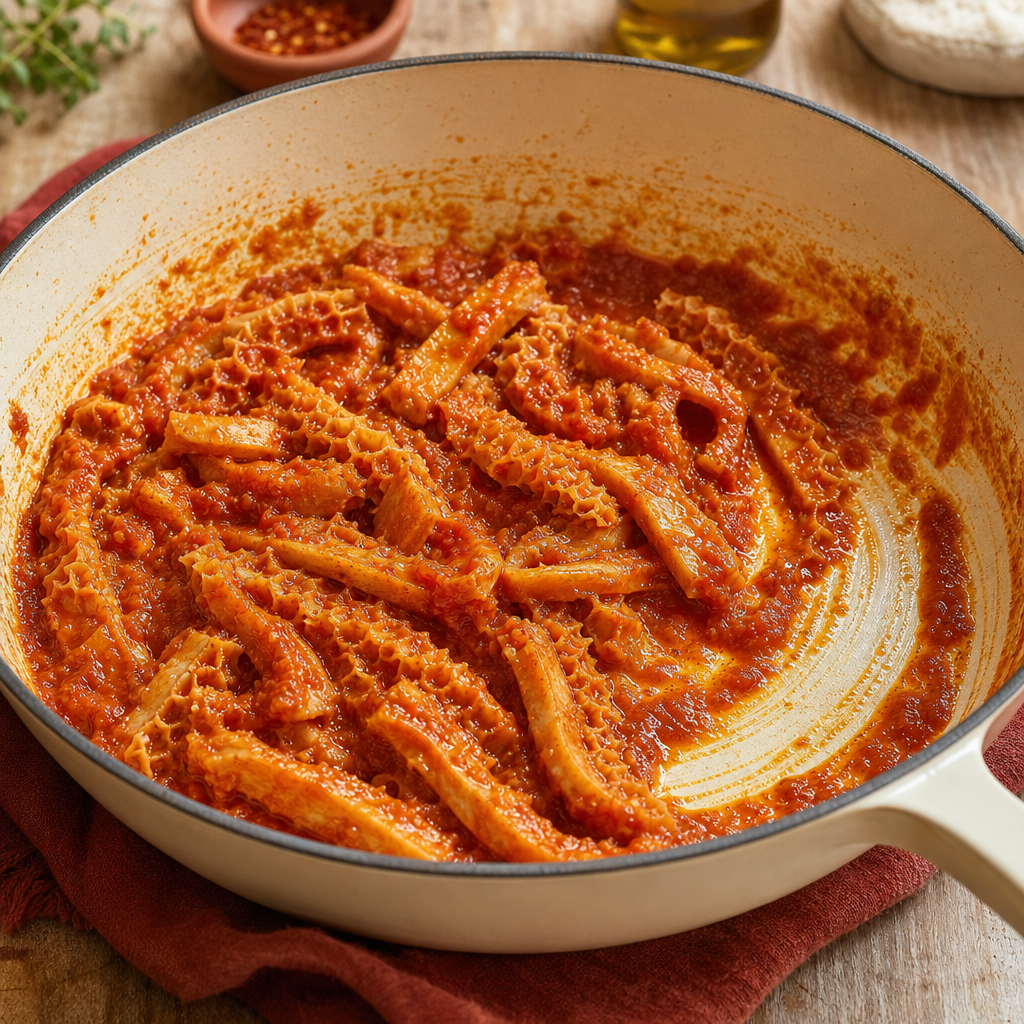
Uncover and simmer 10-20 minutes until the sauce coats the tripe and leaves a clean trail when stirred through the pot. Taste a strip: it should be tender with a slight spring, not squeaky.
Finish with Pecorino and mentuccia
Turn off the heat. Stir in half the Pecorino and half the mentuccia, then rest 5 minutes. Serve hot with the remaining Pecorino and mentuccia over the top.
Common mistakes
- {'mistake': 'Treating the dish like soup', 'fix': 'Reduce until the tomato clings to the ridges of the tripe. A watery bowl is unfinished.'}
- {'mistake': 'Skipping the blanch', 'fix': 'Blanch cleaned tripe for 30 minutes if its aroma is strong. Tomato sauce does not hide stale offal; it amplifies it.'}
- {'mistake': 'Overcooking until the tripe collapses', 'fix': 'Start checking at 75 minutes in the tomato. The target is tender with spring, not gelatinous shreds.'}
- {'mistake': 'Using Parmesan as the default cheese', 'fix': 'Use Pecorino Romano. Parmigiano-Reggiano is a softer cheese profile and reads northern, not Roman.'}
- {'mistake': 'Adding mint too early', 'fix': 'Add mentuccia or mint off heat. Long cooking turns it dull and vegetal.'}
What does not belong
- {'item': 'cream', 'reason': 'Cream does not belong in Trippa alla Romana. The sauce gets body from tomato reduction, tripe gelatin, and Pecorino.'}
- {'item': 'mozzarella', 'reason': 'Melting cheese turns the dish into a baked casserole. Roman trippa finishes with grated Pecorino Romano.'}
- {'item': 'basil as the main herb', 'reason': 'Basil pulls the dish toward generic tomato sauce. The Roman marker is mentuccia, with common mint only as a fallback.'}
- {'item': 'large amounts of sugar', 'reason': 'Sugar flattens the tomato and makes the offal taste heavier. If the sauce is harsh, reduce it properly and use better tomatoes.'}
- {'item': 'potatoes or beans', 'reason': 'Potatoes and beans belong to other regional tripe dishes. They do not belong in the Roman form.'}