Torta Pasqualina
The dish in context
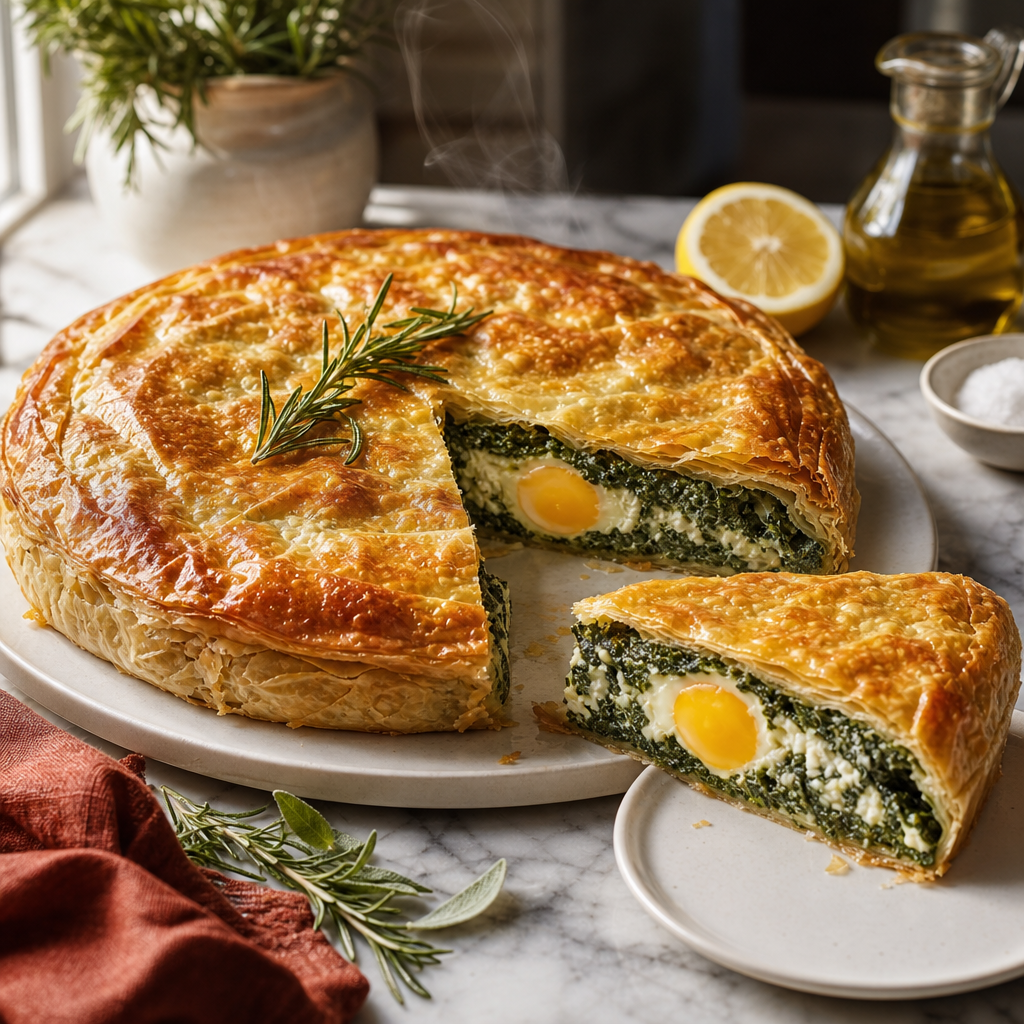
Torta pasqualina is the Ligurian Easter pie associated with spring greens, fresh cheese, eggs, and layered olive-oil pastry. Traditional accounts often mention 33 pastry sheets, a symbolic number tied to Easter practice, but modern Ligurian cooks commonly use fewer thin sheets while keeping the same structure: greens and cheese enclosed in oiled layers with whole eggs baked inside. The filling may be made with bietole, spinach, or artichokes depending on season and household; the chard version is the most stable reference point in English-language and Italian recipe sources. Prescinsêua, the lightly tart Ligurian curd, is the regional cheese; ricotta is the practical substitute outside Liguria.
Method 10 steps · 150 min
Make the olive-oil dough
Mix flour and salt in a bowl. Add 45 ml olive oil and most of the lukewarm water, then knead 8–10 minutes until the dough is smooth, elastic, and no longer ragged at the edges. Add the remaining water only if dry flour remains after 2 minutes of kneading.
Divide and rest
Divide the dough into 6 balls: 3 slightly larger for the bottom, 3 slightly smaller for the top. Coat lightly with oil, cover, and rest at room temperature for 60 minutes.
Cook the greens
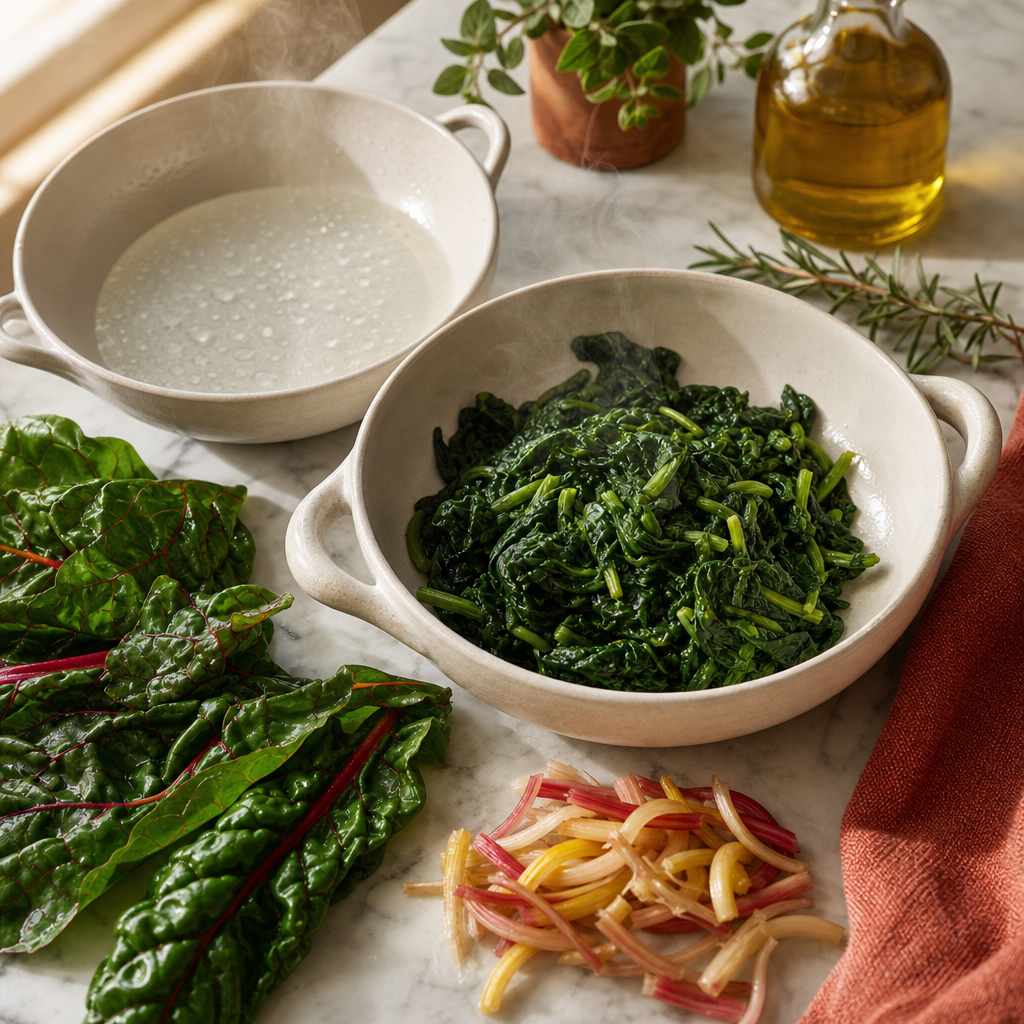
Strip thick chard stems from the leaves; finely slice tender stems and chop the leaves. Cook the chard in salted boiling water for 2–3 minutes until collapsed and bright, then drain and cool. Squeeze by handfuls until no stream of liquid runs out, then chop fine.
Soften the onion
Heat 30 ml olive oil in a wide pan over medium heat. Cook the onion with a pinch of salt for 8–10 minutes until soft and pale gold, not browned. Stir in the chopped chard and cook 3 minutes to drive off surface moisture, then cool.
Mix the filling
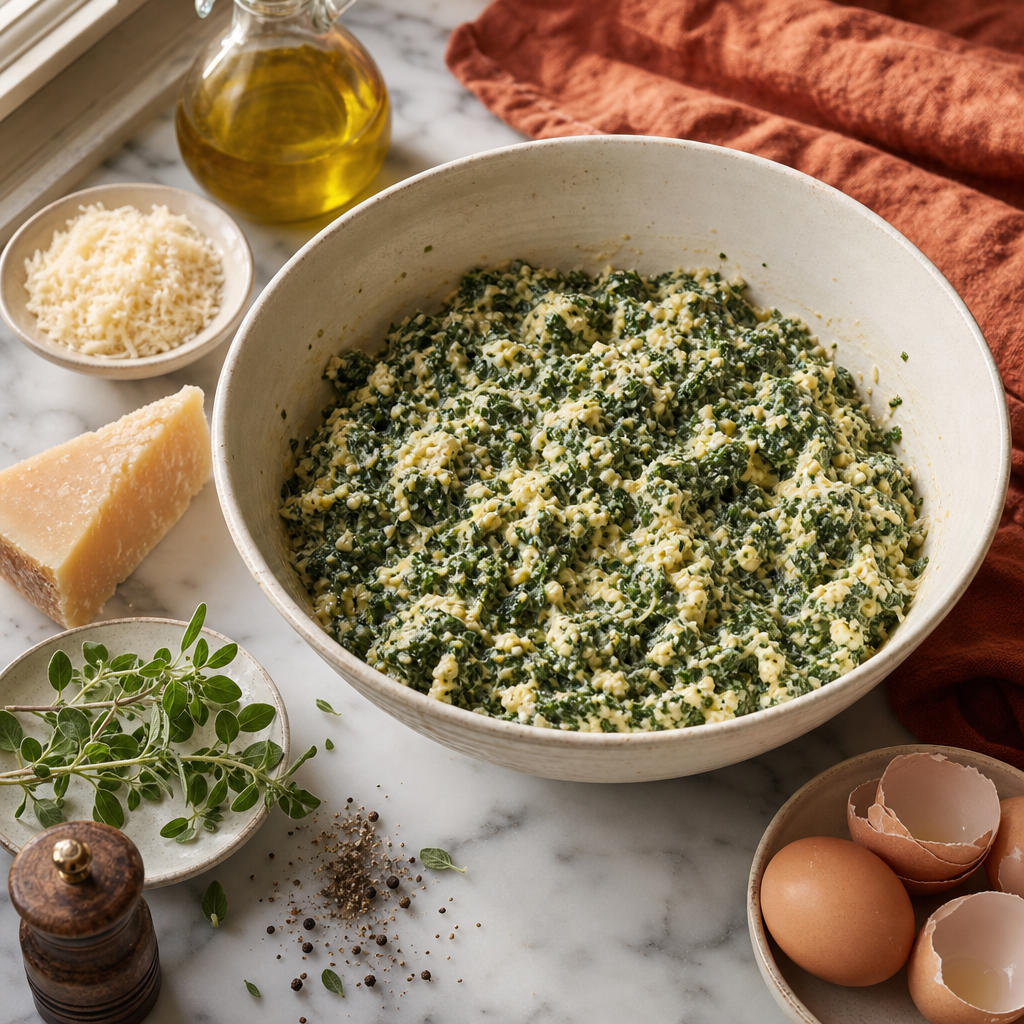
Combine the cooled greens, prescinsêua or drained ricotta, Parmigiano-Reggiano, 3 beaten eggs, marjoram, nutmeg, salt, and pepper. The mixture should hold a mound on a spoon without weeping. Taste before adding the whole eggs later; once the pie is assembled, seasoning is locked in.
Roll the bottom sheets
Oil a 24 cm springform or deep tart pan. Roll one larger dough ball into a very thin circle wide enough to overhang the pan by 5–6 cm; lay it in the pan and brush with oil. Repeat with the next 2 larger balls, stacking and oiling each sheet, then dust the base with breadcrumbs.
Fill and make egg wells
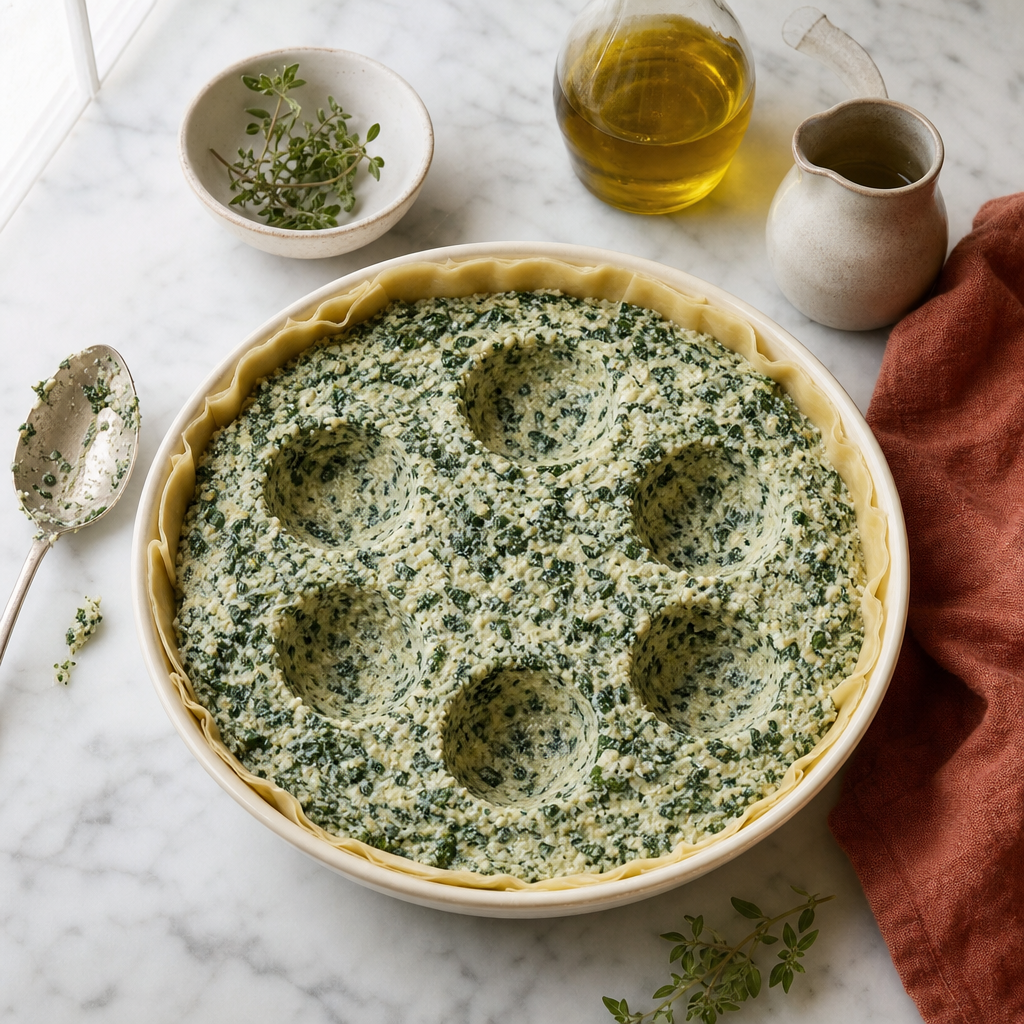
Spread the filling into the pastry shell and level it. Press 6 deep wells into the filling with the back of a spoon, spacing them so each slice can catch egg. Crack one whole egg into each well and season each yolk with a few grains of salt.
Close the torta
Roll the 3 smaller dough balls into thin sheets. Lay them over the filling one at a time, brushing each with oil before adding the next. Trim excess dough to 3 cm, fold the bottom overhang over the top layers, and pinch into a sealed rim.
Vent and bake
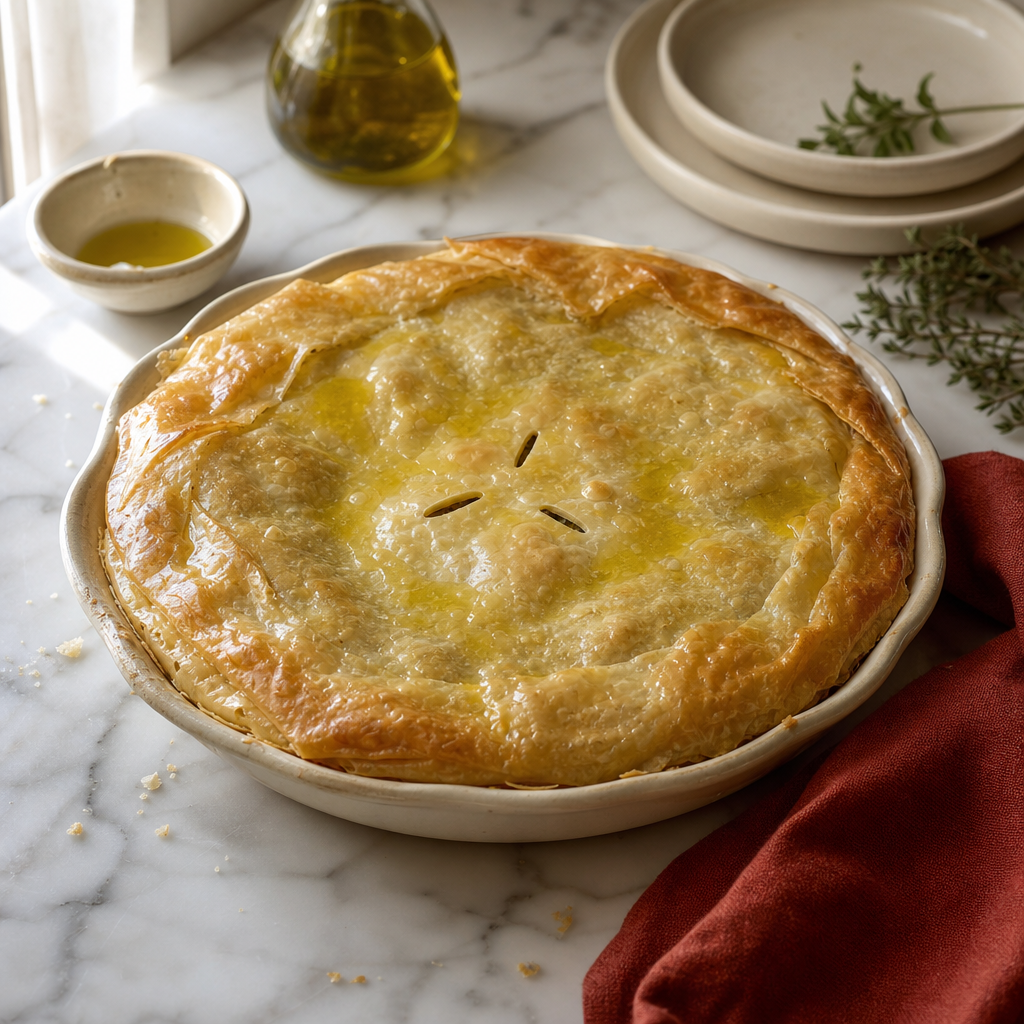
Cut 3 small steam vents in the top without cutting through the egg yolks. Brush the surface with oil and bake at 190°C for 55–65 minutes, until the crust is golden, blistered, and firm at the rim. If the top browns before the center feels set, lower to 175°C for the final 10 minutes.
Rest before slicing
Cool in the pan for 25–30 minutes, then release the ring and slice with a serrated knife. Serve warm or at room temperature.
Common mistakes
- {'mistake': 'Using wet greens', 'fix': 'Squeeze cooked chard until it clumps and no liquid runs between the fingers. A towel twist works better than pressing in a colander.'}
- {'mistake': 'Rolling thick pastry sheets', 'fix': 'Rest the dough longer and roll again. The sheets should be thin and wide, not pie-crust thick.'}
- {'mistake': 'Scrambling the whole eggs into the filling', 'fix': 'Beat only the binder eggs into the greens. The remaining eggs go into spoon-made wells and bake whole.'}
- {'mistake': 'Using ricotta straight from the tub', 'fix': 'Drain ricotta in a sieve or cloth for at least 1 hour if it looks loose. Watery dairy makes a custard leak, not a set filling.'}
- {'mistake': 'Serving straight from the oven', 'fix': 'Rest 25–30 minutes. The pie cuts cleaner and the pastry stays intact.'}
What does not belong
- {'item': 'cream', 'reason': 'Cream does not belong. The dairy body comes from prescinsêua or ricotta plus eggs, not a poured custard.'}
- {'item': 'mozzarella', 'reason': 'Mozzarella does not belong in the Ligurian structure. It melts into strings and makes the filling heavy.'}
- {'item': 'garlic as a dominant flavor', 'reason': 'Garlic-heavy filling moves the pie toward a generic spinach pie. Marjoram, greens, fresh cheese, and egg should lead.'}
- {'item': 'sugar in the pastry', 'reason': 'Sweet pastry does not belong. This is a savory olive-oil crust.'}
- {'item': 'puff pastry as the default', 'reason': 'Puff pastry is a modern shortcut, not the standard. It gives lift and butter richness where the traditional pie wants thin, oiled layers.'}
- {'item': 'pre-shredded hard cheese', 'reason': 'Pre-shredded cheese brings starches and dull aroma. Grate Parmigiano-Reggiano fresh.'}