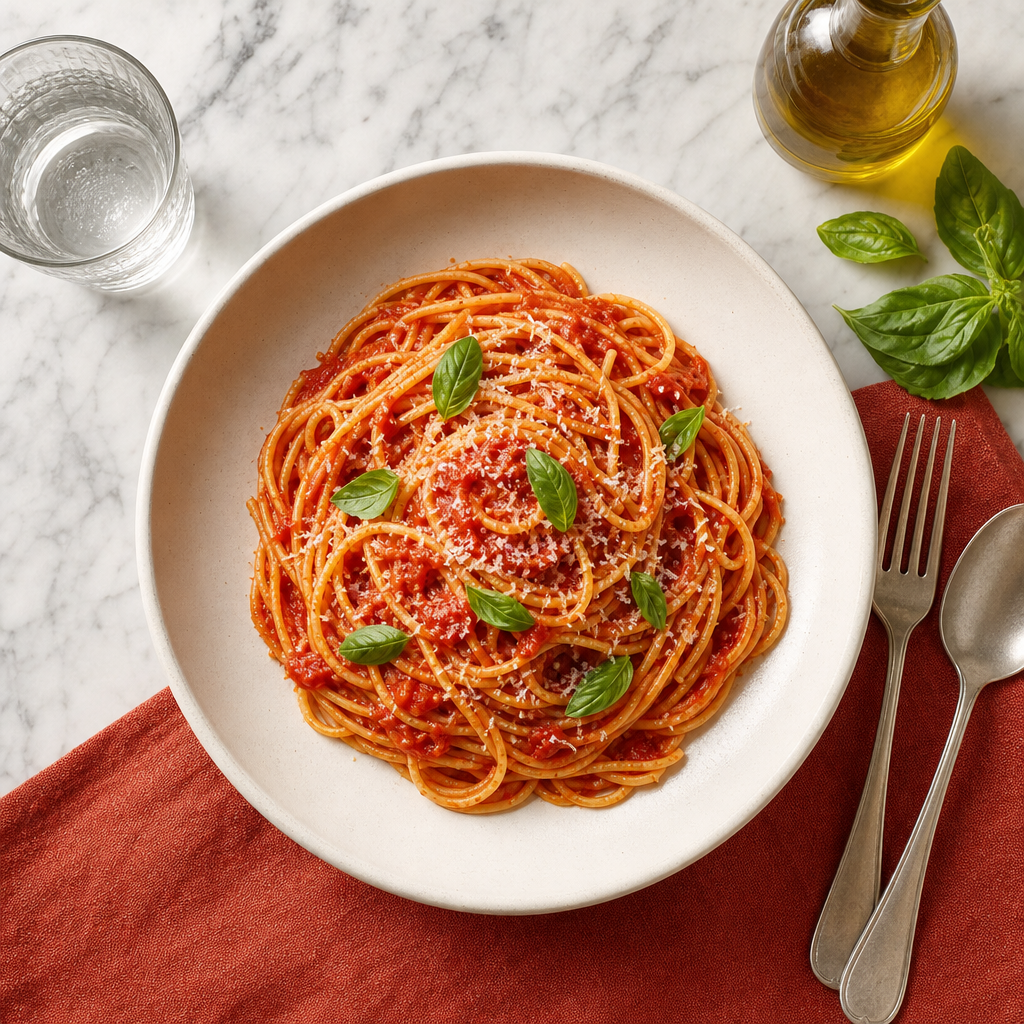
Spaghetti Alla Chitarra
The dish in context
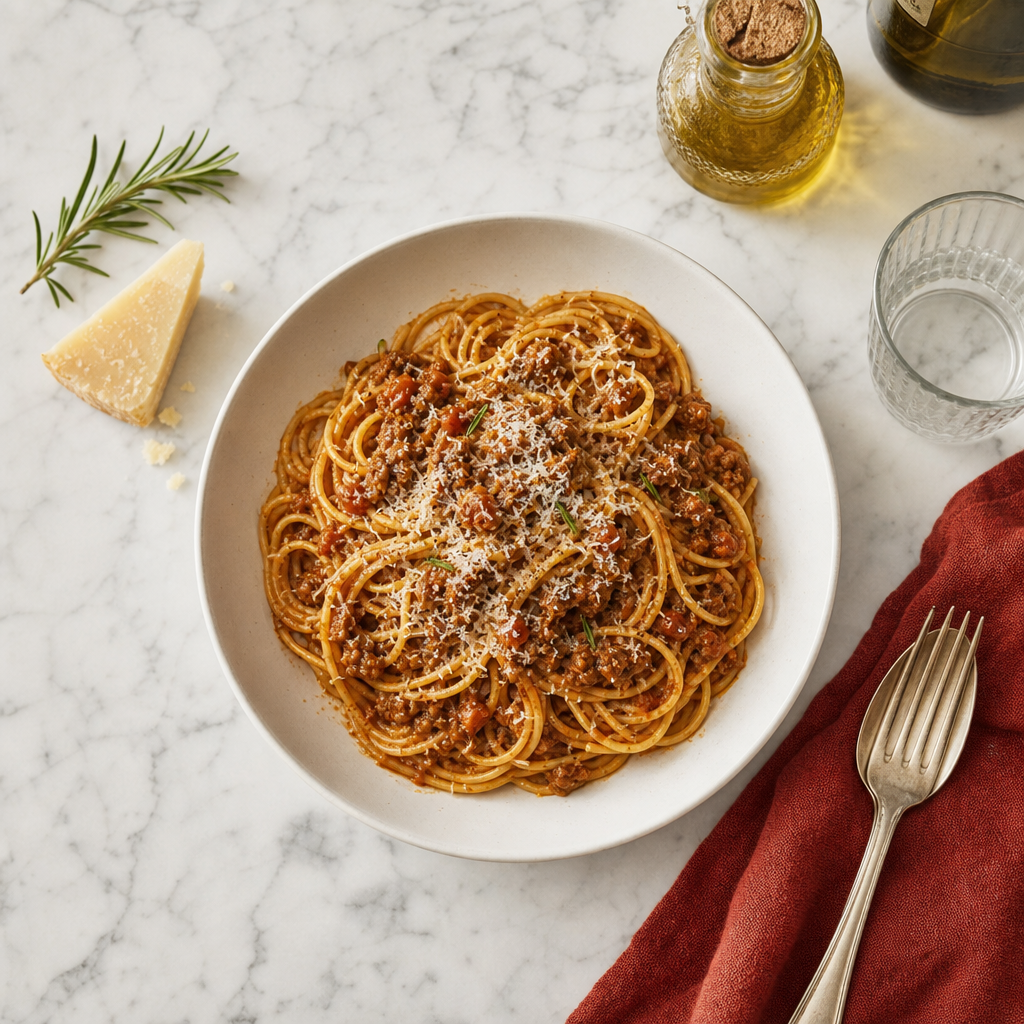
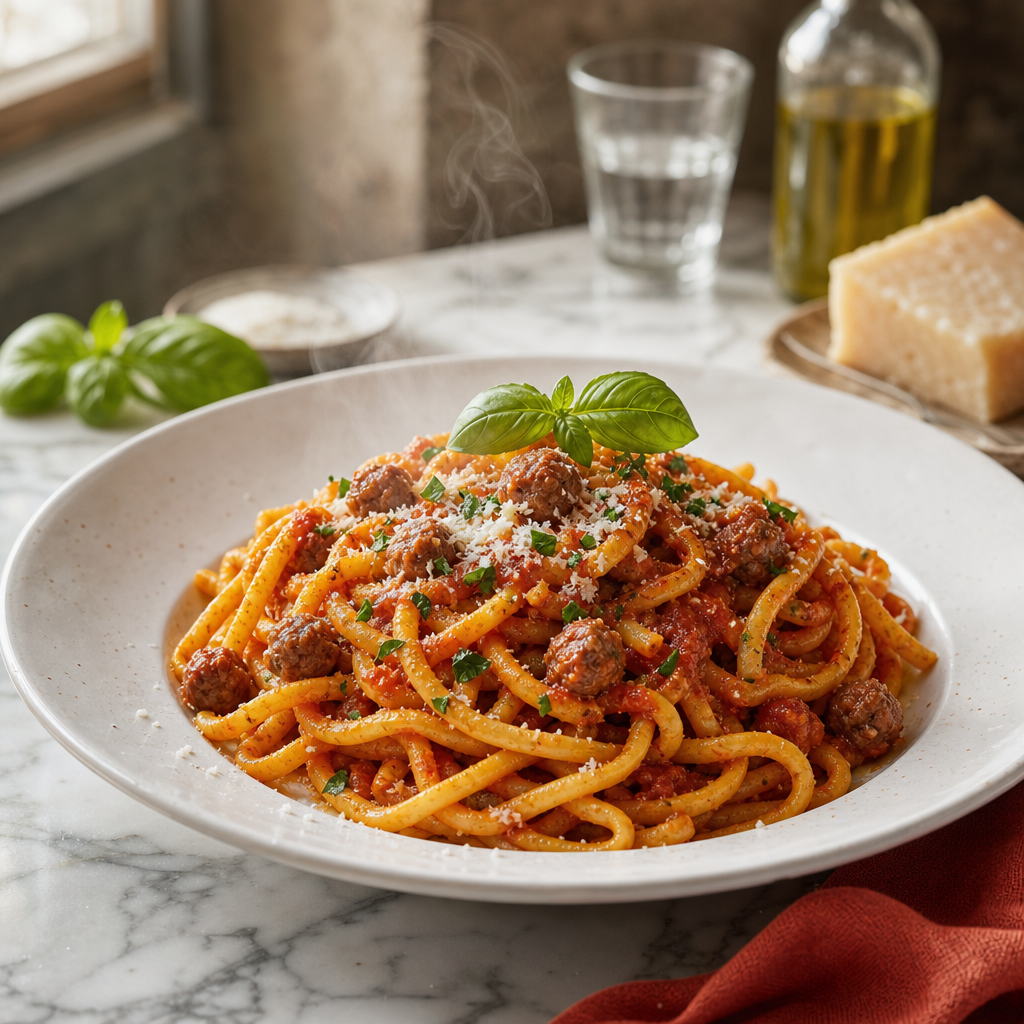
Spaghetti alla chitarra is one of Abruzzo's defining pastas, also called maccheroni alla chitarra in regional usage. The name comes from the chitarra, a rectangular wooden frame strung with parallel wires that cut a sheet of egg dough into square strands. Traditional Abruzzese versions use flour or semolina and eggs, with no salt in the dough, then pair the firm pasta with robust sauces: lamb ragù, mixed-meat ragù, tomato sauce with beef involtini, or the Teramo version with tiny pallottine meatballs. The square cut matters; it gives the noodle bite and a rougher surface that holds sauce better than round spaghetti.
Method 10 steps · 165 min
Mix a stiff egg dough
Whisk the eggs with the saffron, if using. Mound the semola and 00 flour, make a well, add the eggs, and pull flour inward with a fork until the dough becomes shaggy. Knead 10-12 minutes until firm, satin-smooth, and resistant under the heel of the hand.
Rest the dough
Wrap the dough tightly and rest at room temperature for 30 minutes. The dough should feel less springy but still dense when pressed.
Start the tomato sauce
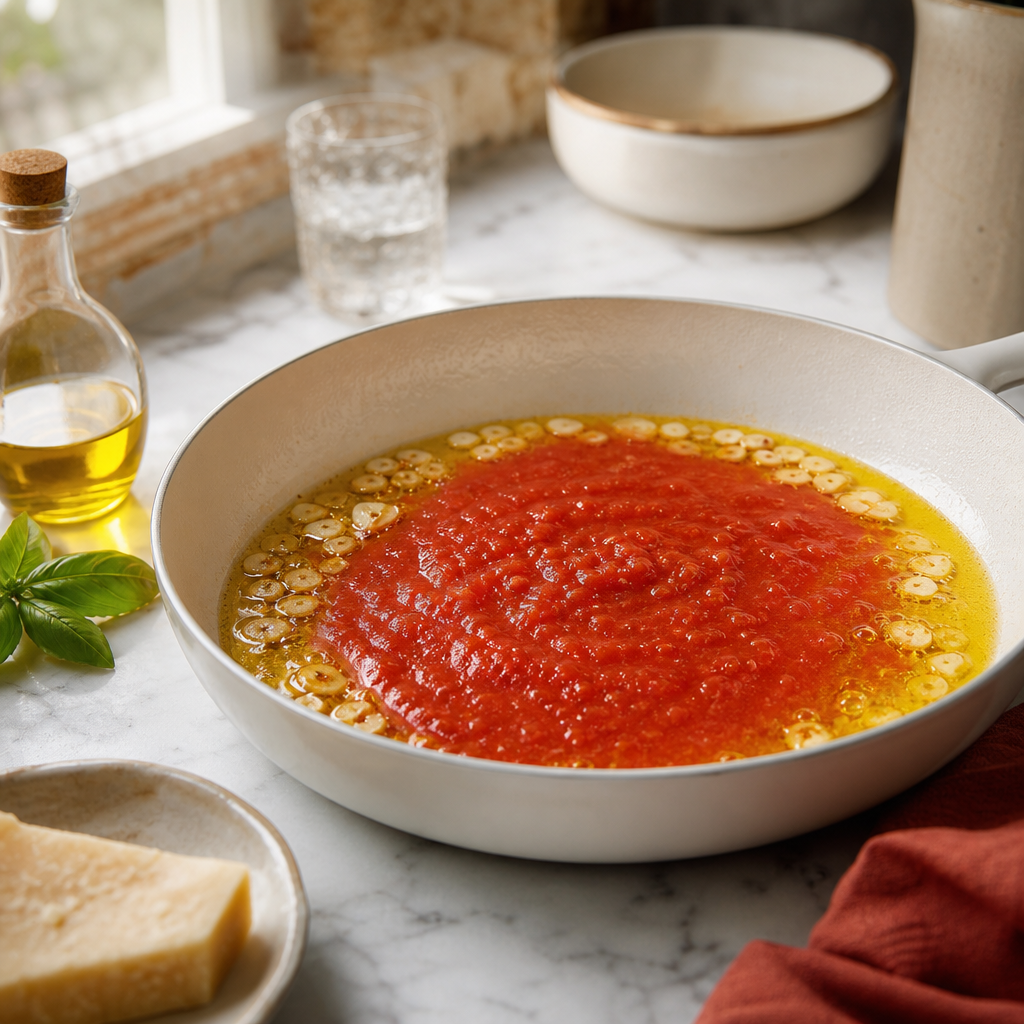
Heat the olive oil over medium-low heat. Add the crushed garlic and cook until pale gold at the edges, then remove it. Add the passata, 4 g salt, and a few grinds of pepper; simmer uncovered until slightly thickened, 25-30 minutes.
Make tiny pallottine
Mix the beef, pork, beaten egg, breadcrumbs, parsley, 20 g pecorino, 4 g salt, and black pepper with fingertips until barely cohesive. Roll into balls about 8-10 mm wide, no larger than a small marble.
Cook the pallottine in the sauce
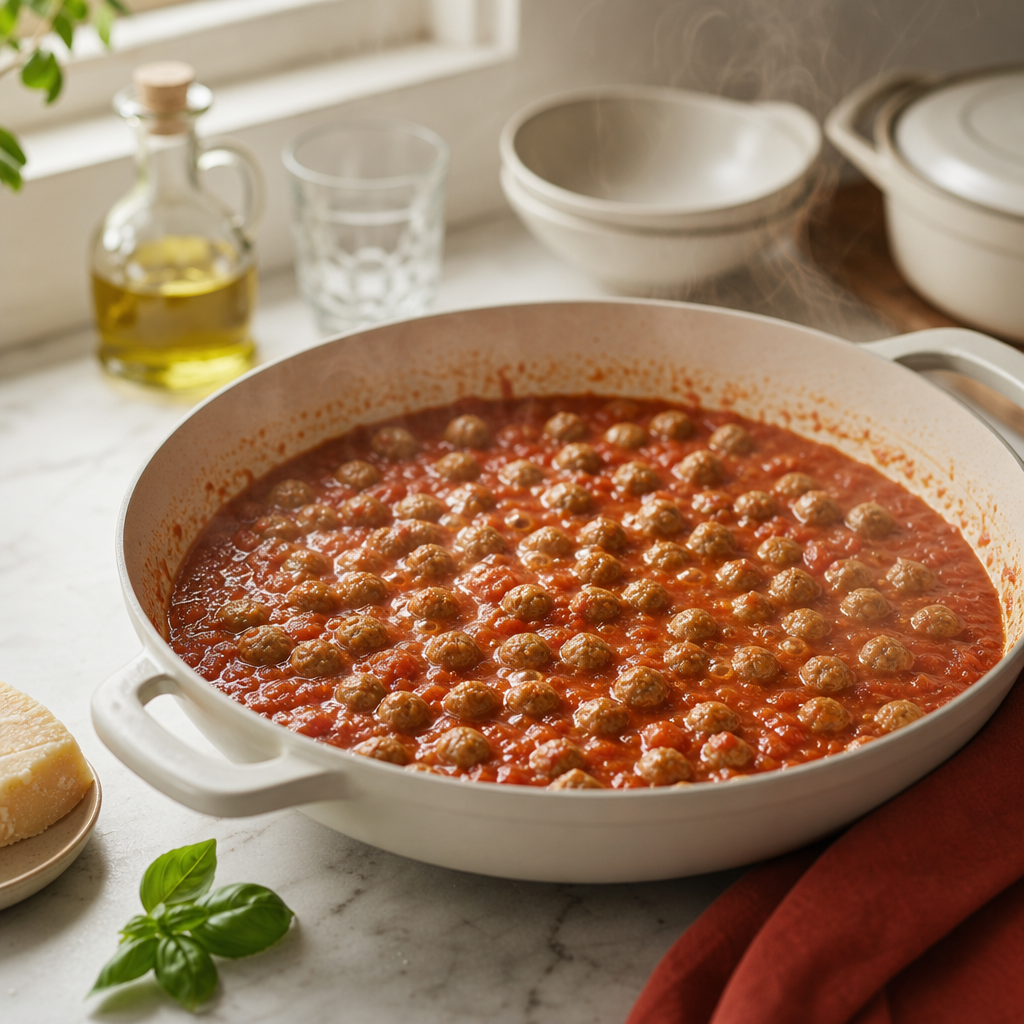
Slide the tiny meatballs into the simmering tomato sauce in one layer. Shake the pan for the first minute instead of stirring, then simmer 15-18 minutes until cooked through and set.
Roll the pasta sheets
Divide the dough into 4 pieces. Roll one piece at a time to about 2 mm thick, dusting with semola as needed; keep the remaining dough covered. The sheet should be dry to the touch but still flexible.
Cut on the chitarra
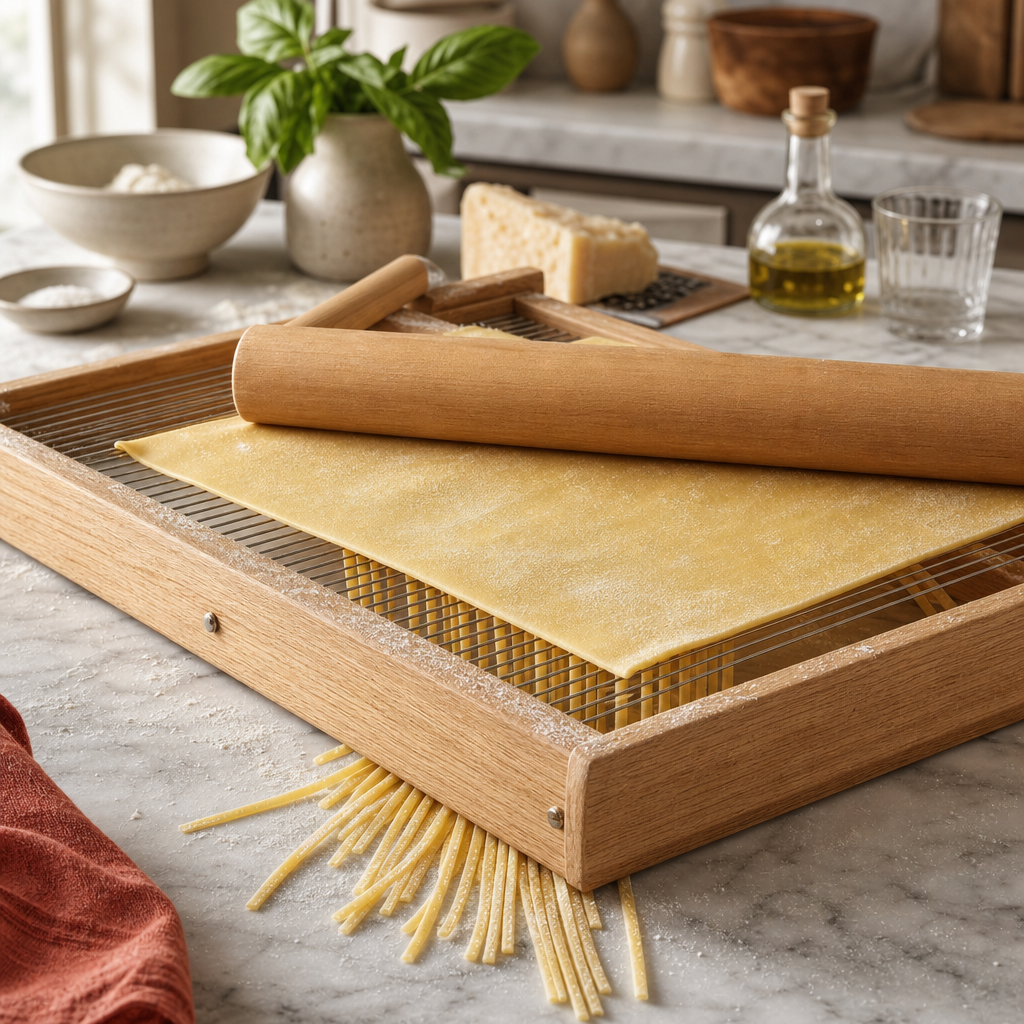
Lay one sheet over the chitarra wires and press firmly with a rolling pin until the strands fall through. Strum the wires with fingers to release any hanging pasta, then dust the strands lightly with semola and lay them in loose nests.
Boil in heavily salted water
Bring 4 L water to a hard boil and salt it with 40 g coarse salt. Drop in the pasta, stir once, and cook 2-4 minutes depending on thickness, until the center keeps a small firm bite.
Finish in the sauce
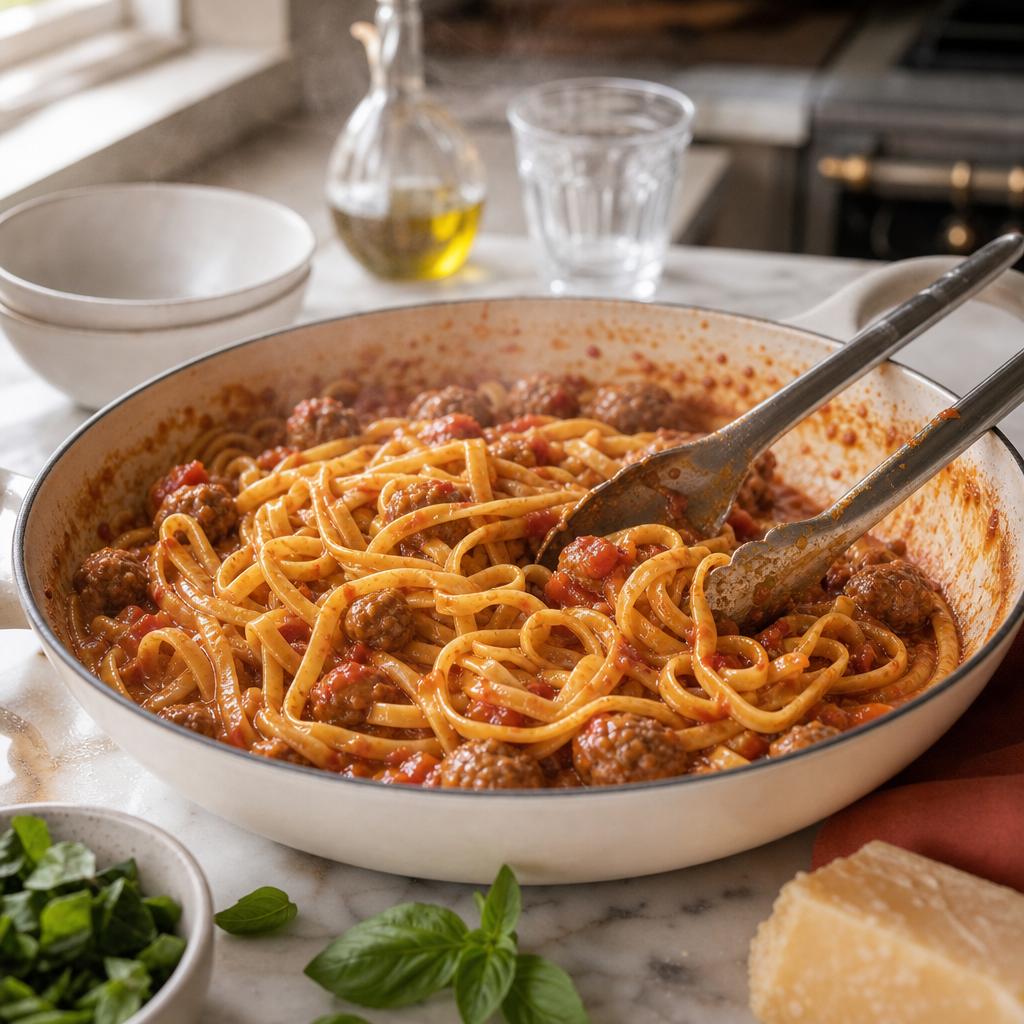
Transfer the pasta directly into the sauce with tongs, carrying some pasta water with it. Toss over medium heat for 60-90 seconds, adding spoonfuls of pasta water until the sauce coats the strands in a glossy film. Fold in the remaining pecorino off heat.
Serve immediately
Plate in low warm bowls with the pallottine distributed through the strands, not piled separately. Finish with a small amount of pecorino if the sauce needs salt and sharpness.
Common mistakes
- {'mistake': 'Using dried round spaghetti and calling it chitarra.', 'fix': 'Use a chitarra, a square-spaghetti cutter, or cut the sheet into square-edged strands by hand. Round extruded spaghetti is a different pasta.'}
- {'mistake': 'Rolling the sheet too thin.', 'fix': 'Stop around 2 mm. The pasta should have bite and visible square edges after cooking.'}
- {'mistake': 'Making large meatballs.', 'fix': 'Roll pallottine 8-10 mm wide. They should season the pasta, not sit beside it as a separate course.'}
- {'mistake': 'Overhydrating the dough.', 'fix': 'Keep the dough stiff. If it feels soft and tacky, knead in semola a teaspoon at a time before resting.'}
- {'mistake': 'Rinsing the pasta.', 'fix': 'Do not rinse. The starch on the surface is what lets tomato and pecorino cling to the square strands.'}
What does not belong
- {'item': 'Cream', 'reason': "Cream does not belong in Abruzzese tomato sauce for chitarra. It dulls the tomato and covers the pasta's wheat-and-egg character."}
- {'item': 'Large Italian-American meatballs', 'reason': 'They create a different dish. Chitarra con le pallottine uses tiny meatballs integrated into the sauce.'}
- {'item': 'Sugar in the sauce', 'reason': 'Sugar flattens tomato acidity. Use good passata and simmer it properly instead.'}
- {'item': 'Chicken', 'reason': 'Chicken has no structural role here and reads as a modern protein swap rather than Abruzzese pasta tradition.'}
- {'item': 'Broken spaghetti', 'reason': 'Breaking long pasta is wrong for the eating mechanics of this dish. Roll the strands into the pot.'}