Chicken Saltimbocca
The dish in context
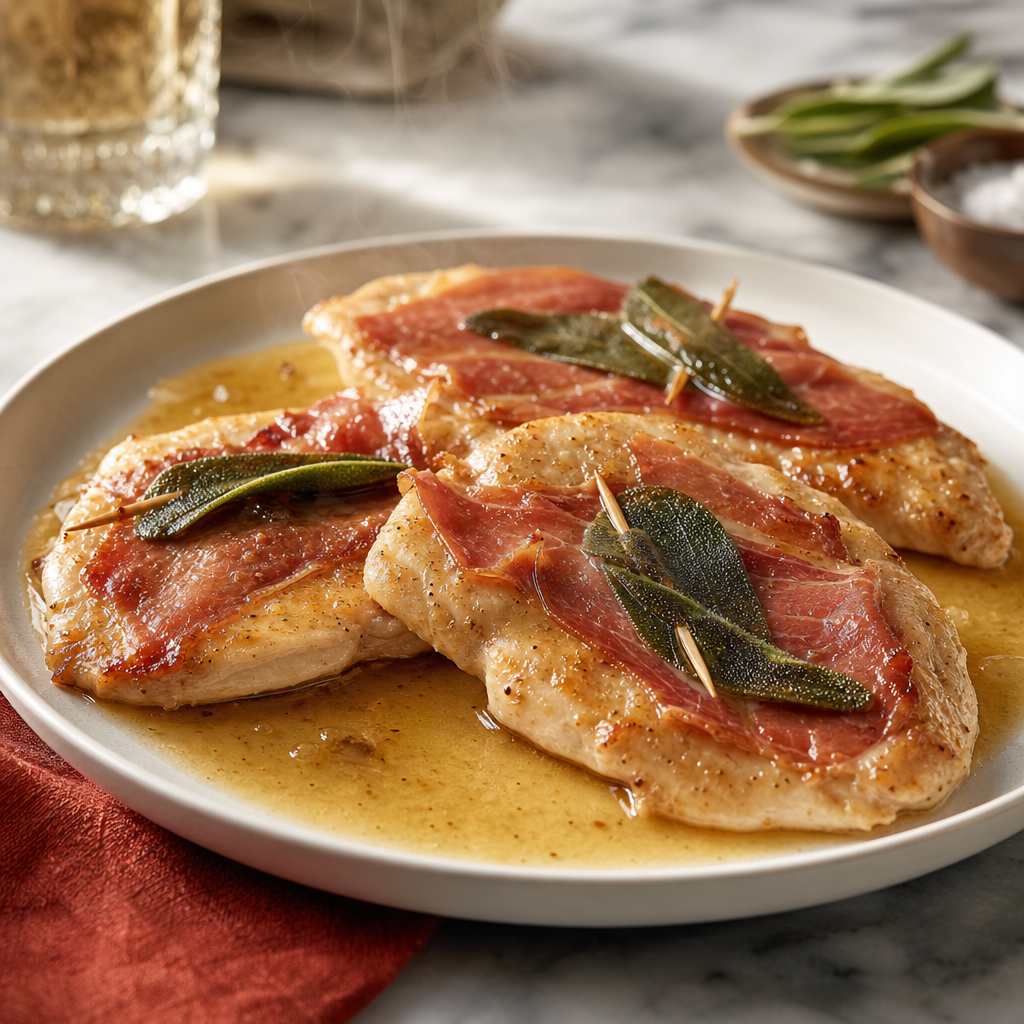
Saltimbocca alla romana is a Lazio standard built on veal, prosciutto crudo, sage, and a short pan sauce. Chicken is a modern substitution, common in Italian American kitchens and restaurant adaptations, but the grammar stays Roman: thin cutlet, cured pork, sage, wine, no heavy sauce. The name means "jumps in the mouth," a Roman-dialect phrase that points to the sharp contrast of salty ham, aromatic sage, and browned meat. This version treats chicken as the protein swap, not as permission to add cheese, cream, or a piccata-style lemon-caper sauce.
Method 8 steps · 35 min
Pound the chicken thin
Slice each chicken breast horizontally into cutlets if needed. Pound between parchment or plastic to 6 mm thick, aiming for even thickness from center to edge. Season the chicken side lightly with salt and pepper; use less salt than instinct suggests because the prosciutto will season the top.
Pin sage and prosciutto
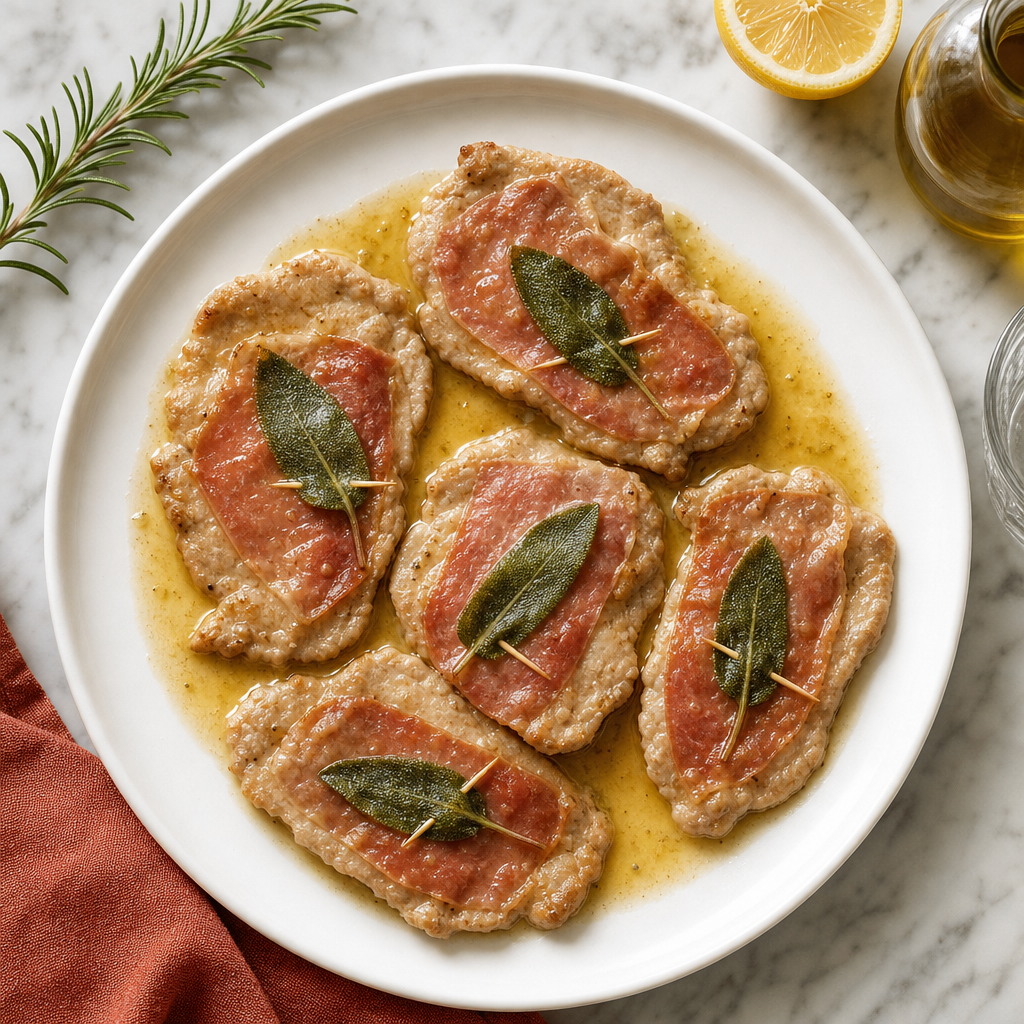
Lay 1 or 2 sage leaves on each cutlet. Cover with a thin slice of prosciutto, trimming or folding so it roughly matches the chicken. Secure through the sage, prosciutto, and chicken with a toothpick, then press flat with the palm of the hand.
Dust, do not bread
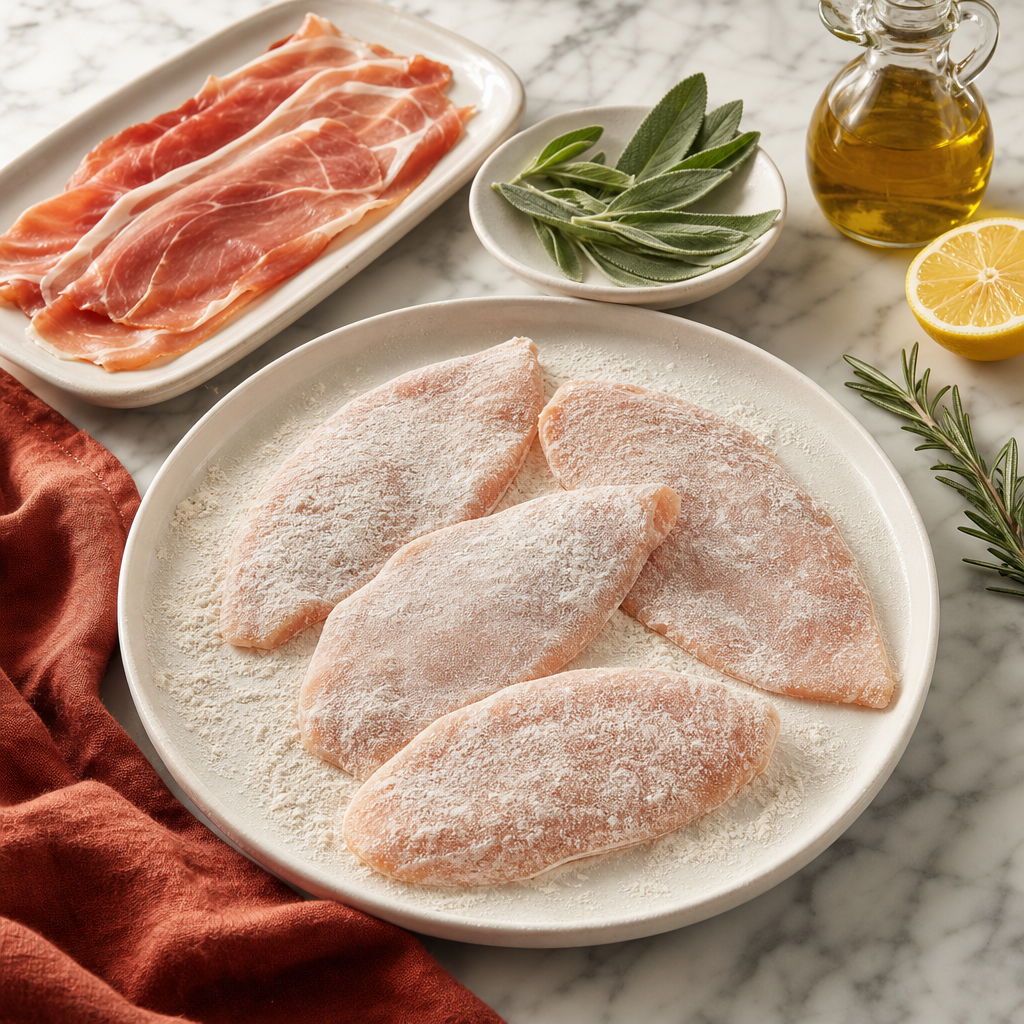
Spread the flour in a shallow plate. Dust each cutlet on both sides and shake hard so only a thin veil remains. The meat should look matte, not white.
Sear the chicken side first
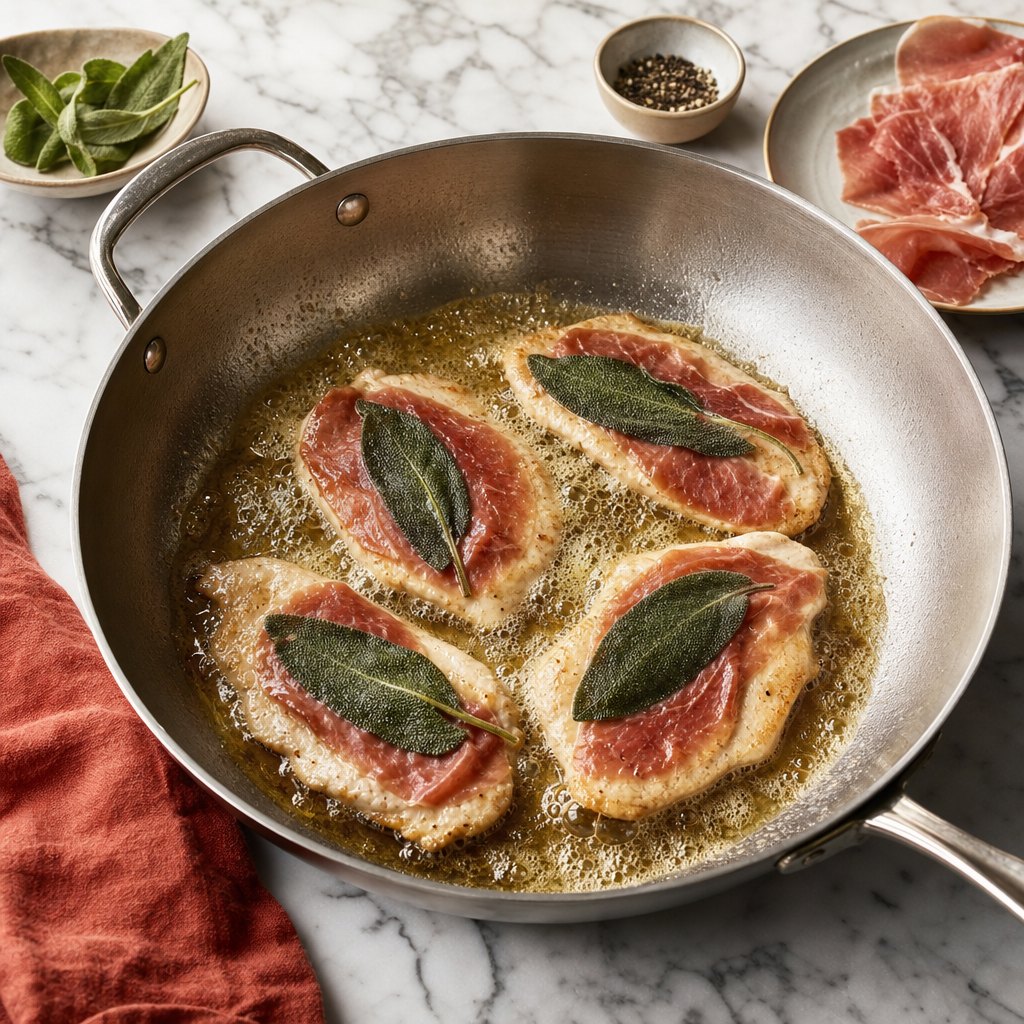
Heat the olive oil and 15 g butter in a large skillet over medium-high heat until the butter foams and the foam begins to subside. Add the cutlets chicken-side down, prosciutto-side up, without crowding. Cook until the underside is golden and the edges turn opaque, 2 to 3 minutes.
Set the prosciutto
Turn the cutlets and cook prosciutto-side down for 45 to 75 seconds, until the ham tightens and darkens at the edges. Transfer to a warm plate. Repeat with remaining cutlets, adding a small knob of butter only if the pan looks dry.
Deglaze the pan
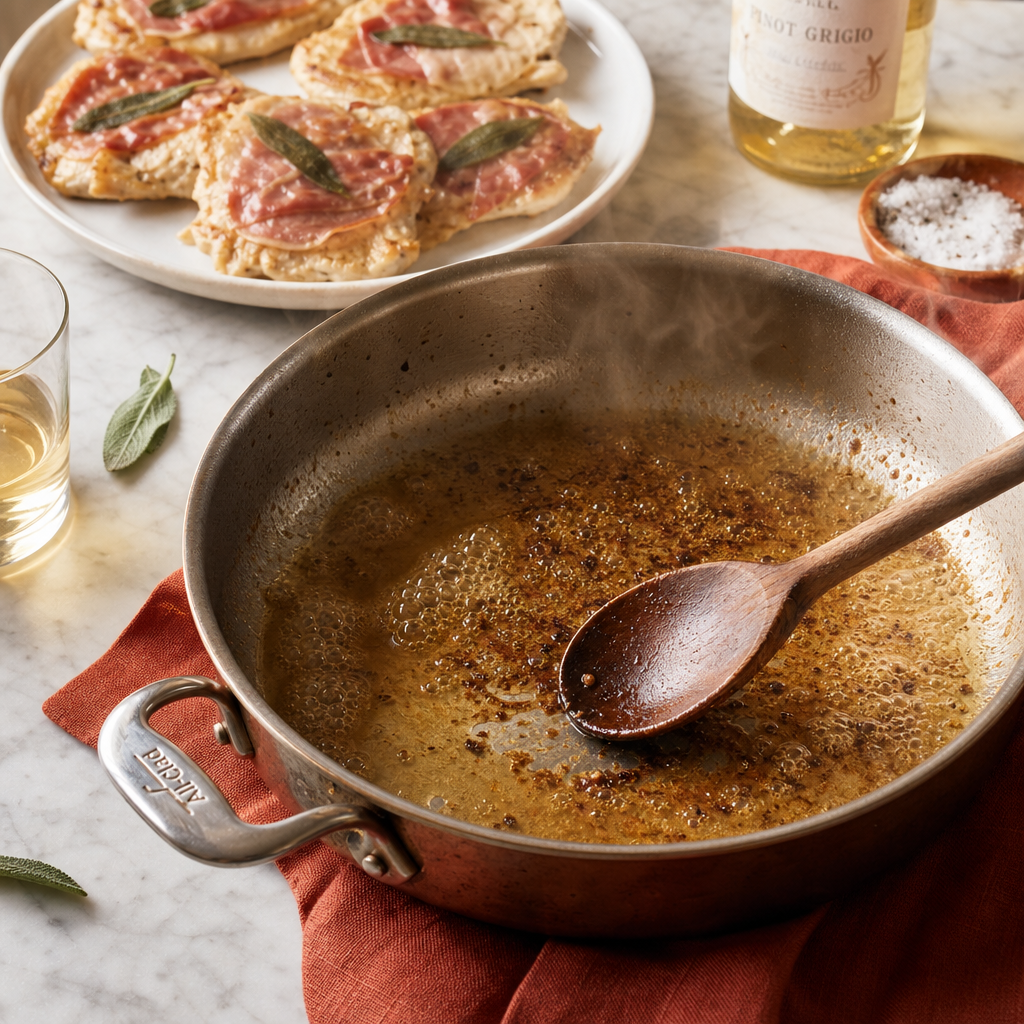
Pour off excess fat if the skillet is greasy, but leave the browned residue. Add the white wine and scrape with a wooden spoon until the pan is clean. Boil until the wine is reduced by about half and smells rounded rather than sharp, 1 to 2 minutes.
Build the sauce
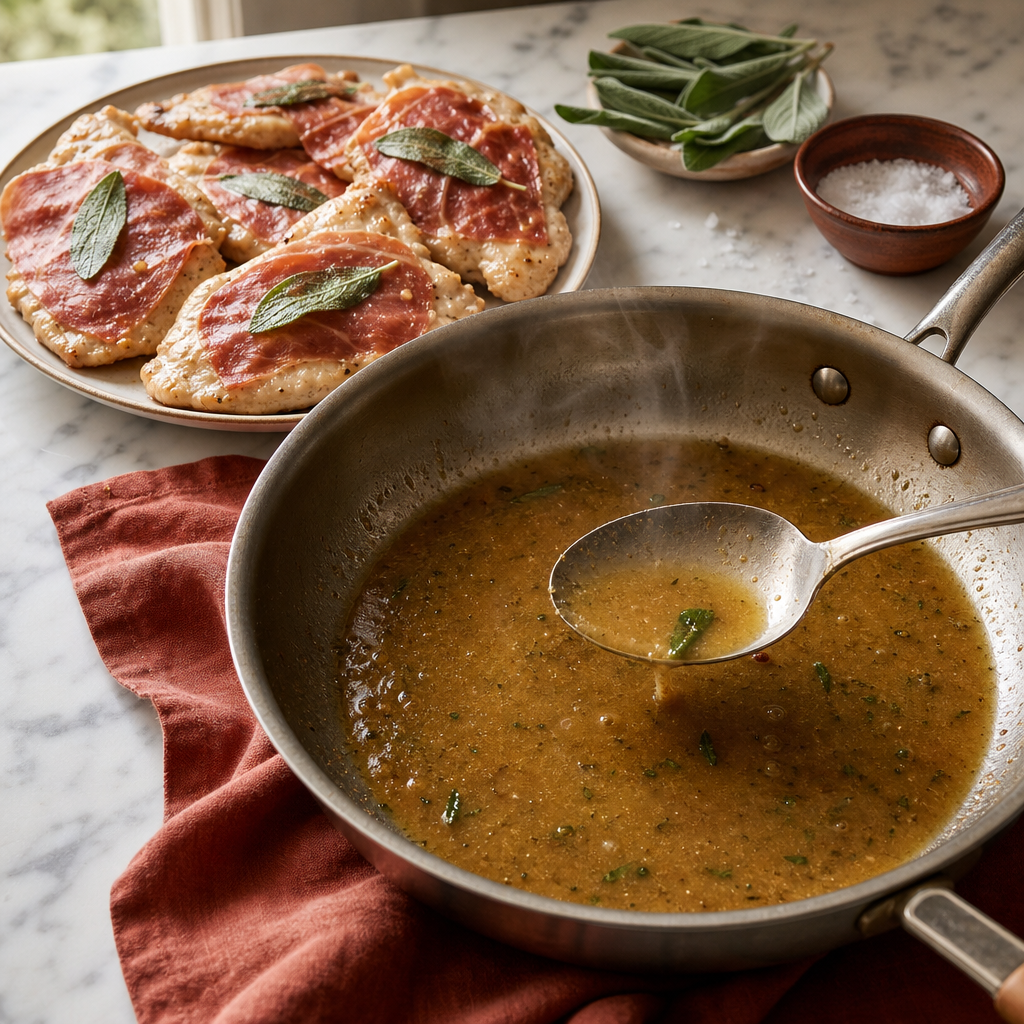
Add the chicken stock and simmer until the sauce lightly coats the back of a spoon, 2 to 3 minutes. Lower the heat and whisk in the remaining 30 g butter in small pieces. Taste before adding salt; the prosciutto may have done the work already.
Return and serve
Return the cutlets to the skillet prosciutto-side up for 30 to 45 seconds, spooning sauce around them rather than over the sage leaves. Remove toothpicks. Serve with the sauce underneath or around the chicken, with lemon wedges only if a sharper finish is wanted.
Common mistakes
- Using thick chicken breasts. The outside overcooks before the center is safe.
- Adding too much salt before the prosciutto is considered. The sauce reduces and concentrates salt further.
- Breading the cutlets. Saltimbocca is dusted, not schnitzel-coated.
- Cooking the prosciutto side for several minutes. It should tighten and lightly crisp, not become pork jerky.
- Pouring in cream to rescue the sauce. The correct texture comes from reduction and butter, not dairy bulk.
- Using sweet wine. Marsala appears in some adaptations, but sweet wine pushes the dish away from the clean Roman profile.
What does not belong
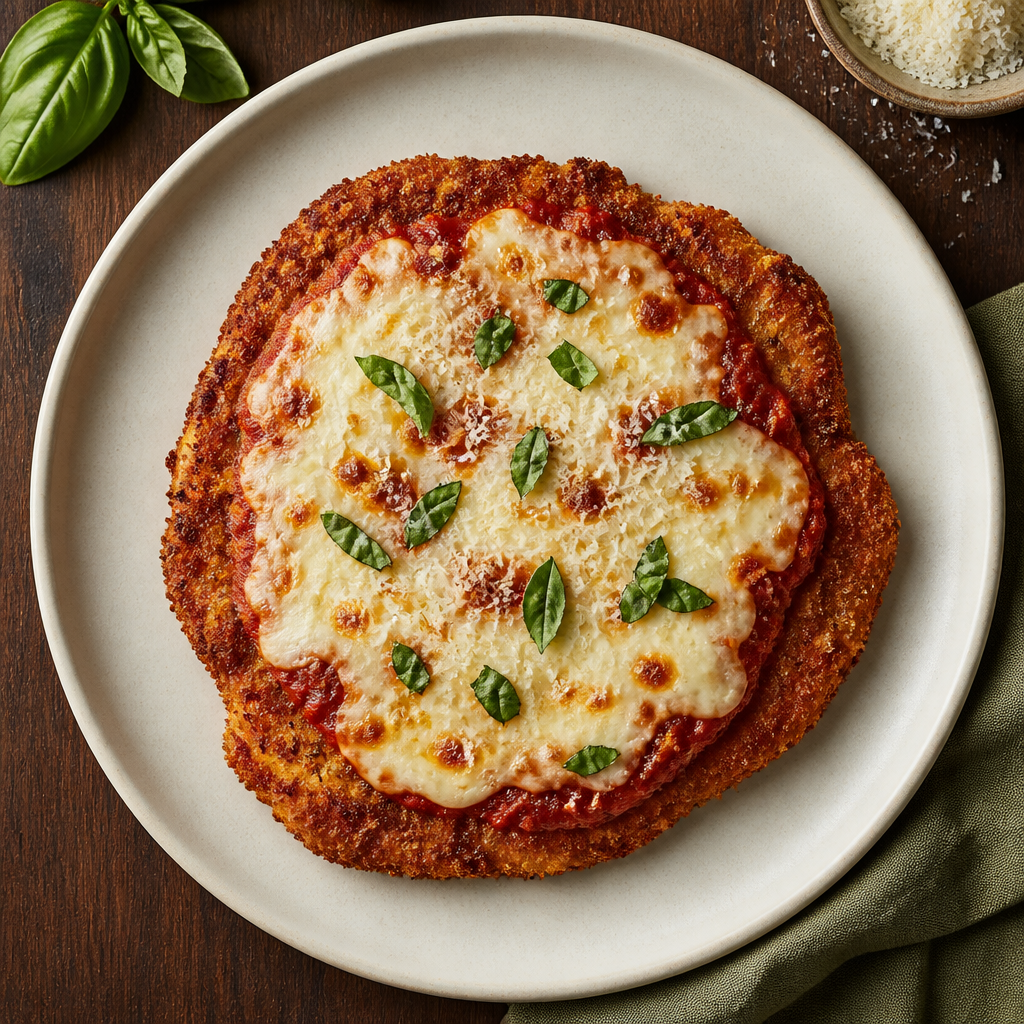
- Mozzarella, fontina, or other melted cheese does not belong in this Lazio-style version. That turns the dish into a chicken cutlet melt.
- Cream does not belong. Saltimbocca sauce is wine, stock or pan juices, and butter.
- Capers do not belong. That is the grammar of piccata, not saltimbocca.
- Garlic does not belong here. It competes with sage and makes the pan sauce read generically Italian-American.
- Bacon does not belong as an equal substitute for prosciutto. Bacon is smoked, fatty, and thick; it changes both texture and salt balance.
- Heavy lemon juice in the pan does not belong. Lemon wedges at the table are acceptable; a lemon-forward sauce is a different dish.