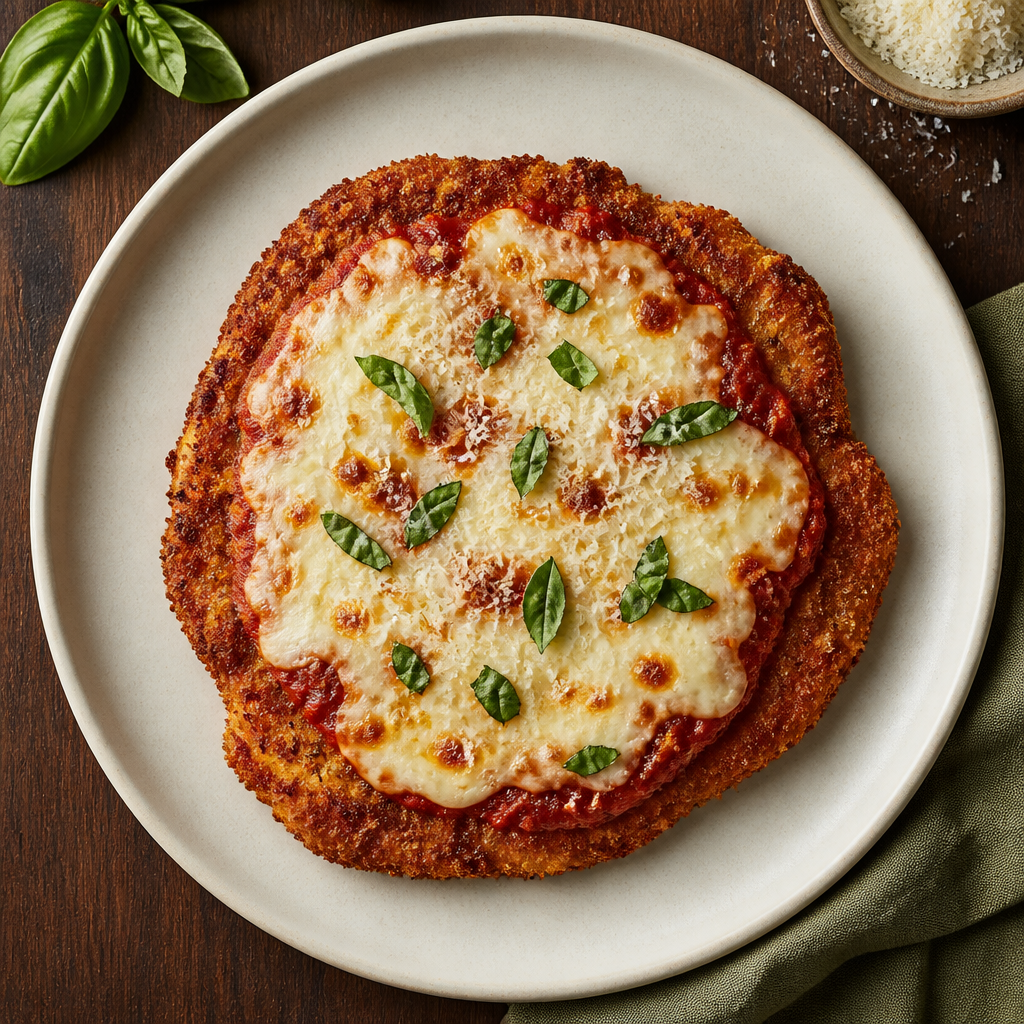
Polpette Pomodoro
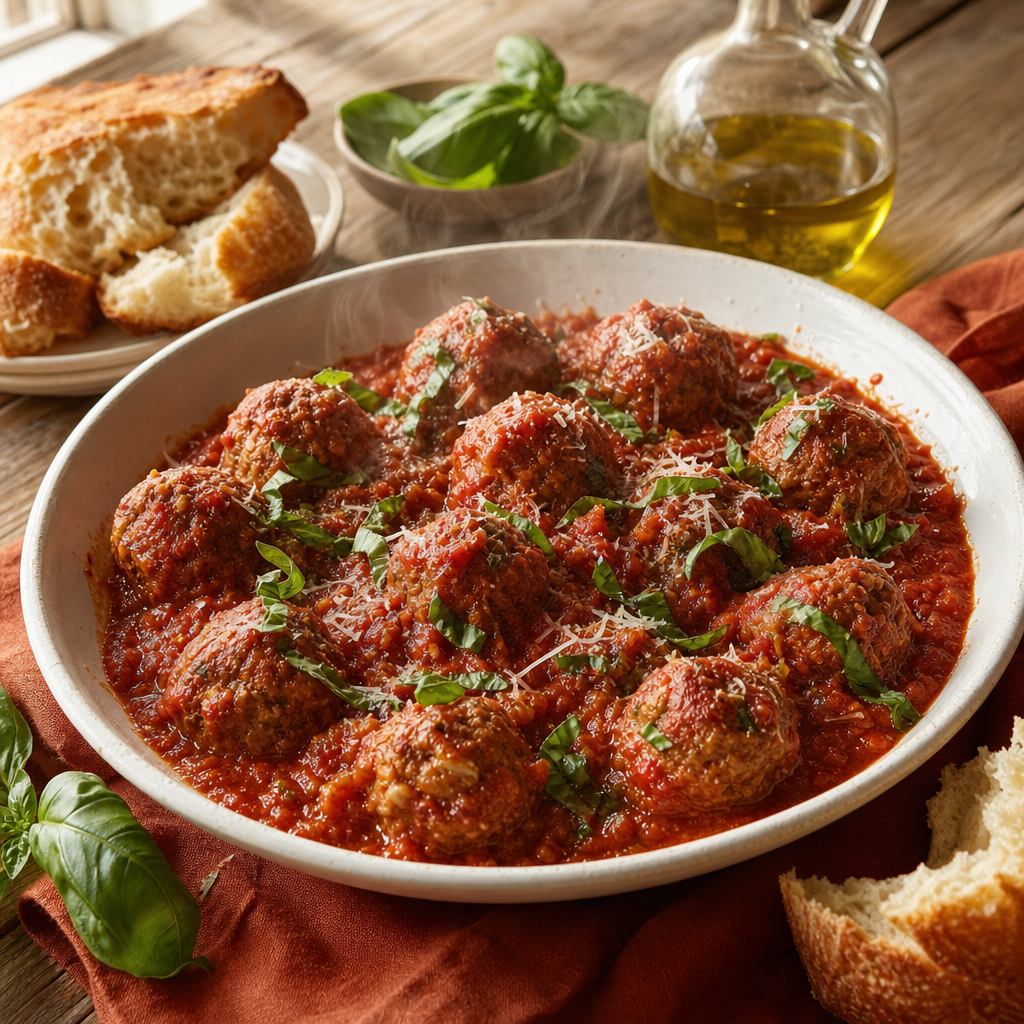
The dish in context
Polpette al pomodoro are part of Italian home cooking rather than restaurant ceremony: meat stretched with bread, egg, cheese, and herbs, then browned and simmered in tomato. Regional and household versions vary on the meat blend, the use of garlic, and whether the meatballs are floured or fried bare. In Italy, polpette are commonly served as a secondo with bread, vegetables, or potatoes; the automatic pairing with spaghetti is mostly Italian-American. The sauce is still valuable: after the meatballs are lifted out, it can dress pasta as a separate course.
Method 8 steps · 60 min
Make the panade
Soak the torn stale bread in the milk for 10 minutes. Mash it with a fork until no dry core remains; squeeze lightly only if it is dripping wet.
Mix the meatballs
Combine beef, pork, soaked bread, egg, Parmigiano-Reggiano, parsley, garlic if using, 8 g salt, and pepper. Mix with your fingers until the mixture holds together but still looks loose and slightly sticky; stop before it becomes pasty.
Shape and chill briefly
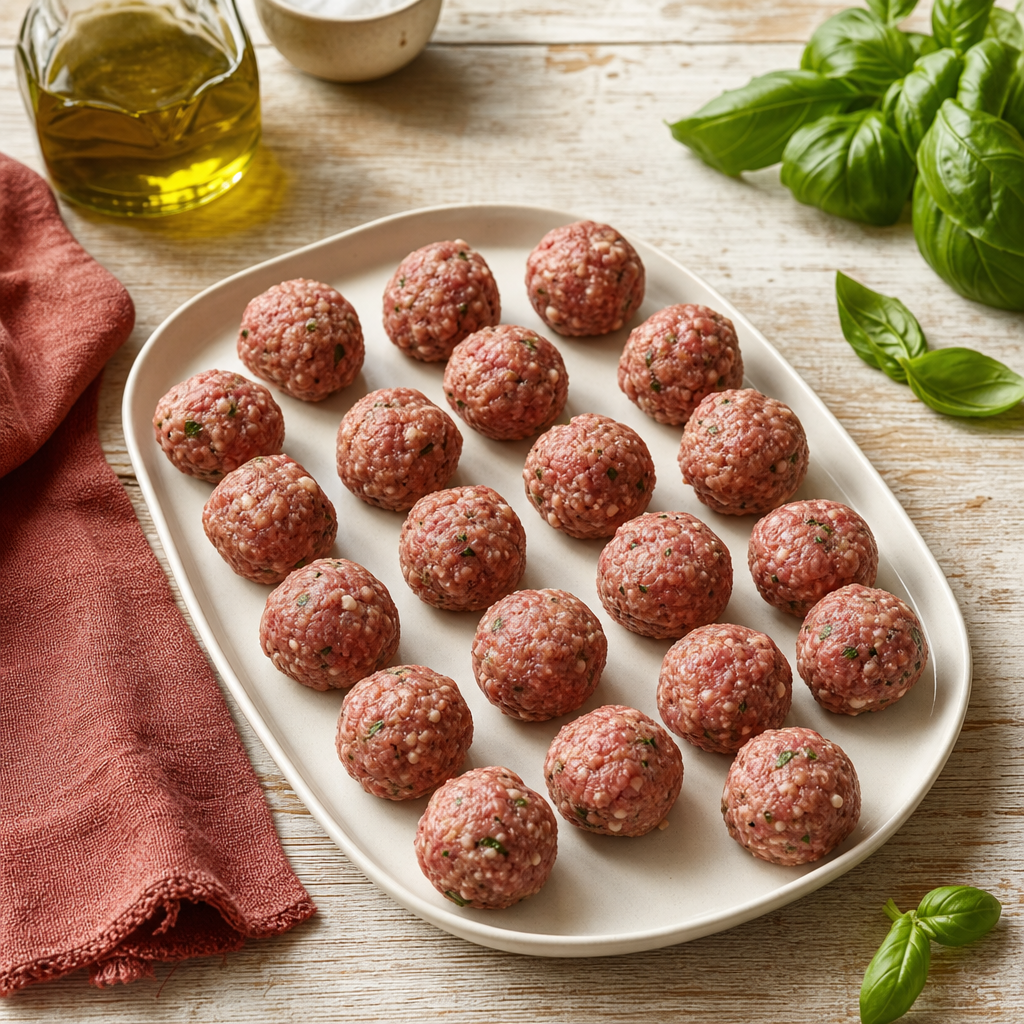
Form 20 to 24 meatballs, each 35-40 g and about the size of a walnut. Set them on a tray and refrigerate for 15 minutes while starting the sauce base.
Start the tomato base
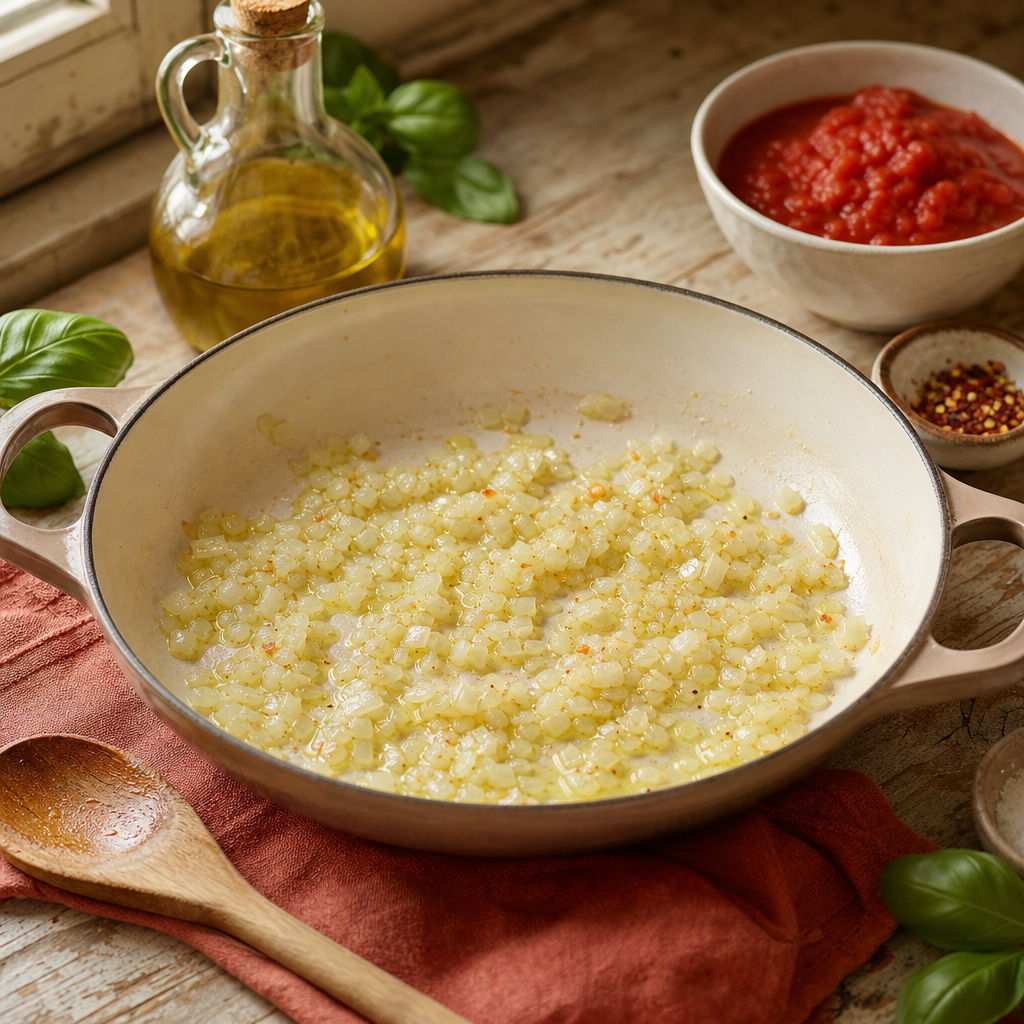
Heat 2 tablespoons of the olive oil in a wide pan over medium-low heat. Add onion and 3 g salt; cook 8-10 minutes until translucent and sweet-smelling, with no browning. Add the crushed garlic clove for the final minute, then remove it if it starts to color.
Add tomato
Add the passata and rinse the container with 120 ml water into the pan. Bring to a low simmer and cook 10 minutes, stirring occasionally, until the raw tomato smell softens.
Brown the meatballs
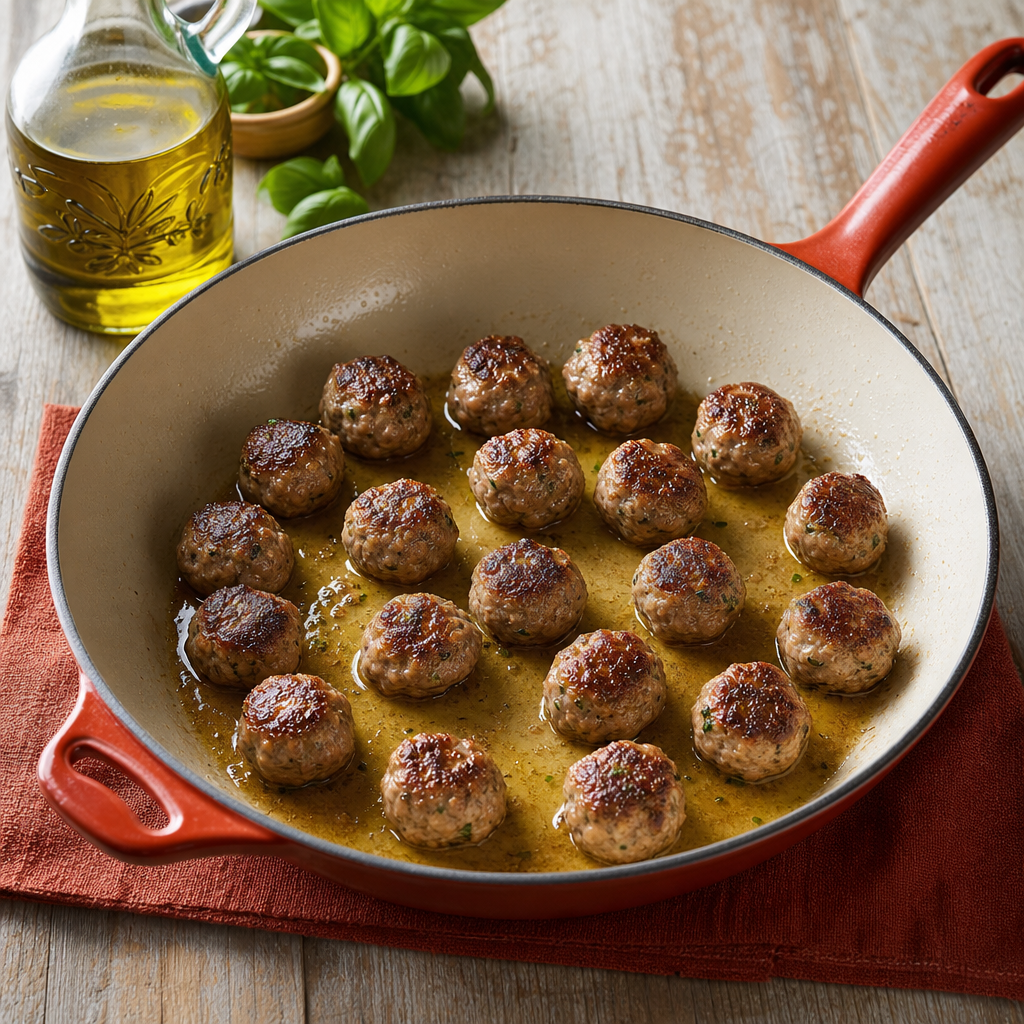
Heat the remaining olive oil in a separate wide skillet over medium heat. Brown the meatballs in batches, turning gently, 2-3 minutes per side until patched with a brown crust; they do not need to cook through. Move them to a plate as they finish.
Simmer in the sauce
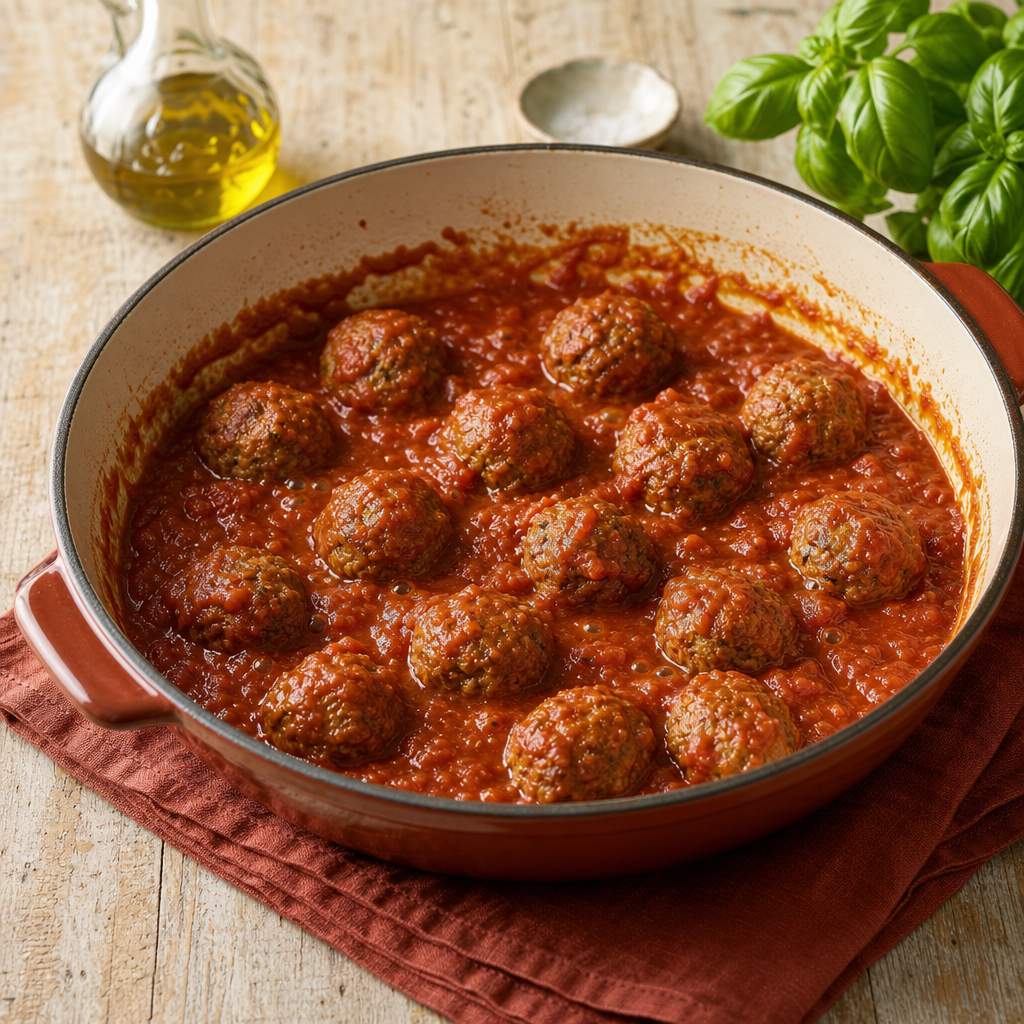
Nestle the browned meatballs into the tomato sauce in one layer. Cover partially and simmer gently for 18-22 minutes, turning once, until the centers reach 70°C or no longer show raw pink when split.
Finish the sauce
Uncover and simmer 3-5 minutes if the sauce is loose. Tear in the basil off heat and rest the pan for 5 minutes before serving.
Common mistakes
- {'mistake': 'Using very lean meat', 'fix': 'Use beef with 15-20% fat and pork that is not extra-lean. Lean meatballs become firm before the tomato sauce has time to reduce.'}
- {'mistake': 'Skipping the bread soak', 'fix': 'Soak the bread until fully soft. Dry breadcrumbs pulled straight into meat steal moisture during cooking.'}
- {'mistake': 'Boiling the sauce hard after adding the meatballs', 'fix': 'Keep the sauce at a low simmer. Violent bubbling breaks the meatballs and emulsifies excess fat into the tomato.'}
- {'mistake': 'Packing the meatballs tightly', 'fix': 'Shape with light pressure. A smooth golf-ball surface usually means the inside will be dense.'}
- {'mistake': 'Treating this as spaghetti and meatballs by default', 'fix': 'Serve as a secondo with bread or vegetables. If pasta is wanted, use some sauce separately and serve the meatballs after.'}
What does not belong
- {'item': 'Ketchup', 'reason': 'Ketchup does not belong in pomodoro sauce. It adds sugar, vinegar, and spice where the dish needs tomato, salt, olive oil, and time.'}
- {'item': 'Heavy cream', 'reason': 'Cream does not belong in polpette al pomodoro. It dulls the tomato and turns the sauce into a different preparation.'}
- {'item': 'Dried oregano as the dominant herb', 'reason': 'Oregano is not the main grammar here. A little can appear in some households, but basil and parsley are the cleaner default for this version.'}
- {'item': 'Sugar as a standard correction', 'reason': 'Sugar does not fix poor tomatoes; it makes poor tomatoes sweet. Use better canned tomatoes and cook off the raw edge.'}
- {'item': 'A mandatory pile of spaghetti', 'reason': 'Spaghetti and meatballs is a legitimate Italian-American dish, not the default Italian serving for polpette al pomodoro.'}