Minestrone
The dish in context
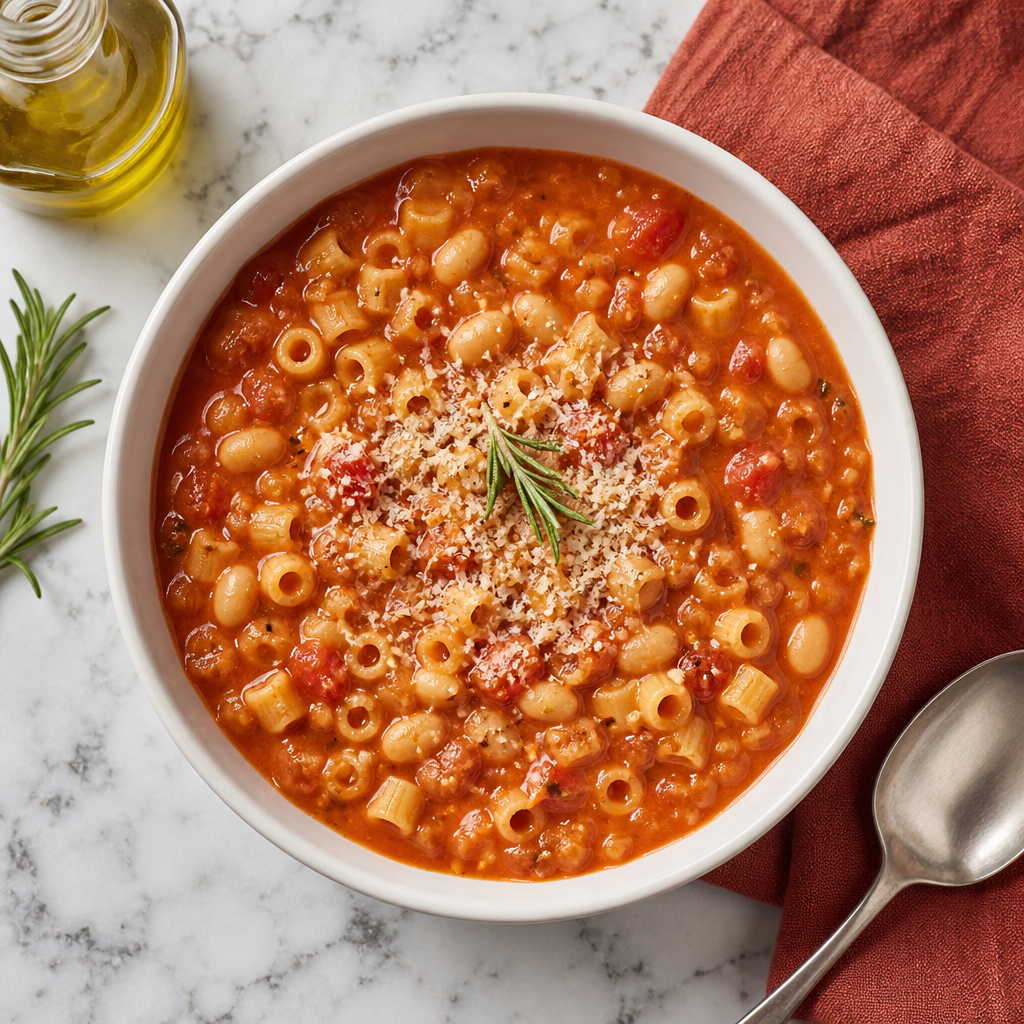
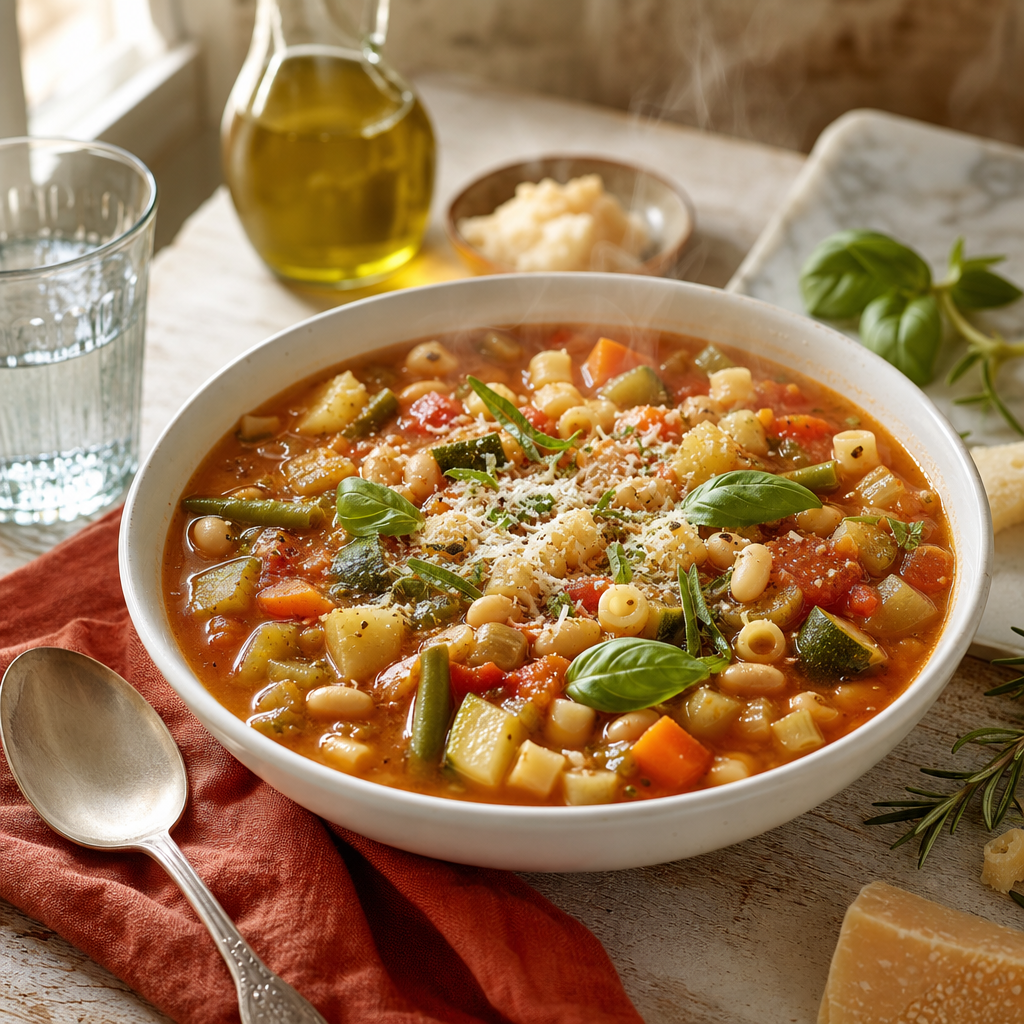
Minestrone is not one fixed recipe; it is the Italian grammar of a thick vegetable soup built from what the season and pantry provide. The dish sits inside cucina povera, where vegetables, beans, grains, stale bread, pasta, or rice stretched into a full meal without needing much meat. Regional versions differ: Ligurian bowls may finish with pesto, northern versions may lean on rice or cabbage, and tomato-heavy versions became more common after New World tomatoes settled into Italian cooking. The constant is structure, not a shopping list: soffritto, vegetables, legumes, starch, and a broth dense enough to eat with a spoon rather than sip.
Method 9 steps · 70 min
Build the soffritto
Heat the olive oil in a heavy pot over medium-low heat. Add onion, carrot, celery, and 4 g salt; cook 12-15 minutes, stirring occasionally, until the vegetables look glossy and soft but not browned.
Bloom the tomato base
Add garlic and cook 45 seconds, then stir in tomato paste. Cook 2-3 minutes until the paste darkens from bright red to brick red and begins to stick lightly to the bottom of the pot.
Start the broth
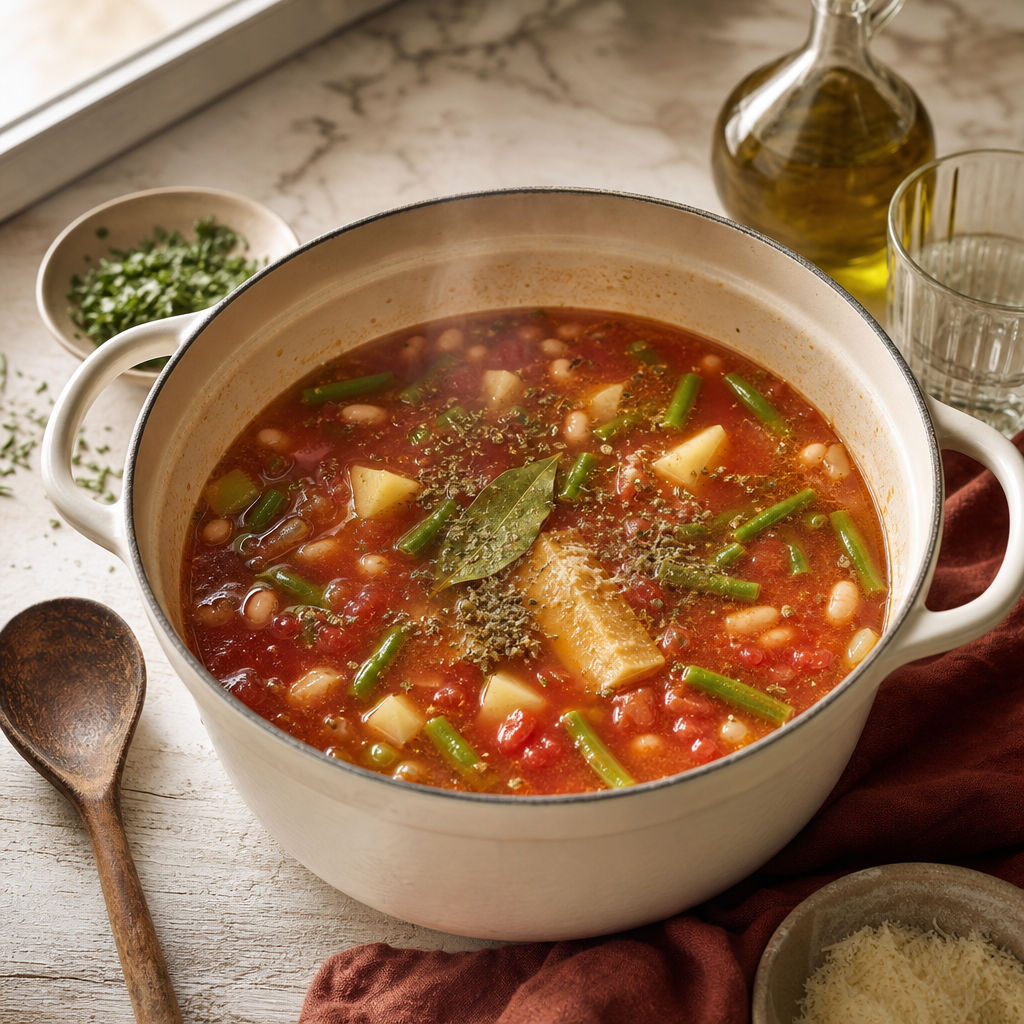
Add the crushed tomatoes, Parmesan rind if using, bay leaves, oregano, potato, green beans, cannellini beans, and stock or water. Scrape the bottom of the pot, bring to a simmer, then reduce the heat so the surface moves in small lazy bubbles.
Simmer the dense vegetables
Simmer uncovered for 25 minutes, or until the potato is tender at the center and the beans have begun to season the broth. Skim any foam if it gathers, but do not chase every speck.
Add the soft vegetables
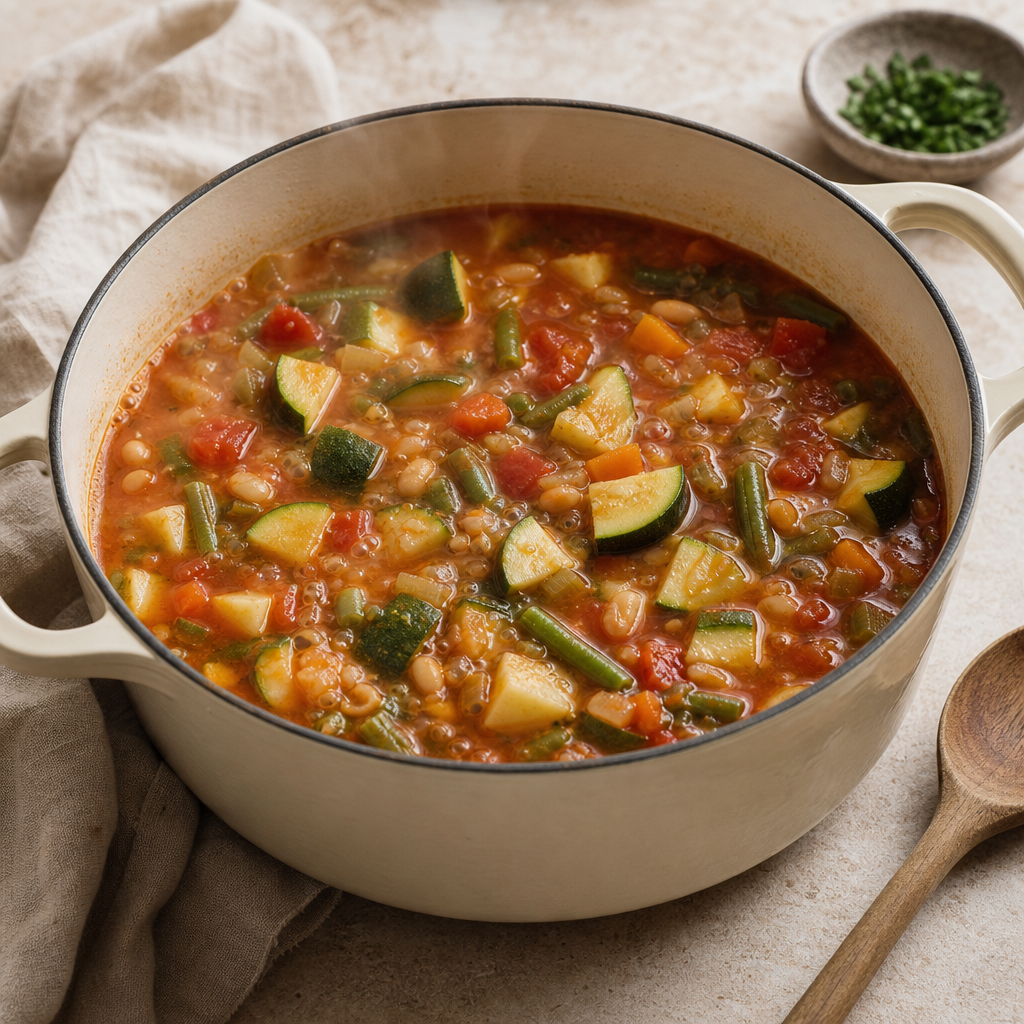
Stir in the zucchini and simmer 8 minutes. The pieces should hold their edges but no longer look raw at the center.
Cook the pasta in the soup
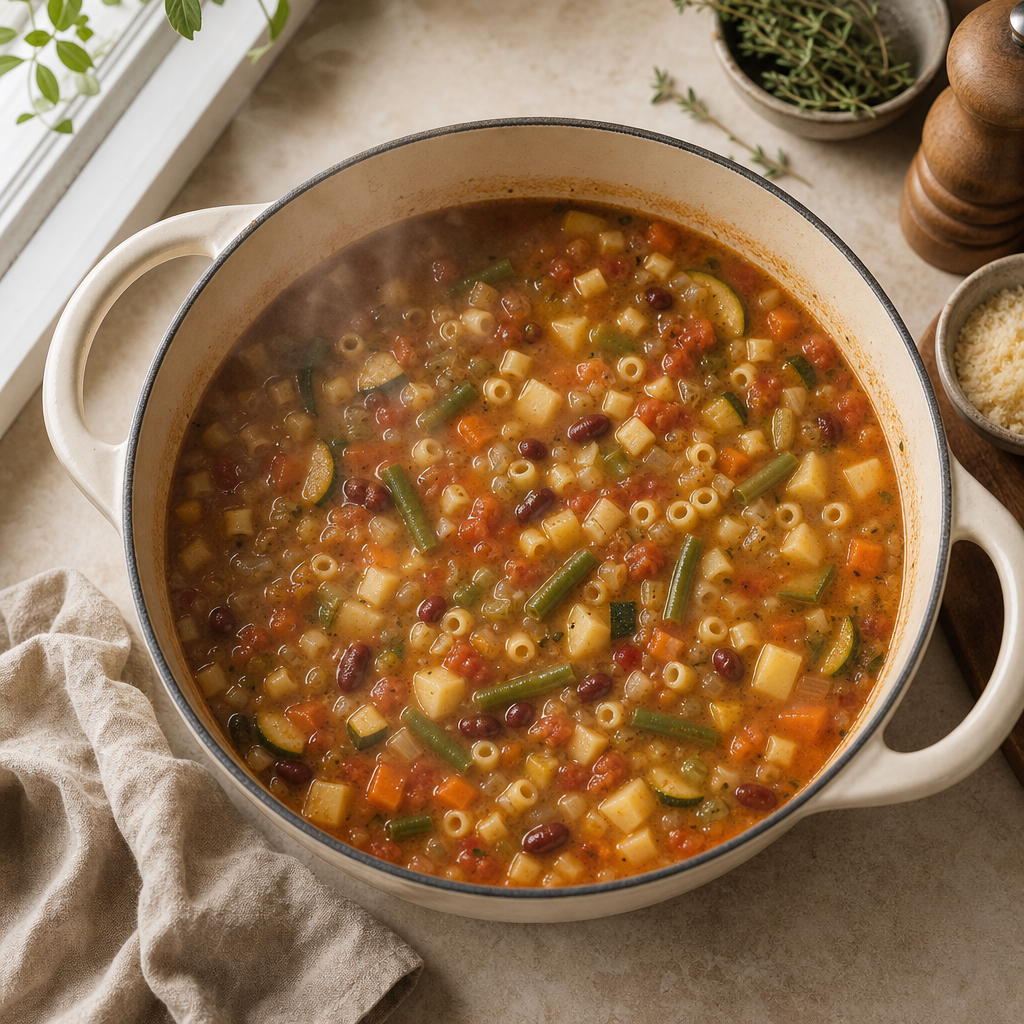
Add the pasta and simmer until 1 minute shy of the package timing, usually 7-9 minutes for ditalini. Stir often near the bottom so starch does not catch.
Wilt the greens
Add the kale, cavolo nero, or chard and simmer 2-4 minutes until the leaves darken and soften. Remove and discard the bay leaves and Parmesan rind.
Rest and adjust
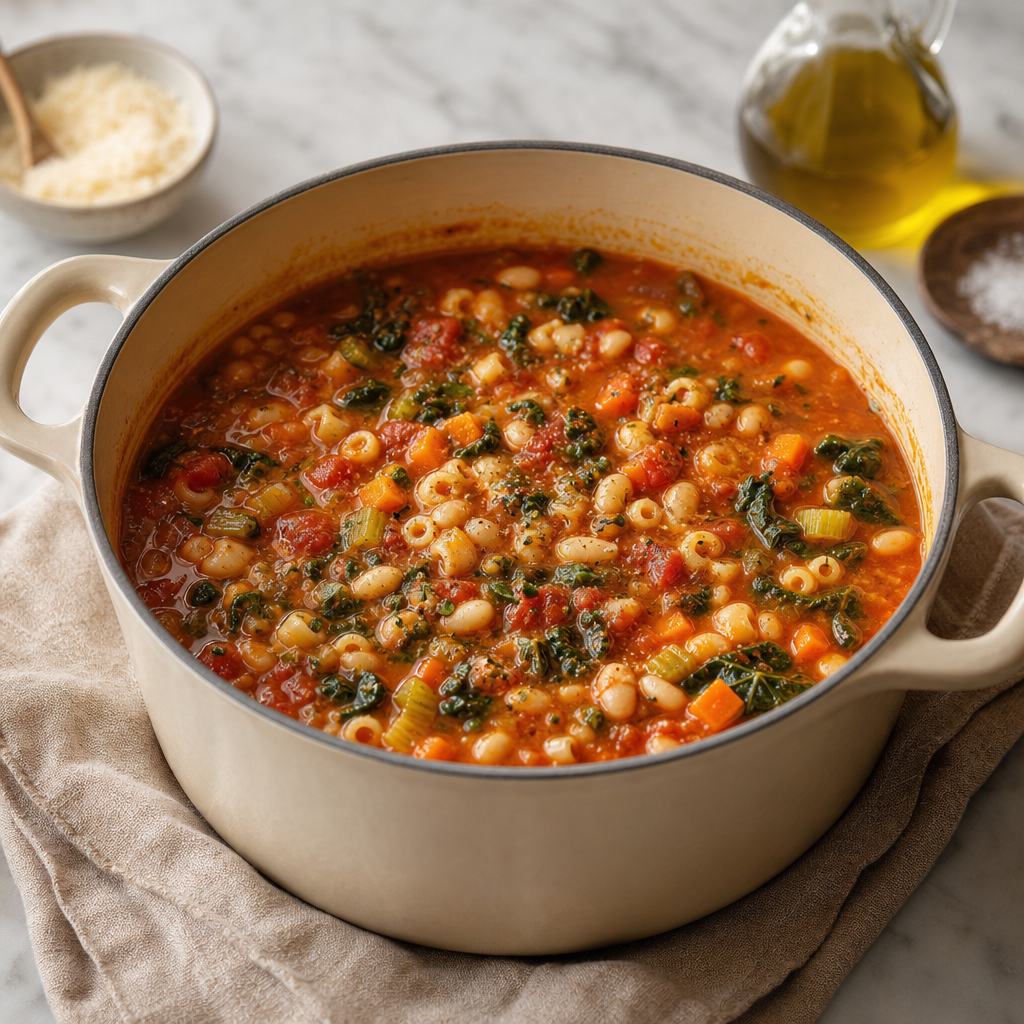
Turn off the heat and let the soup stand 10 minutes. Adjust salt and black pepper; the broth should taste rounded, tomato-rich, and savory, with the vegetables still identifiable.
Serve
Ladle into bowls and finish with torn basil, grated Parmigiano-Reggiano, and a thin thread of extra-virgin olive oil. For leftovers, store cooked pasta separately when possible, or thin the soup with water or stock when reheating.
Common mistakes
- {'mistake': 'Starting with all vegetables at once.', 'fix': 'Cook dense vegetables first and soft vegetables later. A correct bowl has different textures, not one softened mass.'}
- {'mistake': 'Adding too much pasta.', 'fix': 'Keep pasta to about 20 g per serving. Minestrone is vegetable soup with starch, not pasta soup with vegetables.'}
- {'mistake': 'Boiling hard after the beans go in.', 'fix': 'Hold a steady simmer. Hard boiling ruptures beans, shreds greens, and makes the broth cloudy.'}
- {'mistake': 'Using raw tomato paste in liquid.', 'fix': 'Fry the paste in oil with the soffritto until it darkens. That short step removes the canned edge.'}
- {'mistake': 'Leaving pasta in the pot for long storage.', 'fix': 'Cook pasta separately for meal prep. Pasta left in broth keeps absorbing liquid until the next day.'}
What does not belong
- {'item': 'Cream', 'reason': 'Cream does not belong in minestrone. Body comes from beans, potato, pasta starch, and olive oil.'}
- {'item': 'Large pieces of chicken breast', 'reason': 'Chicken chunks turn the dish into chicken vegetable soup. A light meat broth or a little pancetta is within the tradition; boneless chicken pieces are not the point.'}
- {'item': 'A heavy handful of dried mixed Italian seasoning', 'reason': 'Dried herb blends flatten the vegetables into one generic taste. Use one or two herbs with restraint.'}
- {'item': 'Sugar', 'reason': 'Sugar is not the fix for weak tomatoes. Cook the tomato paste properly and use decent canned tomatoes.'}
- {'item': 'Broken spaghetti', 'reason': 'Broken long pasta is a pantry shortcut that eats badly in a spoon. Use small pasta shapes designed for soup.'}