Limoncello
The dish in context
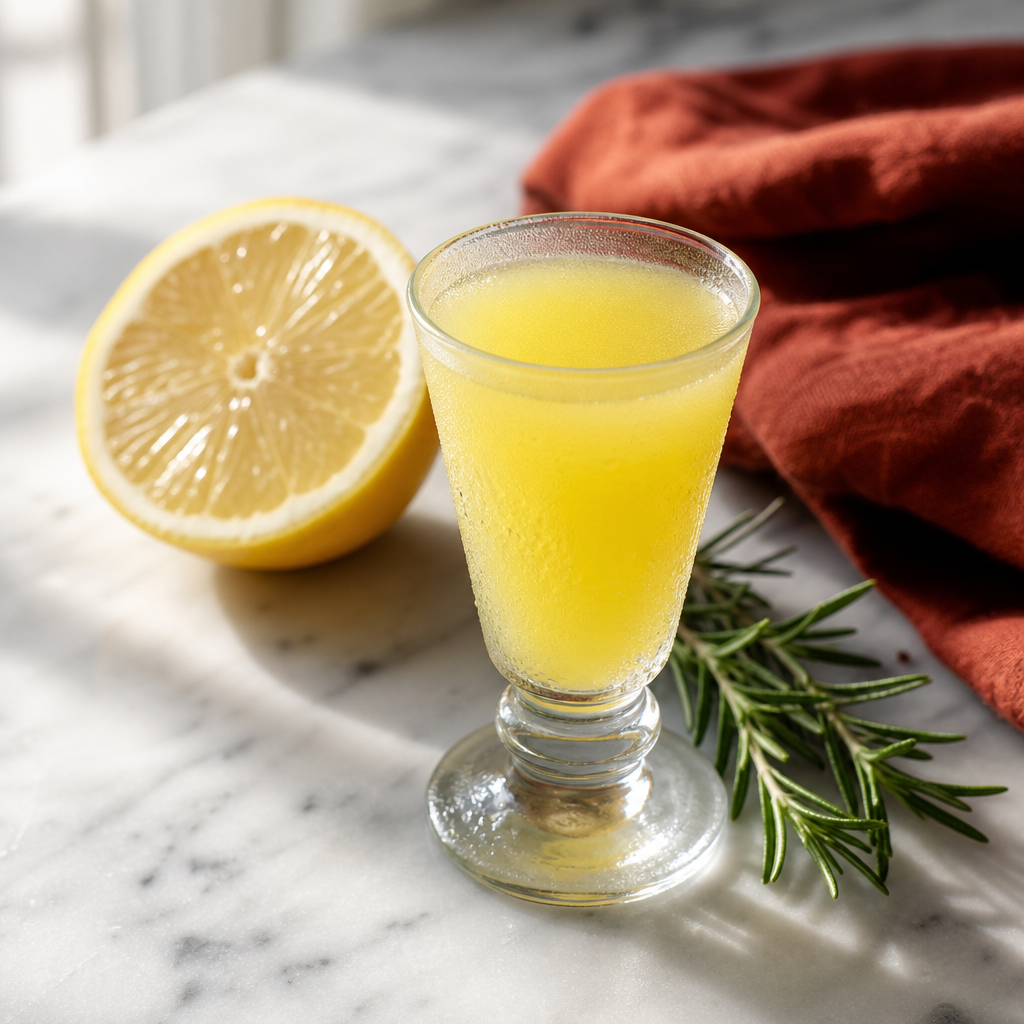
Limoncello is a lemon liqueur associated with Campania, especially the Sorrento Peninsula, Amalfi Coast, and Capri, though its exact origin is disputed among coastal families, producers, and local histories. The traditional structure is spare: untreated lemon peel, neutral alcohol, sugar, and water. Sorrento lemons, especially the oval Femminello types, are prized because the thick peel carries abundant aromatic oil and separates cleanly from the bitter white pith. It is served very cold after a meal as a digestivo, not as a sour cocktail; lemon juice is not part of the base.
Method 7 steps · 11580 min
Strip the lemon peel
Remove only the yellow outer peel with a sharp vegetable peeler. Trim away any attached white pith with a paring knife; the strips should be yellow on one side and barely pale on the other.
Start the infusion
Put the peel in a clean 1.5-2 L glass jar and pour in the alcohol. Seal the jar and shake for 10 seconds, then keep it in a dark cupboard at cool room temperature.
Macerate
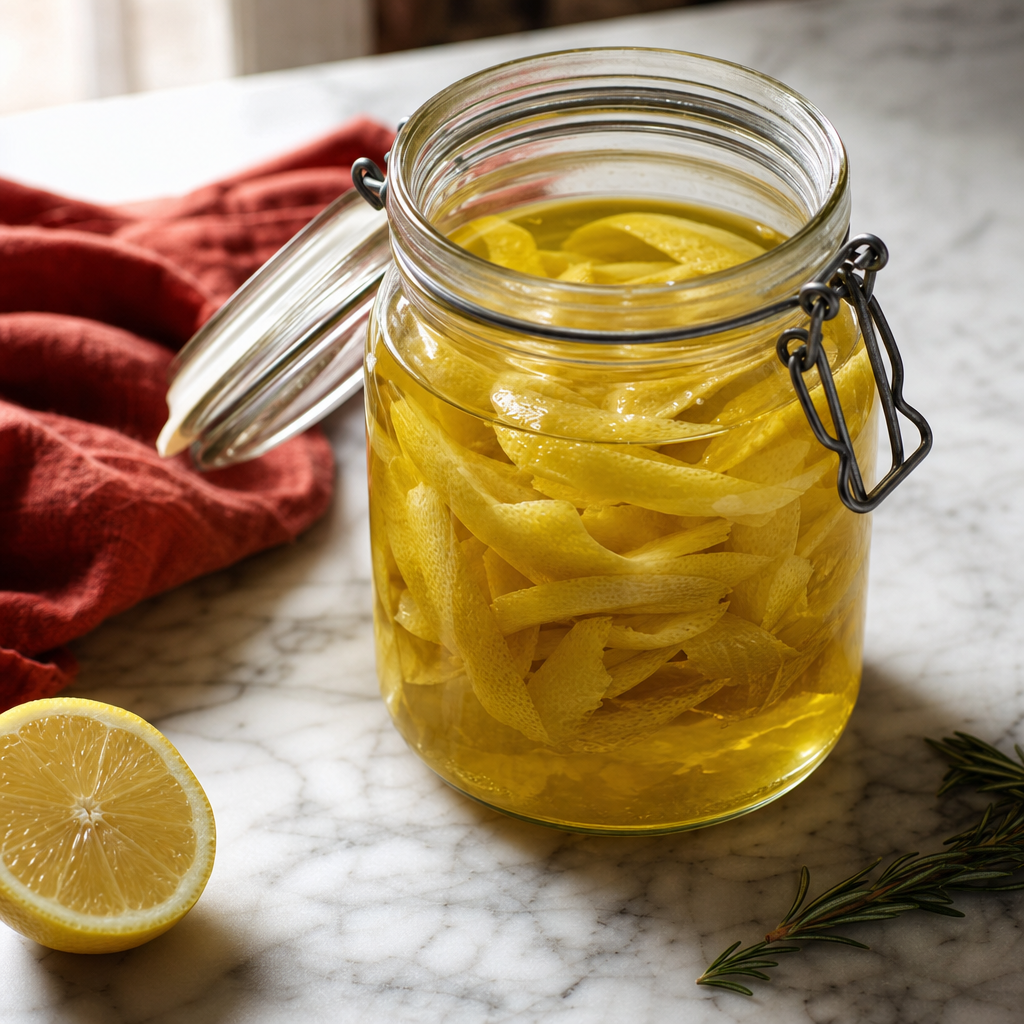
Infuse for 7 days, shaking the jar once a day. Stop when the peels look faded and stiff and the alcohol is a deep, clear yellow.
Make the sugar syrup
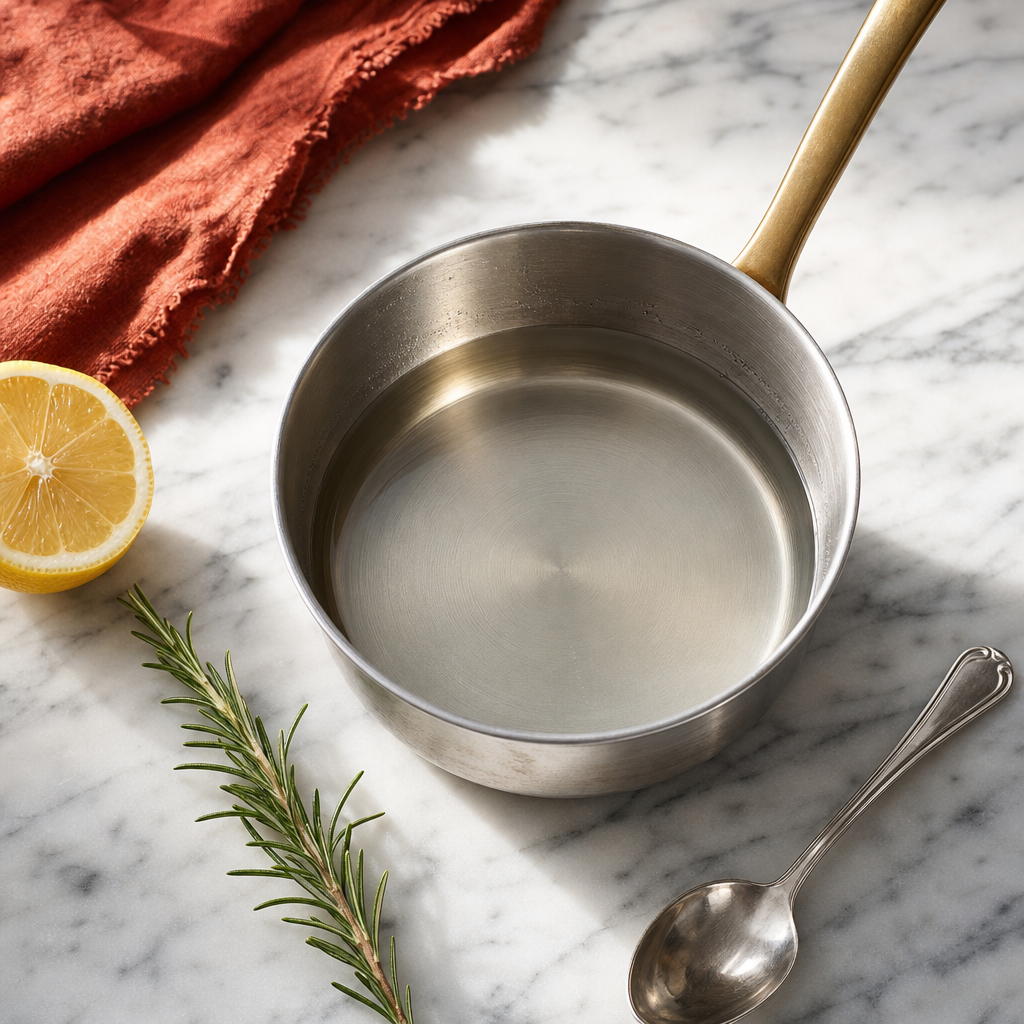
Combine the water and sugar in a saucepan. Heat over medium, stirring until the sugar dissolves fully, then remove from the heat and cool to room temperature.
Strain the infusion
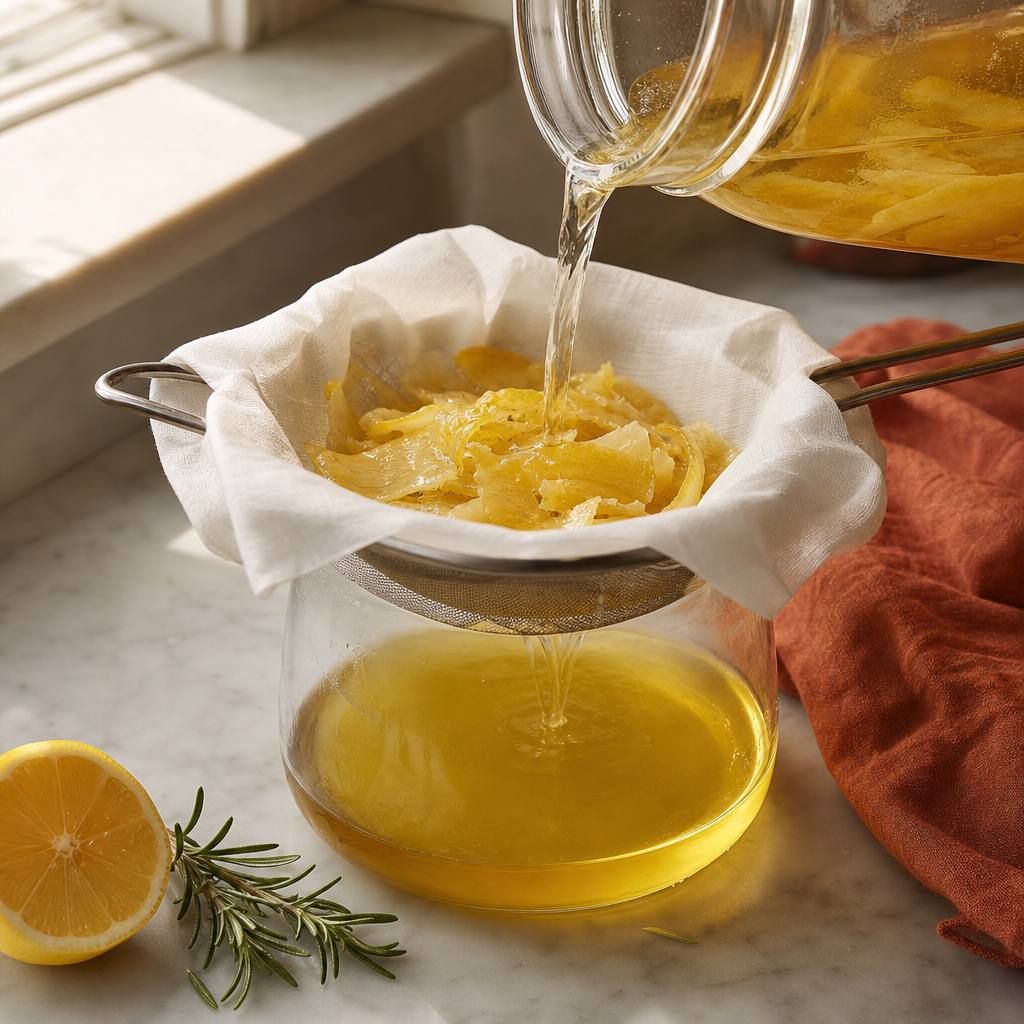
Strain the alcohol through a fine sieve, then through a coffee filter or several layers of cheesecloth. Do not press the peels hard; let the liquid drain.
Dilute and cloud
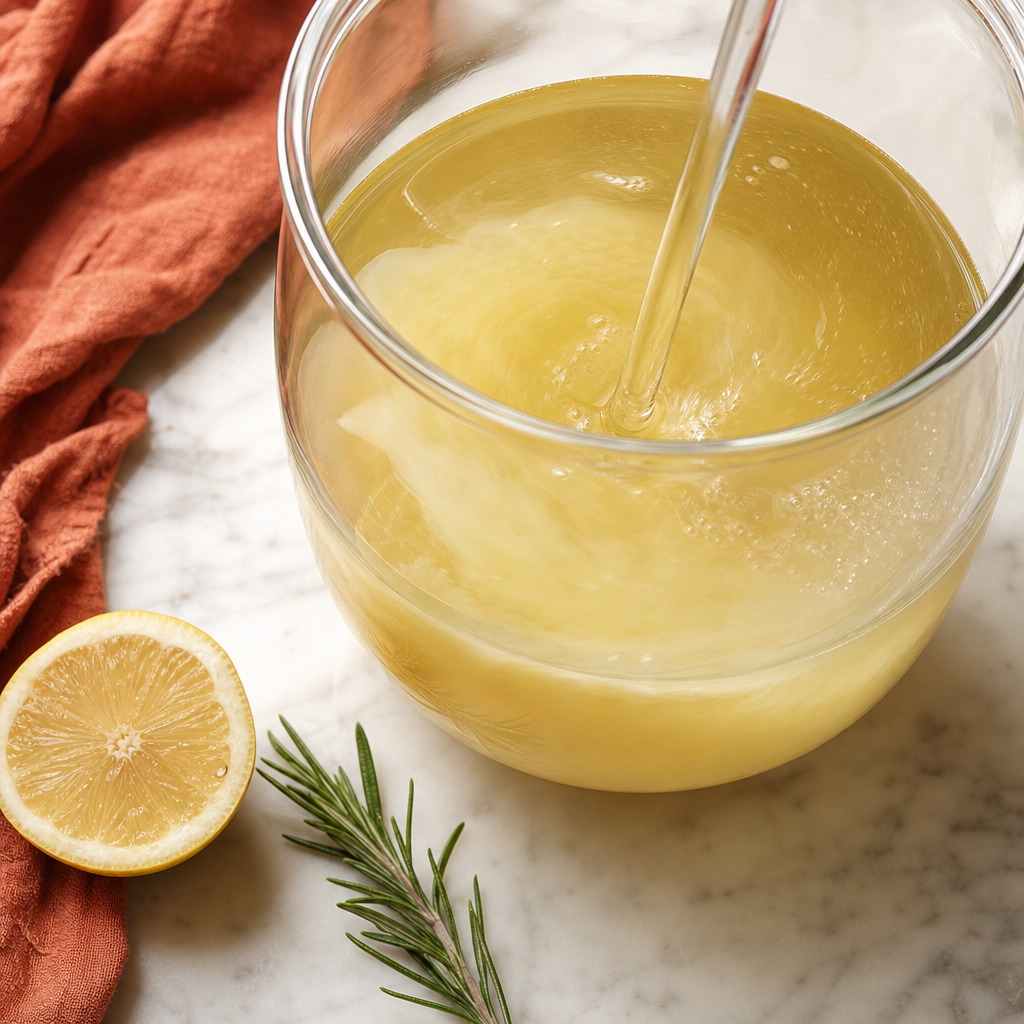
Stir the cooled syrup into the strained lemon alcohol. The liquid should turn opaque yellow as the citrus oils emulsify into the diluted alcohol.
Bottle and mature
Bottle the limoncello in clean glass bottles, seal, and rest for 24-48 hours before serving. Store in the freezer and pour directly into chilled small glasses.
Common mistakes
- {'mistake': 'Using waxed lemons without removing the wax.', 'fix': 'Use untreated unwaxed lemons. Wax blocks extraction and can leave a dull, greasy surface on the finished liqueur.'}
- {'mistake': 'Taking white pith with the peel.', 'fix': 'Peel shallowly and trim the strips. Bitterness from pith does not disappear after filtering or sweetening.'}
- {'mistake': 'Adding hot syrup to the lemon alcohol.', 'fix': 'Cool the syrup completely. Heat pushes the aroma toward cooked citrus and makes the alcohol smell rough.'}
- {'mistake': 'Using low-proof vodka with the full water amount.', 'fix': 'Reduce the added water when using vodka. The proof of the base spirit controls how much dilution the batch can take.'}
- {'mistake': 'Serving it at room temperature.', 'fix': 'Store and serve from the freezer. Warm limoncello tastes sharper and thinner.'}
What does not belong
- {'item': 'lemon juice', 'reason': 'Limoncello is peel liqueur, not lemonade with alcohol. Juice adds tartness and shortens the clean shelf-stable profile.'}
- {'item': 'food coloring', 'reason': 'Color comes from lemon oil in the peel. Dye gives a flat neon yellow that signals a bad bottle.'}
- {'item': 'cream or milk', 'reason': 'Cream turns this into crema di limoncello, a separate liqueur with different storage and texture.'}
- {'item': 'vanilla, cinnamon, cloves, or herbs', 'reason': 'Spiced citrus infusions exist, but they are not standard limoncello. The lemon peel should not have to compete.'}
- {'item': 'lemon extract', 'reason': 'Extract reads like candy and perfume. The structure of limoncello is macerated fresh peel.'}
Adaptations
Sugar processing varies by producer in some countries. Use beet sugar or certified vegan cane sugar if strict vegan compliance matters.
This is an alcoholic liqueur. A non-alcoholic lemon syrup can borrow the flavor idea, but it is not limoncello.
Distilled neutral alcohol is generally considered gluten-free after distillation. Use a certified gluten-free spirit if required for medical or regulatory reasons.
No dairy belongs in standard limoncello.
No shellfish ingredients are used.