Granita Siciliana
The dish in context
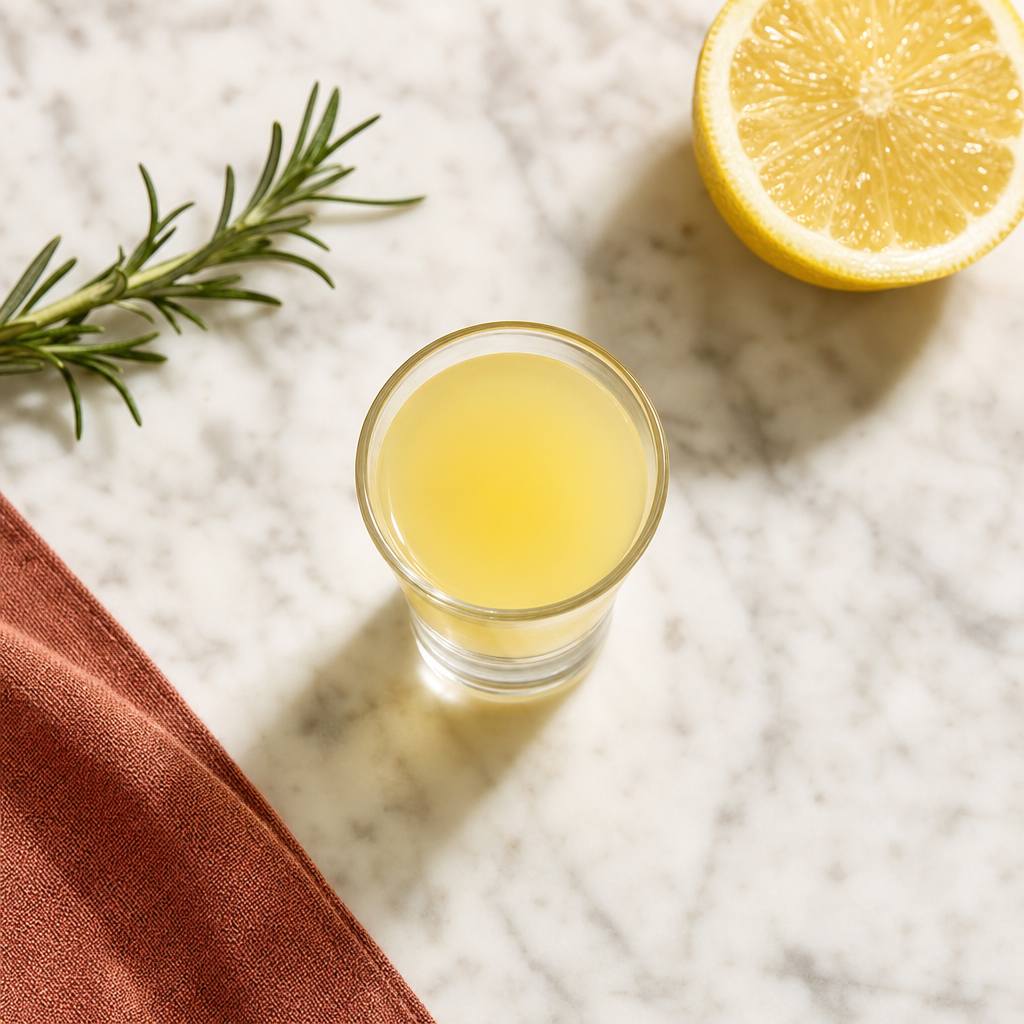
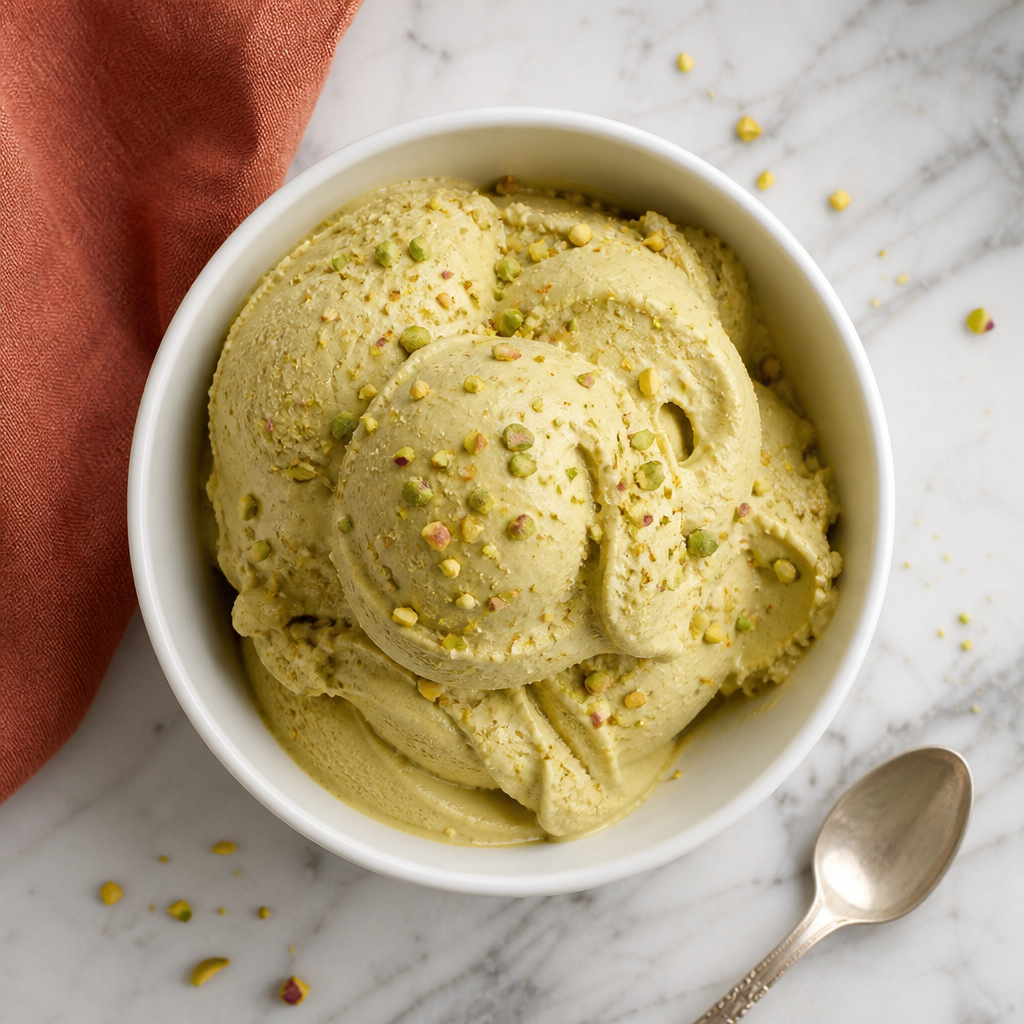
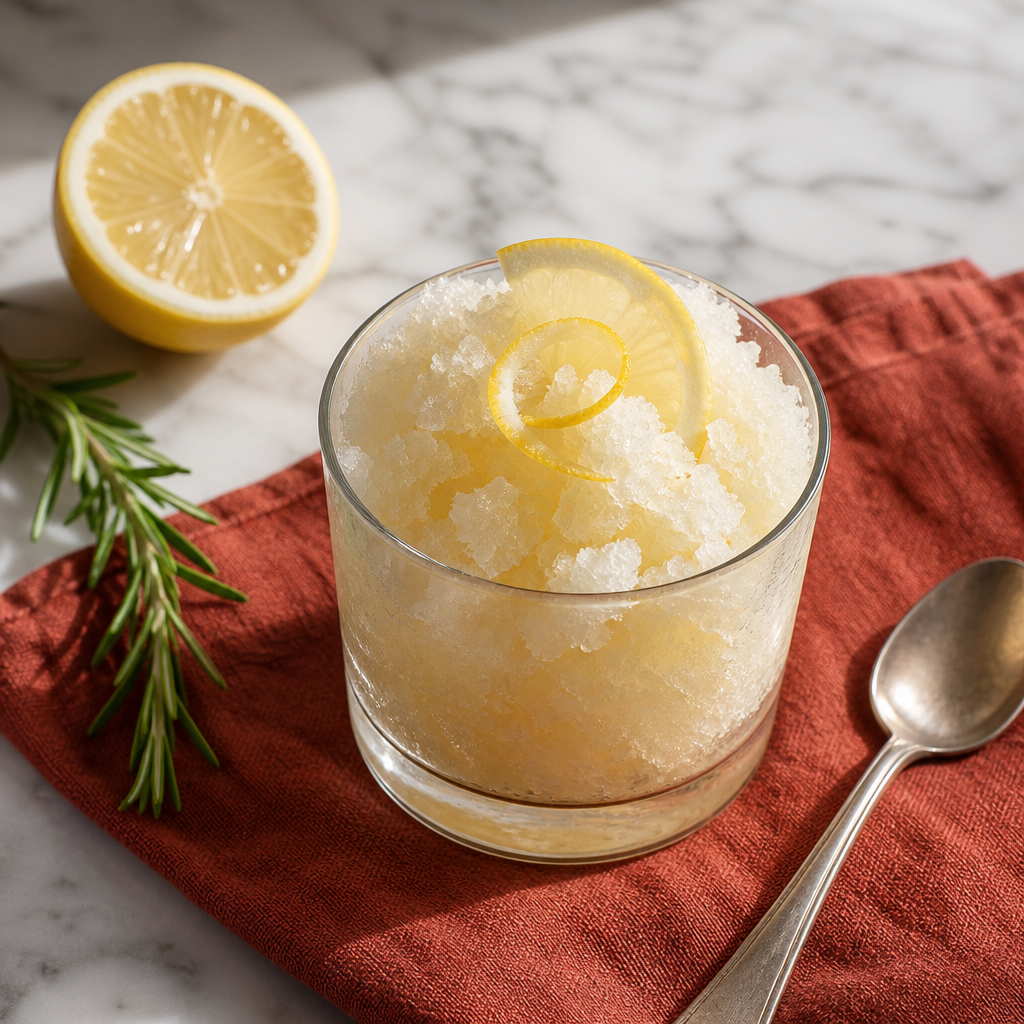
Granita is one of Sicily's defining frozen preparations, built from water, sugar, and a flavoring rather than dairy or egg. Lemon, almond, coffee, jasmine, mulberry, strawberry, and pistachio are all traditional Sicilian flavors, with texture varying by city: some versions are fine and almost creamy, others deliberately granular. In eastern Sicily, granita is commonly eaten for breakfast with brioche col tuppo, especially in summer. This recipe is the lemon branch, granita al limone, the cleanest version and the one with nowhere to hide.
Method 7 steps · 270 min
Dissolve the sugar
Combine the water, sugar, and salt in a saucepan. Heat over medium, stirring until the liquid turns clear and no crystals remain on the bottom; do not boil hard.
Infuse the zest
Remove the pan from the heat. Stir in the lemon zest and let the syrup stand until warm, 10 minutes.
Add the lemon juice off heat
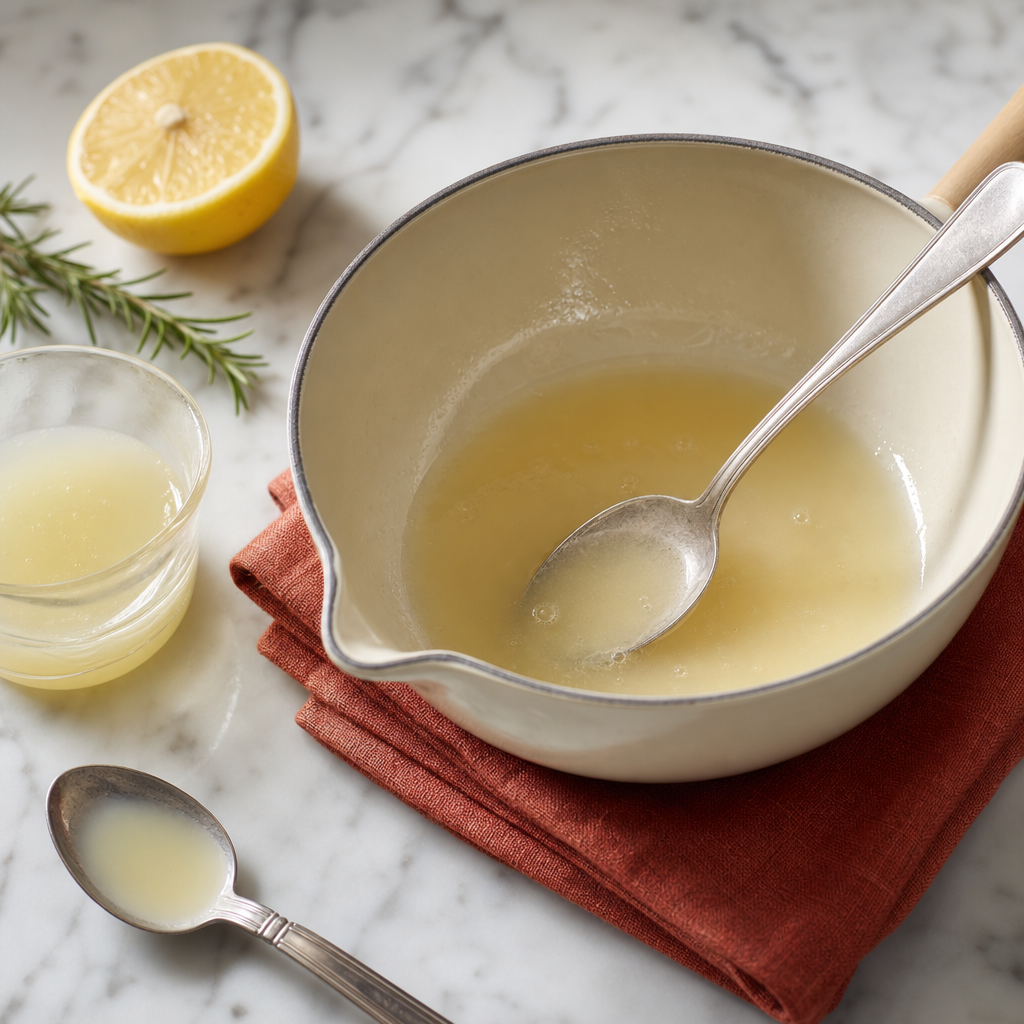
Stir in the strained lemon juice. Taste the mixture cold on a spoon if possible: it should taste slightly too sweet and slightly too sharp, because freezing mutes both.
Chill the base
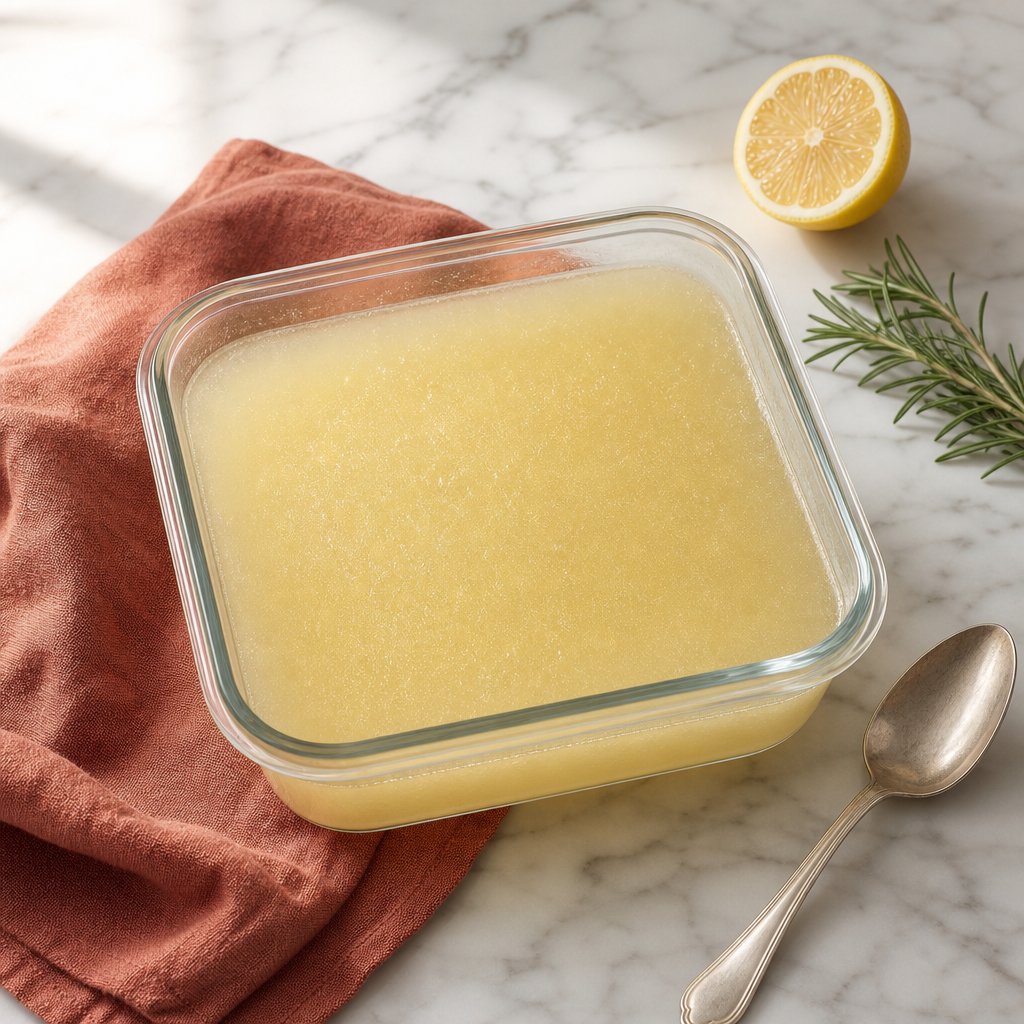
Transfer the mixture to a shallow metal pan or glass dish. Refrigerate until fully cold, about 30 minutes.
Start the freeze
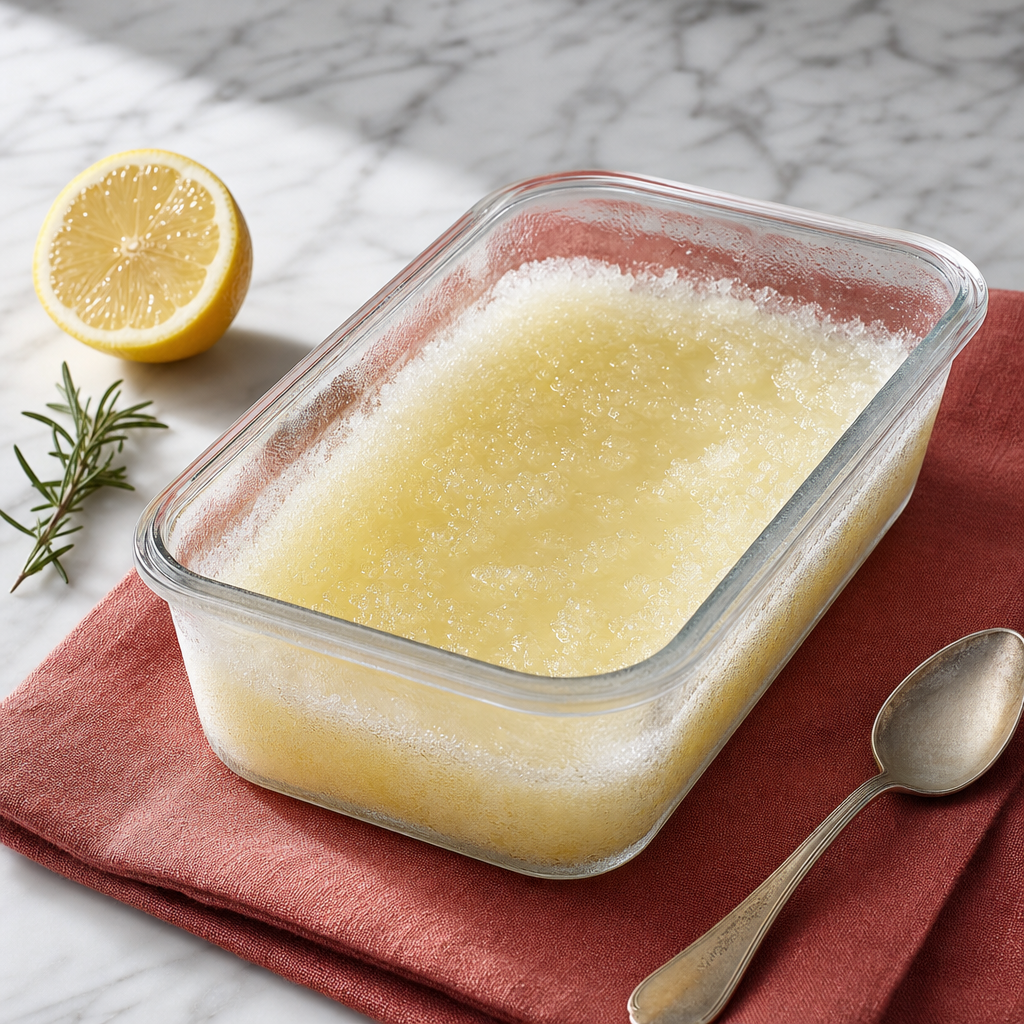
Move the pan to the freezer. Freeze until ice begins to form around the edges while the center remains slushy, 45 to 60 minutes.
Scrape and repeat
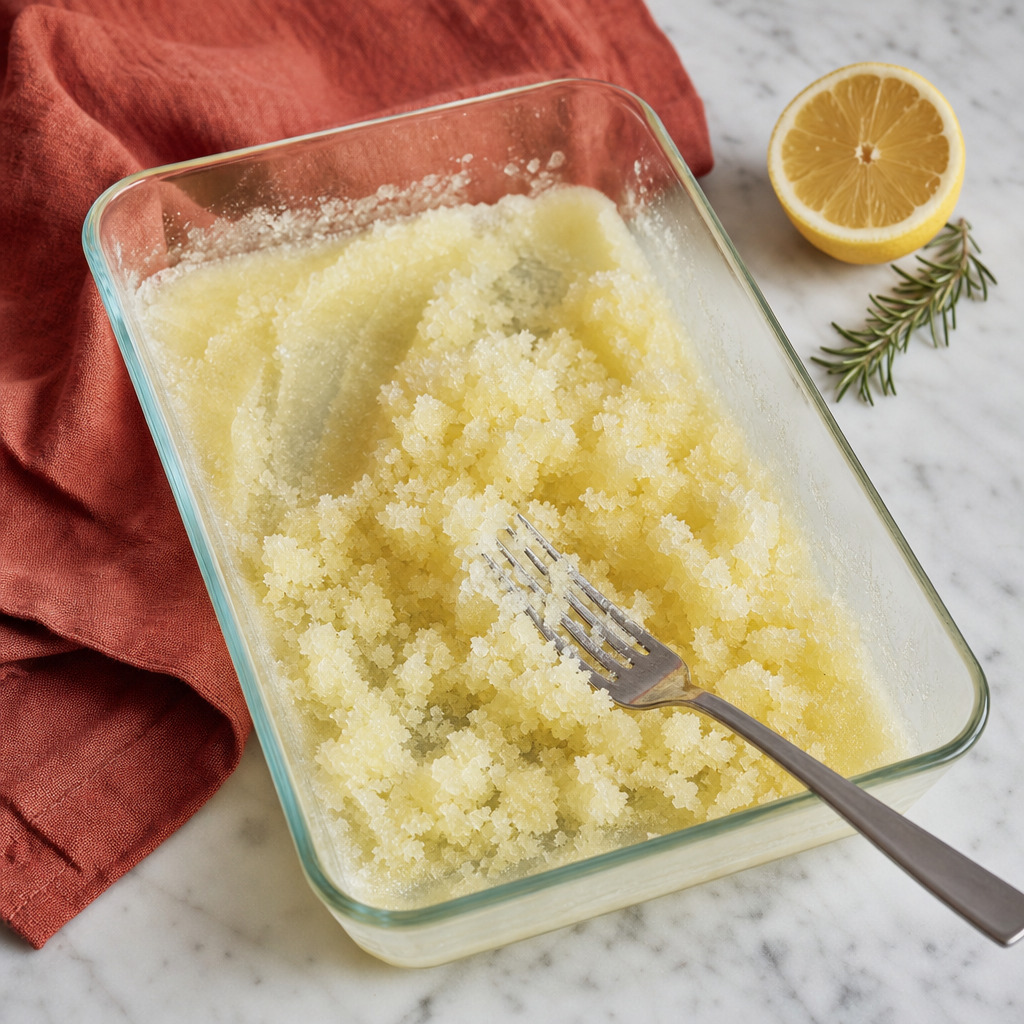
Use a fork to pull the frozen edges into the center, breaking up any sheets of ice. Return to the freezer and repeat every 30 to 40 minutes for 3 to 4 rounds, until the granita is pale, fluffy, and made of separate crystals.
Serve
Fluff the granita with a fork immediately before serving. Spoon into chilled glasses and garnish with lemon if using.
Common mistakes
- {'mistake': 'Using bottled lemon juice.', 'why_it_fails': 'Bottled juice has acidity but little volatile citrus oil. The granita tastes flat because this dish has no dairy, egg, or spice to cover the shortcut.'}
- {'mistake': 'Freezing in a deep container.', 'why_it_fails': 'The edges freeze hard while the center stays liquid. The result is coarse ice outside and syrup inside.'}
- {'mistake': 'Skipping the scheduled scraping.', 'why_it_fails': 'Granita is not sorbet. Without repeated scraping, it becomes a solid slab and loses the defining granular texture.'}
- {'mistake': 'Reducing sugar too aggressively.', 'why_it_fails': 'Sugar depresses the freezing point and softens the ice structure. Cut too much and the granita freezes hard, brittle, and dull.'}
- {'mistake': 'Serving straight from a long freeze without re-fluffing.', 'why_it_fails': 'The crystals compress in storage. A fork is part of the serving method, not a decorative step.'}
What does not belong
- {'item': 'Milk or cream', 'reason': 'Dairy turns this into a different frozen dessert. Lemon granita is water-based and crystalline.'}
- {'item': 'Gelatin or stabilizers', 'reason': 'The texture should be loose ice crystals, not a set or elastic scoop.'}
- {'item': 'Limoncello in the base', 'reason': 'Alcohol lowers the freezing point and can keep the mixture slushy. Use a small splash at serving only if making a modern bar variation.'}
- {'item': 'Food coloring', 'reason': 'Lemon granita is naturally pale yellow. Neon yellow reads industrial, not Sicilian café.'}
- {'item': 'A blender after freezing', 'reason': 'Blending makes a wet slush and melts the crystal structure. Use a fork.'}
Adaptations
The base contains no animal products.
No alcohol is used in the base.
The granita itself contains no gluten. Brioche served alongside is not gluten-free unless made separately with a gluten-free formula.
Traditional lemon granita is water-based. Do not add cream.
No shellfish ingredients are present.