Grissini Torinesi
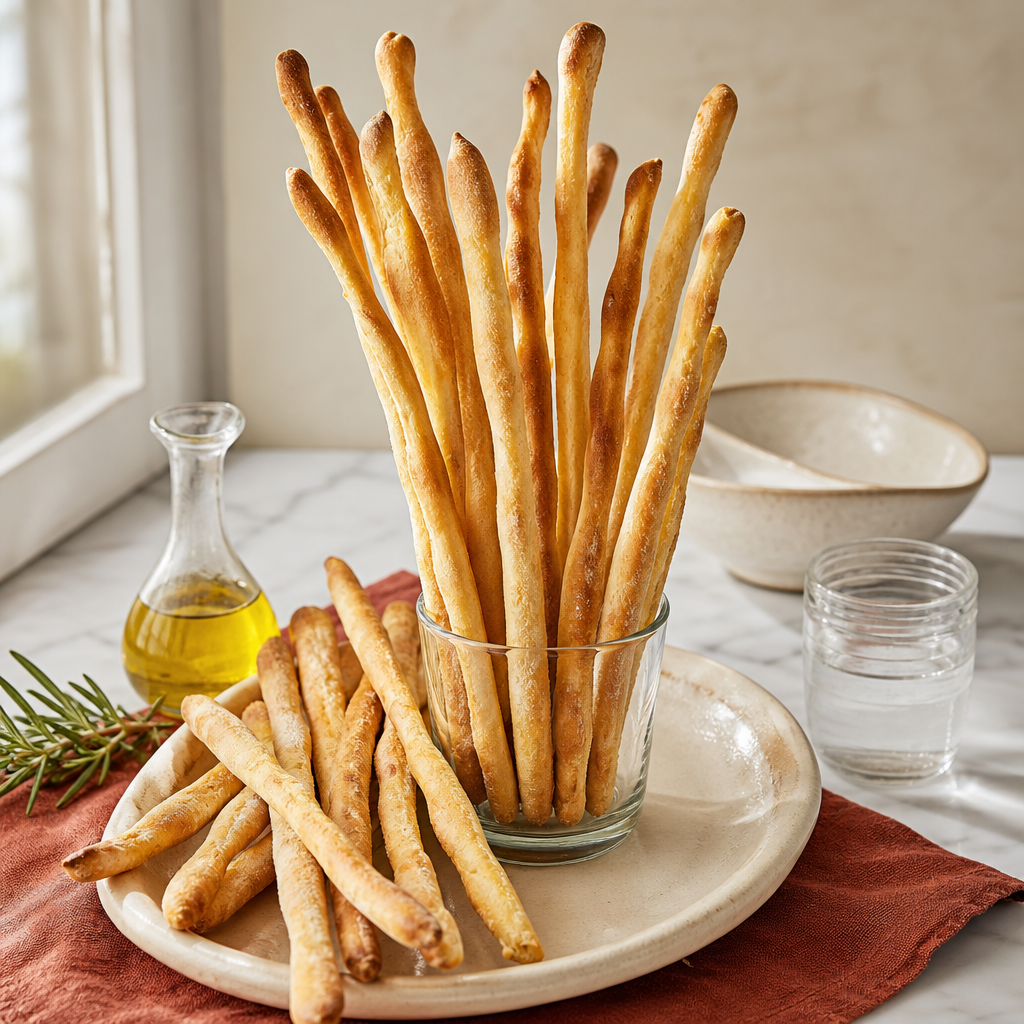
The dish in context
Grissini Torinesi are the breadsticks of Turin and the surrounding Piedmontese table, tied to aperitivo, salumi, cheese, and restaurant bread baskets. Sources distinguish two main traditional shapes: grissini stirati, stretched by hand into long airy sticks, and rubatà, rolled by hand for a more knobbly form. The often-repeated court story places their invention in the late seventeenth century for Vittorio Amedeo II of Savoy, but older breadstick-like forms appear in Piedmontese bread history before that legend. The stable grammar is flour, water, yeast, salt, and fat, traditionally strutto or olive oil; the technique matters more than embellishment.
Method 7 steps · 150 min
Mix the dough
Combine flour, yeast, and malt in a large bowl. Add water and olive oil, mix until no dry flour remains, then add the salt and knead 6-8 minutes by hand or 4-5 minutes on low speed until the dough is smooth, elastic, and slightly tacky.
Rest until expanded
Shape the dough into a tight rectangle about 20 x 12 cm. Brush the surface lightly with olive oil, cover, and let it rise at room temperature until puffy and about doubled, 60-75 minutes.
Prepare the oven and trays
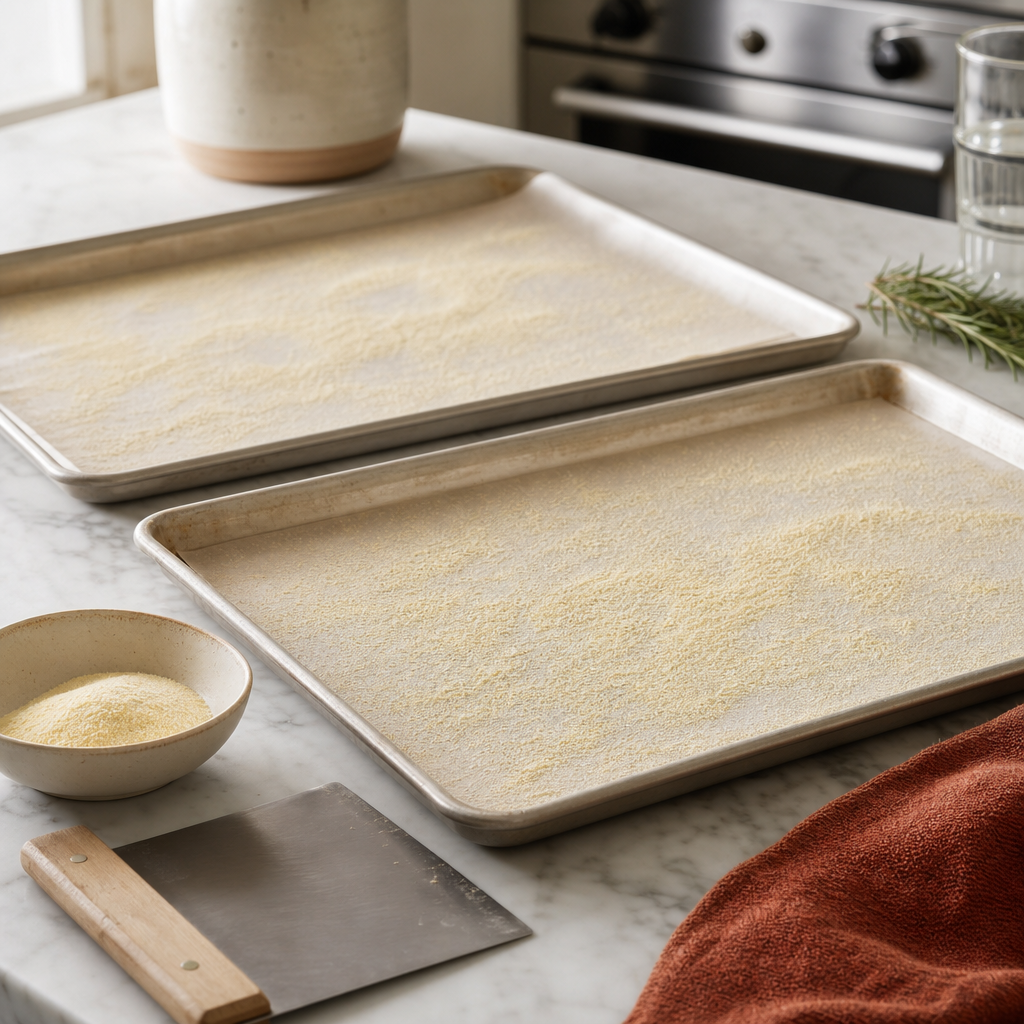
Heat the oven to 220°C. Line two half-sheet pans with parchment and dust them lightly with semolina or flour.
Cut strips without deflating the slab
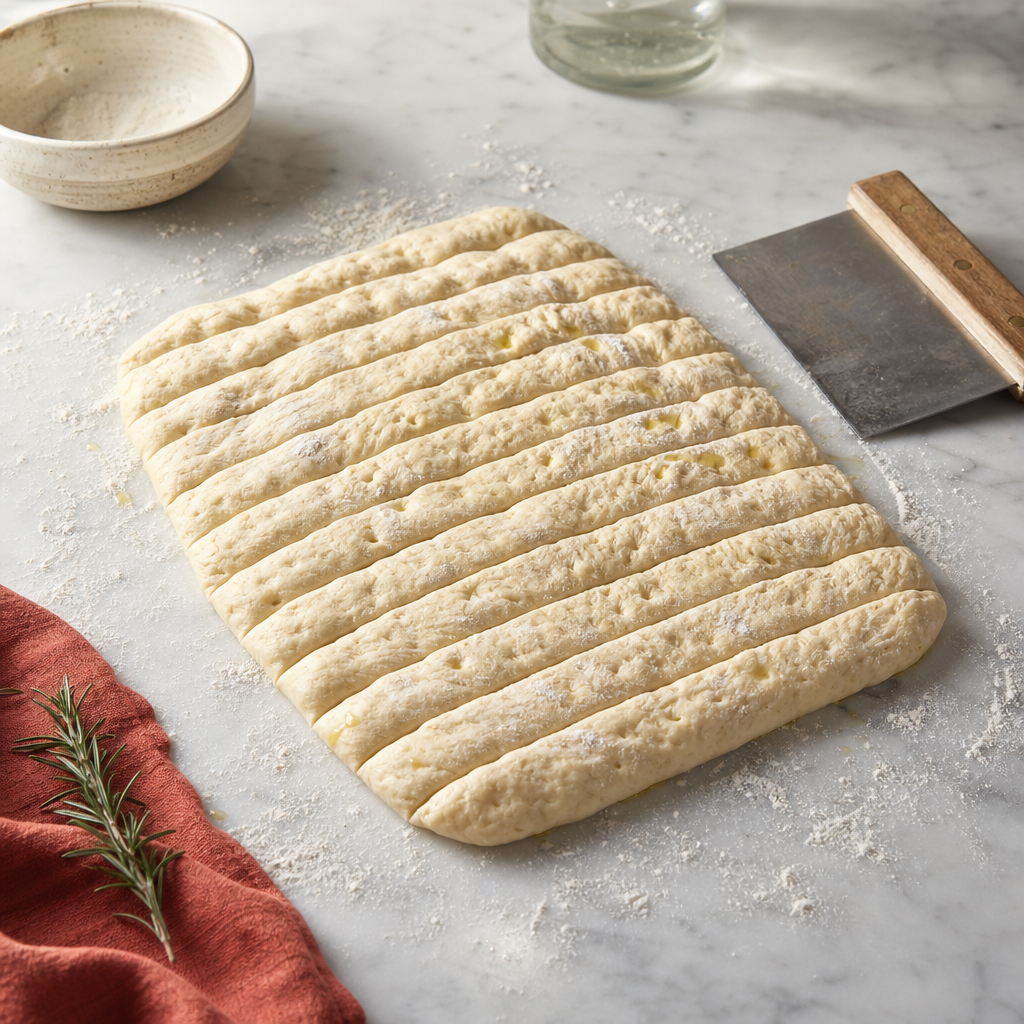
Transfer the dough to a floured board without punching it down. Cut crosswise into strips about 1 cm wide; use a bench knife and press straight down rather than sawing.
Stretch each grissino
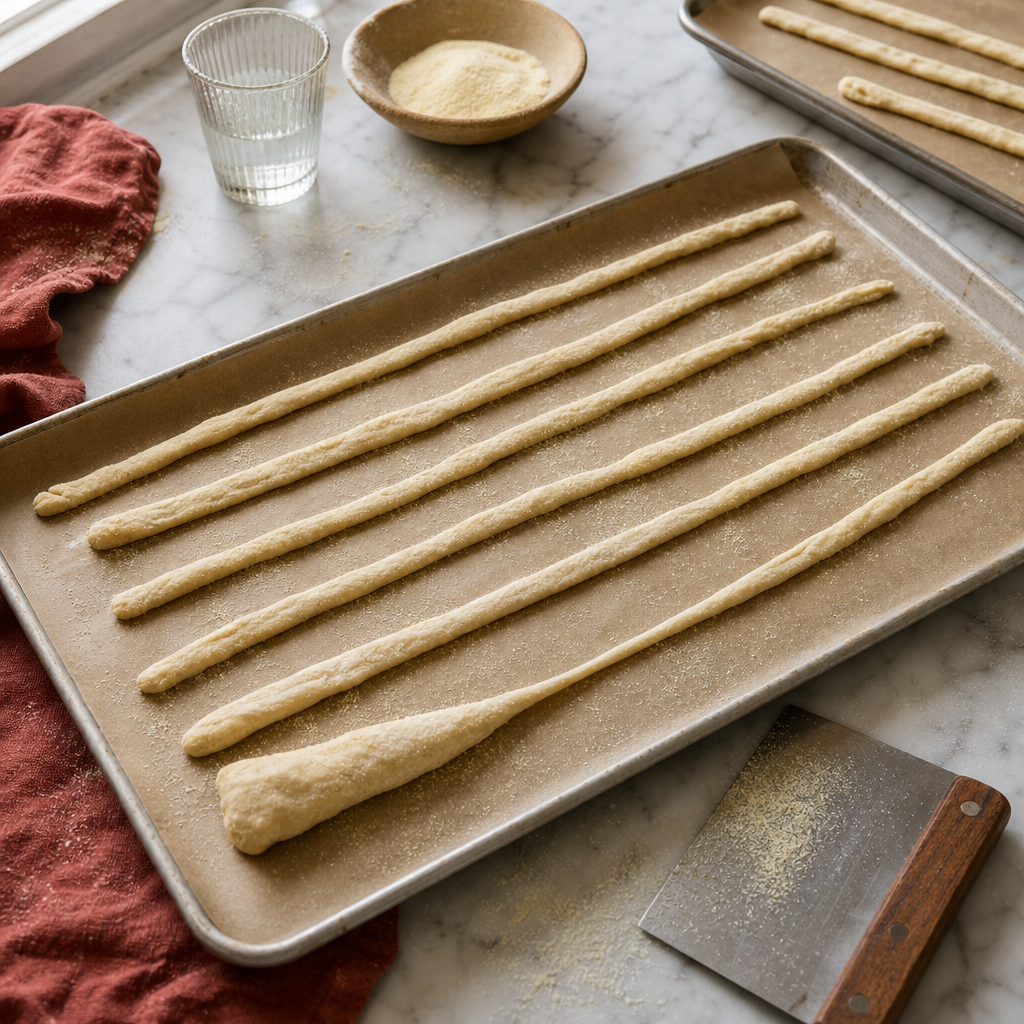
Lift one strip by both ends and pull steadily until it reaches the length of the tray, usually 30-40 cm. Lay it down without coiling; if it tears, bake the shorter pieces rather than re-kneading them.
Bake until dry and golden
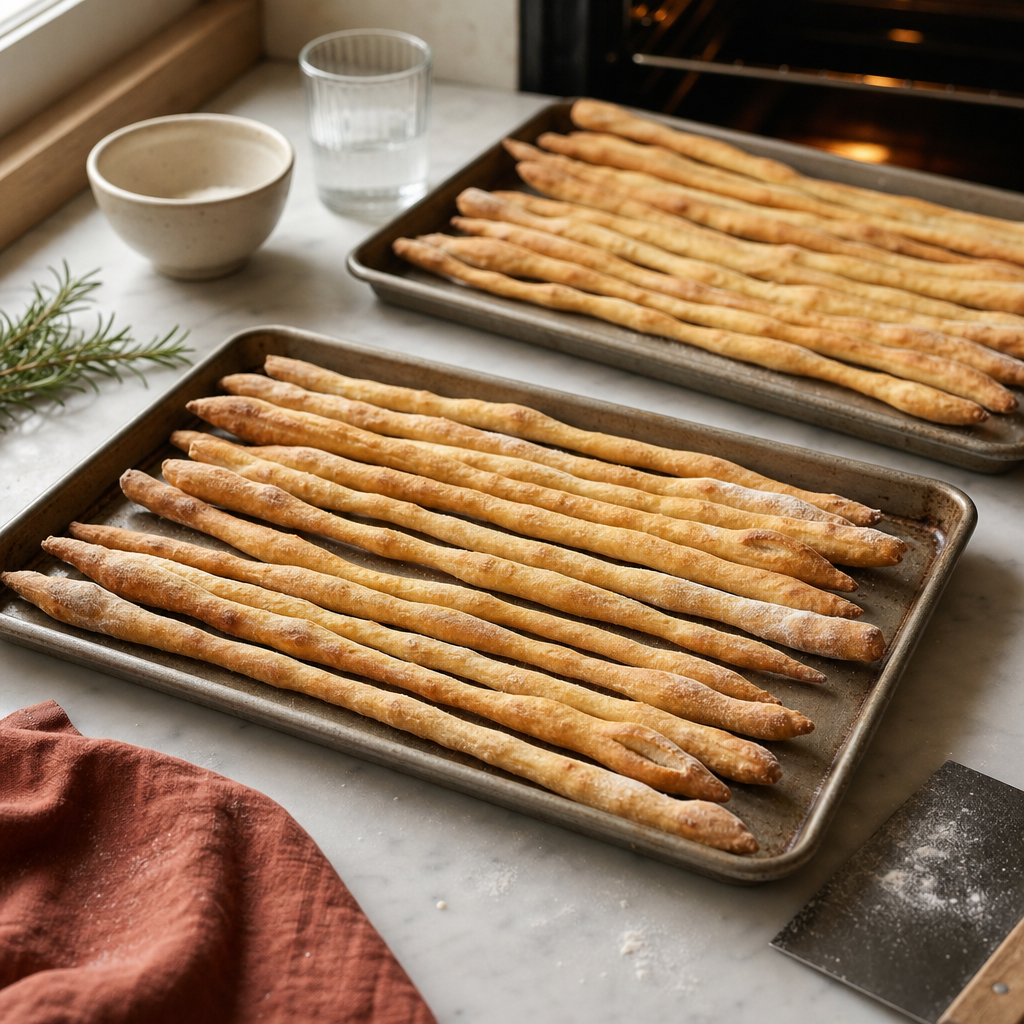
Bake 12-16 minutes, rotating the trays once, until the grissini are golden-yellow with darker tips and feel light when lifted. If the centers still bend, lower the oven to 160°C and bake 5-8 minutes more to dry them without over-browning.
Cool uncovered
Cool completely on a rack before storing. Keep in an airtight tin or container at room temperature for up to 2 weeks.
Common mistakes
- {'mistake': 'Frying the dough.', 'fix': 'Grissini Torinesi are baked breadsticks. Frying makes a different crisp dough snack and does not produce the dry, brittle snap of grissini.'}
- {'mistake': 'Rolling every strip into a tight rope.', 'fix': 'For grissini stirati, stretch the strip from both ends. Rolling is valid for rubatà-style breadsticks, but it gives a denser, more compact bite.'}
- {'mistake': 'Using too much flour during shaping.', 'fix': 'Dust the board, not the dough repeatedly. Excess flour creates dusty seams and prevents the surface from baking cleanly.'}
- {'mistake': 'Underbaking because the color looks done.', 'fix': 'Test the bend. A finished grissino snaps; a bendy center needs extra drying at lower heat.'}
- {'mistake': 'Packing them warm.', 'fix': 'Cool completely before storage. Warm grissini steam themselves soft in a sealed container.'}
What does not belong
- {'item': 'deep-frying oil', 'reason': 'Deep-frying does not belong. Grissini Torinesi are oven-baked.'}
- {'item': 'eggs', 'reason': 'Eggs make the dough richer and more bread-roll-like. The traditional structure is lean flour, water, yeast, salt, and fat.'}
- {'item': 'milk', 'reason': 'Milk softens the crumb and encourages browning before the sticks dry through. That works against the dry snap.'}
- {'item': 'large amounts of sugar', 'reason': 'A pinch of malt or sugar can support browning; sweetness does not belong in standard grissini torinesi.'}
- {'item': 'heavy wet toppings', 'reason': 'Tomato sauce, cheese layers, or wet herb pastes turn the breadstick into another product. Dry seeds or a little rosemary are variants; wet toppings break the form.'}
Adaptations
Use olive oil, not lard. Standard yeast, flour, water, salt, and olive oil are vegan.
Use olive oil. Lard does not belong in a halal version.
The hand-stretched structure depends on gluten elasticity. Gluten-free versions can be crisp sticks, but they are not grissini stirati in texture or method.
Use olive oil. No dairy is needed.
The recipe contains no shellfish.