Fritto Misto di Mare
The dish in context
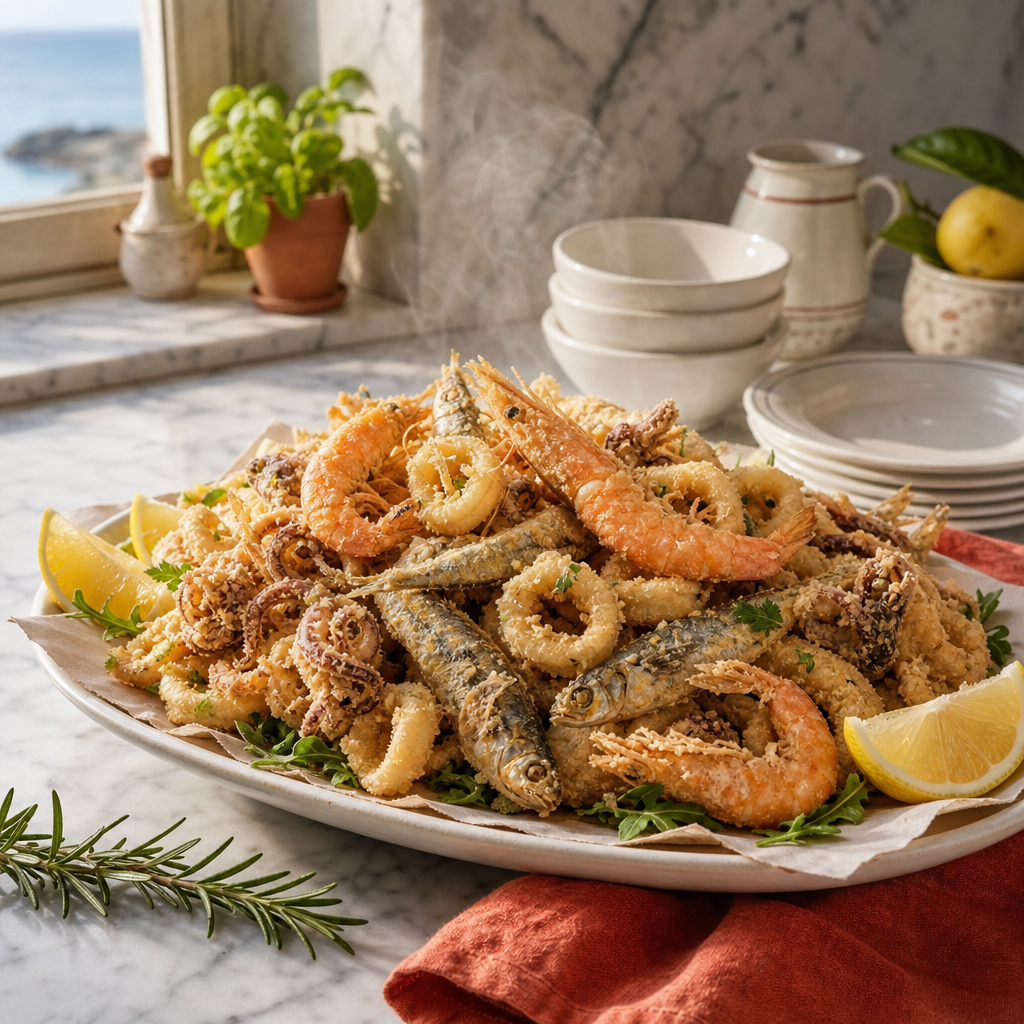
Fritto misto means mixed fry; fritto misto di mare narrows the idea to seafood from the coast. The exact mix changes by region and catch: Venice may include tiny lagoon fish and soft-shell crabs, Campania often frames the dish as frittura di paranza, named for the small fishing boats that brought in mixed small fish. The technique is deliberately spare: fresh seafood, a dry coating of semolina or flour, hot oil, salt, lemon. Batter exists in some household and restaurant versions, but the lean coastal standard is not a thick coating hiding the seafood.
Method 8 steps · 55 min
Dry the seafood
Spread the squid, shrimp, and small fish on towels. Blot until the surface feels tacky rather than wet, then keep chilled while the oil heats.
Set the frying station
Line a tray with paper towels or a rack. Mix semolina, 6 g fine salt, and pepper in a wide bowl. Cut the lemons and keep the finishing salt within reach.
Heat the oil
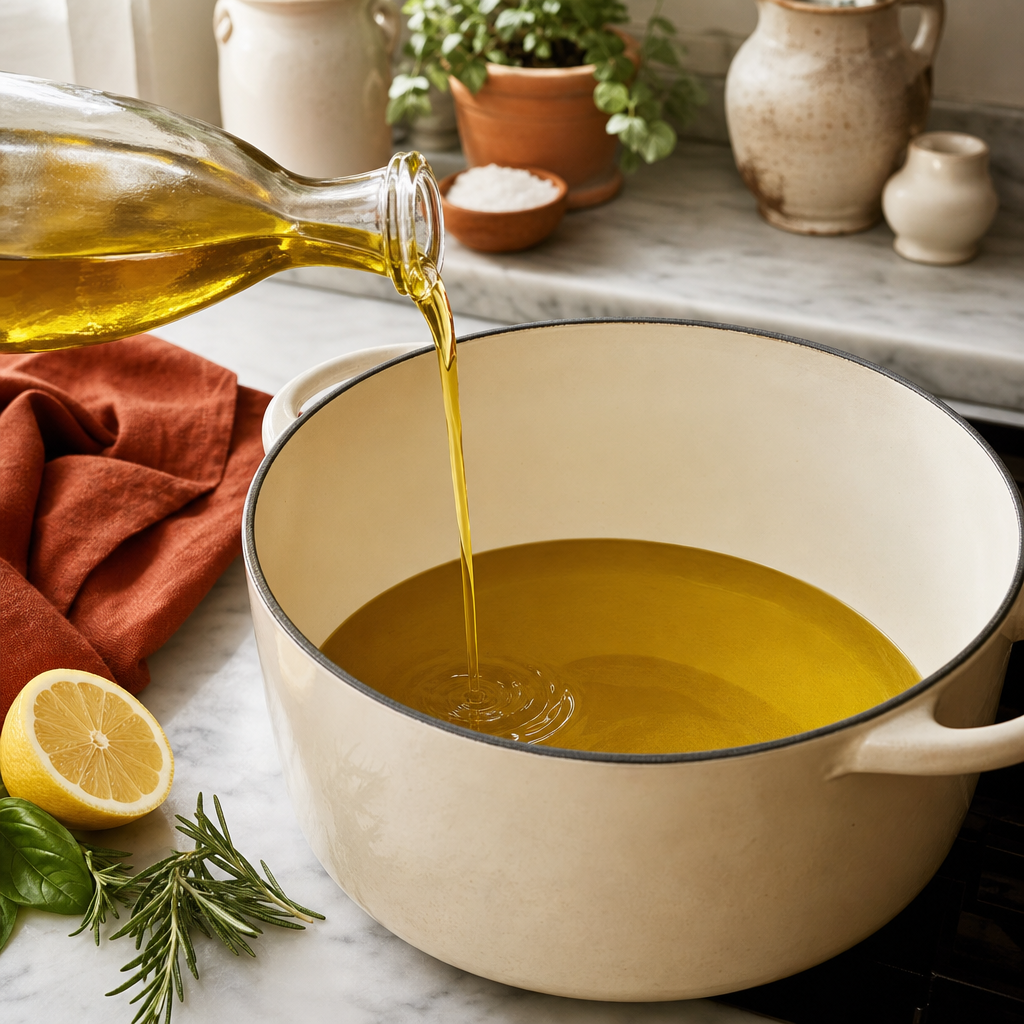
Pour oil into a heavy pot to a depth of 6-7 cm. Heat to 180°C. Adjust the burner so the oil returns to 175-180°C between batches.
Dredge one batch
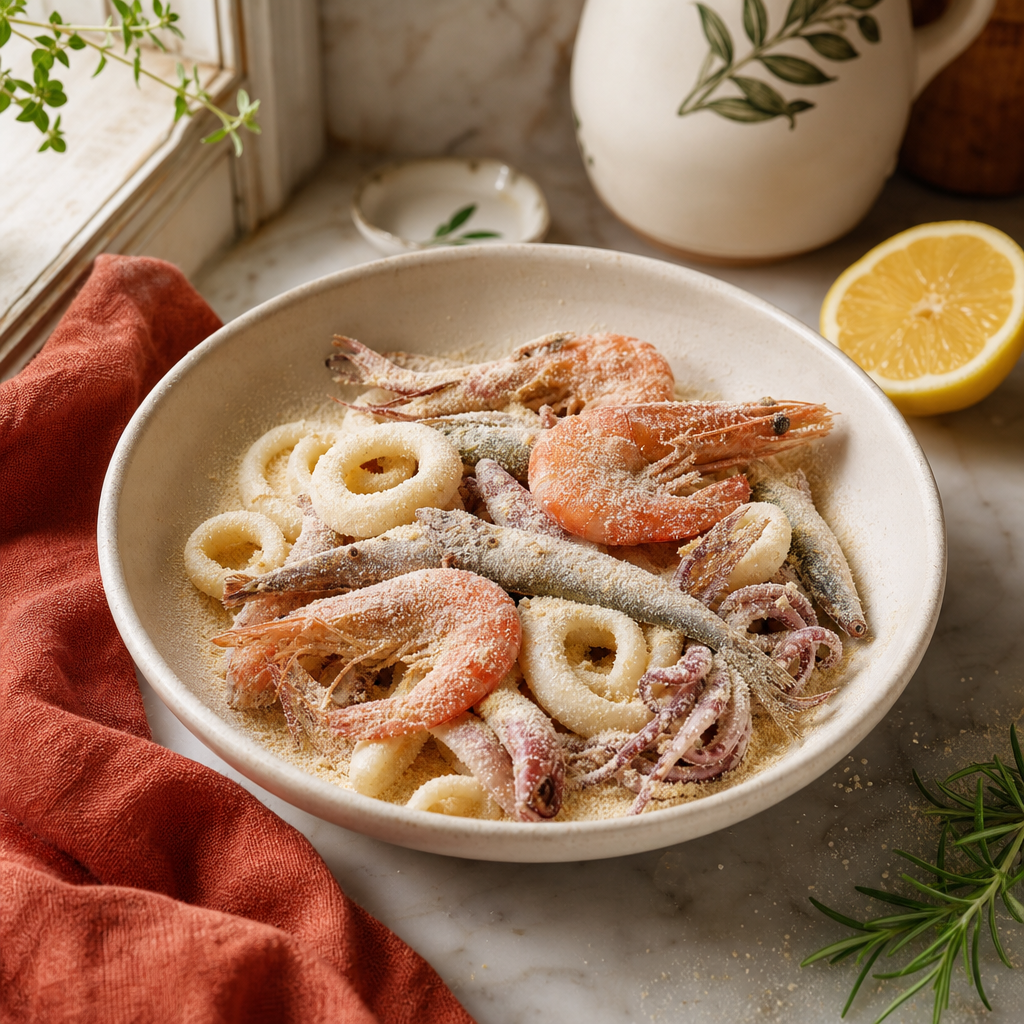
Toss only one batch of seafood in the semolina. Shake off every loose clump; the surface should look dusted, not buried.
Fry the squid
Lower squid rings and tentacles into the oil without crowding. Fry 60-90 seconds, until the coating is pale gold and the tentacles curl. Lift out with a spider and drain.
Fry the shrimp
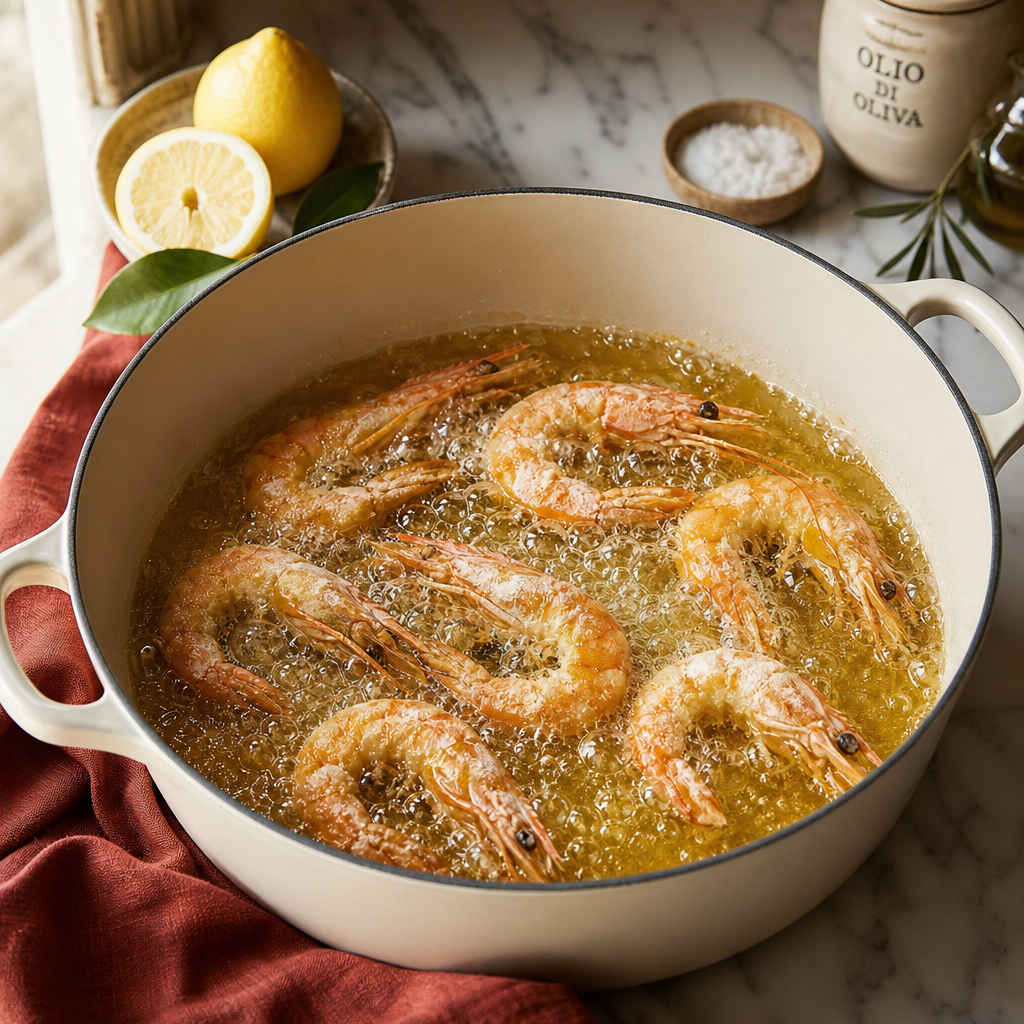
Dredge the shrimp, shake off excess, and fry 90-150 seconds depending on size. Pull them when the shells turn crisp and the bodies curl into loose commas, not tight C-shapes.
Fry the small fish
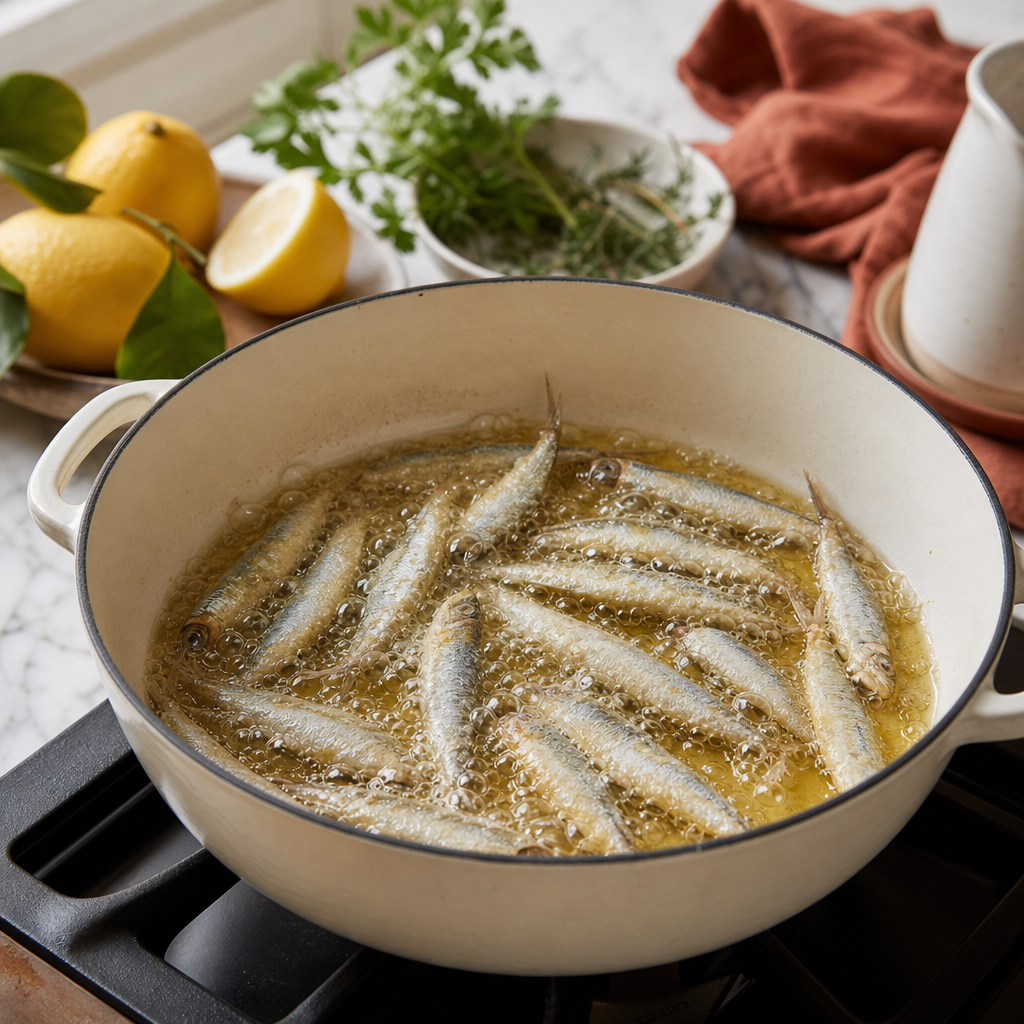
Dredge the small fish last and fry 2-4 minutes, depending on thickness. They are ready when the tails and fins look rigid and the coating is golden at the belly seam.
Salt and serve immediately
Salt each batch while it is still hot. Pile the seafood on a warm platter, scatter parsley if using, and serve with lemon wedges for squeezing at the table.
Common mistakes
- {'mistake': 'Dredging the seafood too early.', 'fix': 'Dredge one batch at a time, seconds before frying. Hydrated flour becomes paste.'}
- {'mistake': 'Crowding the pot.', 'fix': 'Leave open oil around each piece. If the oil drops below 170°C, stop adding seafood and let it recover.'}
- {'mistake': 'Using large shrimp and thick fish pieces.', 'fix': 'Keep the seafood small. Fritto misto is bite-size frying, not fish-and-chips portions.'}
- {'mistake': 'Chasing a dark brown crust.', 'fix': 'Aim for pale gold to golden. Deep brown usually means overcooked squid and bitter flour.'}
- {'mistake': 'Squeezing lemon over the whole platter before serving.', 'fix': 'Serve lemon wedges on the side. Lemon softens the crust fast.'}
What does not belong
- {'item': 'Thick beer batter', 'reason': 'Thick batter does not belong in the lean coastal version. It hides the seafood and changes the dish into fried batter with seafood inside.'}
- {'item': 'Cheese', 'reason': 'Cheese does not belong on fritto misto di mare. Italian seafood frying finishes with salt and lemon, not grated cheese.'}
- {'item': 'Garlic powder or dried herb blends in the dredge', 'reason': 'Seasoned fry mix does not belong here. It masks the marine sweetness and burns in the oil.'}
- {'item': 'Extra virgin olive oil as the sole frying oil', 'reason': 'Extra virgin olive oil does not belong as the main frying fat for this method. The heat strips its aroma and can push the oil toward smoke; use neutral oil or light olive oil.'}
- {'item': 'Heavy sauces', 'reason': 'Aioli, tartar sauce, and sweet chili sauce do not belong on the platter. Lemon is the correct acid; the crust is too thin for sauce.'}