Risotto Nero Seppia
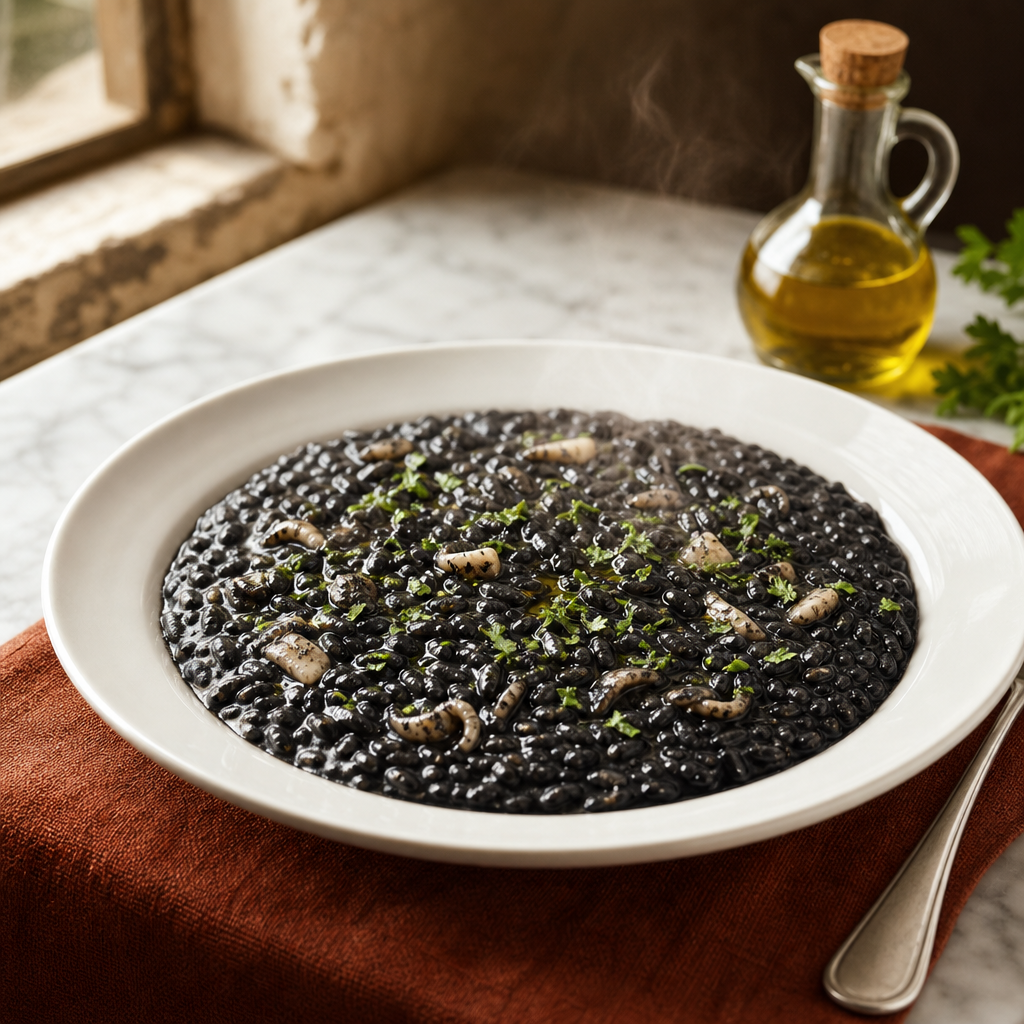
The dish in context
Risotto al nero di seppia is one of the defining seafood rice dishes of Venice and the wider Veneto, where lagoon cooking gives equal weight to rice and cephalopods. Traditional versions use seppia, cuttlefish, and its ink; English-language recipes often substitute squid because it is easier to buy outside Italy. The dish exists in neighboring Adriatic cooking as well, but the Venetian version is built as risotto, not as black seafood stew with rice added. Its black color is not decoration — the ink is the seasoning base, carrying salinity, iodine, and marine bitterness.
Method 7 steps · 75 min
Warm the stock
Bring the fish stock to a bare simmer, then hold it hot beside the risotto pan. Do not boil it hard; evaporation concentrates salt before the rice has a chance to use the liquid.
Start the cuttlefish braise
Heat 30 ml olive oil in a wide pan over medium heat. Add onion and a pinch of salt; cook until soft and translucent, 8-10 minutes, without browning. Add garlic for 30 seconds, then add the cuttlefish and stir until it firms and turns opaque.
Add wine, tomato, and ink
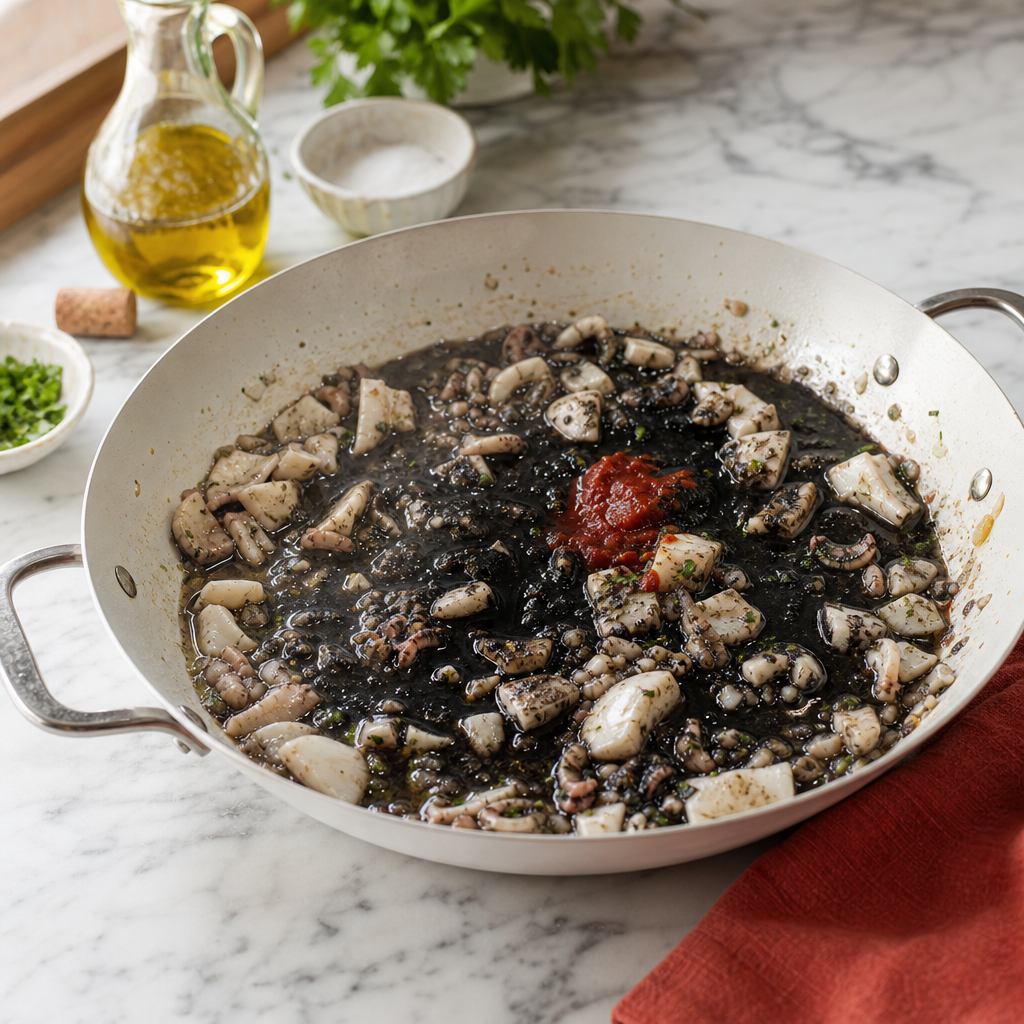
Add 100 ml wine and reduce until the raw alcohol smell is gone. Stir in the tomato paste, then dilute the ink with 60 ml hot stock and add it to the pan. Cover and simmer gently until the cuttlefish is tender but still springy, 25-35 minutes; add splashes of stock if the pan gets dry.
Toast the rice
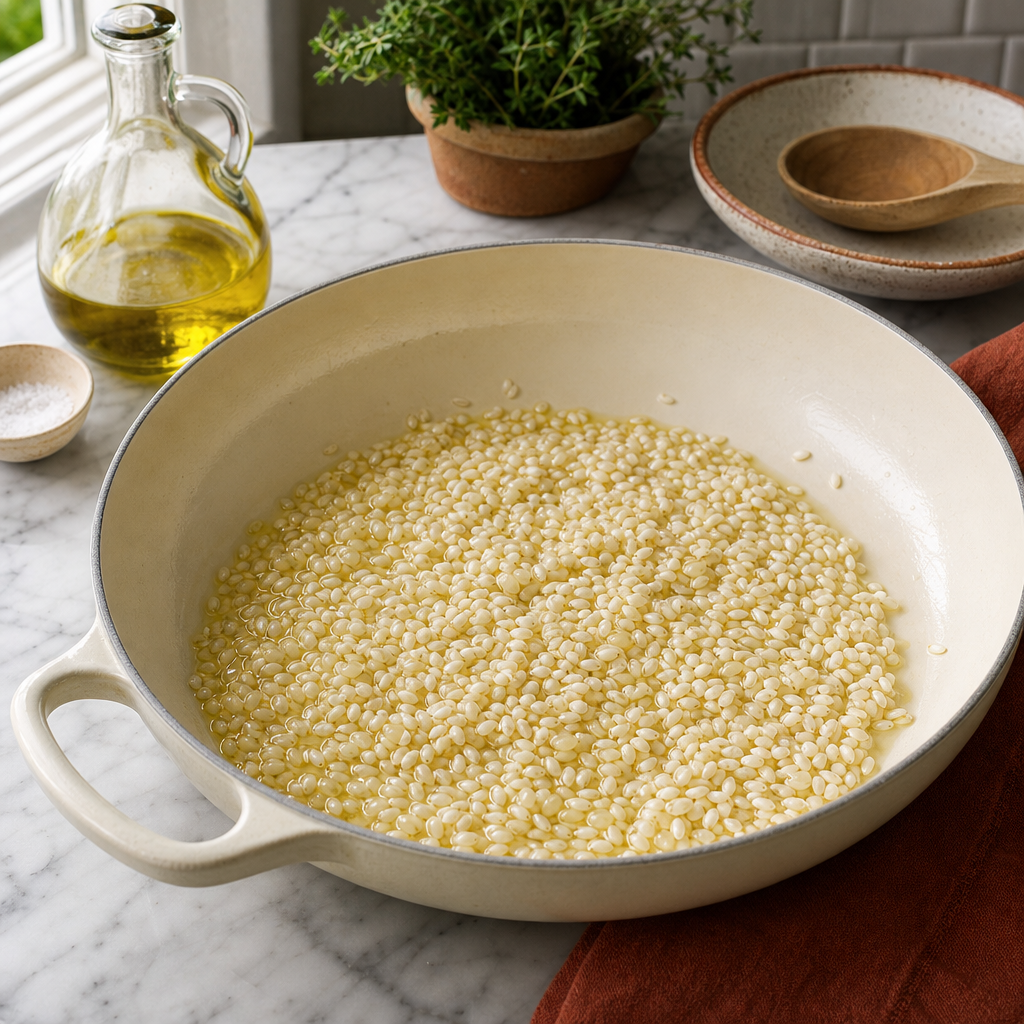
In a second wide pan, heat the remaining 15 ml olive oil over medium heat. Add the rice and stir for 2 minutes, until the grains feel hot and sound faintly glassy against the pan. Add the remaining 50 ml wine and reduce until the pan is nearly dry.
Cook the risotto
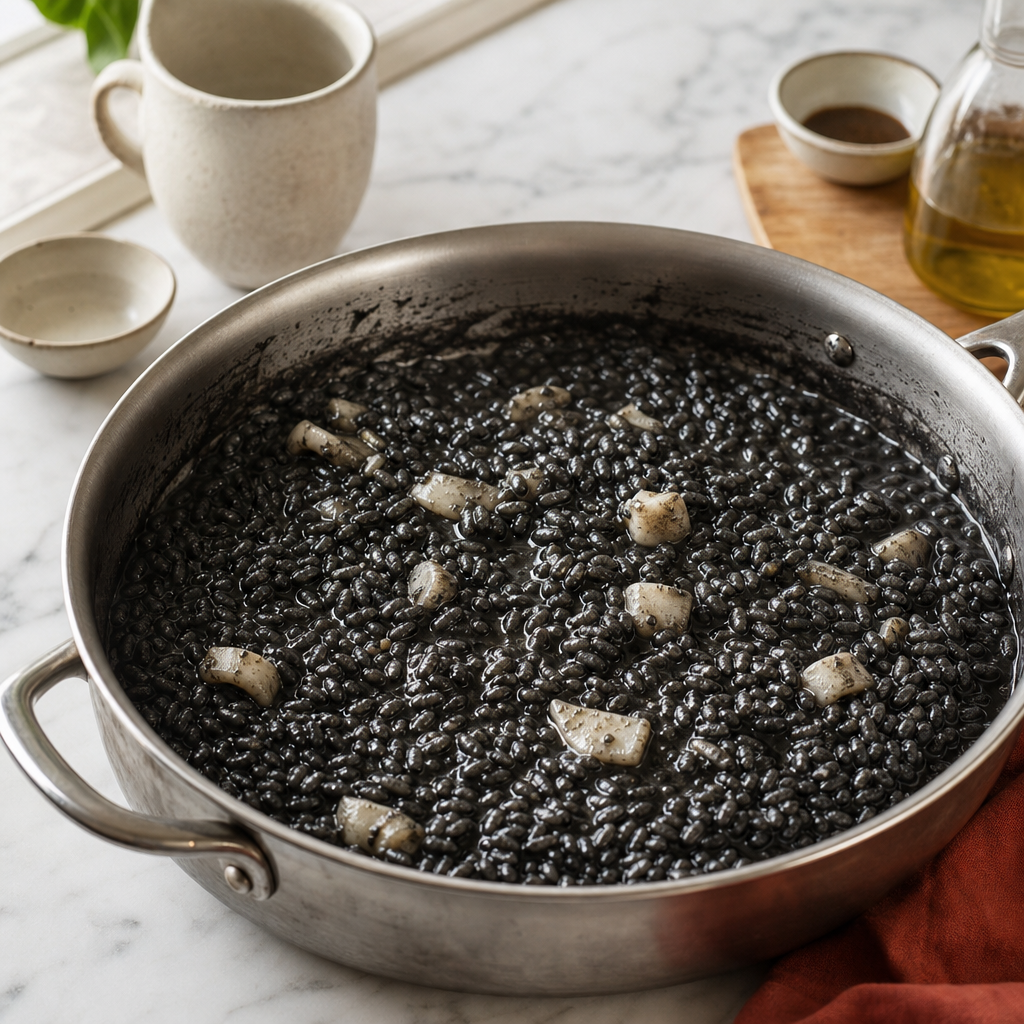
Add hot stock one ladle at a time, stirring steadily and adding the next ladle only when the previous one is mostly absorbed. After 8 minutes, fold in the cuttlefish-ink braise. Continue adding stock and stirring until the rice is tender at the edge with a fine chalk line in the center, usually 16-18 minutes total from the first ladle.
Set the all'onda texture
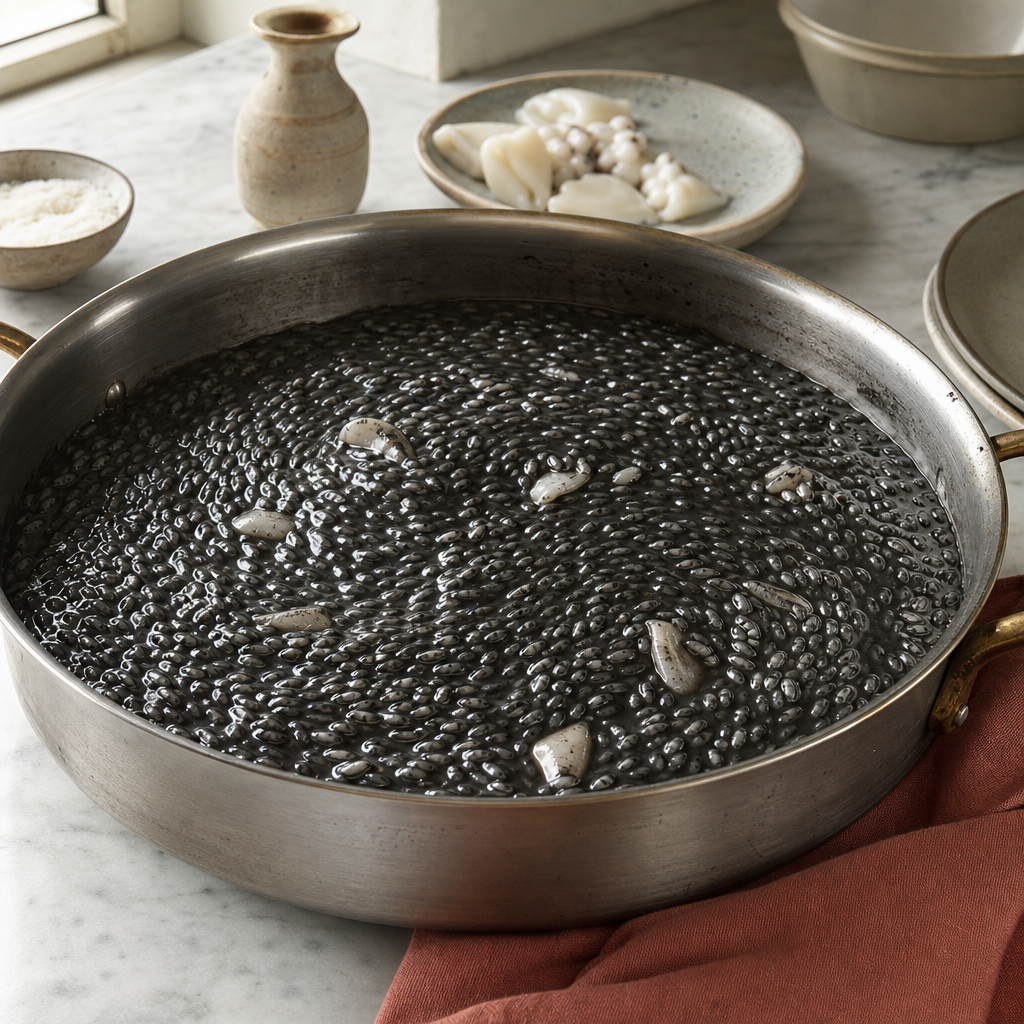
Adjust salt only now, after the ink and stock have concentrated. Add enough hot stock to make the risotto loose and flowing, then pull the pan off heat. Beat in the cold butter for 45-60 seconds until the surface turns glossy and the rice moves in a slow wave when the pan is shaken.
Plate immediately
Spoon onto warm shallow plates and tap each plate once so the risotto settles flat. Finish with parsley and black pepper if using. Serve at once; risotto nero thickens fast and does not wait politely.
Common mistakes
- {'mistake': 'Using too little ink', 'fix': 'Use enough ink for a black, glossy risotto. Gray risotto usually means the ink was treated as coloring rather than as a core ingredient.'}
- {'mistake': 'Cooking the cuttlefish only for the rice-cooking time', 'fix': 'Braise it first. Cuttlefish needs longer than rice to become tender; otherwise the rice finishes before the seafood does.'}
- {'mistake': 'Letting the risotto finish stiff', 'fix': "Add stock at the end until it moves all'onda. A correct risotto ripples outward on the plate."}
- {'mistake': 'Salting before the ink is added', 'fix': 'Salt late. Commercial ink and fish stock can be salty enough to push the dish over the line.'}
- {'mistake': 'Adding cheese because risotto usually gets cheese', 'fix': "Do not add Parmigiano to this seafood risotto. The dairy salt and nuttiness flatten the ink's mineral edge."}
What does not belong
- {'item': 'Parmigiano-Reggiano or grated Parmesan', 'reason': 'Cheese does not belong in Risotto al Nero di Seppia. Seafood risotto is a major exception to the default risotto mantecatura.'}
- {'item': 'Cream', 'reason': 'Cream turns the ink muddy and heavy. The correct creaminess comes from rice starch and off-heat emulsification.'}
- {'item': 'Long-grain rice, basmati, or jasmine rice', 'reason': 'These grains do not release the starch needed for risotto. They make black rice pilaf, not risotto.'}
- {'item': 'Heavy tomato sauce', 'reason': 'A small amount of tomato paste can round the braise; tomato sauce turns the dish into something else.'}
- {'item': 'Prawns as the main seafood', 'reason': 'Prawns can be a garnish in modern restaurant versions, but they do not replace cuttlefish in this dish.'}
- {'item': 'Truffle oil', 'reason': 'The dish already has a strong mineral-marine identity. Truffle oil smothers it.'}