Cacciucco Livornese
The dish in context
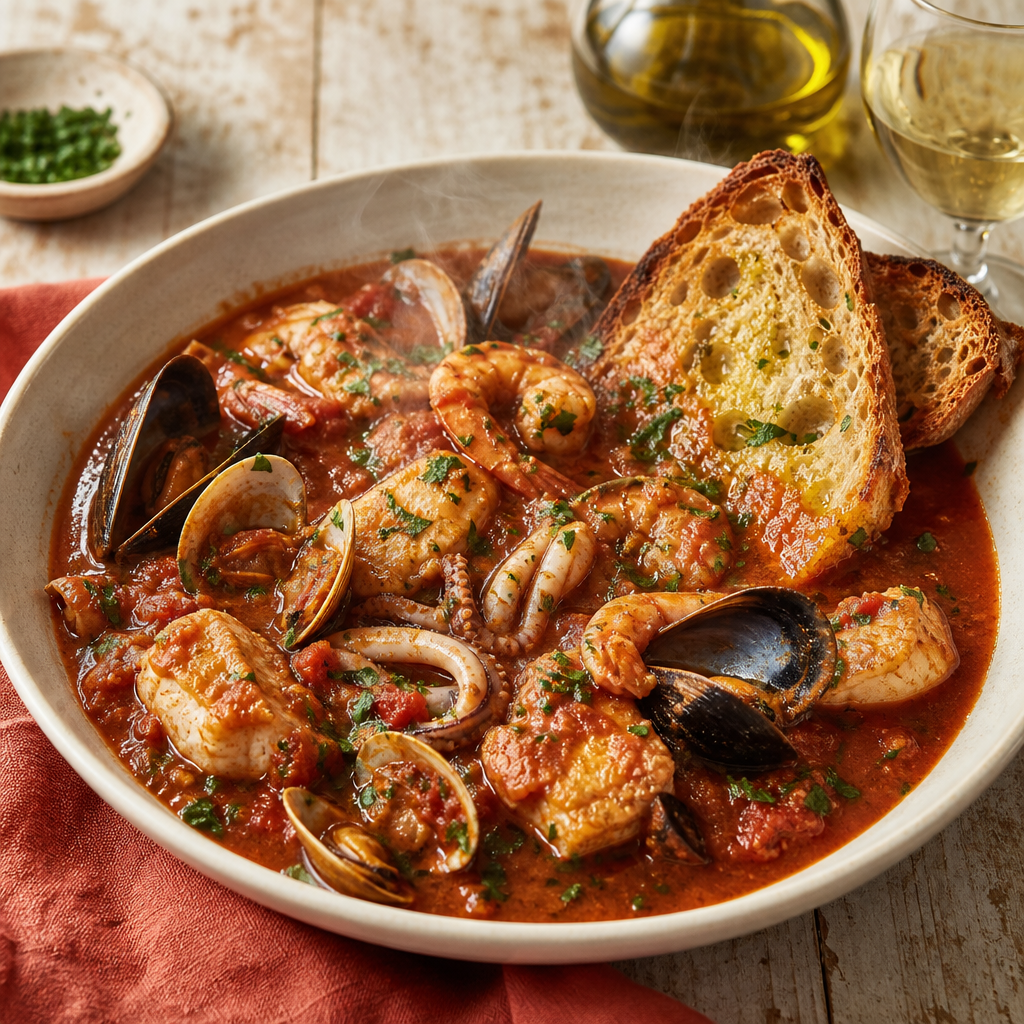
Cacciucco is the port stew of Livorno, built from the small, bony, awkward fish that were less valuable at market and more valuable in a pot. Its name is often linked to Turkish küçük, meaning small, which fits both Livorno's trading history and the dish's use of mixed small fish, though food etymology does not need a single clean origin story to be useful. The Livornese version is darker and more forceful than many Italian fish soups: garlic, chili, sage, tomato, red wine, and toasted bread are not garnish-level details. Viareggio has its own cacciucco tradition; this recipe follows the Livorno grammar, where the broth is extracted first from bones and heads, then the seafood is cooked in stages.
Method 13 steps · 150 min
Purge and sort the seafood
Purge clams in cold salted water for 30 minutes if needed. Scrub mussels, discard cracked shellfish, and discard any open mussels or clams that do not close when tapped. Keep fish pieces cold and separate from octopus, squid, and shellfish.
Start the garlic-sage base
Heat the olive oil in a wide heavy pot over medium heat. Add 6 crushed garlic cloves, chili, sage, and onion if using; cook until the garlic is pale gold at the edges and the onion is soft, 8-10 minutes. Do not brown the garlic dark.
Toast the tomato paste
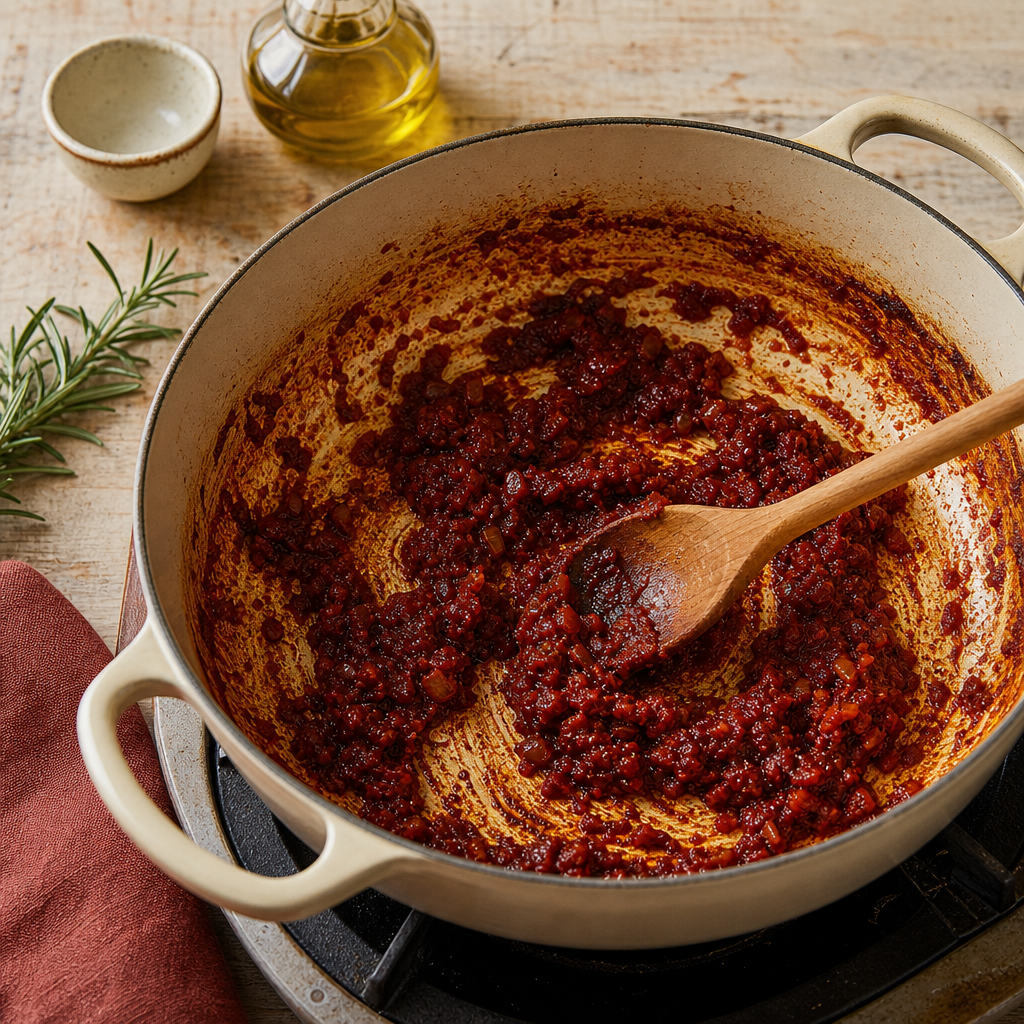
Add the tomato paste and cook, stirring, until it darkens from bright red to brick-red and leaves a film on the bottom of the pot, 3-4 minutes.
Reduce the red wine
Pour in the red wine and scrape the bottom of the pot. Boil until the wine no longer smells sharp and the liquid is reduced by about half, 6-8 minutes.
Build the fish-bone broth
Add the fish heads, bones, and trimmings, then add crushed tomatoes and water or light stock. Bring to a low simmer, skim once, and cook uncovered for 35 minutes. Press the heads occasionally with a spoon to release gelatin and juices.
Strain hard
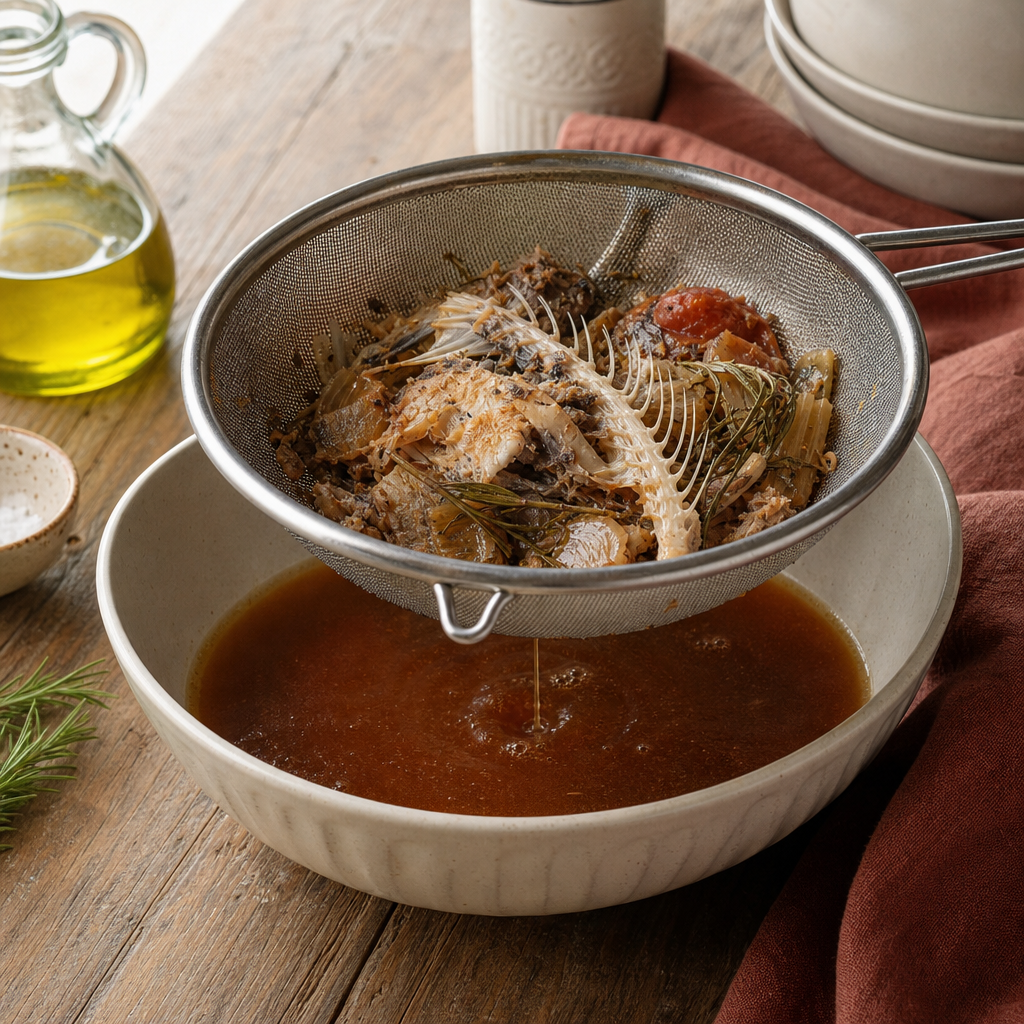
Pass the broth through a food mill or coarse sieve into a clean bowl, pressing firmly on the solids. Discard bones, skins, and aromatics. Rinse the pot and return the strained broth to it.
Cook the octopus
Bring the strained broth to a bare simmer. Add the octopus and cook gently until a skewer enters with resistance but not bounce, 35-45 minutes depending on size.
Add cuttlefish or squid
Add the cuttlefish or squid and simmer until the pieces lose their raw translucency and begin to soften, 12-18 minutes. Keep the pot at a tremble, not a rolling boil.
Cook the firm fish
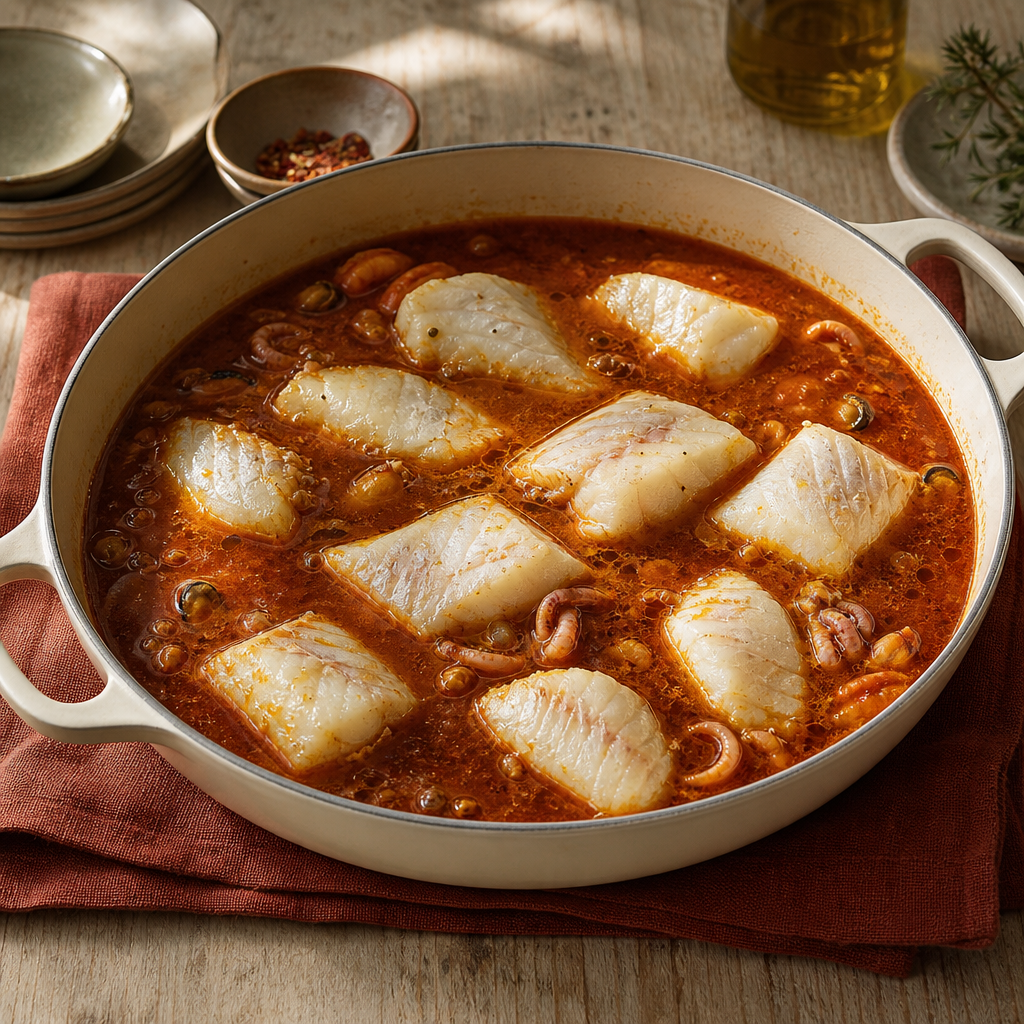
Season the broth lightly with salt, then slide in the firm white fish pieces in a single layer where possible. Simmer without stirring for 5-7 minutes, spooning broth over the top instead of moving the fish.
Finish with shellfish and shrimp
Add mussels, clams, and shrimp. Cover and cook until the shells open and the shrimp turn opaque in a loose comma shape, 4-6 minutes. Discard any shellfish that remain closed.
Correct the broth
Turn off the heat. Taste the broth and adjust with salt, black pepper, and a small drizzle of olive oil if the tomato tastes sharp. Scatter in parsley.
Toast and rub the bread
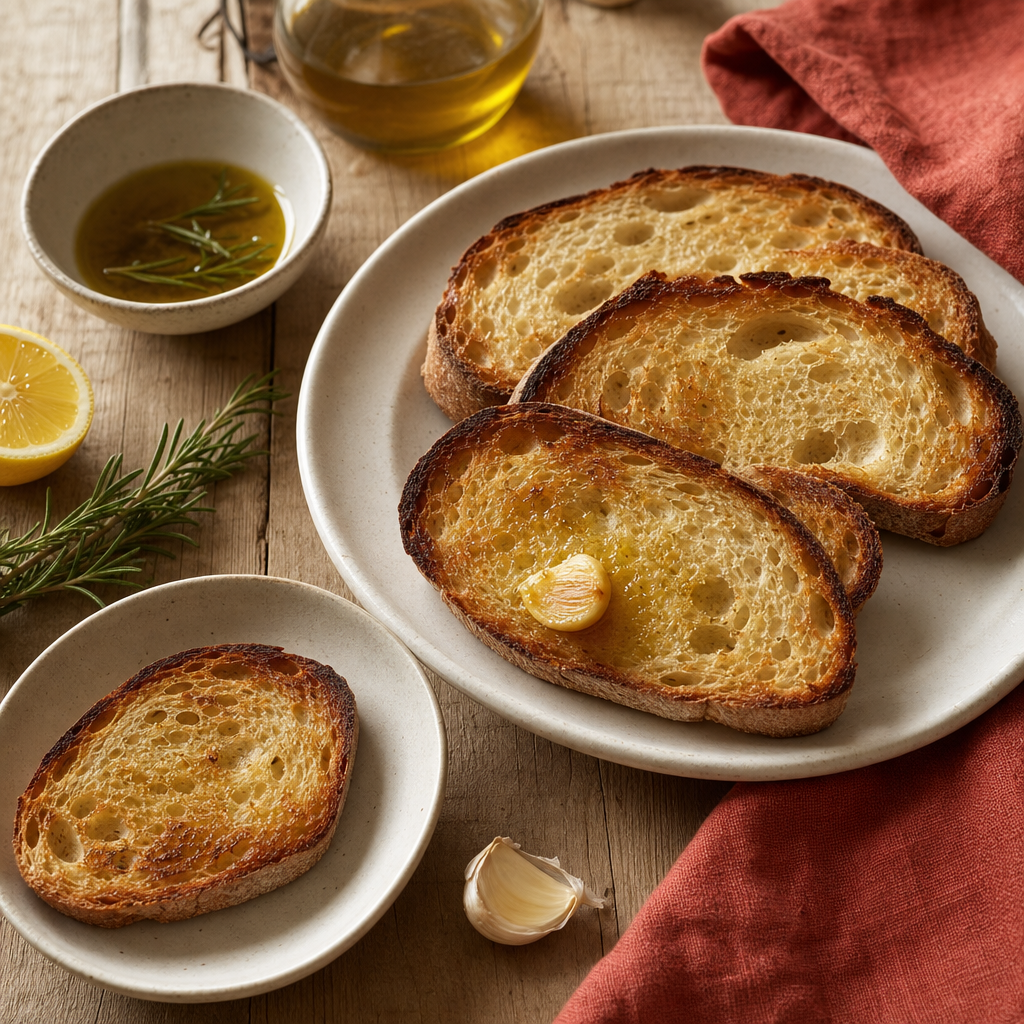
Toast the bread until dry and browned at the edges. Rub one side lightly with the cut garlic clove. Place one slice in each shallow bowl or serve the toast alongside if the table prefers structure.
Serve wide, not deep
Ladle broth over the bread, then arrange fish, cephalopods, and shellfish on top so the pieces stay visible. Finish with a thread of olive oil and more parsley if needed.
Common mistakes
- {'mistake': 'Using only boneless fillets', 'fix': 'Use heads, bones, or at minimum a clean unsalted fish stock. Fillets alone give protein, not broth.'}
- {'mistake': 'Adding all seafood at once', 'fix': 'Cook octopus first, then squid or cuttlefish, then firm fish, then shellfish and shrimp. Timing is the recipe.'}
- {'mistake': 'Boiling the stew hard', 'fix': 'Hold a low simmer. A rolling boil shreds fish, toughens squid, and makes tomato taste coarse.'}
- {'mistake': 'Skipping the straining step', 'fix': 'Strain and press the fish-bone broth. Cacciucco should be dense, not full of bones and scale fragments.'}
- {'mistake': 'Serving the bread as a polite side', 'fix': 'Toast it hard, rub it with garlic, and put it in contact with the broth. Soft untoasted bread turns gluey.'}
What does not belong
- {'item': 'Cream', 'reason': 'Cream does not belong in cacciucco. It dulls the tomato, garlic, wine, and fish broth that define the Livornese profile.'}
- {'item': 'Cheese', 'reason': 'Grated cheese on this seafood stew does not belong. It muddies the broth and fights the shellfish liquor.'}
- {'item': 'Salmon or oily blue-fish bones for the broth', 'reason': 'They make the stock greasy and metallic. Use white fish heads, frames, and small rock fish.'}
- {'item': 'Sweet tomato sauce', 'reason': 'Sugar-forward jarred sauce does not belong. Cacciucco is dark and savory, with heat from chili and bitterness from reduced wine.'}
- {'item': 'Dried mixed Italian herbs', 'reason': 'The herb note is sage and parsley. Oregano-heavy dried blends make the stew taste like generic tomato sauce.'}