Cappuccino

The dish in context
Cappuccino is the modern Italian form of an older central European coffee-and-milk idea, with the name tied to the brown-and-white coloring associated with Capuchin friars. The drink as recognized now depends on espresso-machine technology: concentrated coffee below, steam-textured milk above. In Italy it is mainly a morning drink, though the rule is social rather than mechanical; bars will still make one later if asked. The canonical size is small by chain-cafe standards, usually around 150-180 ml, not a bucket of hot milk with coffee in it.
Method 7 steps · 6 min
Warm the cup
Fill a 150-180 ml cappuccino cup with hot water while the machine heats. Empty and dry it before brewing.
Brew the espresso
Pull 25-30 ml espresso directly into the warmed cup. Stop the shot when the stream turns pale blond and watery, not when the cup looks full.
Stretch the milk
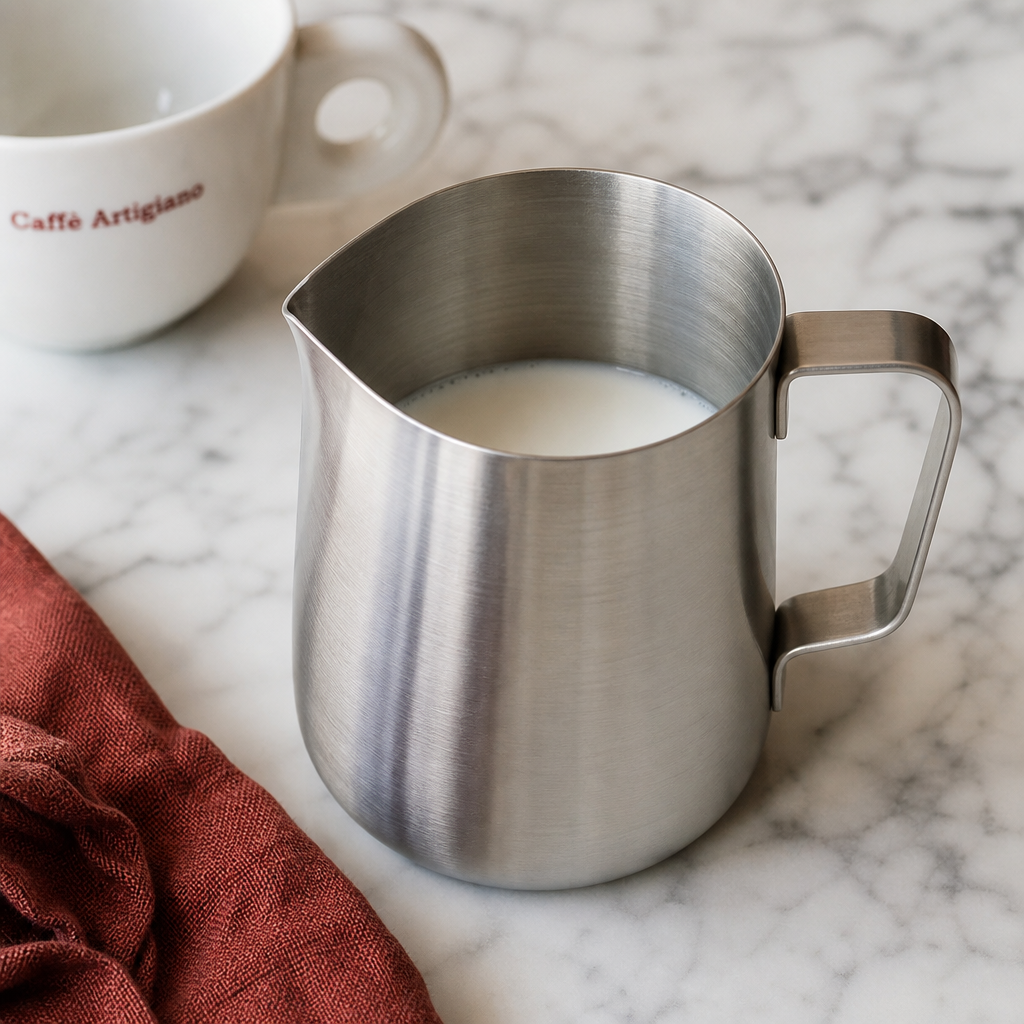
Pour the measured cold milk into a pitcher, leaving enough headroom for expansion; in most pitchers this sits around just below the spout base. Place the steam tip just under the surface and introduce air for 3-5 seconds, until the milk volume rises by about one-third and the sound shifts from sharp paper-tearing to a quieter hiss.
Texture and heat
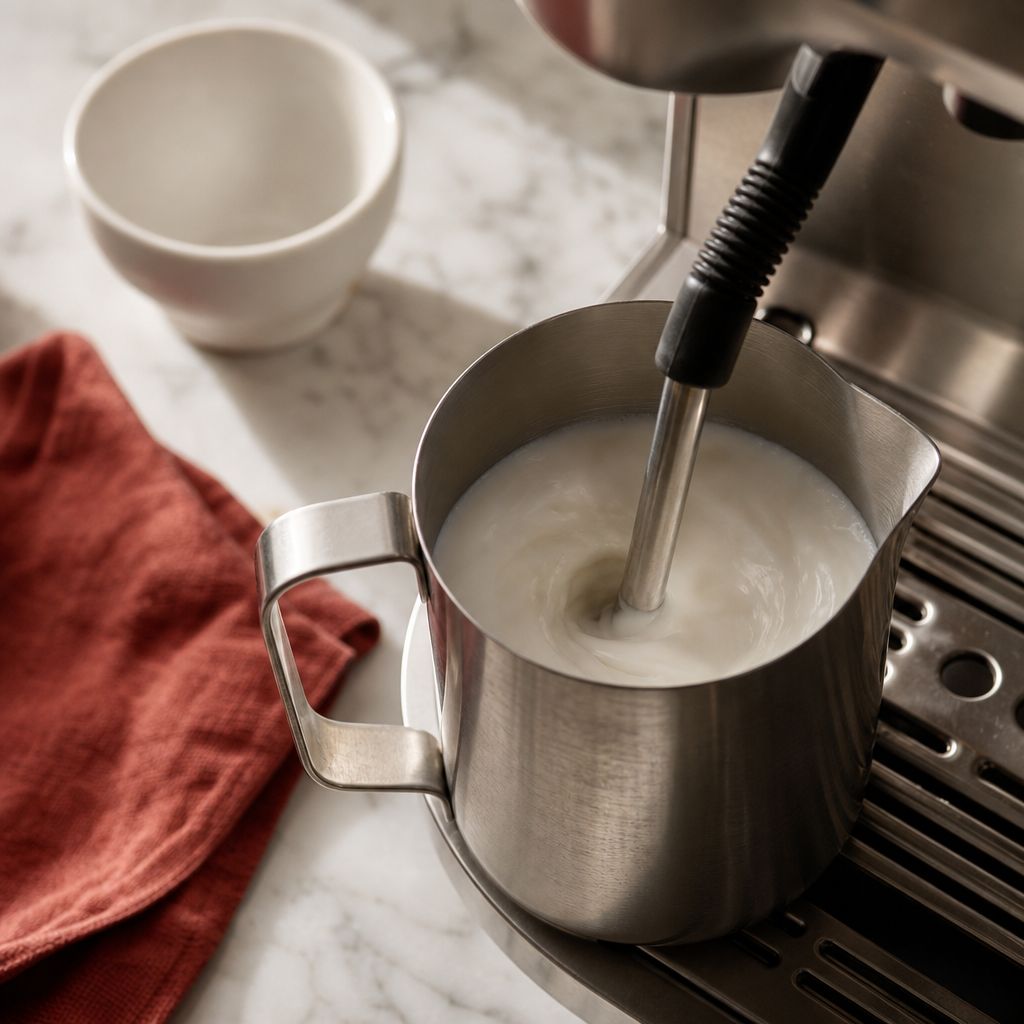
Lower the steam tip slightly and angle the pitcher to create a whirlpool. Stop steaming at 60-65°C, or when the pitcher is hot enough that holding it for more than 2 seconds is uncomfortable.
Polish the foam
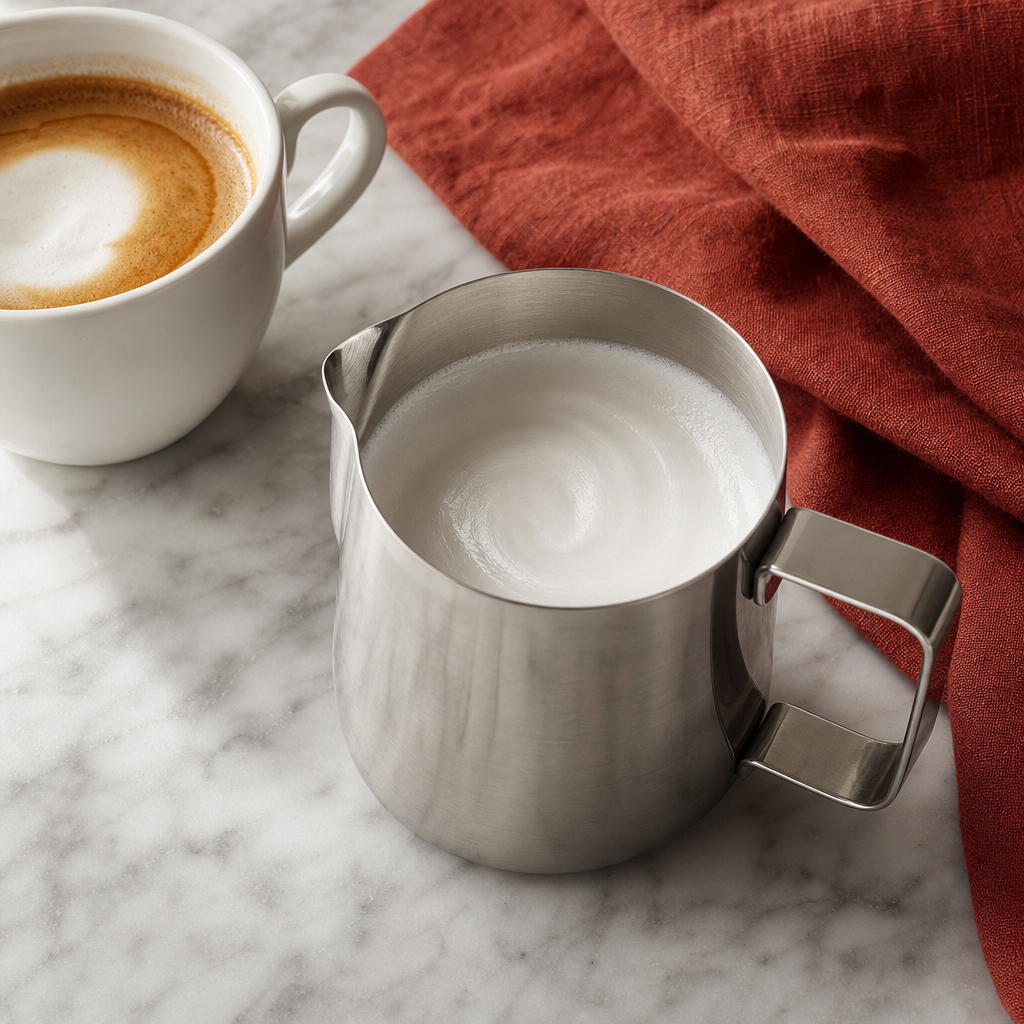
Tap the pitcher once to break large surface bubbles, then swirl until the milk looks glossy and moves like wet paint. Do not let it sit.
Pour the cappuccino
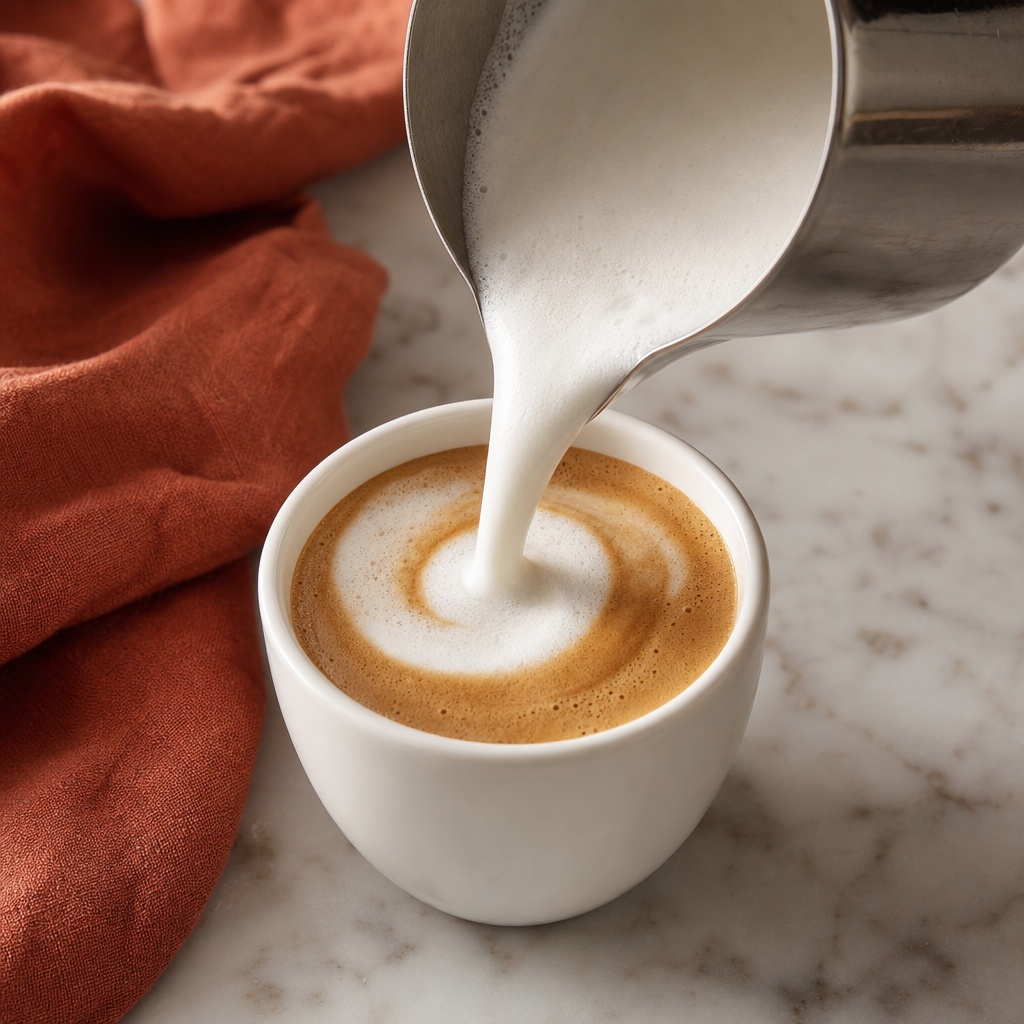
Pour from 3-4 cm above the cup at first to fold milk through the espresso. As the cup fills, lower the pitcher close to the surface and increase the pour so the foam rises into a white cap with a tan crema ring.
Finish
Dust with a trace of unsweetened cocoa if using. Serve immediately, before the foam dries and the espresso cools.
Common mistakes
- {'mistake': 'Using a large mug', 'fix': 'Use a 150-180 ml cup. A 300 ml mug turns the drink into a weak latte unless the espresso dose is changed.'}
- {'mistake': 'Overheating the milk', 'fix': 'Stop at 60-65°C. Boiled milk smells flat and forms coarse, stiff foam.'}
- {'mistake': 'Spoon-dolloping dry foam on top', 'fix': 'Steam wet foam and pour it. Cappuccino foam should be integrated, glossy, and plush, not a separate cap of bubbles.'}
- {'mistake': 'Running the espresso shot long for more volume', 'fix': 'Pull a proper espresso and control drink size with the cup and milk. Long extraction adds bitterness, not coffee strength.'}
- {'mistake': 'Letting steamed milk wait', 'fix': 'Swirl and pour immediately. Foam stratifies fast in the pitcher.'}
What does not belong
- {'item': 'Whipped cream', 'reason': 'Whipped cream belongs to other coffee drinks. Cappuccino is espresso plus steam-textured milk.'}
- {'item': 'Vanilla syrup or caramel sauce', 'reason': 'Flavored syrup turns the drink into a flavored milk coffee. It does not belong in a standard cappuccino.'}
- {'item': 'Chocolate sauce', 'reason': 'Chocolate sauce pushes the drink toward mocha. A trace of dry cocoa on top is optional; sauce is not cappuccino grammar.'}
- {'item': 'A tall glass', 'reason': 'That presentation reads latte macchiato or caffè latte. Cappuccino belongs in a small handled cup.'}
- {'item': 'Boiling milk', 'reason': 'Boiled milk destroys the clean dairy sweetness and makes the foam coarse.'}