Espresso Classico
The dish in context
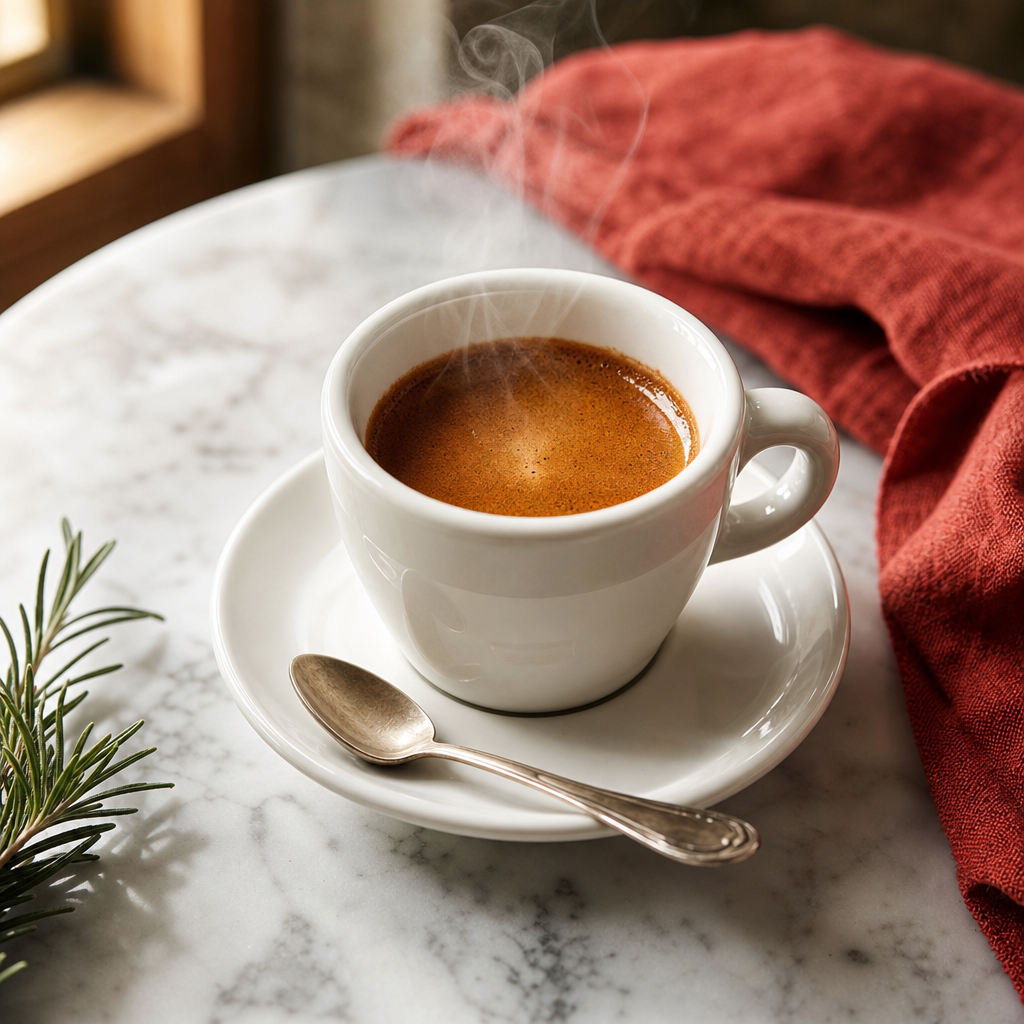
Espresso is an Italian pressure-brewed coffee method, not a bean type and not a roast level. Early 20th-century machines made coffee to order under pressure, and postwar lever machines helped define the crema-topped short shot now associated with Italian bars. The Italian bar standard is small, concentrated, and served immediately, often consumed standing at the counter. Contemporary specialty coffee has widened the range of roasts and ratios, but Espresso Classico points to the traditional Italian grammar: compact dose, balanced bitterness, dense body, visible crema.
Method 5 steps · 5 min
Heat the machine and cup
Bring the espresso machine fully to temperature. Lock in the empty portafilter while it heats, then warm the demitasse with hot water and dry it before brewing.
Grind and dose
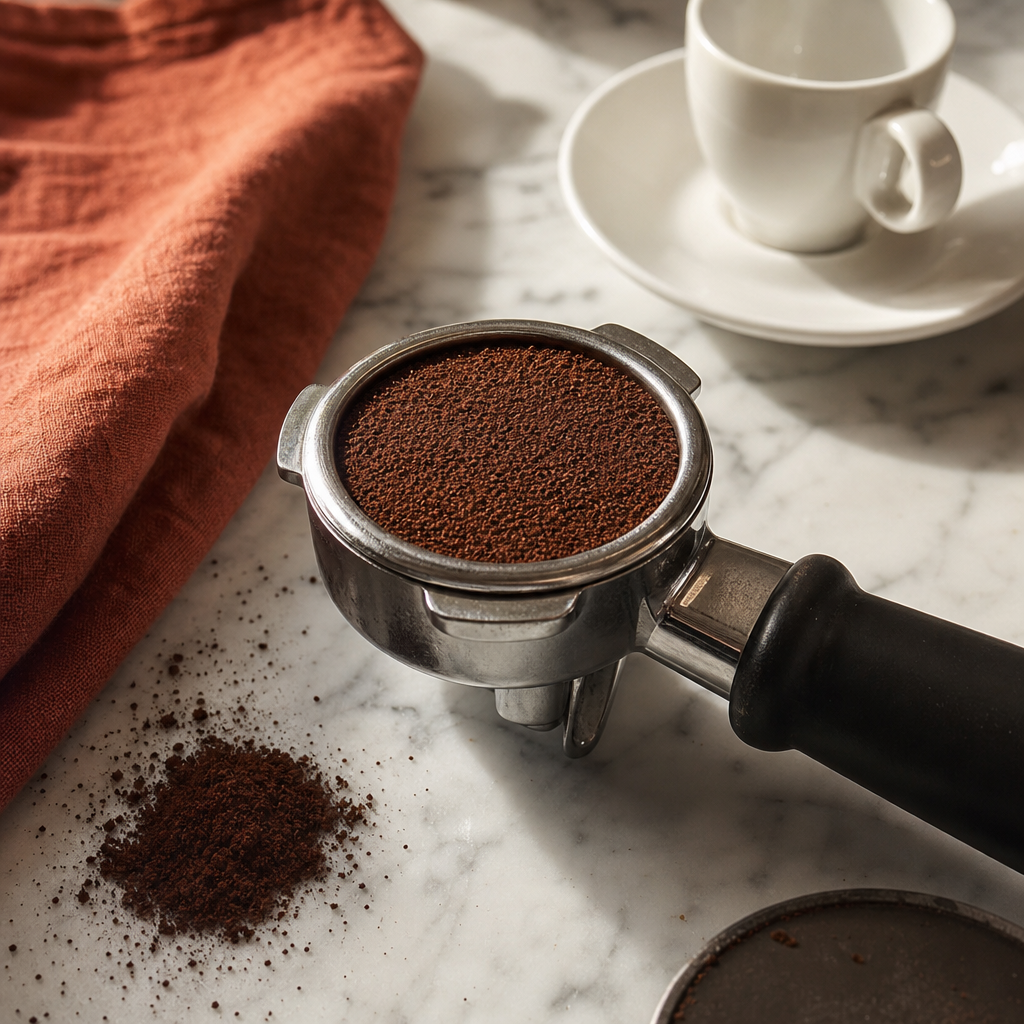
Grind 8 g coffee fine enough that the finished shot reaches 25-30 ml in 25-30 seconds. Dose into a dry single basket and level the grounds before tamping.
Tamp flat
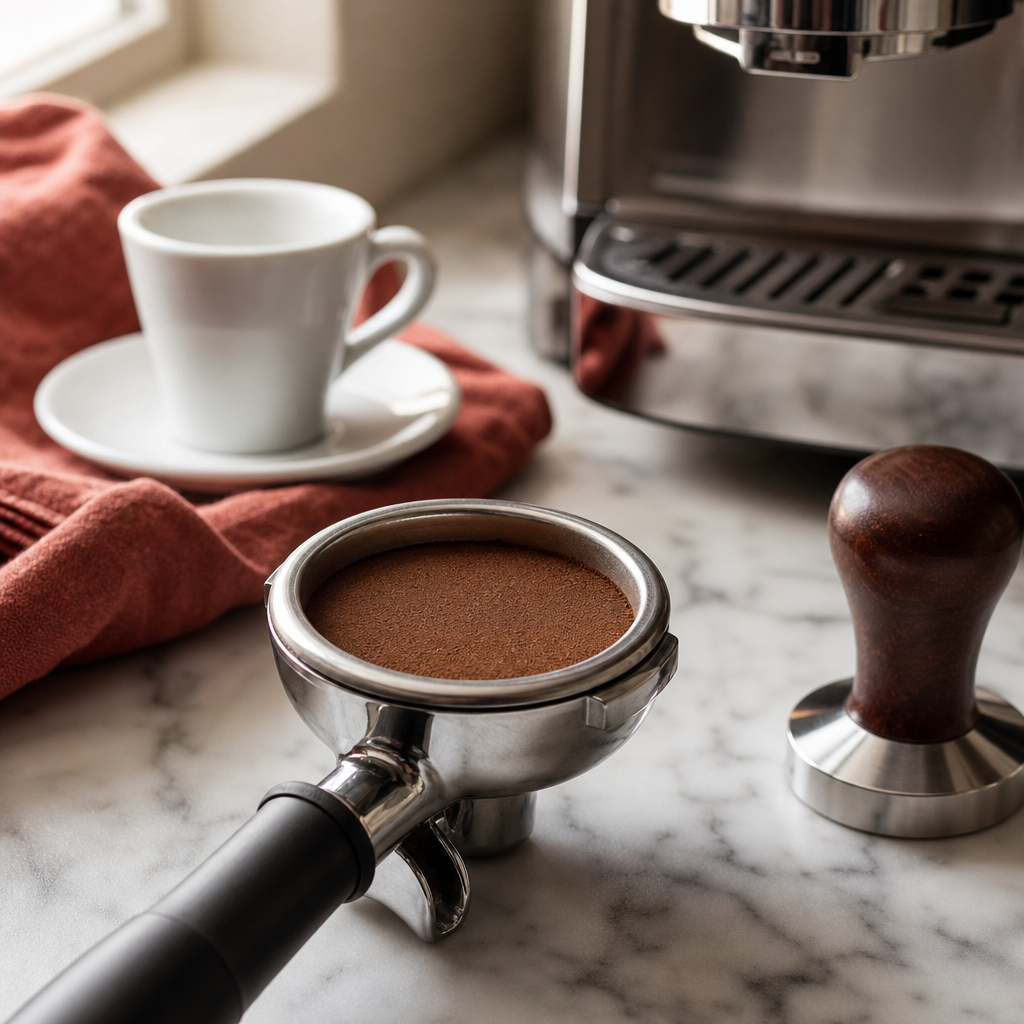
Tamp level with firm, even pressure. Wipe loose grounds from the rim, then lock the portafilter into the group head without knocking the puck.
Pull the shot
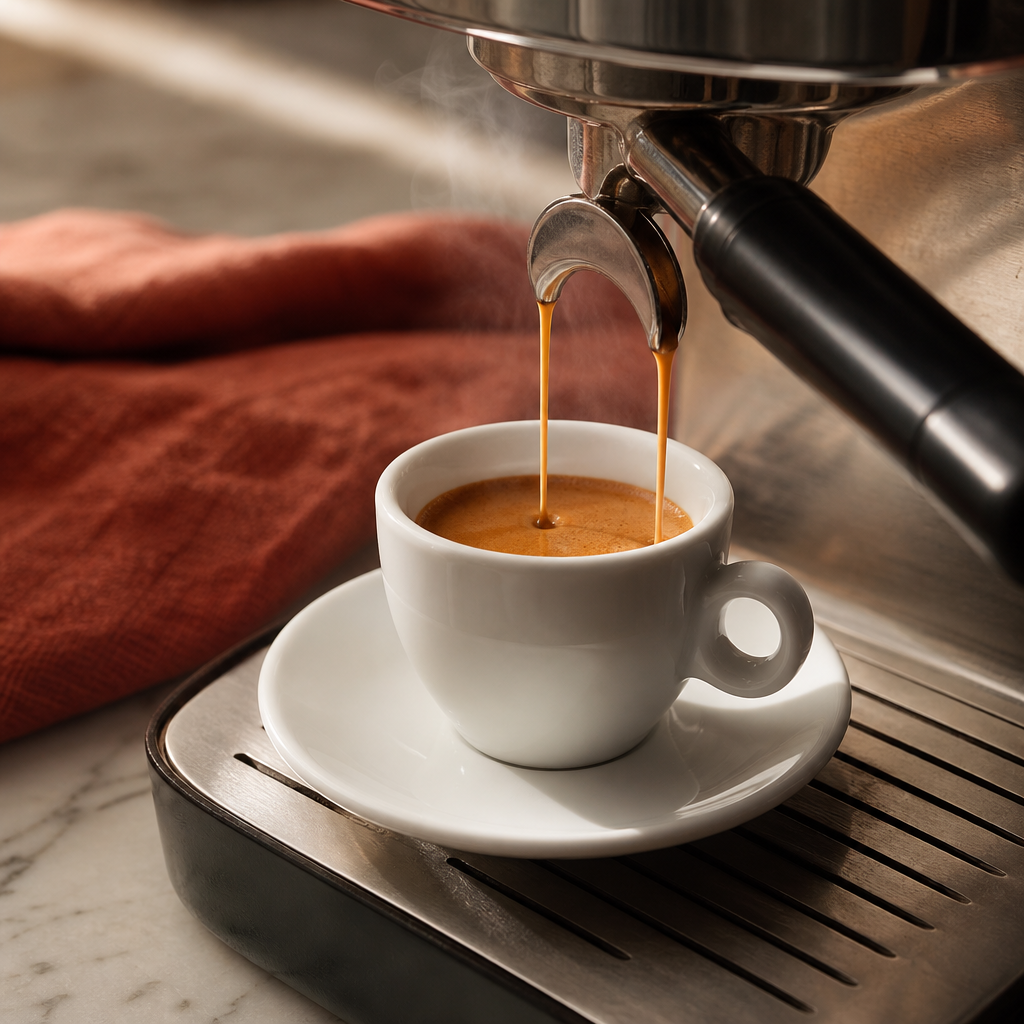
Start brewing immediately. Stop at 25-30 ml, including crema, when the stream shifts from dark brown to lighter hazelnut and begins to thin.
Serve at once
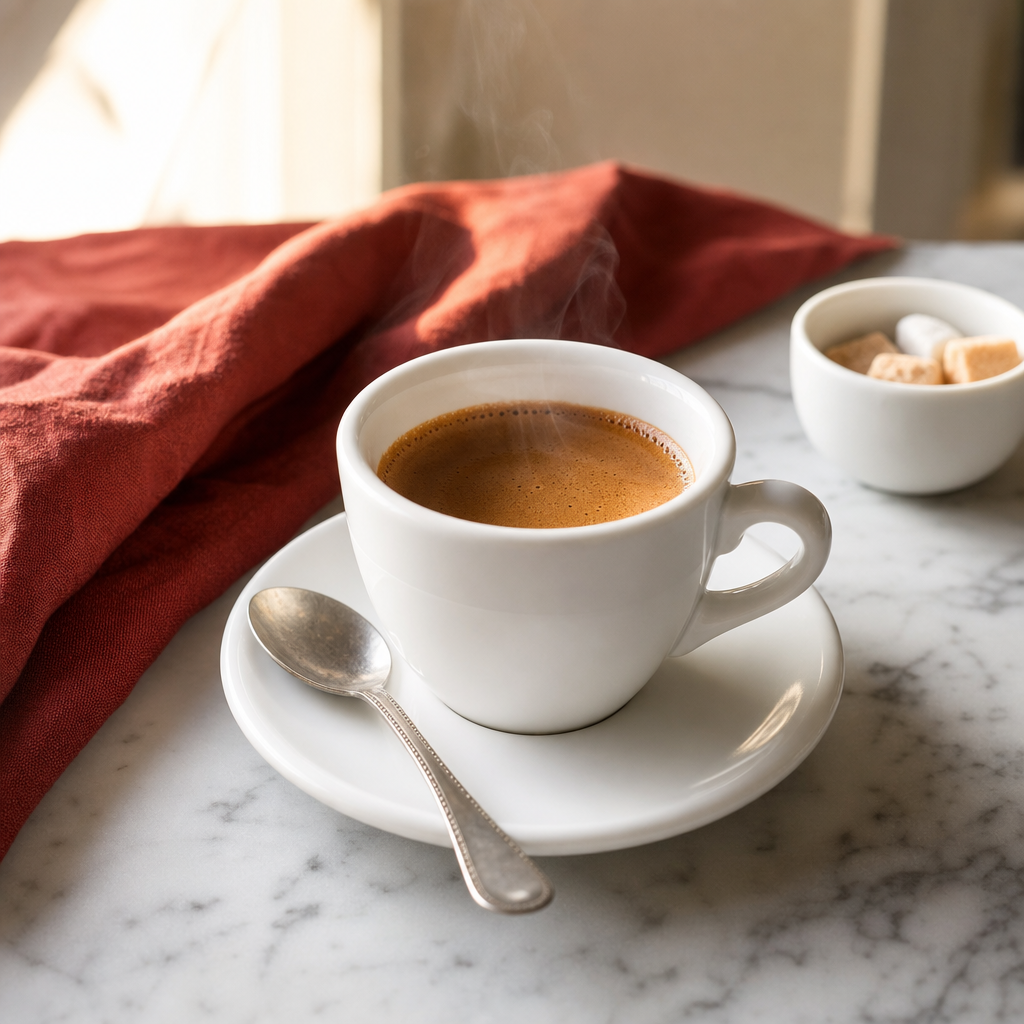
Serve the espresso immediately in the warmed demitasse, with sugar on the side if used. Do not let it sit while pulling milk or arranging garnishes.
Common mistakes
- {'mistake': 'Using pre-ground coffee from a bag.', 'fix': 'Grind immediately before brewing. Espresso grind stales fast because the particle size is fine and the exposed surface area is high.'}
- {'mistake': 'Pulling one long shot to fill a larger cup.', 'fix': 'Stop at 25-30 ml for a single. For a bigger drink, make an Americano or pull another shot.'}
- {'mistake': 'Judging only by crema volume.', 'fix': 'Crema matters, but it is not proof of good extraction. Time, yield, body, and taste matter more than a thick foam cap.'}
- {'mistake': 'Using a wet basket.', 'fix': 'Dry the basket before dosing. Water under the puck encourages uneven saturation and channeling.'}
- {'mistake': 'Changing dose, grind, and yield at the same time.', 'fix': 'Change one variable at a time. If the shot runs fast, grind finer; if it runs slow, grind coarser.'}
What does not belong
- {'item': 'milk', 'reason': 'Milk turns the drink into a macchiato, cappuccino, or latte. It does not belong in Espresso Classico.'}
- {'item': 'cream or whipped cream', 'reason': 'Cream covers the short-shot structure and changes the drink category.'}
- {'item': 'flavored syrups', 'reason': 'Vanilla, caramel, hazelnut, and similar syrups belong to composed café drinks, not a classic Italian espresso.'}
- {'item': 'ice', 'reason': 'Iced espresso is a different preparation. Espresso Classico is served hot and short.'}
- {'item': 'cocoa powder or cinnamon garnish', 'reason': 'A plain crema surface is the visual marker. Dusting belongs to other coffee drinks.'}
Adaptations
Coffee, water, and optional sugar contain no animal products.
No alcohol or animal-derived ingredients are used.
Plain coffee and water are gluten-free. Avoid flavored beans with unclear additives.
Espresso Classico contains no milk or cream.
No shellfish ingredients are used.