Cha Yen
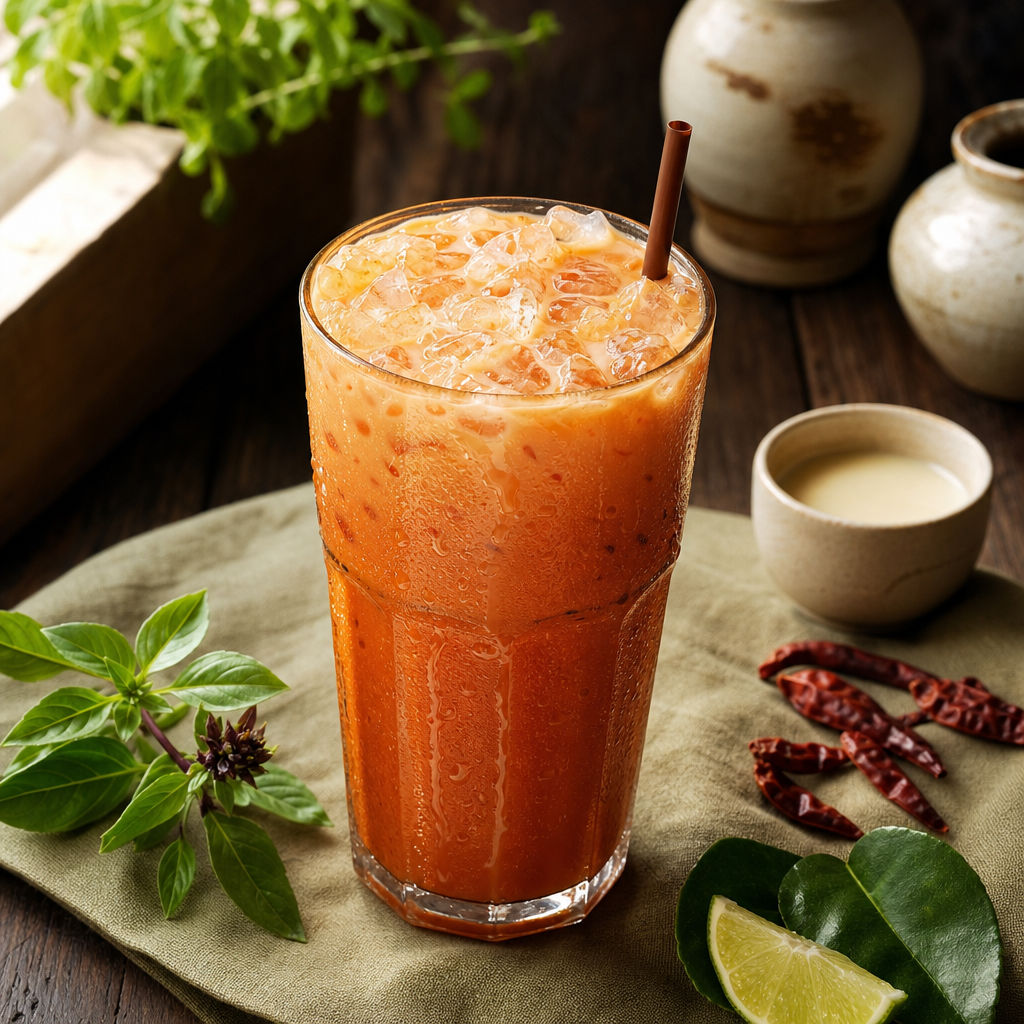
The dish in context
Cha yen (ชาเย็น) is the Thai iced milk tea sold at drink carts, food courts, school canteens, and restaurants across central Thailand and beyond. Its modern form depends on strong black tea brewed from Thai tea leaves or Thai tea mix, then sweetened hard and rounded with condensed milk and evaporated milk. The orange color associated with restaurant cha yen usually comes from commercial Thai tea blends, not from a separate household step. International recipes often add star anise, cloves, or vanilla to imitate the aroma of packaged Thai tea mix, but street-stall cha yen in Thailand is not defined by a masala-style spice blend. The drink is intentionally strong before ice; a weak brew over a full glass of ice turns thin in minutes.
Method 7 steps · 15 min
Boil the water
Bring 360 ml water to a full boil, then turn off the heat. Let the bubbling settle for 10 seconds before adding the tea.
Steep the tea strong
Add 30 g Thai tea leaves. Cover and steep for 5 minutes, pressing the leaves once at the end with a spoon or tea sock; the liquid should be dark rust-orange and smell strongly of black tea.
Strain cleanly
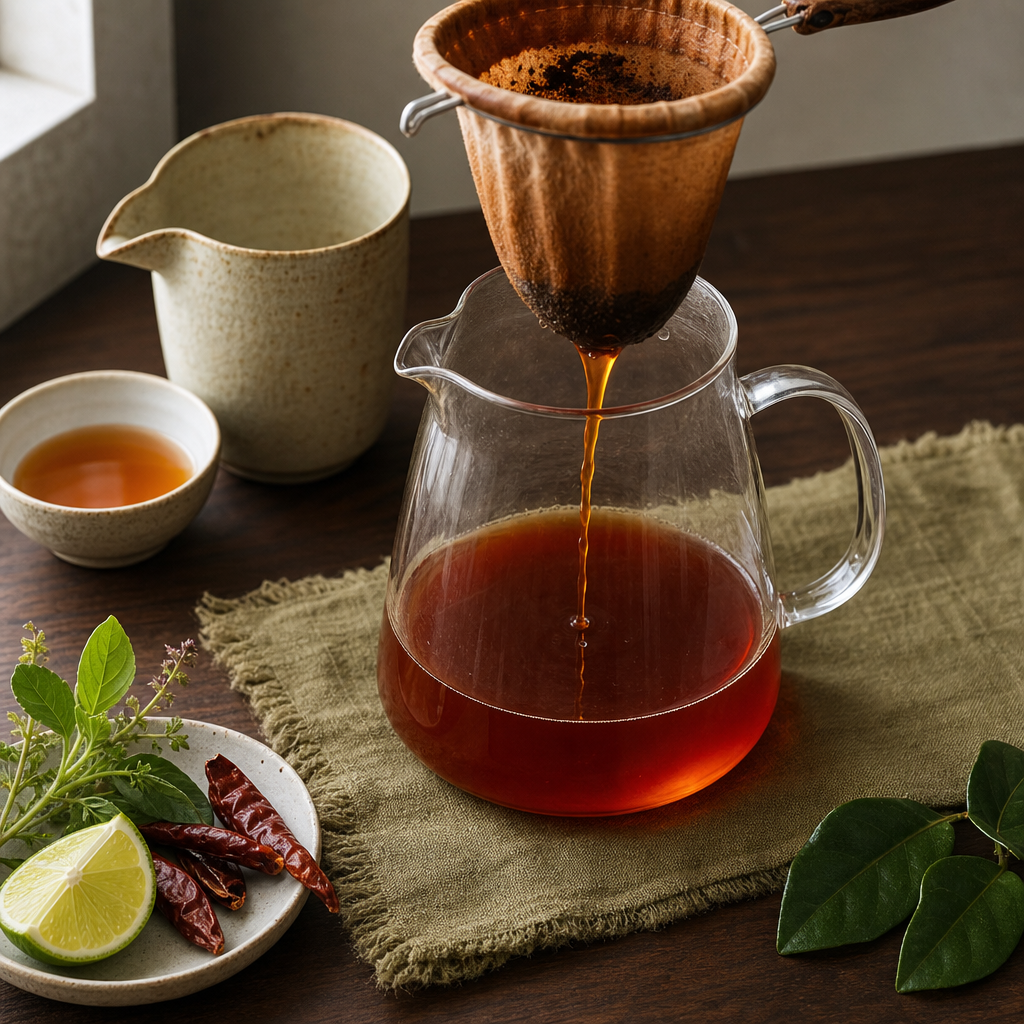
Strain through a tea sock, fine sieve, or paper filter into a heatproof jug. Do not leave leaf dust sitting in the concentrate.
Dissolve the sweeteners
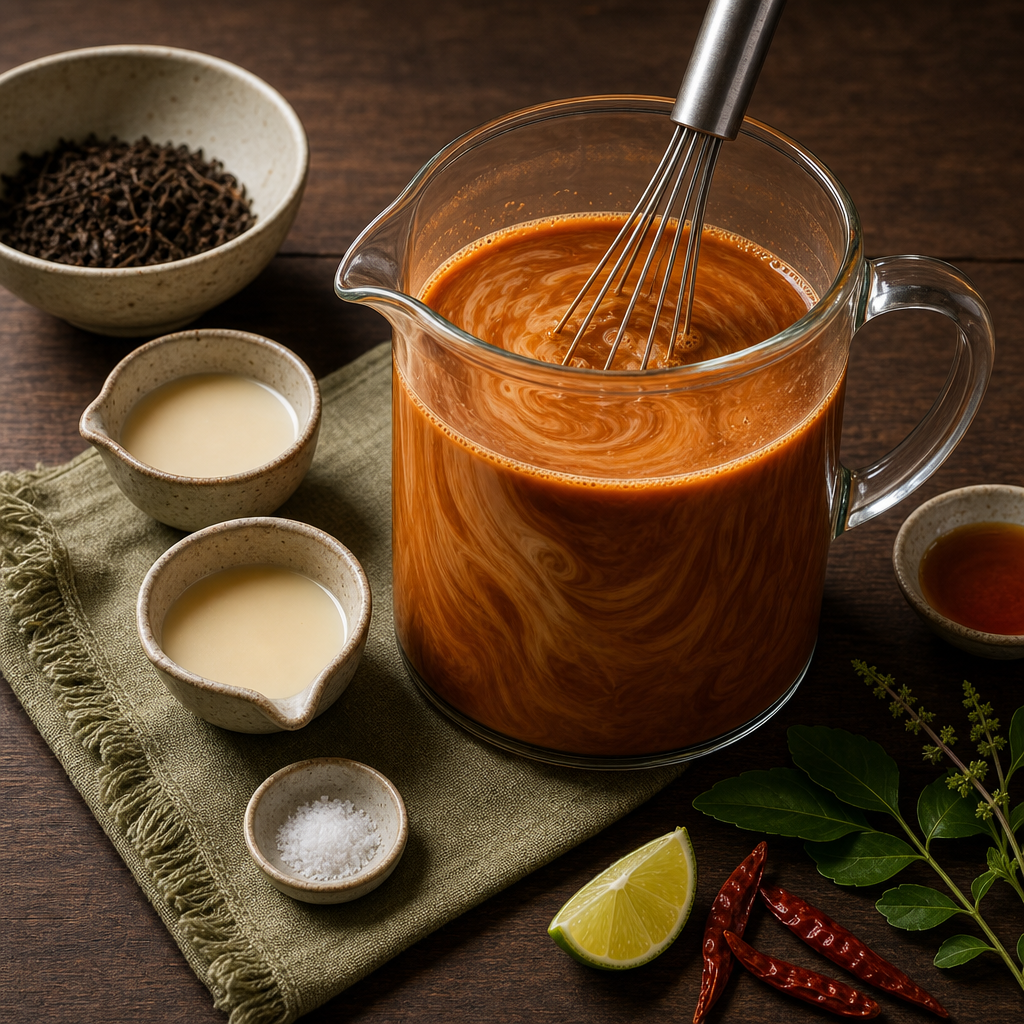
While the tea is hot, whisk in 24 g sugar, 60 g sweetened condensed milk, 60 ml evaporated milk, and the salt if using. Stir until no condensed milk streaks remain.
Cool briefly
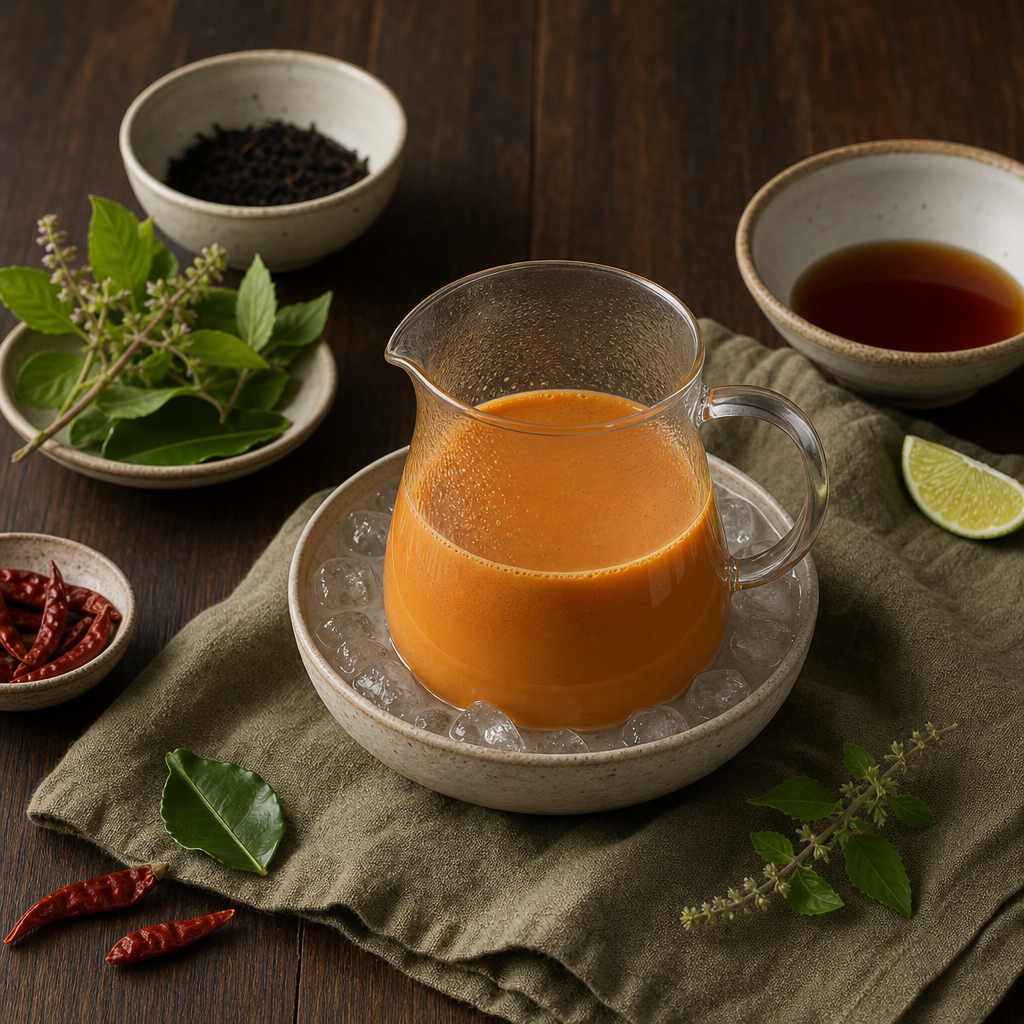
Let the tea concentrate stand for 3-5 minutes, or set the jug in an ice bath for 2 minutes if serving at once. It should be warm, not steaming hard, before it hits the glass.
Build the glasses
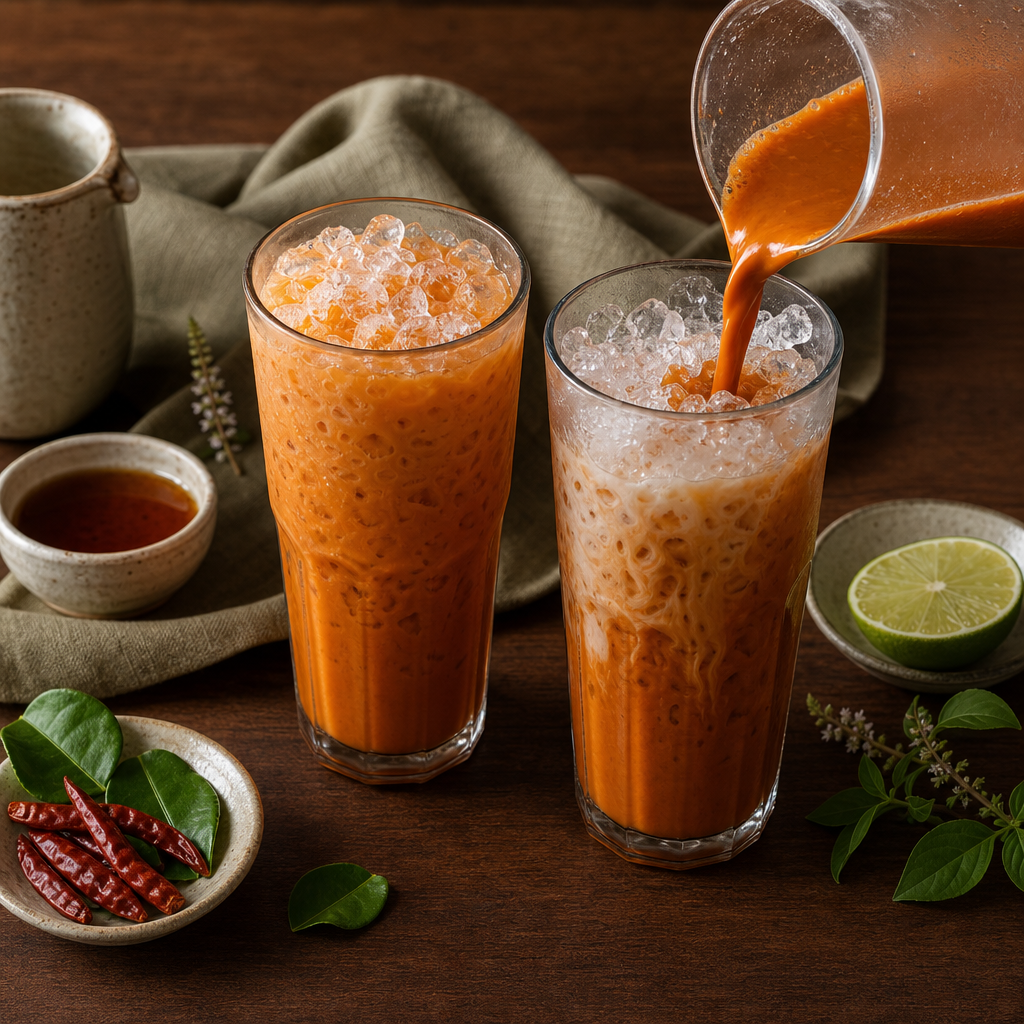
Pack two tall glasses completely with crushed ice or small cubes. Pour the tea concentrate over the ice, dividing it evenly, then top each glass with about 15 ml evaporated milk.
Serve before the ice collapses
Serve with a straw. Stir at the table if a uniform creamy orange drink is wanted; leave unstirred for the pale milk cap and darker tea layer.
Common mistakes
- {'mistake': 'Brewing tea at normal drinking strength.', 'fix': 'Use about 30 g Thai tea leaves for 360 ml water. The concentrate should taste too strong before ice.'}
- {'mistake': 'Treating spices as mandatory.', 'fix': 'Star anise and clove belong to some international adaptations, not the core street-stall formula. If using plain black tea as a substitute, a tiny amount can help, but it is not the identity of cha yen.'}
- {'mistake': 'Adding condensed milk after the tea is cold.', 'fix': 'Dissolve condensed milk while the tea is hot. Cold condensed milk sinks and streaks.'}
- {'mistake': 'Using too little ice.', 'fix': 'Fill the glass to the top. Cha yen is engineered around dilution from a full glass of ice.'}
- {'mistake': 'Chasing the orange color with separate dye or turmeric.', 'fix': 'Use Thai tea mix if the orange color matters. Turmeric does not belong; it makes the drink earthy and wrong.'}
What does not belong
- {'item': 'Tapioca pearls', 'reason': 'Boba makes a bubble tea variant. It does not belong in standard cha yen.'}
- {'item': 'Whipped cream', 'reason': 'Whipped cream turns the drink into a café dessert build, not Thai iced tea as sold at drink stalls.'}
- {'item': 'Coconut milk as the default dairy', 'reason': 'Coconut milk does not belong in standard cha yen. Use it only for a dairy-free adaptation and accept that the drink changes character.'}
- {'item': 'Turmeric or annatto for color', 'reason': 'The orange color comes from commercial Thai tea blends. Separate coloring is cosmetic and risks muddy flavor.'}
- {'item': 'A heavy masala-style spice blend', 'reason': 'Cha yen is not chai. Star anise or clove may appear in some Western reconstructions, but a spice-forward brew reads as a different drink.'}
- {'item': 'Lemon or lime juice', 'reason': 'Acid curdles the dairy and has no role in cha yen.'}