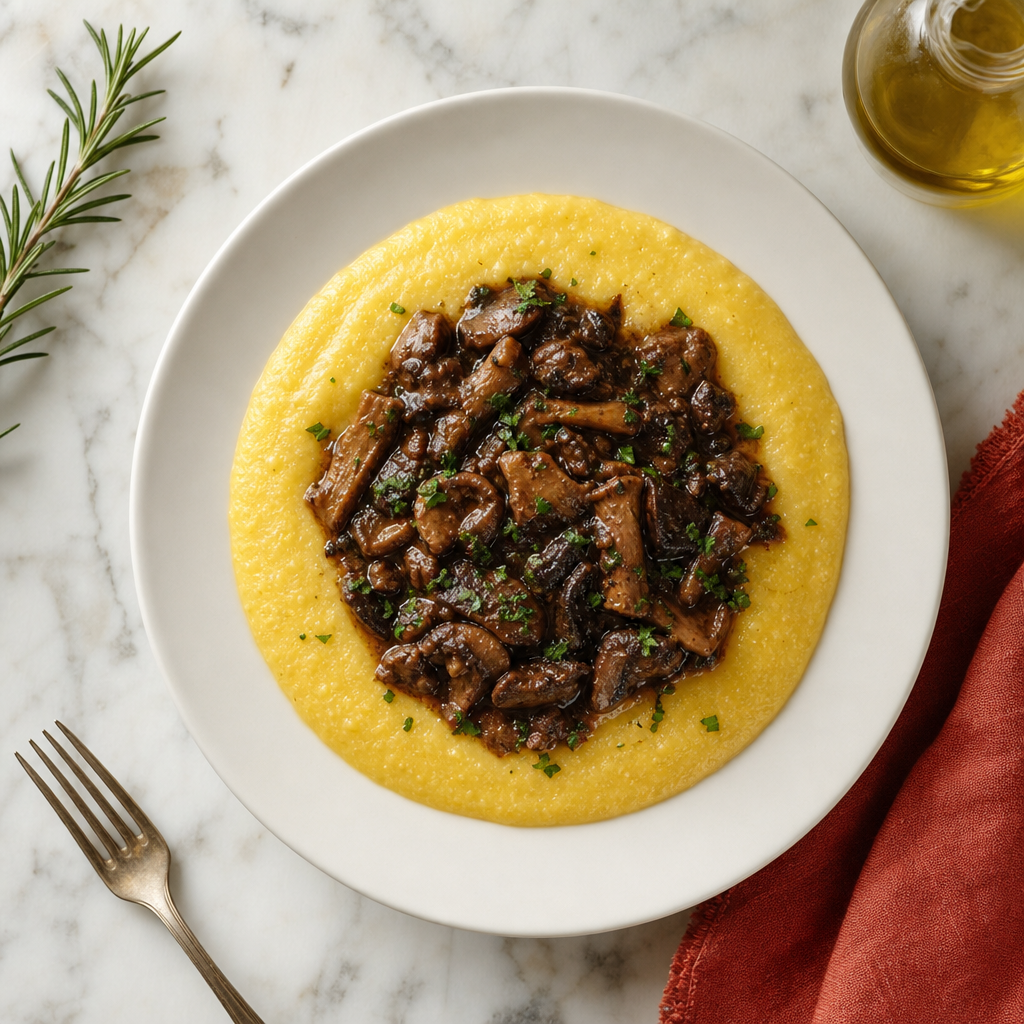
Polenta Concia
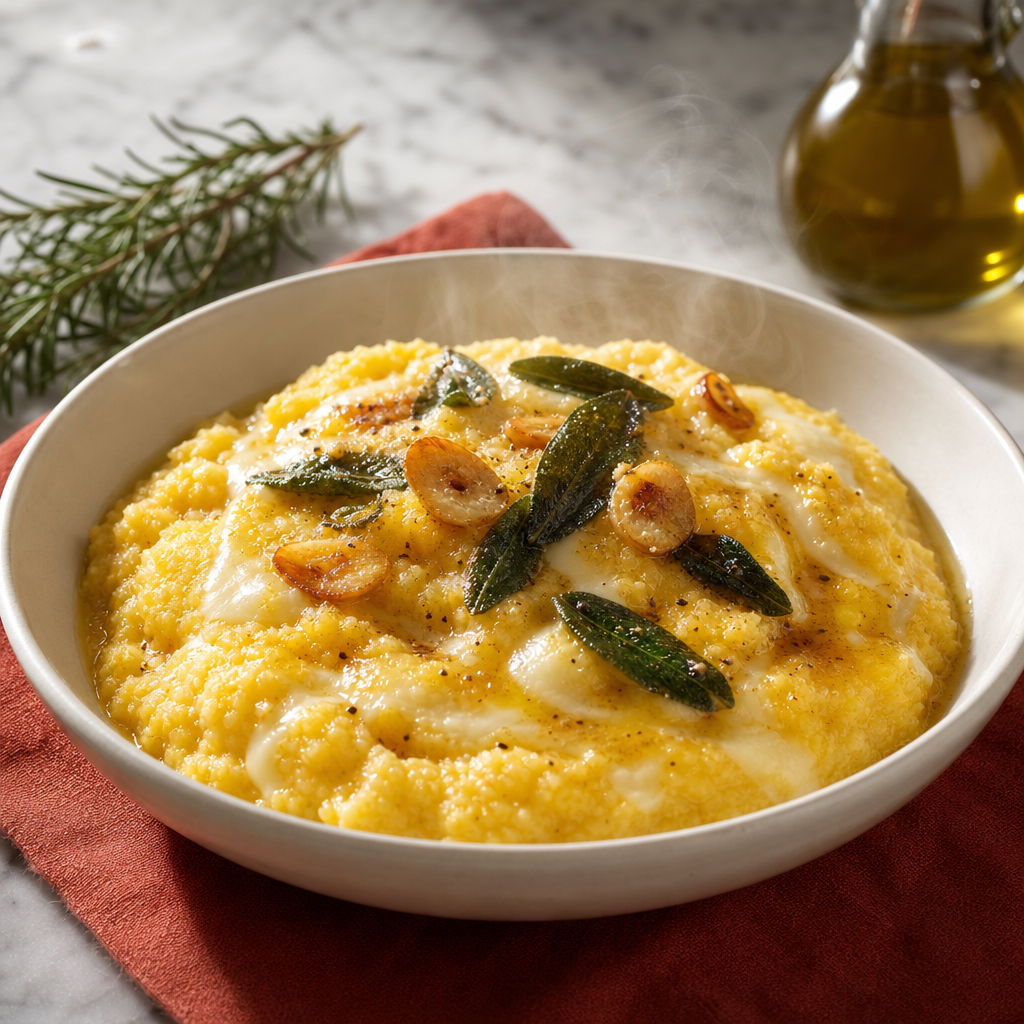
The dish in context
Polenta concia belongs to the Alpine and pre-Alpine belt of northern Italy, where cooked cornmeal was enriched with whatever local dairy the valley produced: butter, soft melting cheese, and aged mountain cheese. Lombardy has its own related form, often called polenta uncia around Lake Como, finished with melted butter, garlic, sage, and local cheeses. Piemonte and Valle d'Aosta make neighboring versions with their own cheeses, so there is no single national formula. The stable grammar is coarse polenta cooked fully, then loaded with dairy until it becomes a meal rather than a side dish.
Method 6 steps · 60 min
Start the polenta in salted water
Bring the water and salt to a steady boil in a heavy pot. Rain in the polenta slowly while whisking, then keep whisking for 1 minute until the surface looks like thin yellow porridge with no dry islands.
Cook until the grains lose their raw edge
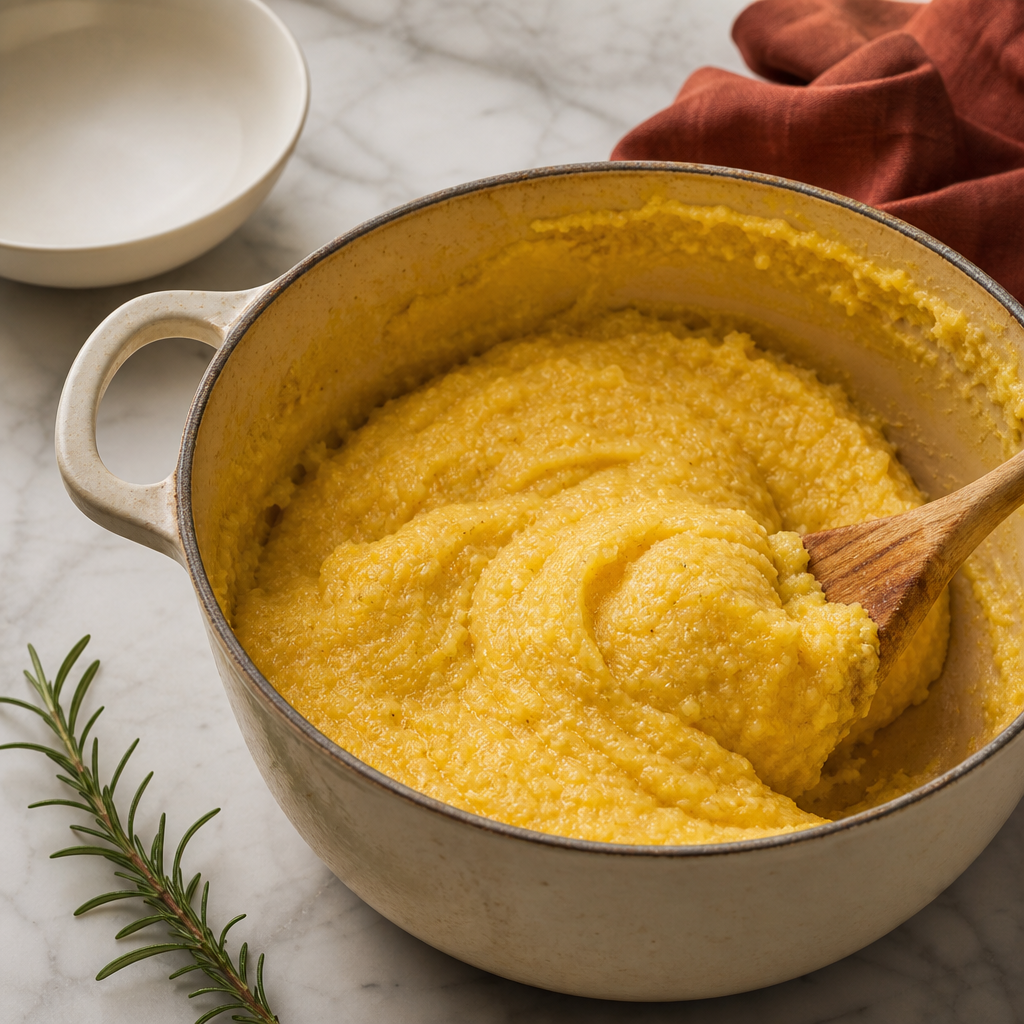
Reduce the heat to low and cook, stirring often with a wooden spoon, for 40-45 minutes. The polenta is ready when it pulls heavily from the sides, tastes fully hydrated rather than sandy, and falls from the spoon in thick folds.
Beat in the first butter
Lower the heat to its minimum. Add the 50 g butter and beat until the surface turns glossy and the polenta relaxes slightly.
Melt in the cheeses
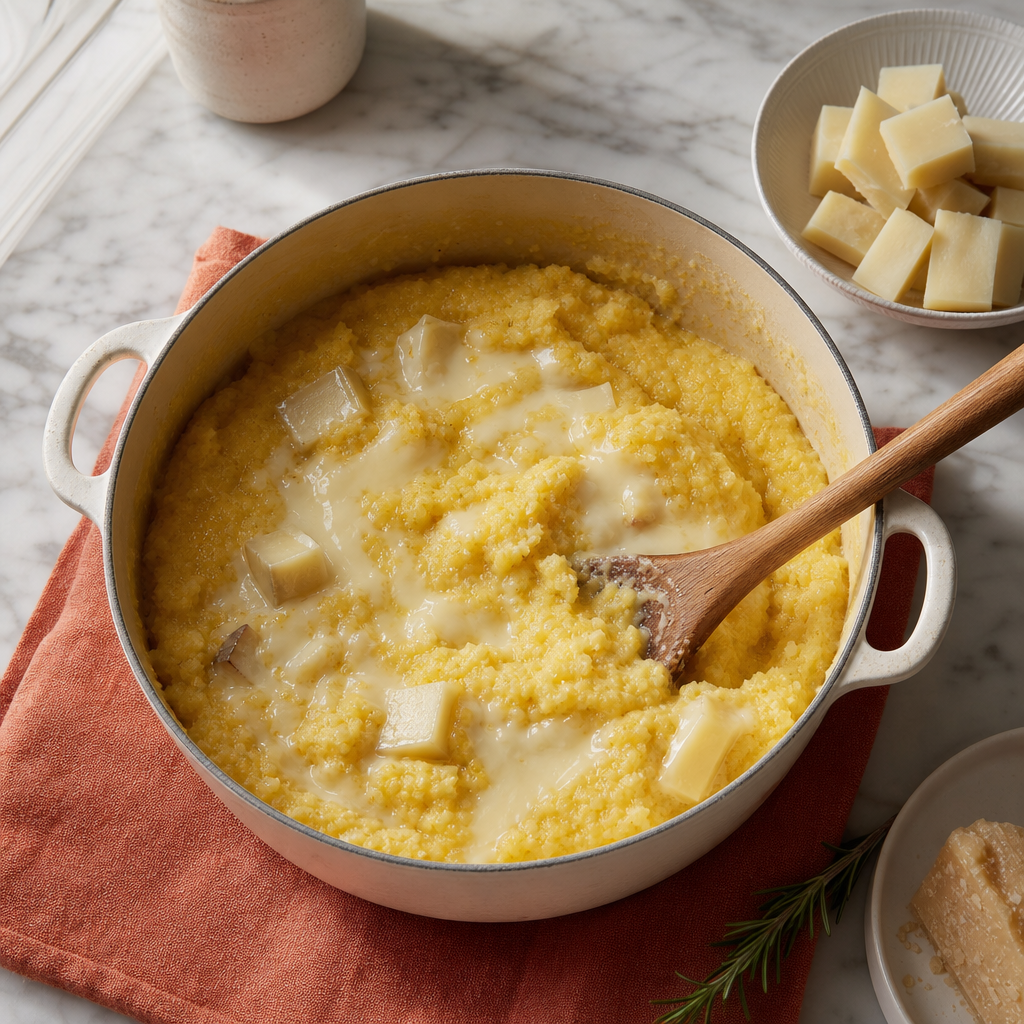
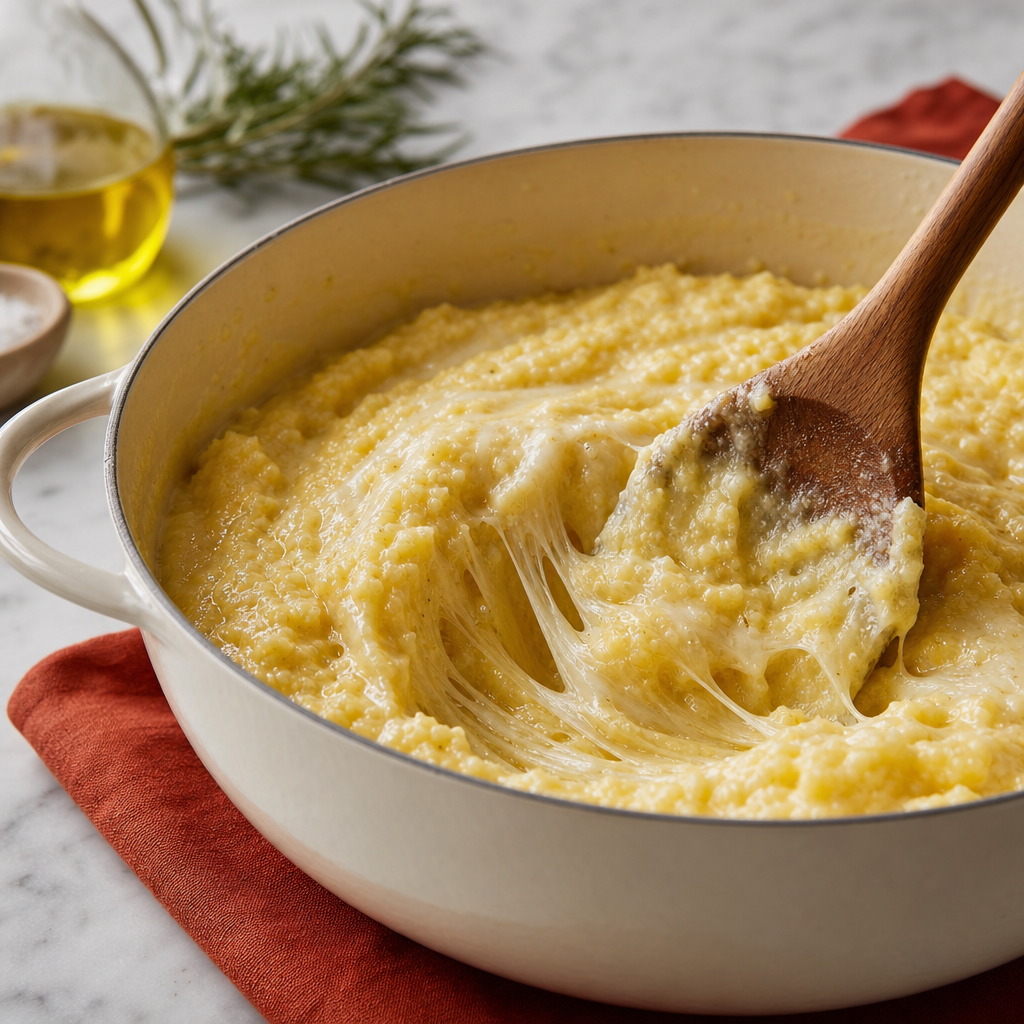
Add the Taleggio and Valtellina Casera in 3 additions, stirring until each addition is mostly melted before adding the next. If the polenta stiffens before the cheese melts, loosen with hot milk or hot water, 2 tablespoons at a time.
Brown the finishing butter
In a small skillet, melt the 70 g butter with the crushed garlic and sage over medium heat. Cook until the sage darkens slightly, the garlic edges turn gold, and the butter smells nutty; pull it before the milk solids turn black.
Serve loose, not sliced
Spoon the polenta into warm shallow bowls. Pour the sage butter over the surface, leaving the garlic and sage visible, and finish with black pepper if using.
Common mistakes
- {'mistake': 'Using instant polenta and judging the dish by the package time.', 'correction': 'Long-cooked coarse polenta gives grain, body, and corn aroma. Instant polenta makes a softer paste and needs more careful liquid control.'}
- {'mistake': 'Adding cheese over aggressive heat.', 'correction': 'Keep the heat low or turn it off. Boiling melted cheese squeezes out fat and leaves tough strands.'}
- {'mistake': 'Using only aged hard cheese.', 'correction': 'Aged grating cheese does not provide the molten body. Use at least one soft or semi-soft melting cheese.'}
- {'mistake': 'Letting the polenta become stiff before serving.', 'correction': 'Loosen with hot milk or water while stirring. The finished texture should move slowly in the bowl.'}
- {'mistake': 'Burning the garlic in the butter.', 'correction': 'Gold is the stop point. Dark brown garlic turns the finish acrid.'}
What does not belong
- {'item': 'Cream', 'reason': 'Cream does not belong in polenta concia. Butter and cheese provide the dairy richness; cream makes the finish heavy and dulls the corn.'}
- {'item': 'Mozzarella as the main cheese', 'reason': 'Mozzarella pulls into elastic strings and contributes little salt or mountain-cheese depth. It is the wrong melt for this dish.'}
- {'item': 'Pre-grated Parmesan-style cheese', 'reason': 'Anti-caking starches and dry cheese texture make the polenta grainy. Use real melting cheese, cut or grated fresh.'}
- {'item': 'Chicken stock', 'reason': 'Stock pushes the dish toward a side for braised meat. Polenta concia is built on corn, butter, and cheese; water keeps that structure clean.'}
- {'item': 'Truffle oil', 'reason': 'Truffle oil does not belong. Its synthetic aroma smothers the sage butter and washed-rind cheese.'}