Fettuccine Alfredo
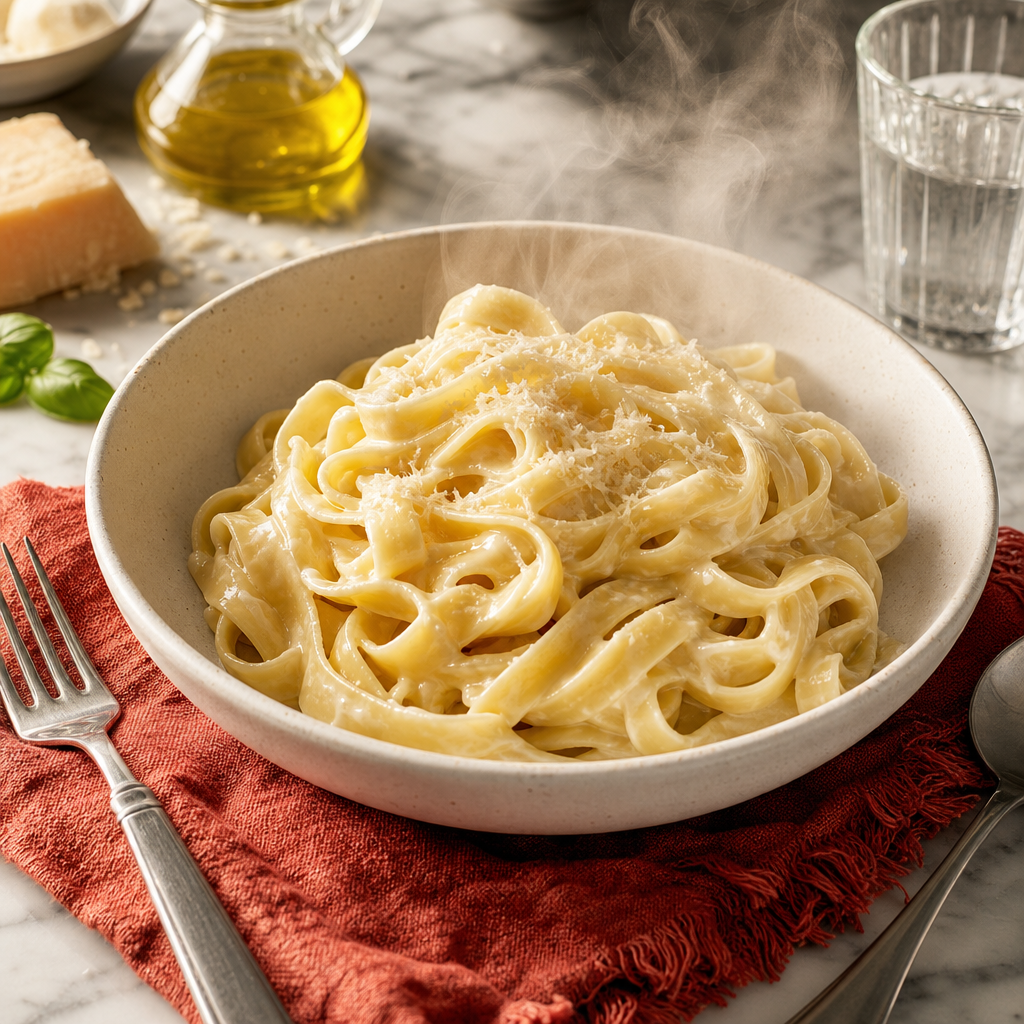
The dish in context
Fettuccine Alfredo is a 20th-century Roman restaurant dish associated with Alfredo Di Lelio, built from an older Italian household grammar of pasta, butter, and grated cheese. Its international fame grew through American visitors and Hollywood publicity, which is why the dish is often treated abroad as more central to Italian cooking than it is in Italy. The Roman structure is narrow: fettuccine all’uovo, butter, Parmigiano-Reggiano, salt, and starchy pasta water worked into an emulsion. The heavy-cream version is an Italian-American offshoot; legitimate in its own category, but not the Roman dish.
Method 6 steps · 18 min
Warm the serving bowl
Fill a wide serving bowl or sauté pan with hot water for 2 minutes, then empty and dry it. Keep the butter cold and the cheese grated before the pasta goes in.
Boil the fettuccine
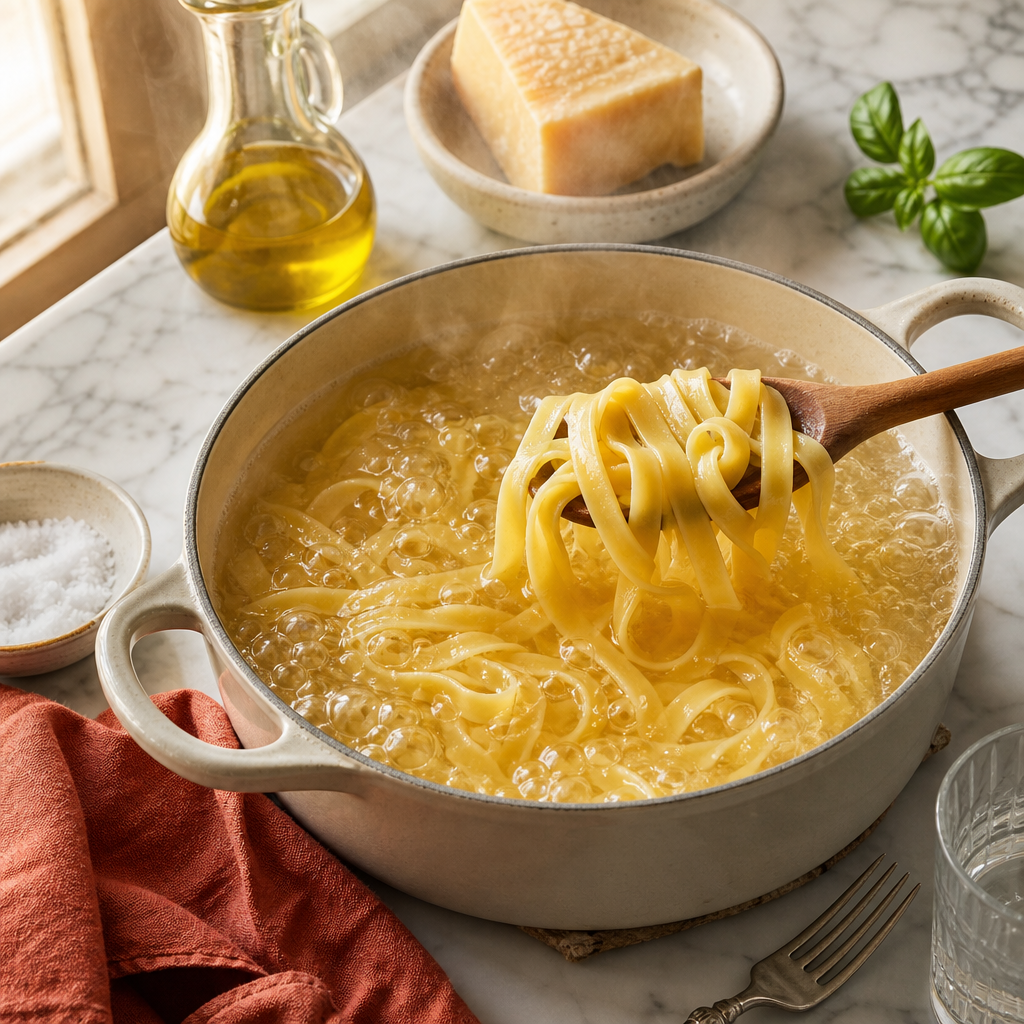
Bring 2.5 L water to a full boil and salt it with 20 g fine sea salt. Add the fresh fettuccine and cook until flexible but still springy at the center, usually 2-3 minutes; dried egg fettuccine will take longer according to thickness.
Reserve the starch
Scoop out at least 500 ml pasta water before draining. Drain the pasta, leaving it wet rather than steam-dry.
Melt the butter through the pasta
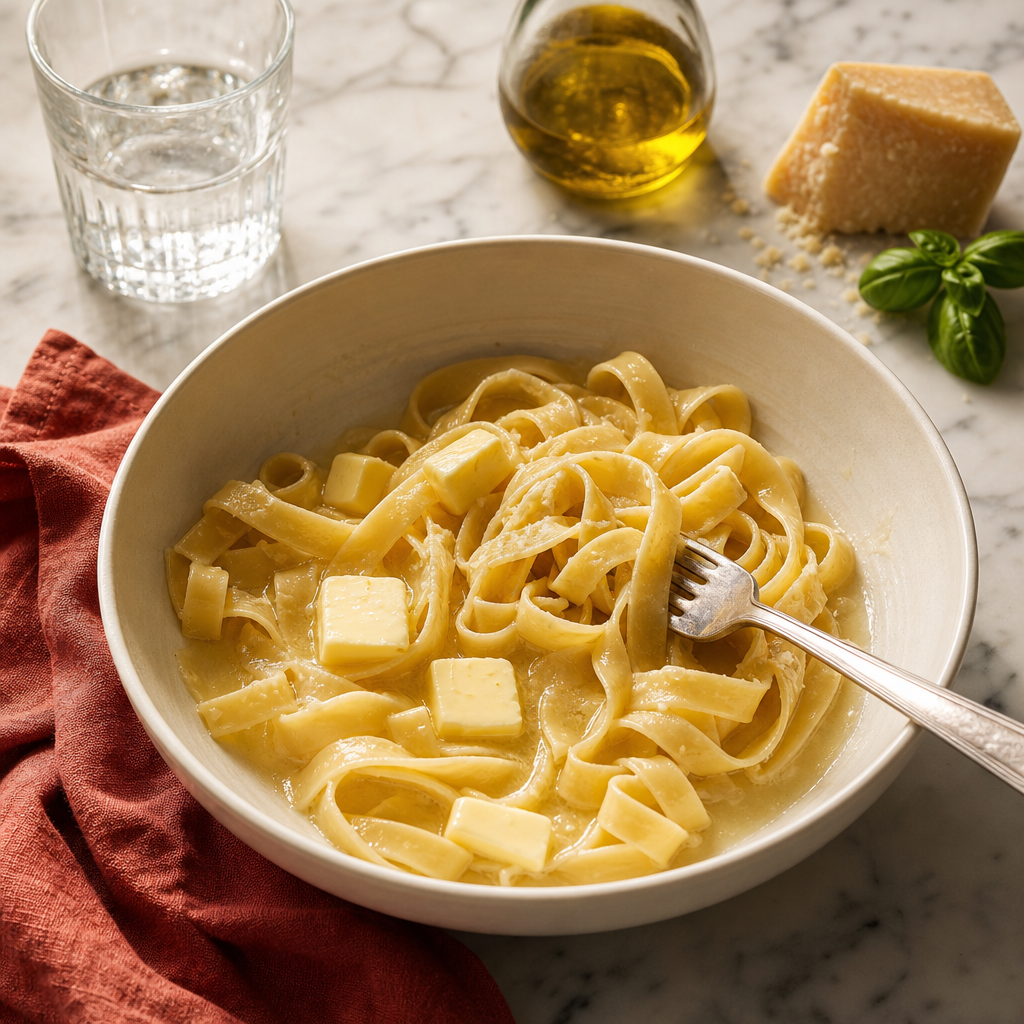
Transfer the hot fettuccine to the warm bowl. Add the cold butter cubes and 120 ml reserved pasta water, then toss hard until the butter disappears into a shiny coating.
Add the cheese gradually
Add the Parmigiano-Reggiano in 3 additions, tossing after each addition until no dry cheese remains. Add pasta water 1 tablespoon at a time as needed; the finished sauce should slide over the ribbons and leave no puddle at the bottom of the bowl.
Serve immediately
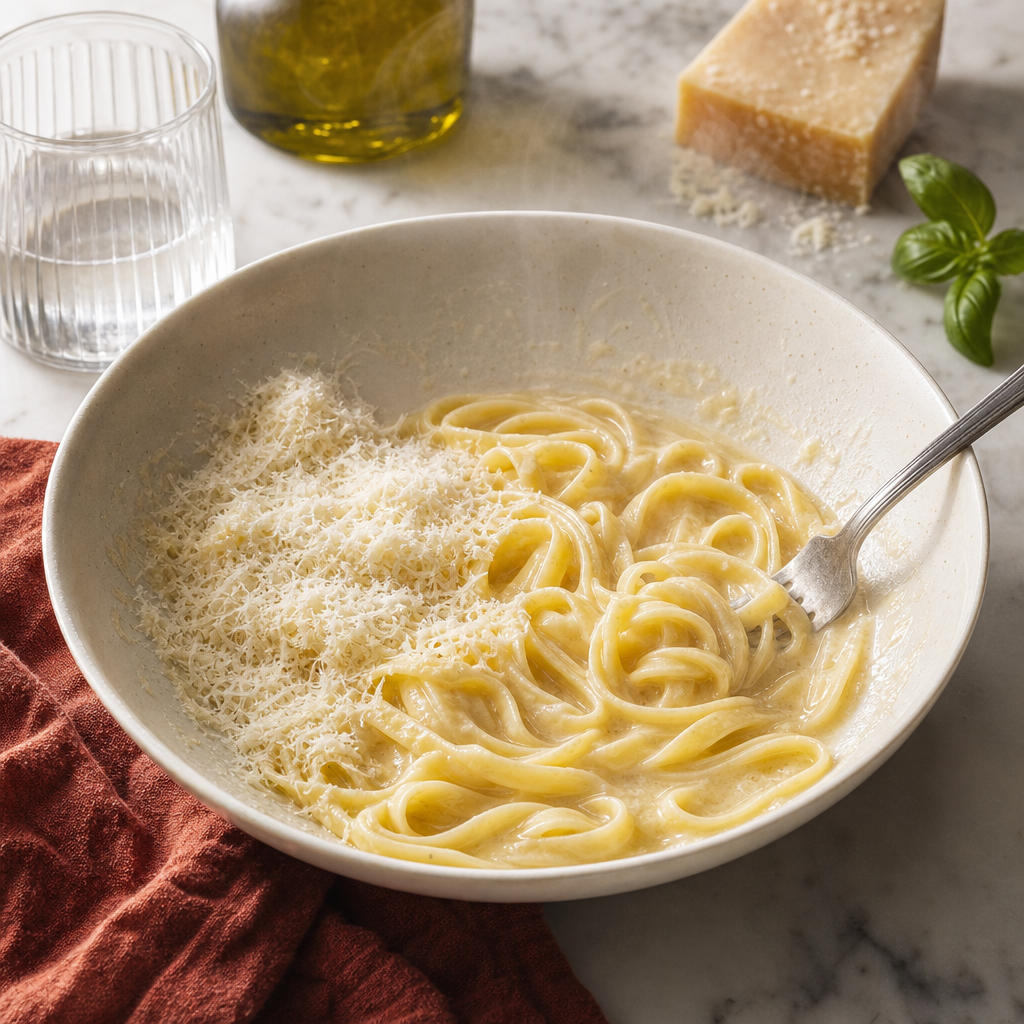
Divide onto warm plates and finish with a small dusting of Parmigiano-Reggiano. Serve at once; Alfredo stiffens as the butter cools and the cheese continues to absorb water.
Common mistakes
- {'mistake': 'Adding cream', 'fix': 'Use pasta water to loosen the sauce. Cream makes a different Italian-American sauce and dulls the cheese.'}
- {'mistake': 'Putting the cheese over direct heat', 'fix': 'Take the pan or bowl off the burner before adding Parmigiano-Reggiano. Direct heat tightens cheese proteins and makes the sauce grainy.'}
- {'mistake': 'Using pre-grated cheese', 'fix': 'Grate from a whole wedge. Anti-caking starches and dry cheese surfaces block smooth melting.'}
- {'mistake': 'Draining the pasta dry', 'fix': 'Move the pasta wet and reserve more cooking water than the recipe seems to need. The sauce needs starch and water to bind.'}
- {'mistake': 'Trying to hold the pasta for service', 'fix': 'Serve immediately. Alfredo is a minute-by-minute emulsion, not a buffet pasta.'}
What does not belong
- {'item': 'heavy cream', 'reason': 'Cream does not belong in Roman-style Fettuccine Alfredo. The sauce is butter, Parmigiano-Reggiano, and pasta water.'}
- {'item': 'chicken', 'reason': 'Chicken Alfredo is an Italian-American restaurant dish. It is not Fettuccine Alfredo as served in the Roman model.'}
- {'item': 'garlic', 'reason': 'Garlic pushes the dish toward a cream-sauce pasta. Alfredo has nowhere to hide, and garlic dominates the butter-cheese emulsion.'}
- {'item': 'parsley', 'reason': 'Parsley is a visual habit from American plating. It adds wet, green interruption to a dish whose structure is dairy and pasta.'}
- {'item': 'black pepper', 'reason': 'Black pepper is common in modern kitchens, but it is not part of the documented original formula. Add it and the dish starts borrowing from cacio e pepe.'}
- {'item': 'olive oil', 'reason': 'Olive oil does not help this emulsion. Butter is the fat phase; oil makes the sauce slicker and less cohesive.'}