Tagliatelle Ragu
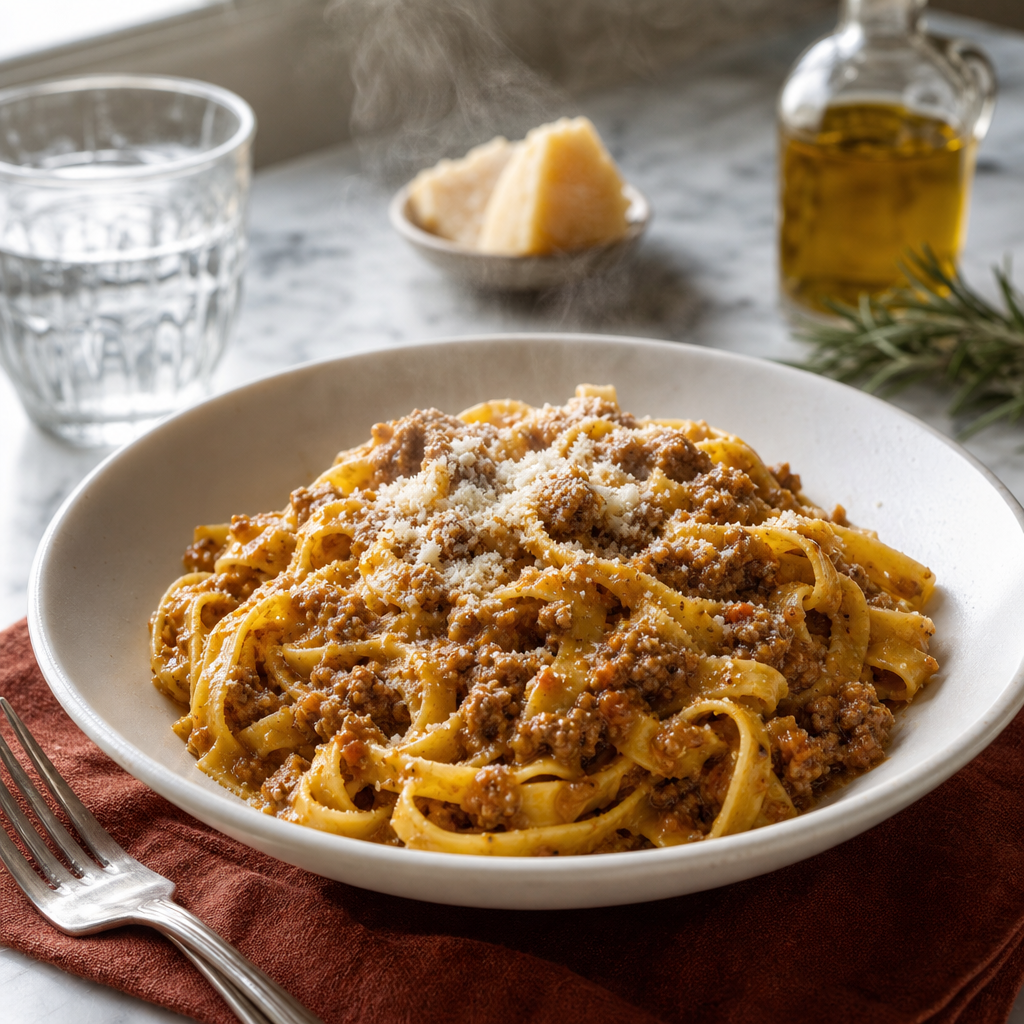
The dish in context
Ragù alla Bolognese belongs to Bologna and the wider Emilia-Romagna table, where fresh egg pasta is the expected partner. The Bologna Chamber of Commerce has recorded official versions through the Accademia Italiana della Cucina, including the well-known 1982 deposit and a renewed 2023 version. The core grammar is stable: beef, pork fat or pancetta, onion-celery-carrot soffritto, white wine, tomato in restraint, milk, and a long simmer. The international tomato-heavy 'Bolognese sauce' is a different branch; tagliatelle al ragù is meat-led, not marinara with ground beef.
Method 11 steps · 240 min
Render the pancetta
Set a heavy pot over medium-low heat. Add the olive oil and pancetta, then cook until the fat renders and the cubes look translucent with pale gold edges, 8-10 minutes. Do not crisp it like bacon.
Sweat the soffritto
Add onion, carrot, celery, and butter. Cook over medium-low heat until the vegetables collapse and look glossy, 12-15 minutes. Stop before they brown.
Brown the beef
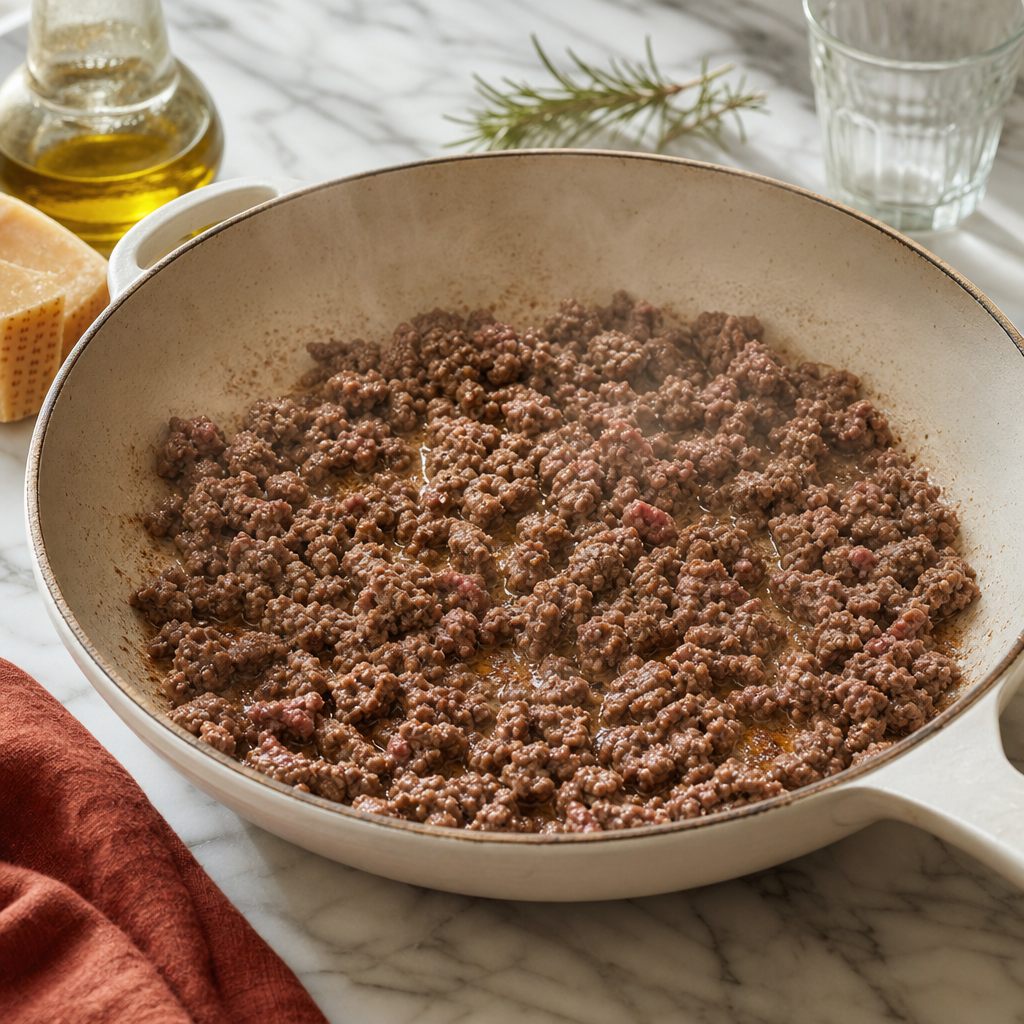
Raise the heat to medium-high and add the beef in a loose layer. Cook, breaking it into small uneven granules, until the liquid evaporates and the meat begins to catch lightly on the bottom, 12-15 minutes. If the pot floods, keep cooking until the hiss returns.
Reduce the wine
Pour in the white wine and scrape the bottom of the pot. Boil until the wine smell is gone and the pot is nearly dry, 5-7 minutes.
Cook the tomato paste
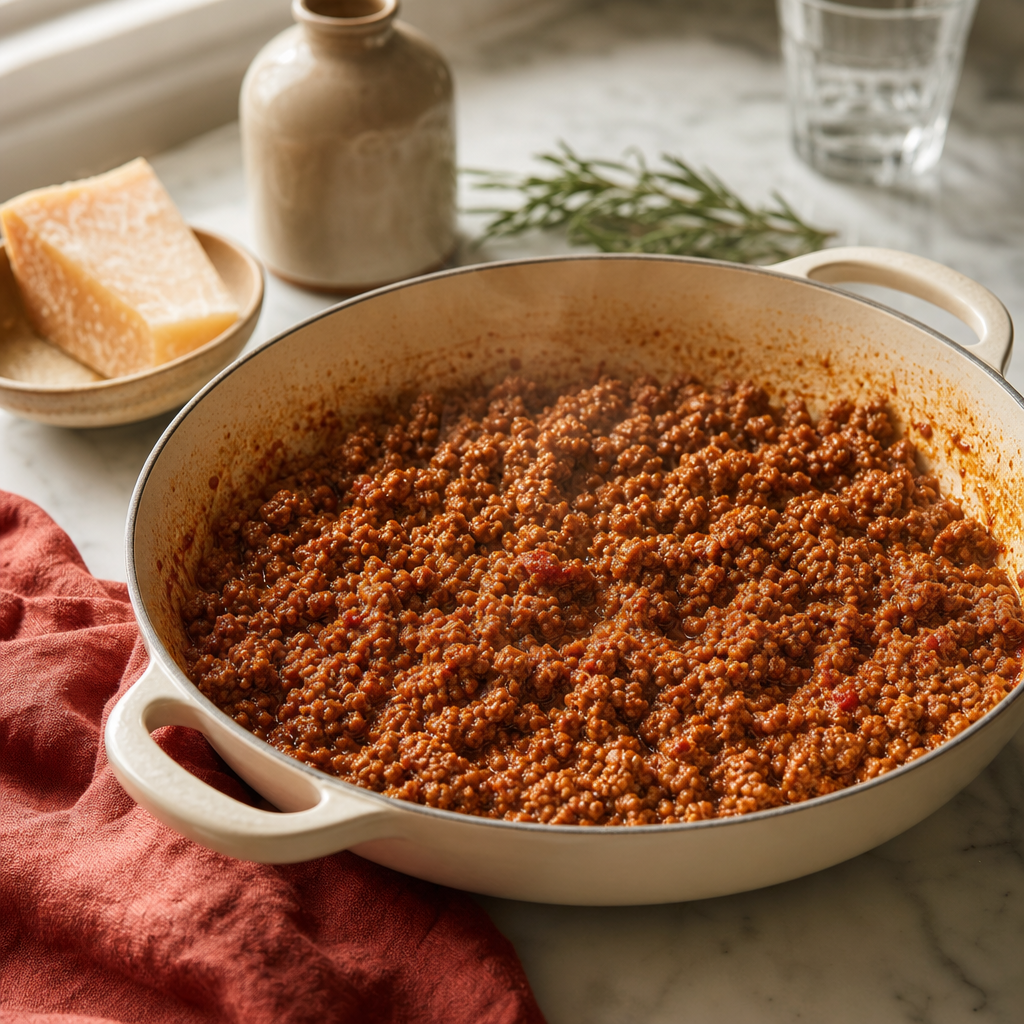
Stir in the tomato paste and cook for 2 minutes, smearing it through the meat until it darkens from bright red to brick-orange.
Add milk and begin the braise
Add the milk and bring to a bare simmer. Cook uncovered until the milk is mostly absorbed and the sauce looks creamy rather than milky, 20-25 minutes.
Slow-simmer the ragù
Add 200 ml hot stock, 5 g salt, and the black pepper. Simmer uncovered at the lowest steady bubble for 2 1/2 to 3 hours, adding small splashes of hot stock when the pot looks dry. The finished ragù should be thick, glossy, and spoonable, with no loose red liquid around the edges.
Rest and correct
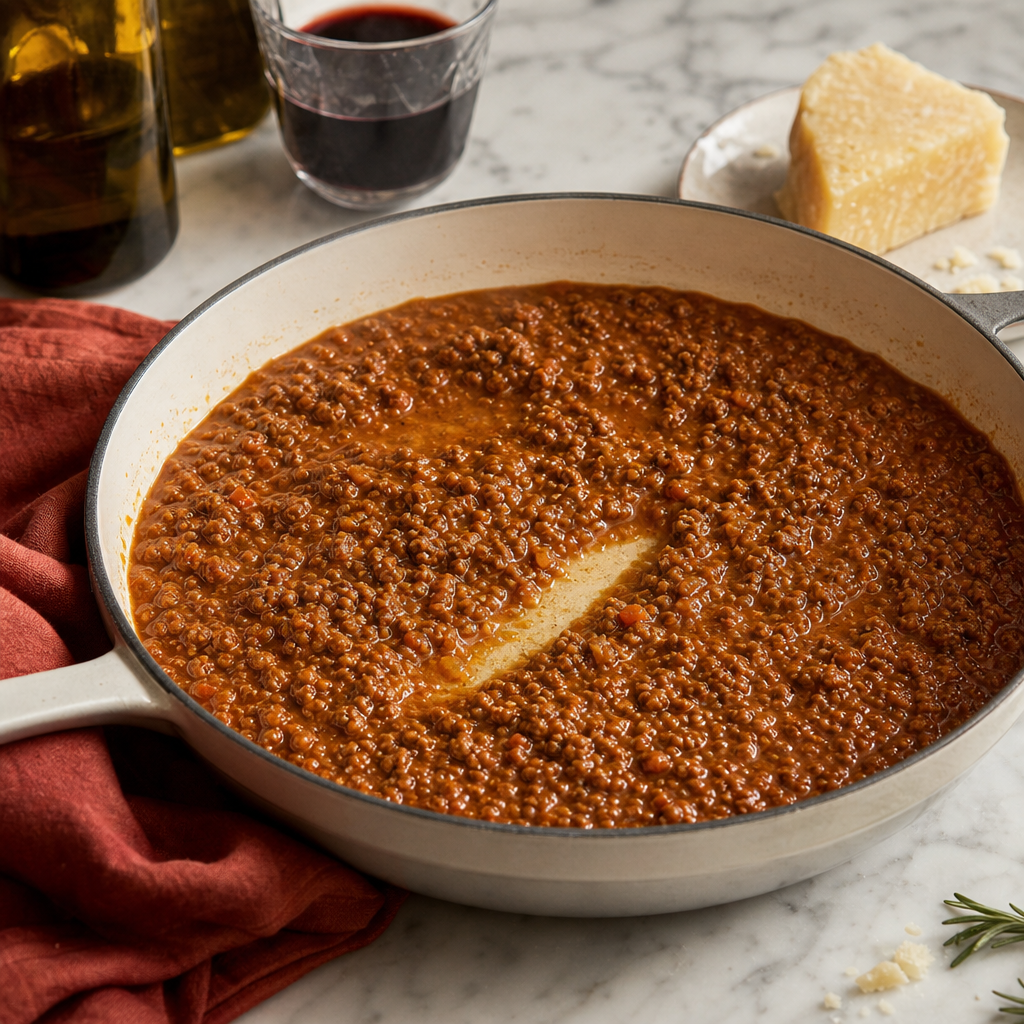
Let the ragù stand off heat for 15 minutes. Taste and correct salt; the sauce should taste slightly under-seasoned if the pasta water and Parmigiano are still to come.
Cook the tagliatelle
Bring 4 L water to a rolling boil and salt it with 40 g coarse salt. Cook fresh tagliatelle until flexible and still slightly firm at the center, usually 2-3 minutes. Reserve 250 ml pasta water before draining.
Marry pasta and ragù
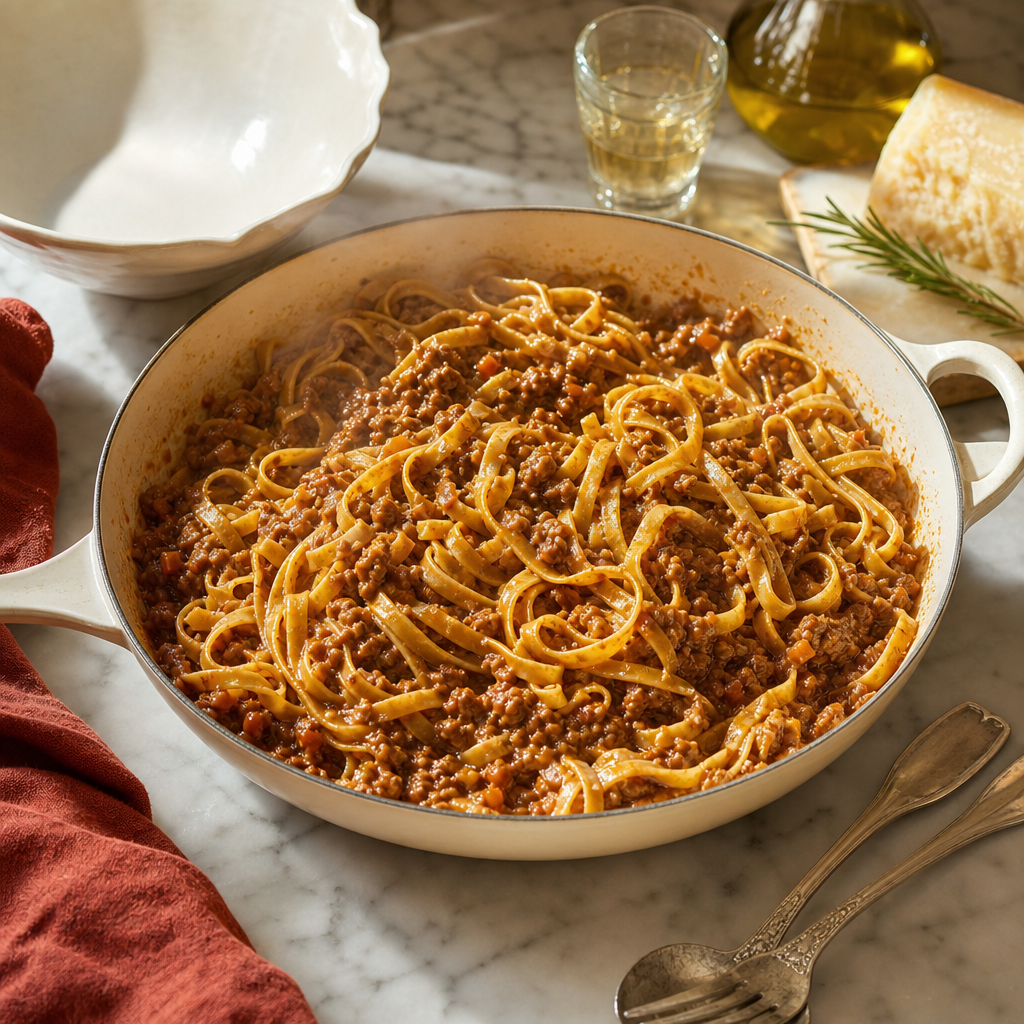
Move about two-thirds of the ragù to a wide skillet over medium heat. Add the drained tagliatelle and toss with 60-120 ml pasta water until the sauce coats the ribbons in a thin granular layer. Add more ragù only if the pasta looks bare; it should not sit in a puddle.
Serve
Plate in warm shallow bowls. Finish with Parmigiano-Reggiano at the table or a restrained dusting on each portion.
Common mistakes
- {'mistake': 'Using spaghetti.', 'why_it_fails': 'Round dried pasta sheds this ragù. Fresh tagliatelle gives the flat, porous surface the meat sauce needs.'}
- {'mistake': 'Adding a large can of tomatoes.', 'why_it_fails': 'Bolognese is meat-led. Too much tomato turns it into a southern-style meat sauce.'}
- {'mistake': 'Browning the soffritto hard.', 'why_it_fails': 'The vegetable base should melt into the fat. Browned soffritto gives roasted sweetness and visible bits.'}
- {'mistake': 'Skipping milk.', 'why_it_fails': 'Milk is not a modern softener; it is part of the Bolognese structure. Without it, the meat tastes sharper and leaner.'}
- {'mistake': 'Serving sauce on top of plain pasta.', 'why_it_fails': 'The final toss is where the sauce binds. A ladle on top leaves seasoned meat above and unseasoned pasta below.'}
- {'mistake': 'Cooking over a hard boil.', 'why_it_fails': 'A hard boil tightens the meat and throws fat out of suspension. The correct simmer barely breaks the surface.'}
What does not belong
- {'item': 'Garlic', 'reason': 'Garlic does not belong in the canonical Bolognese profile. Onion, carrot, and celery are the aromatic base.'}
- {'item': 'Oregano', 'reason': 'Oregano pushes the sauce toward Italian-American red sauce. Ragù alla Bolognese is not built on dried herbs.'}
- {'item': 'Basil', 'reason': 'Fresh basil reads as tomato sauce, not Bologna. It masks the restrained meat-and-milk profile.'}
- {'item': 'Bay leaf', 'reason': 'Common in many ragù recipes, but not part of the canonical Bolognese grammar used here.'}
- {'item': 'Cream', 'reason': 'Milk belongs during the simmer. Cream at the end makes the sauce heavy and hides poor reduction.'}
- {'item': 'Smoked bacon', 'reason': 'Smoke dominates the sauce. Pancetta should be cured pork fat, not campfire pork.'}
- {'item': 'Chili flakes', 'reason': 'Heat is not a feature of this dish. Pepper can season; chili changes the identity.'}