Som Tum Pla Ra
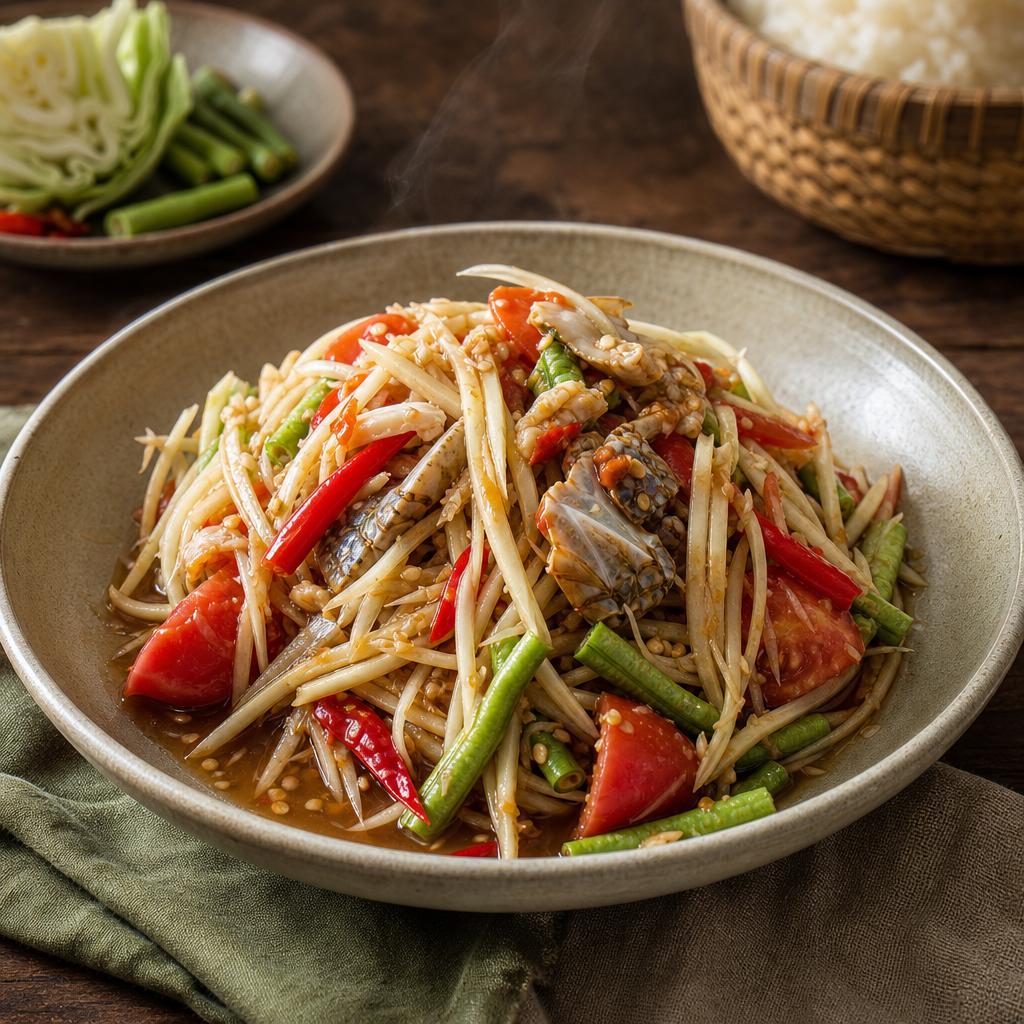
The dish in context
Som tum pla ra belongs to the Isaan and Lao-family grammar of pounded green papaya salads, where sourness, chile heat, and fermented fish carry the dish more than sweetness. Pla ra (ปลาร้า), the fermented fish seasoning, is a staple preservation product of the Northeast and is central enough that removing it makes a different salad. Thai public-health sources often flag this dish for sodium because pla ra, fish sauce, and salted crab can push one plate close to a full day’s recommended intake. Modern home versions should use boiled or commercially pasteurized pla ra sauce, not raw unboiled ferment.
Method 7 steps · 25 min
Shred the papaya
Peel the green papaya, remove the seeds, and shred the flesh into firm matchsticks. If using a knife, make shallow lengthwise cuts into the flesh, then shave downward to release uneven strands.
Build the chile-garlic base
Pound the fresh chilies, dried chilies, and garlic in a clay or wooden mortar until split and ragged. Do not make a paste.
Bruise the beans
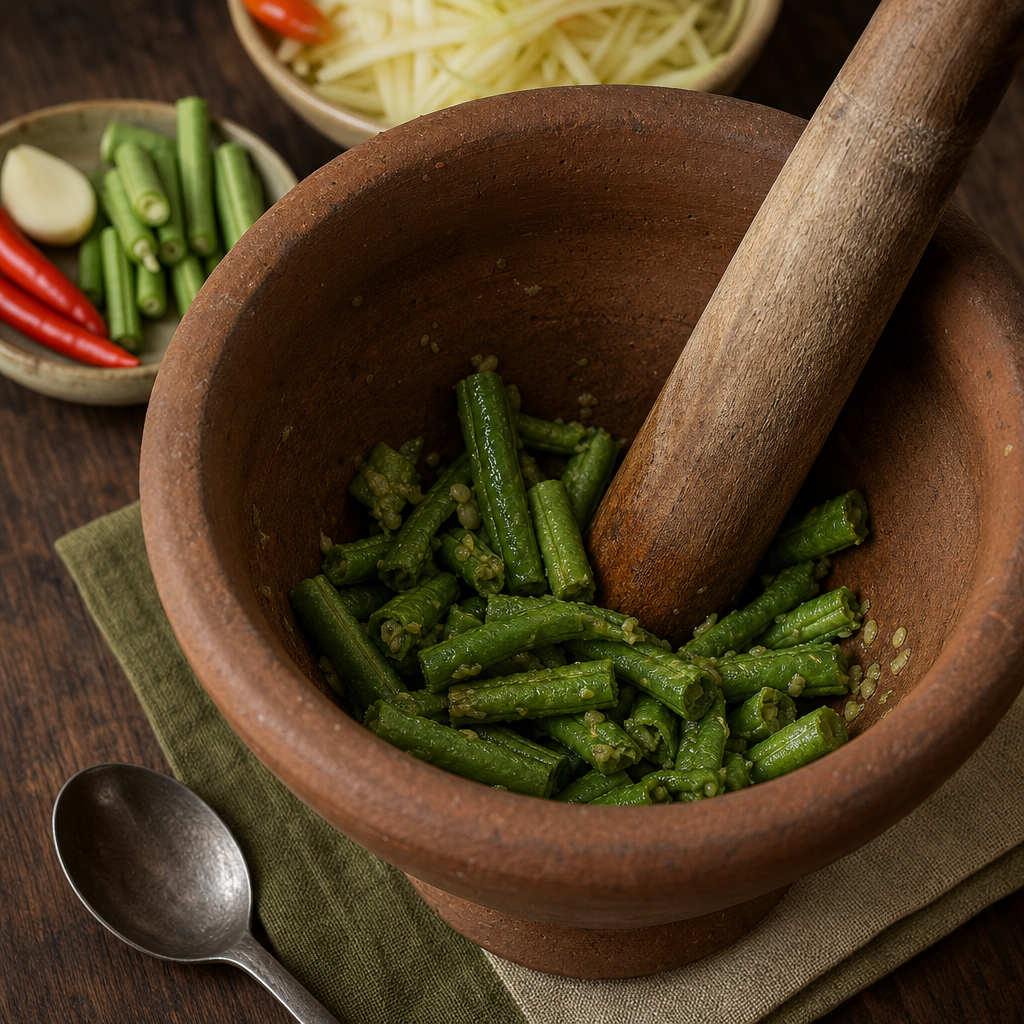
Add the long beans and pound 6-8 times, until the cut edges darken slightly and the pieces crack but still hold their shape.
Season the mortar
Add the cooked pla ra sauce, lime juice, tamarind water, fish sauce if using, palm sugar if using, and MSG if using. Stir and scrape with a spoon while pressing once or twice with the pestle to dissolve the sugar.
Add tomato and optional crab
Add the tomatoes and salted crab if using. Press the tomatoes until they split and release juice; crack the crab shell lightly, not into fragments.
Pound and fold the papaya
Add the shredded papaya. Pound with one hand while lifting and turning with a spoon in the other, 20-30 seconds, until the strands gloss over and bend slightly.
Correct and serve immediately
Taste the dressing collected at the bottom of the mortar. Correct with lime for sharpness, pla ra for funk and salt, or a pinch of sugar only if the edges are harsh, then transfer to a plate with all mortar juices.
Common mistakes
- {'mistake': 'Using raw unboiled pla ra.', 'fix': 'Use cooked, boiled, strained, or pasteurized pla ra sauce. Raw fermented fish carries avoidable parasite and sanitation risk.'}
- {'mistake': 'Making it sweet like som tum Thai.', 'fix': 'Keep palm sugar at 0-5 g for 2 servings. Som tum pla ra should be sour, salty, spicy, and fermented before it is sweet.'}
- {'mistake': 'Grinding the aromatics into paste.', 'fix': 'Split the chilies and bruise the garlic. Paste makes the dressing muddy and too hot in a one-note way.'}
- {'mistake': 'Overloading the mortar.', 'fix': 'Pound in batches above 4 servings. A full mortar crushes the lower layer while the top stays unseasoned.'}
- {'mistake': 'Treating all pla ra sauces as equal.', 'fix': 'Start with the listed amount, then adjust. Some commercial bottles are sweetened, some are aggressively salty, and some are thin.'}
- {'mistake': 'Letting the salad sit before serving.', 'fix': 'Serve right after pounding. After 10-15 minutes, papaya gives up water and the dressing turns diluted but still salty.'}
What does not belong
- {'item': 'coconut milk', 'reason': 'Coconut milk does not belong in som tum pla ra. It dulls the acid and has no role in this salad.'}
- {'item': 'peanuts', 'reason': 'Peanuts belong to som tum Thai. In som tum pla ra they soften the fermented fish profile and move the dish toward a different style.'}
- {'item': 'dried shrimp', 'reason': 'Dried shrimp is not part of the core pla ra version. It competes with the deeper fermented fish note.'}
- {'item': 'large amounts of sugar', 'reason': 'A sweet som tum pla ra is structurally wrong. Sugar is a corrective, not a flavor base.'}
- {'item': 'olive oil or sesame oil', 'reason': 'Oil does not belong in this pounded salad. The dressing is water-based: lime, pla ra, tomato juice, and papaya juices.'}
- {'item': 'soy sauce as the main seasoning', 'reason': 'Soy sauce cannot replace pla ra. It gives salt and dark color, not fermented fish depth.'}