Pork Satay
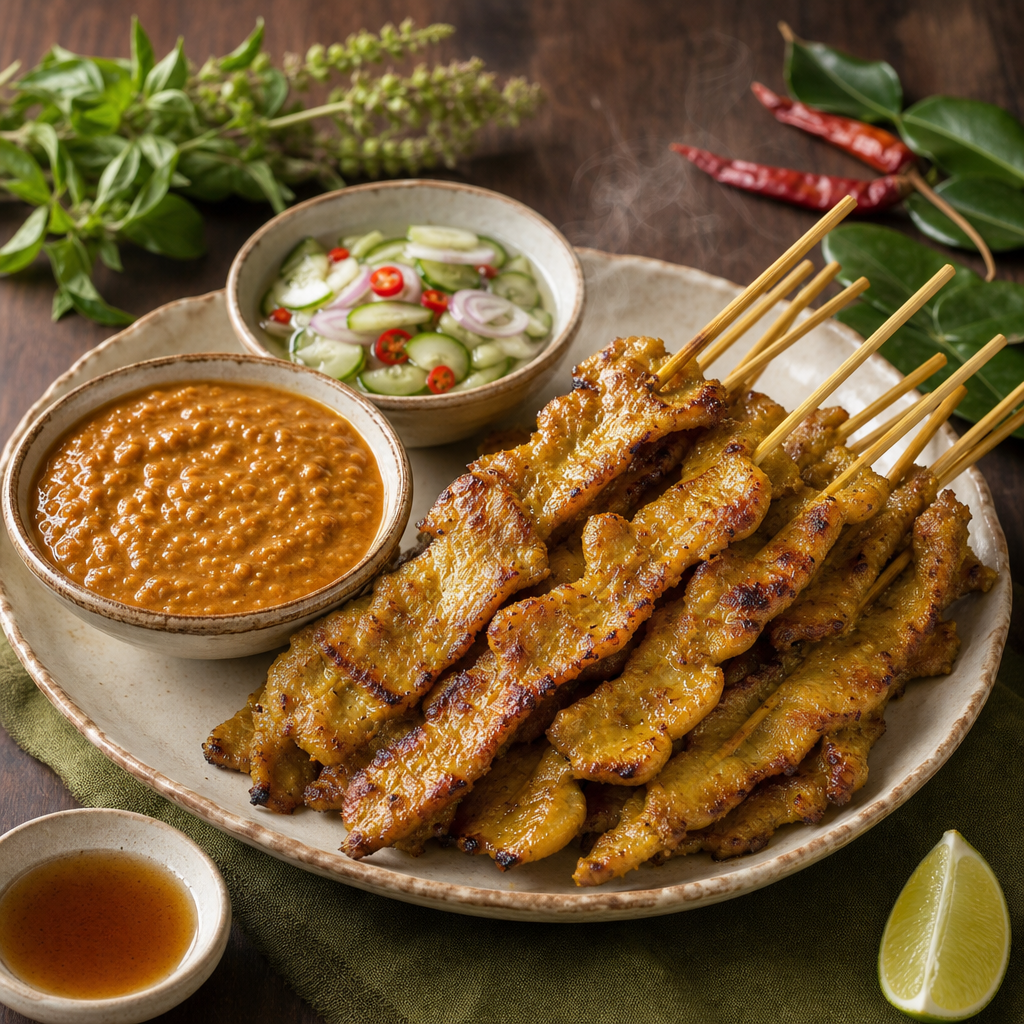
The dish in context
Satay entered Thailand through the wider Malay-Indonesian satay world and became naturalized as central Thai street food, especially in Bangkok and old market districts. Thai pork satay differs from many Indonesian versions in its flat sliced pork, yellow curry-powder-and-turmeric marinade, coconut basting, sweet peanut sauce, and sharp cucumber relish called อาจาด. Older Thai accounts also connect satay to court and Muslim cooking before it spread into shop and street formats. Pork is now the most common Thai version, though beef and chicken versions exist; pork satay is not halal by definition.
Method 9 steps · 285 min
Slice the pork thin
Chill the pork until firm but not frozen, then slice across the grain into strips about 3 mm thick and 8-10 cm long. Keep some fat attached. Thick cubes do not belong in Thai pork satay.
Make the marinade paste
Pound or blend lemongrass, galangal, garlic, toasted coriander seed, cumin, curry powder, turmeric, white pepper, palm sugar, salt, coconut milk, and evaporated milk into a coarse yellow marinade. Stop when the lemongrass is broken down enough to cling to the pork.
Marinate
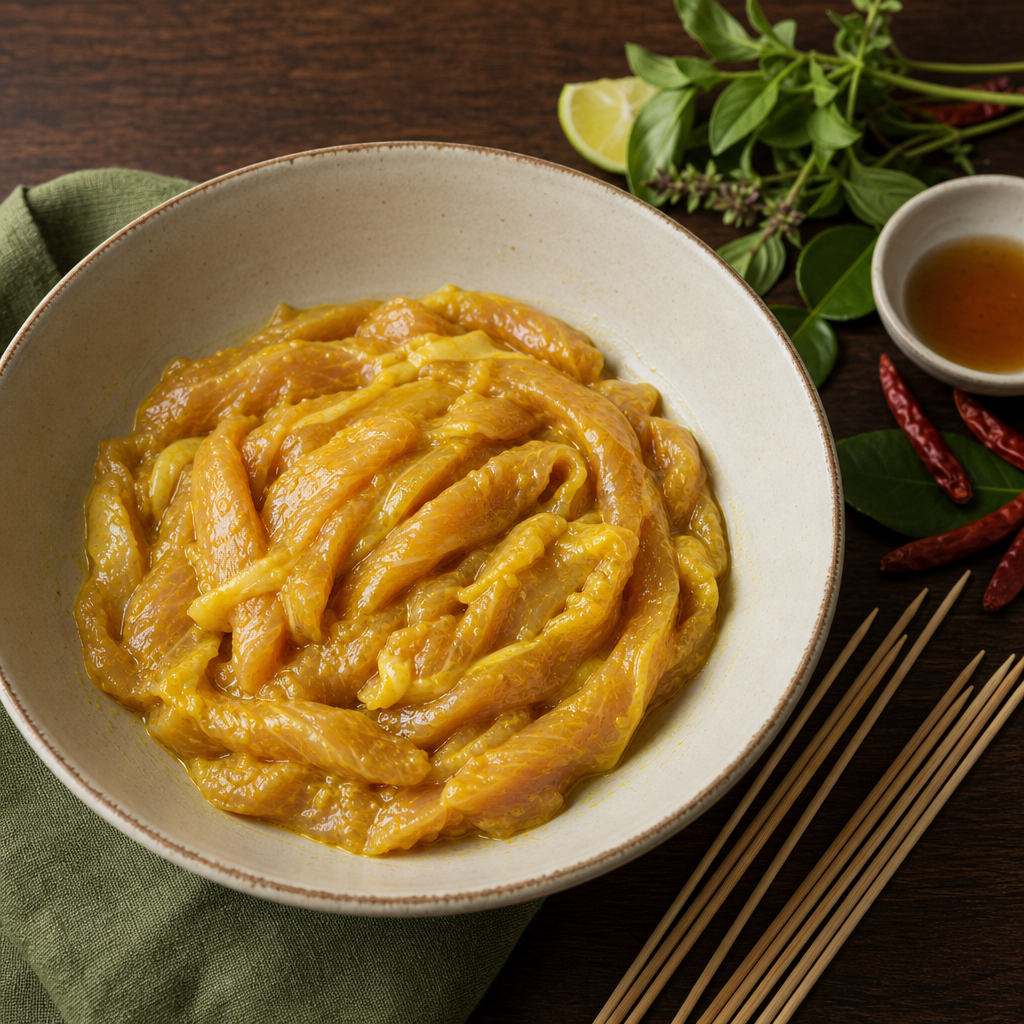
Massage the marinade into the pork until every strip is yellow and glossy. Cover and refrigerate for at least 3 hours, preferably 4 hours; overnight is acceptable if the pork is not sliced thinner than 3 mm.
Cook the peanut sauce base
Heat 120 ml of the sauce coconut milk in a saucepan until the fat begins to glisten at the edges. Fry massaman paste and red curry paste in it for 2-3 minutes until the raw chili smell softens.
Finish the peanut sauce
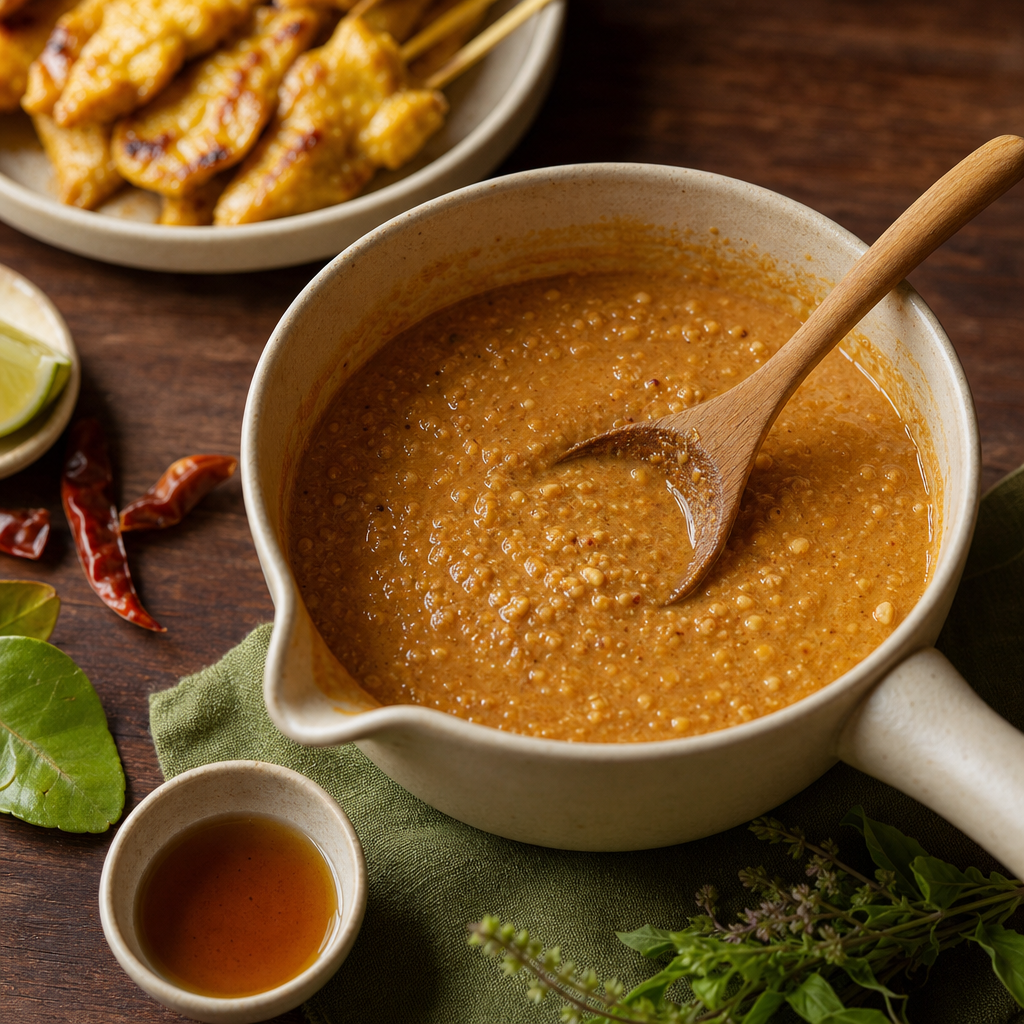
Add the remaining coconut milk, peanuts, palm sugar, tamarind water, and salt. Simmer 8-10 minutes, stirring often, until the sauce thickens to a slow ribbon from the spoon; loosen with water only if it turns pasty.
Make the ajad syrup
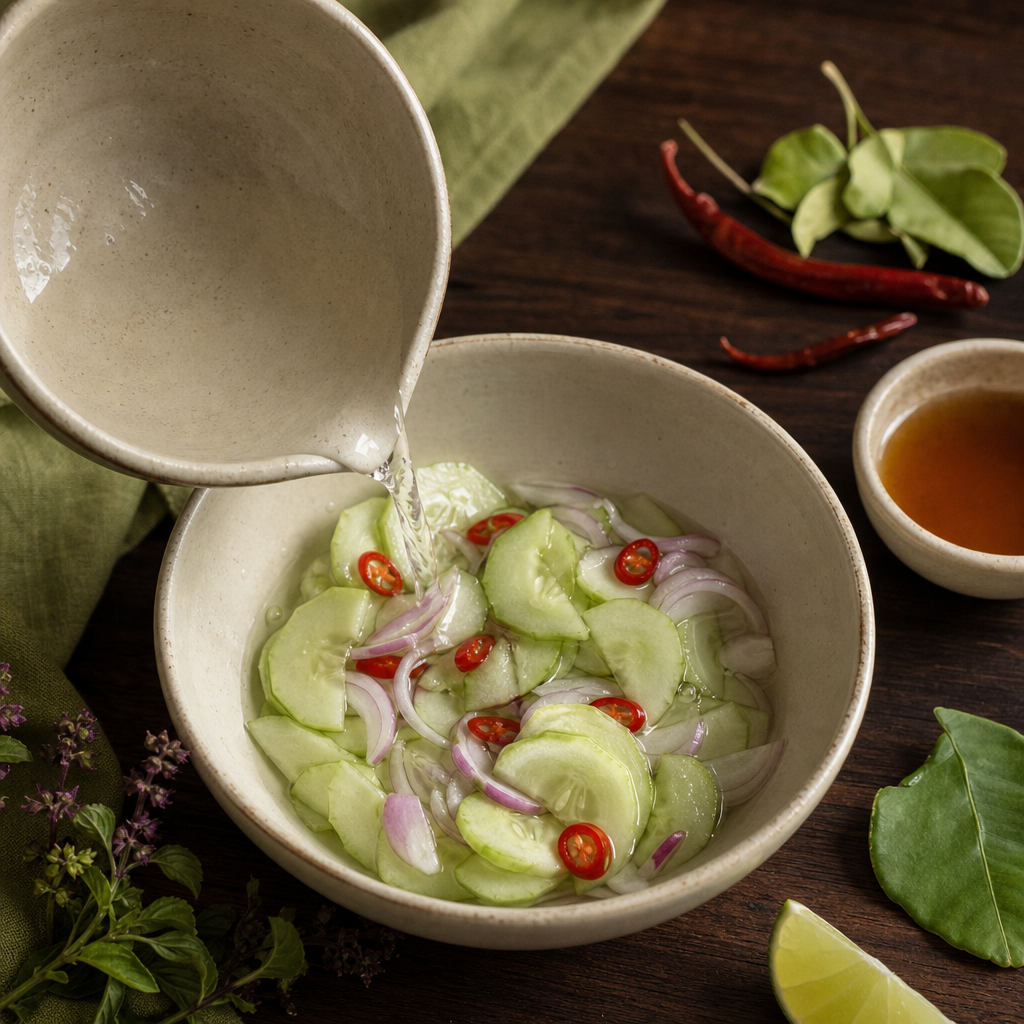
Bring vinegar, water, sugar, and salt to a brief boil, stirring until clear. Cool completely before adding cucumber, shallot, red chili, and cilantro.
Thread the skewers
Thread each strip onto a soaked bamboo skewer in a flat ribbon, not bunched into a lump. Leave the handle clean and keep the meat portion compact enough to grill evenly.
Grill and baste
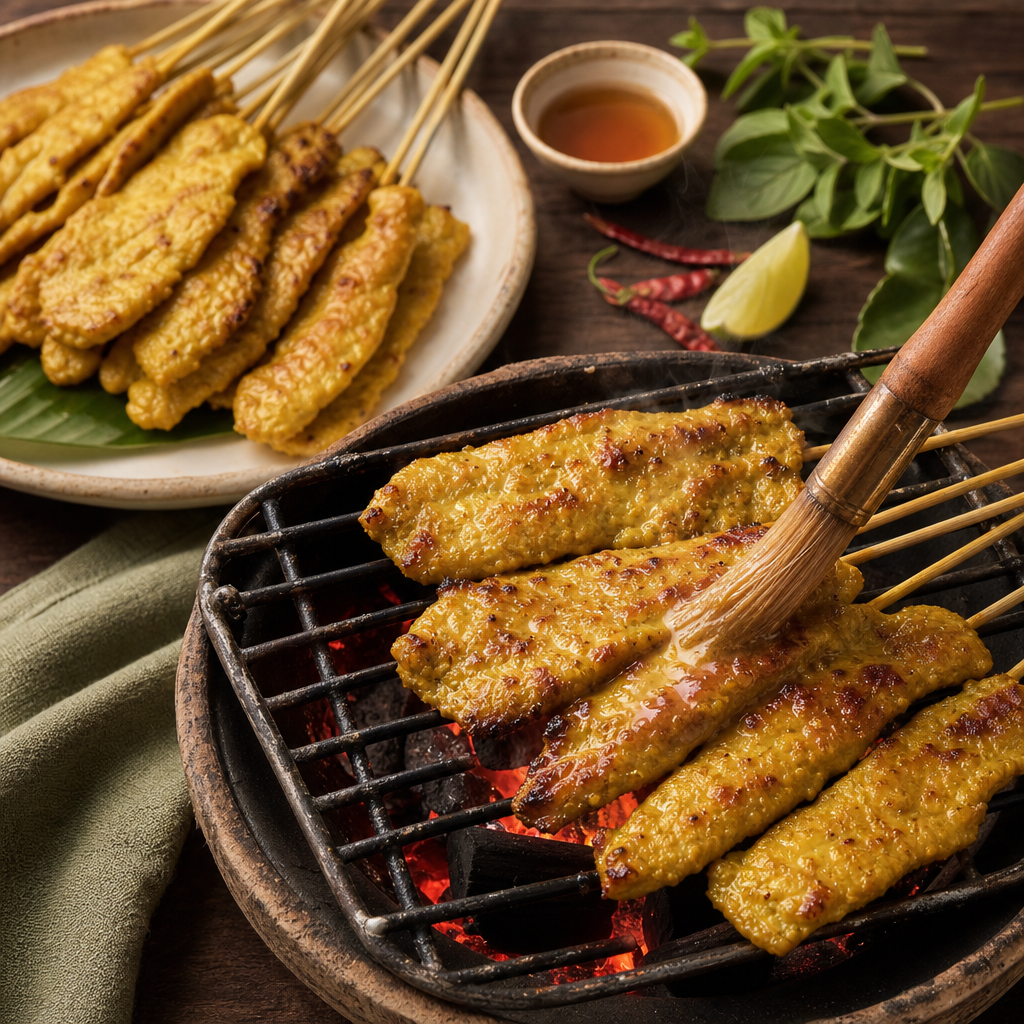
Grill over medium-hot charcoal or a preheated grill pan. Brush with coconut cream as the pork starts to set, turn often, and grill 4-6 minutes total until the edges char in spots and the center is cooked through but still flexible.
Serve as a set
Serve the skewers hot with peanut sauce, ajad, and toasted white bread if using. Keep the sauces separate; spooning peanut sauce over the whole pile softens the char.
Common mistakes
- Cutting the pork into cubes. Thai pork satay uses thin, flat strips; cubes cook like kebabs and lose the satay-shop texture.
- Using lean pork with no fat. The meat tightens and dries before the surface browns.
- Adding too much turmeric. The color gets stronger, but the flavor turns bitter and dusty.
- Boiling the peanut sauce until stiff. Peanuts continue to absorb liquid off heat; stop while the sauce still falls from the spoon.
- Adding cucumber to hot ajad syrup. The relish should crunch, not slump.
- Grilling over flames instead of coals. Dripping coconut fat ignites fast and leaves soot rather than clean char.
What does not belong
- Soy-heavy teriyaki marinade does not belong; it moves the dish toward Japanese-style skewers, not Thai satay.
- Lime juice in the peanut sauce does not belong; tamarind supplies the sourness with the correct darker fruit acidity.
- Ketchup does not belong in the peanut sauce.
- Chunky kebab vegetables on the skewers do not belong. Onion, bell pepper, and pineapple change the format.
- Bottled sweet chili sauce does not replace ajad. The relish must be vinegar syrup, cucumber, shallot, and chili.
- Peanut butter as the main peanut source does not belong unless there is no alternative. It makes the sauce sticky and one-note; roasted ground peanuts give the correct coarse body.