Penne Arrabbiata
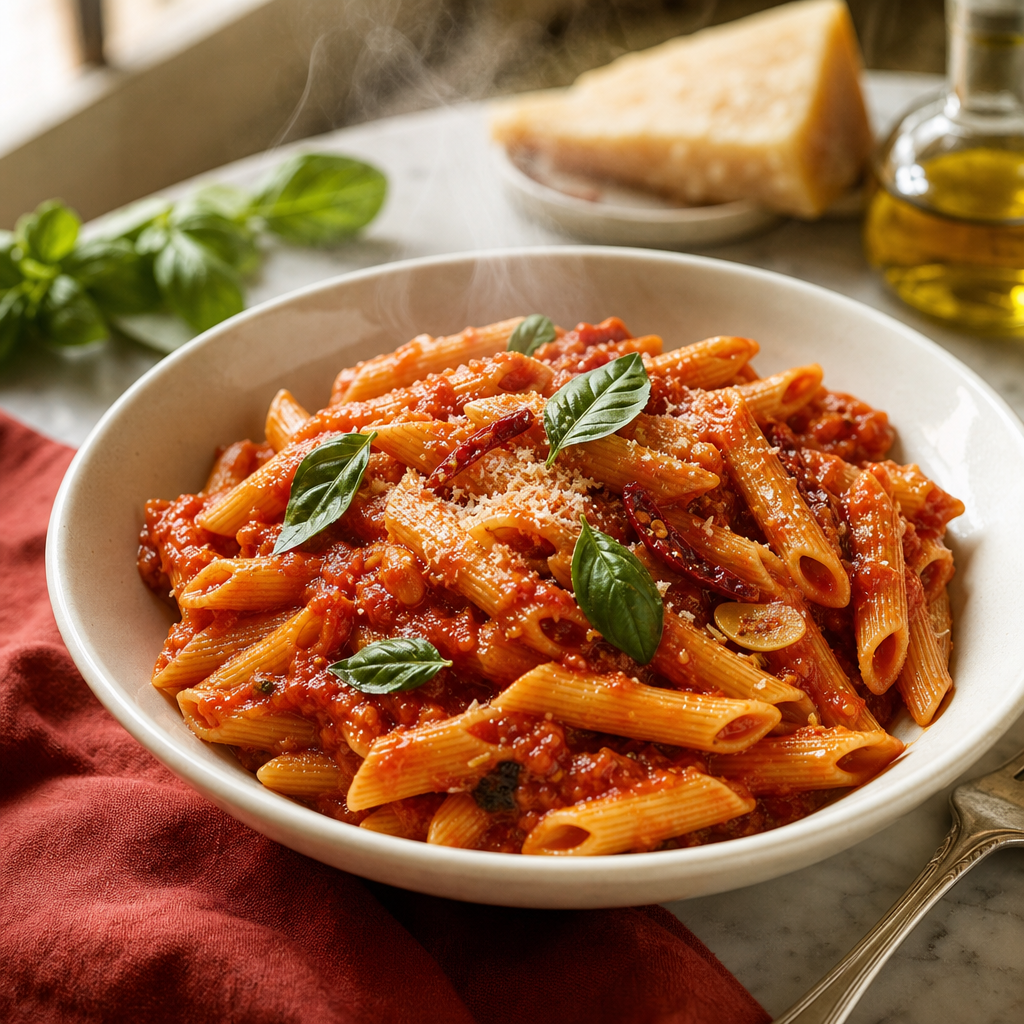
The dish in context
Penne all'arrabbiata belongs to Roman and Lazio cooking, with most accounts placing its popular rise in the mid-20th century rather than in an old rural canon. Arrabbiata means angry; in Roman usage the anger is the heat of peperoncino carried by oil, garlic, and tomato. The grammar is narrow: short ridged pasta, tomato, garlic, chili, olive oil, and usually parsley, with Pecorino Romano at the table if used. Basil, onion, meat, and cream belong to other pasta sauces, not to the Roman structure of this dish.
Method 7 steps · 30 min
Crush the tomatoes
Pour the canned tomatoes into a bowl and crush them by hand until no large cores remain. Keep some texture; arrabbiata should not look like jarred purée unless using passata intentionally.
Start the pasta water
Bring 4 L water to a hard boil and salt it with 40 g salt. Add the penne and cook 2 minutes short of the package time.
Bloom the chili and garlic
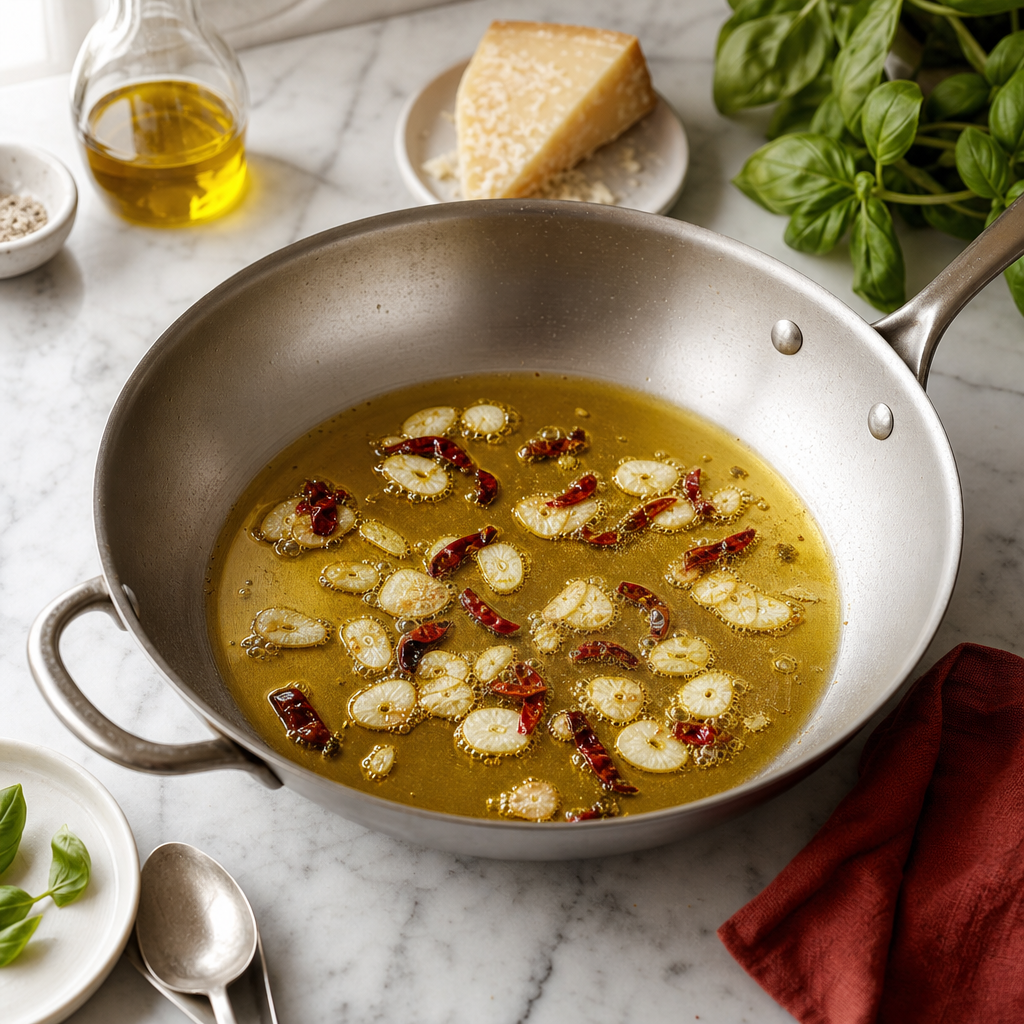
Set a wide sauté pan over medium-low heat and add the olive oil, sliced garlic, and peperoncino. Cook until the garlic is pale gold at the edges and the chili darkens slightly, 2-3 minutes; do not brown the garlic.
Cook the tomato sauce
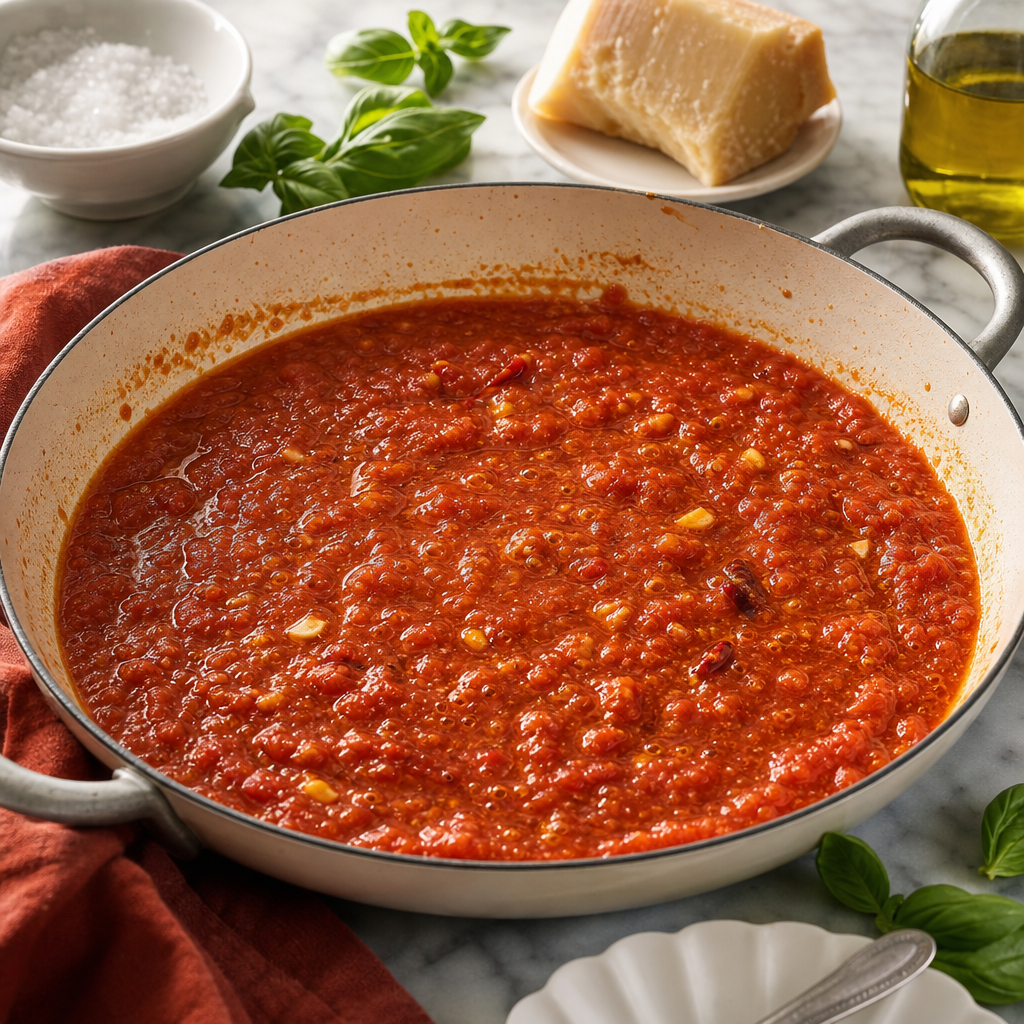
Add the crushed tomatoes and a generous pinch of salt. Simmer over medium heat until the sauce thickens, the oil begins to show at the edges, and the raw tomato smell is gone, 12-15 minutes.
Transfer the pasta
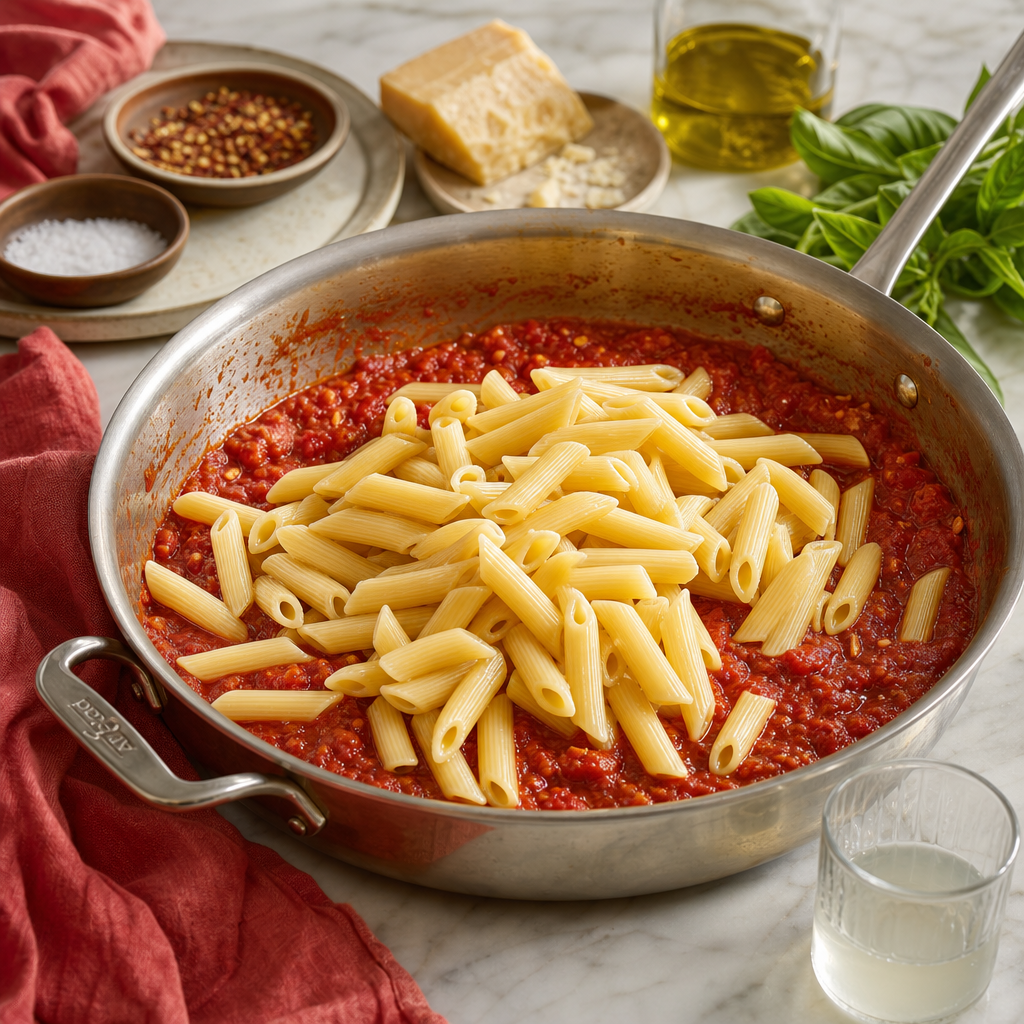
Before draining, reserve at least 180 ml pasta water. Move the penne into the sauce while it is still undercooked and wet on the surface.
Finish in the pan
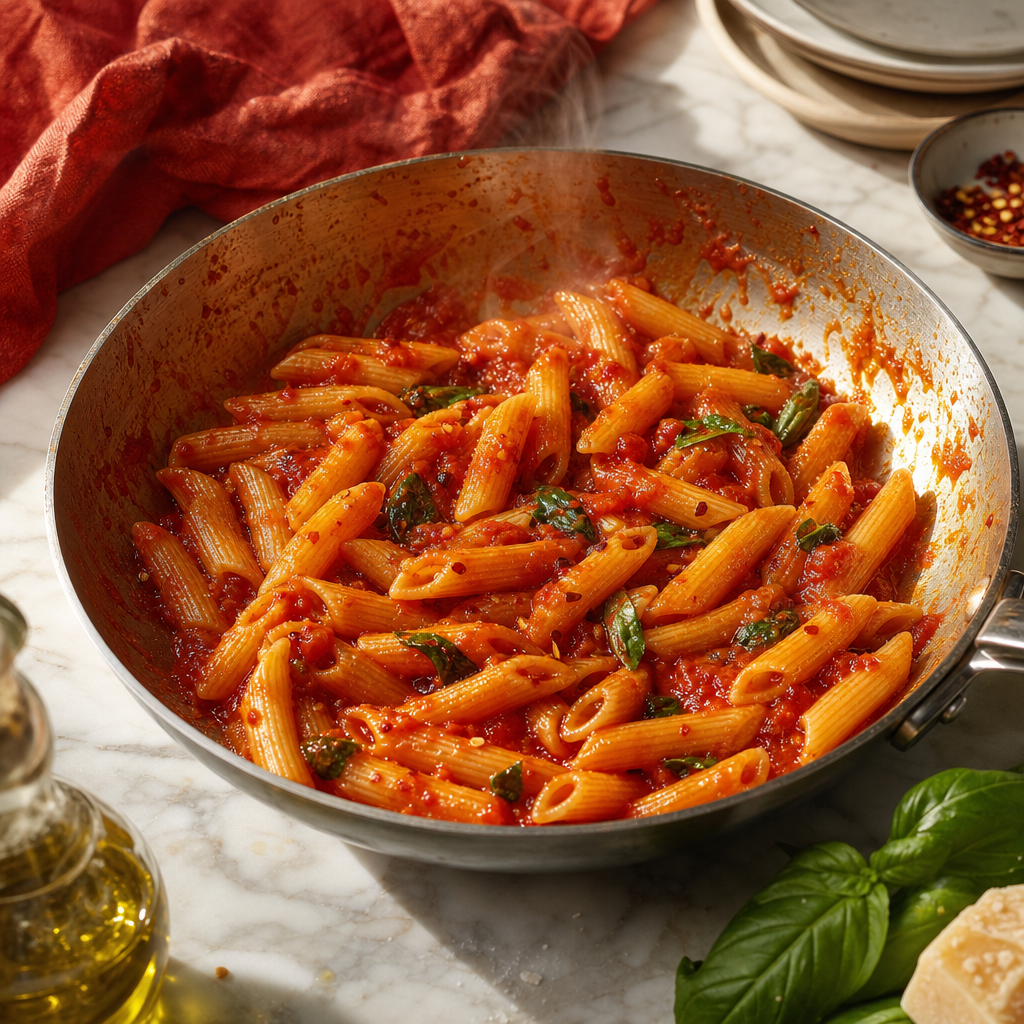
Toss the penne over medium-high heat for 1-2 minutes, adding pasta water in small splashes until the sauce turns glossy and clings inside the ridges. The pan should sound wet and active, not dry and sticky.
Finish with parsley and cheese
Turn off the heat and fold in the parsley. Serve immediately with Pecorino Romano at the table, not buried in the pan.
Common mistakes
- {'mistake': 'Browning the garlic.', 'fix': 'Cook garlic and chili over medium-low heat and stop at pale gold. Dark brown garlic makes the sauce bitter.'}
- {'mistake': 'Using too little chili.', 'fix': 'Arrabbiata must register as hot. If the chili is mild, increase it before the tomato goes in so the heat blooms in the oil.'}
- {'mistake': 'Finishing the pasta by pouring sauce on top.', 'fix': 'Move the penne into the pan and toss with pasta water. Sauce-binding happens under heat and movement.'}
- {'mistake': 'Over-reducing the tomato.', 'fix': 'Stop when the sauce is glossy and spoon-coating, not dry. Pasta water can loosen it, but it cannot restore fresh tomato acidity.'}
- {'mistake': 'Rinsing the pasta.', 'fix': 'Do not rinse. The starch is needed for the emulsion.'}
What does not belong
- {'item': 'cream', 'reason': 'Cream does not belong in arrabbiata. It dulls the chili and turns the dish into a separate creamy tomato pasta.'}
- {'item': 'onion', 'reason': 'Onion sweetens and thickens the sauce in the wrong direction. Arrabbiata is garlic-led.'}
- {'item': 'sugar', 'reason': 'Sugar does not fix weak tomatoes; it makes the heat taste candied. Use better tomatoes or reduce correctly.'}
- {'item': 'pancetta, bacon, or guanciale', 'reason': 'Cured pork moves the dish toward amatriciana territory. Arrabbiata is not a meat sauce.'}
- {'item': 'oregano', 'reason': 'Oregano pushes the sauce toward pizzeria marinara. The Roman finish is usually parsley, with cheese optional.'}
- {'item': 'butter', 'reason': 'Butter softens the sharp olive oil, garlic, and chili profile. It does not belong in this lean Roman sauce.'}
Adaptations
Omit Pecorino Romano. The core sauce is tomato, olive oil, garlic, chili, and parsley.
No alcohol or meat is used. Check cheese rennet if serving with Pecorino Romano.
Use a sturdy gluten-free penne and reduce the final pan time. Gluten-free pasta sheds starch quickly and can break if over-tossed.
Omit the Pecorino Romano. Do not replace it with cream or butter.
The dish contains no shellfish.