Pad Woon Sen Gai
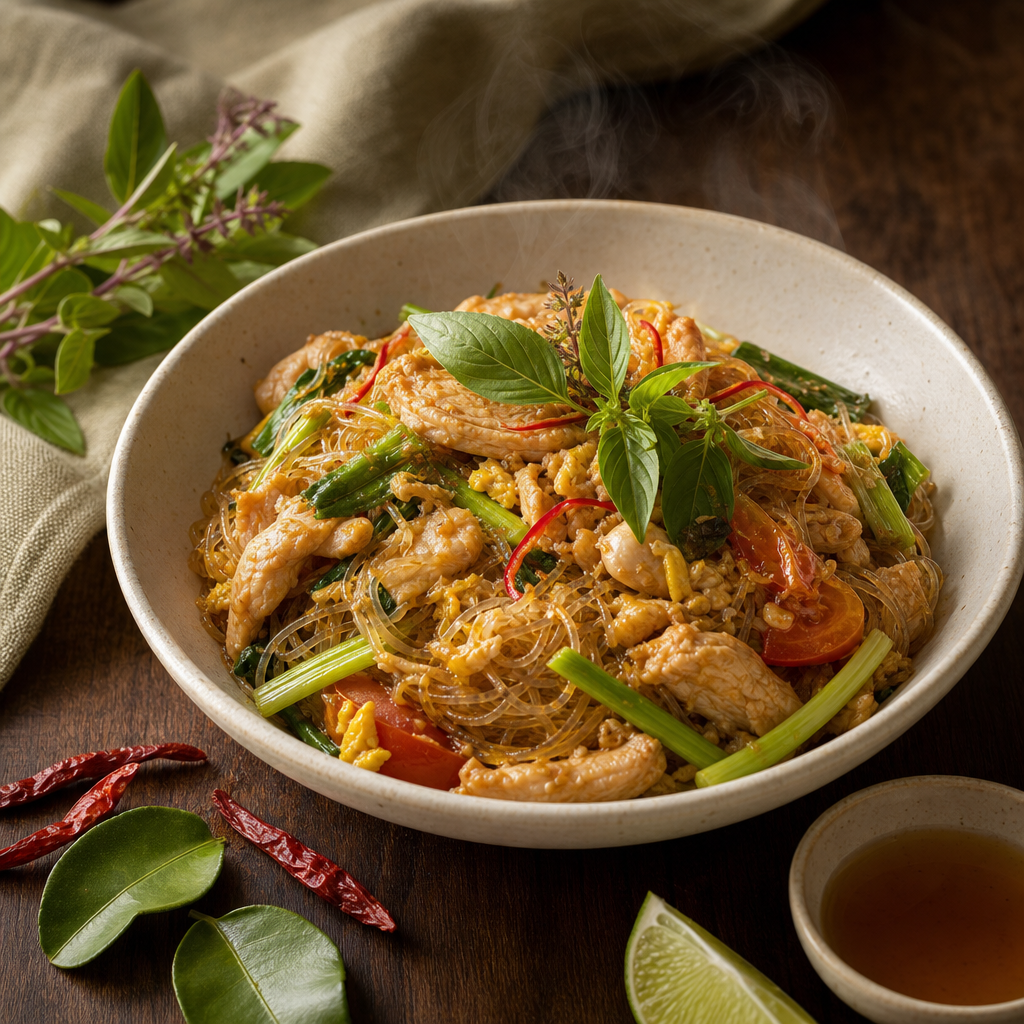
The dish in context
Pad woon sen (ผัดวุ้นเส้น) is a Thai household and lunch-stall stir-fry built around mung bean glass noodles, egg, mixed vegetables, and a salty-savoury sauce. The chicken version, pad woon sen gai (ผัดวุ้นเส้นไก่), sits in the central Thai stir-fry grammar: garlic first, protein next, egg, noodles, vegetables, then a short sauce reduction in the wok. Sources diverge on the vegetable set because the dish is domestic by nature; onion, cabbage, carrot, tomato, scallion, and Chinese celery appear often, while pork, shrimp, and mixed seafood versions follow the same structure. It is usually eaten as a one-plate meal or with rice, not as a soup noodle dish.
Method 8 steps · 30 min
Soak the noodles
Cover the glass noodles with room-temperature water for 10-12 minutes, until they bend without snapping but still feel springy. Drain well and cut once or twice with scissors into 15-20 cm lengths.
Mix the sauce
Stir oyster sauce, fish sauce, light soy sauce, seasoning sauce, sugar, white pepper, and water in a small bowl until the sugar dissolves.
Fry the garlic and chicken
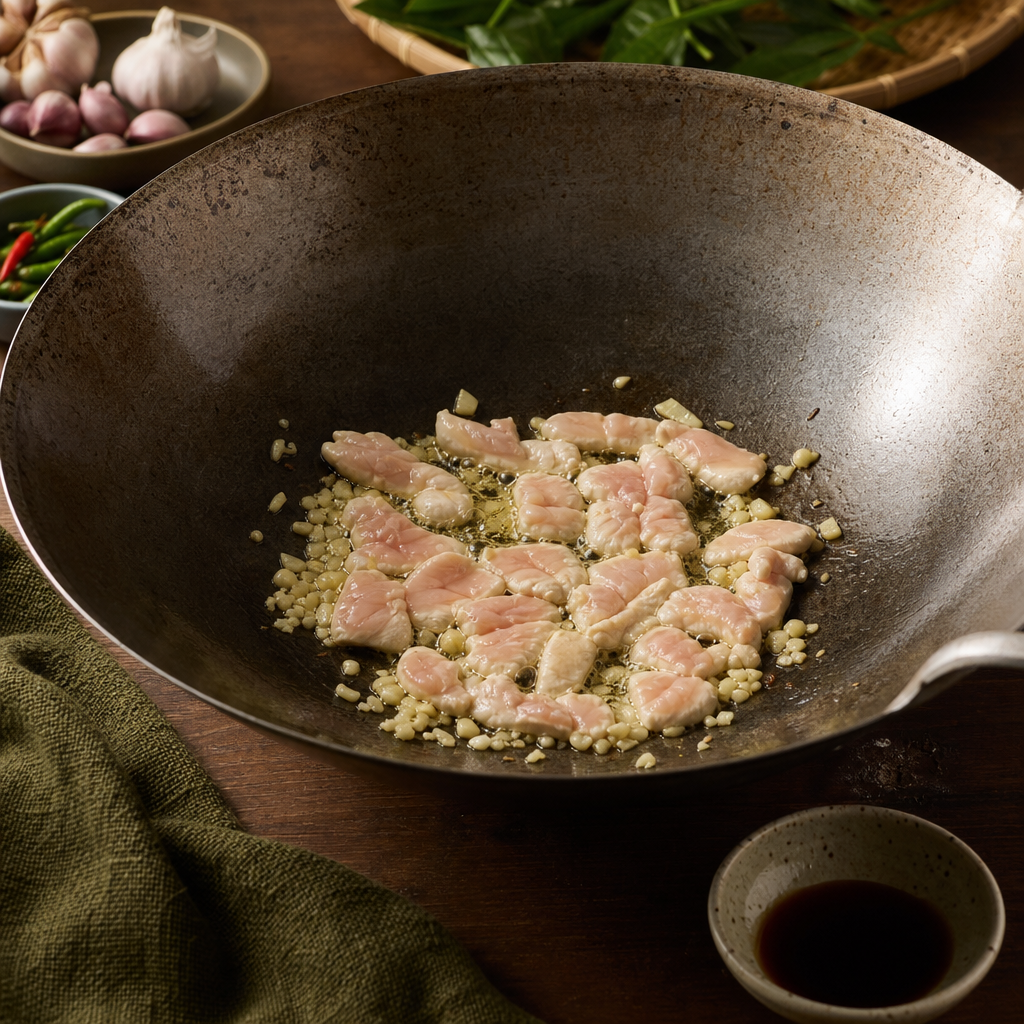
Heat the oil in a wok over medium-high heat until it shimmers. Add garlic and stir for 10-15 seconds, then add chicken and spread it into a thin layer; stir-fry until the outside turns opaque with a few pale golden edges, about 2 minutes.
Set the egg in the oil
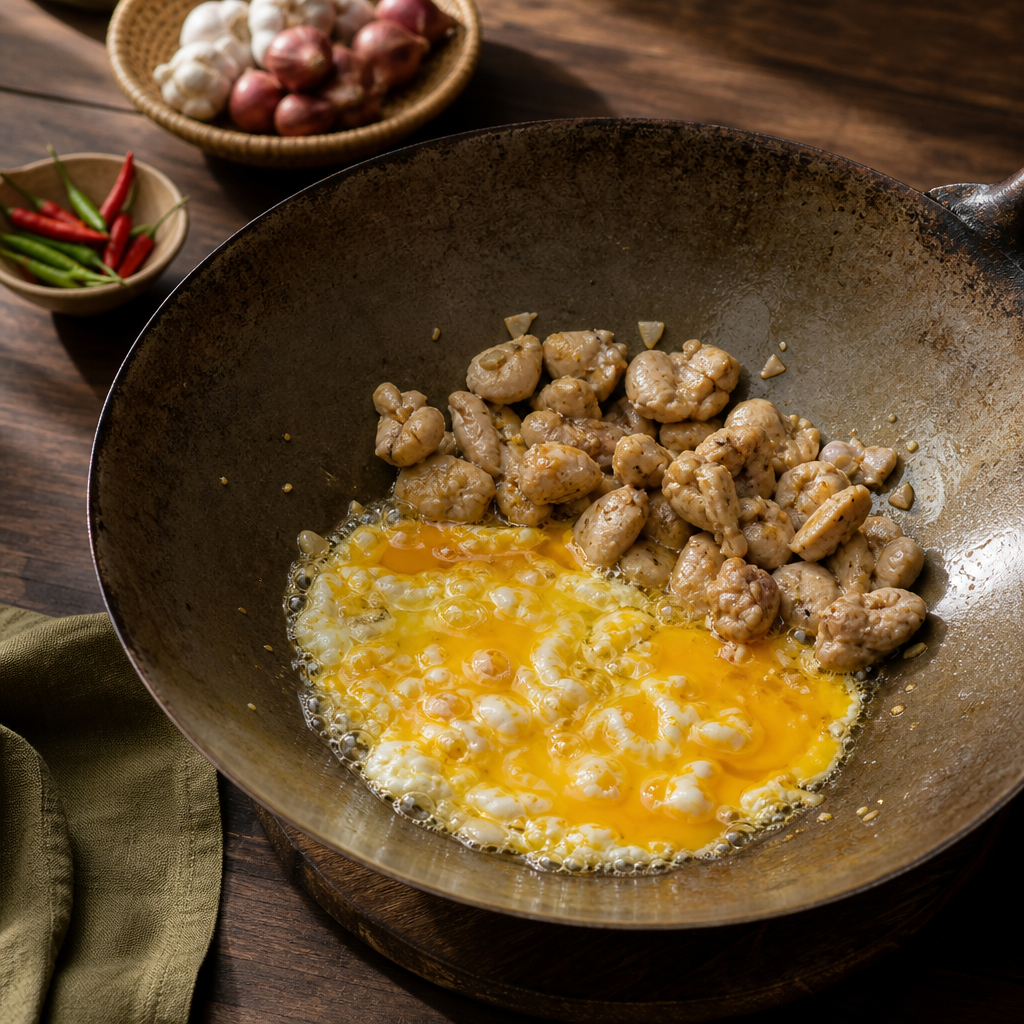
Push the chicken to one side. Crack in the eggs, break the yolks, and let them sit for 10 seconds before stirring into soft yellow curds.
Add firm vegetables
Add onion, cabbage, and carrot. Stir-fry for 60-90 seconds, until the cabbage edges look glossy but the carrot still has a bite.
Finish the noodles in sauce
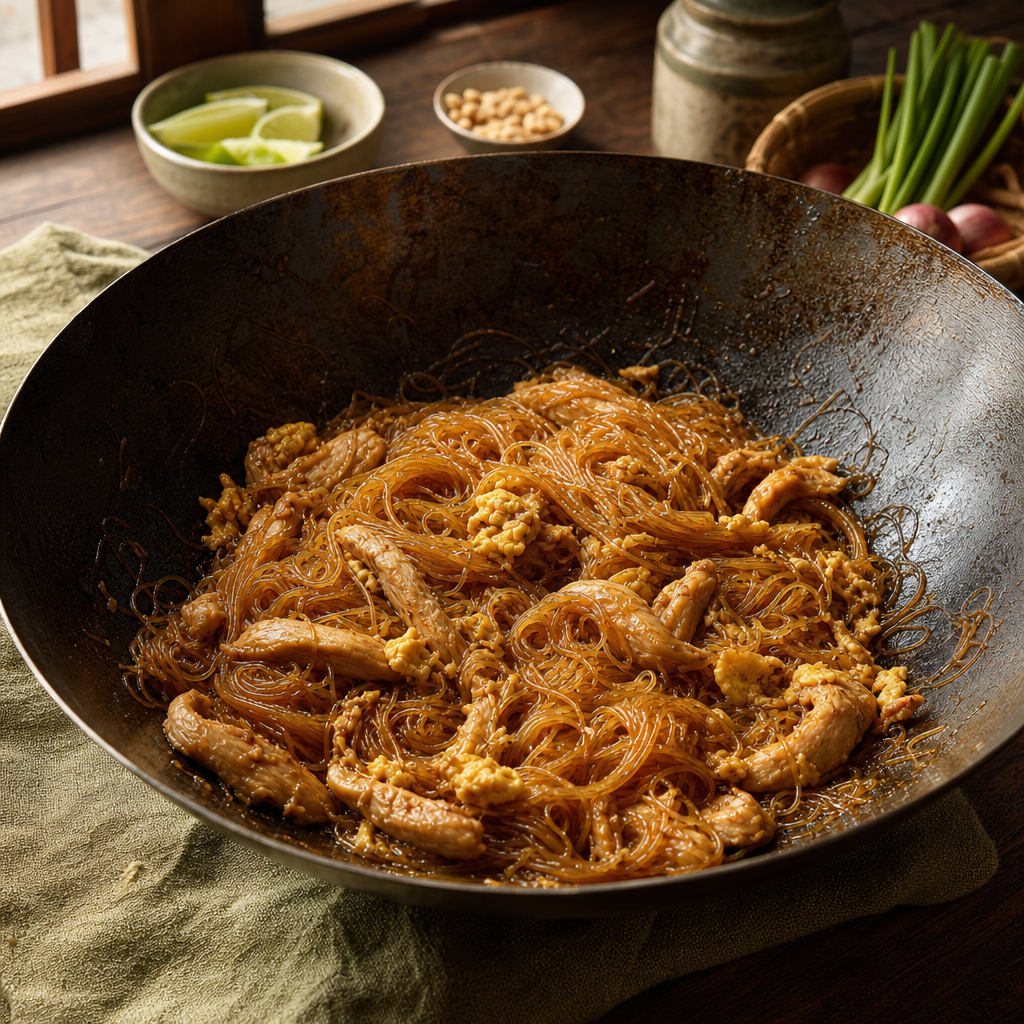
Add the drained glass noodles and the sauce. Toss and fold constantly for 2-3 minutes, lifting from the bottom of the wok, until the noodles turn clear, glossy, and lightly tacky rather than soupy.
Add soft vegetables and herbs
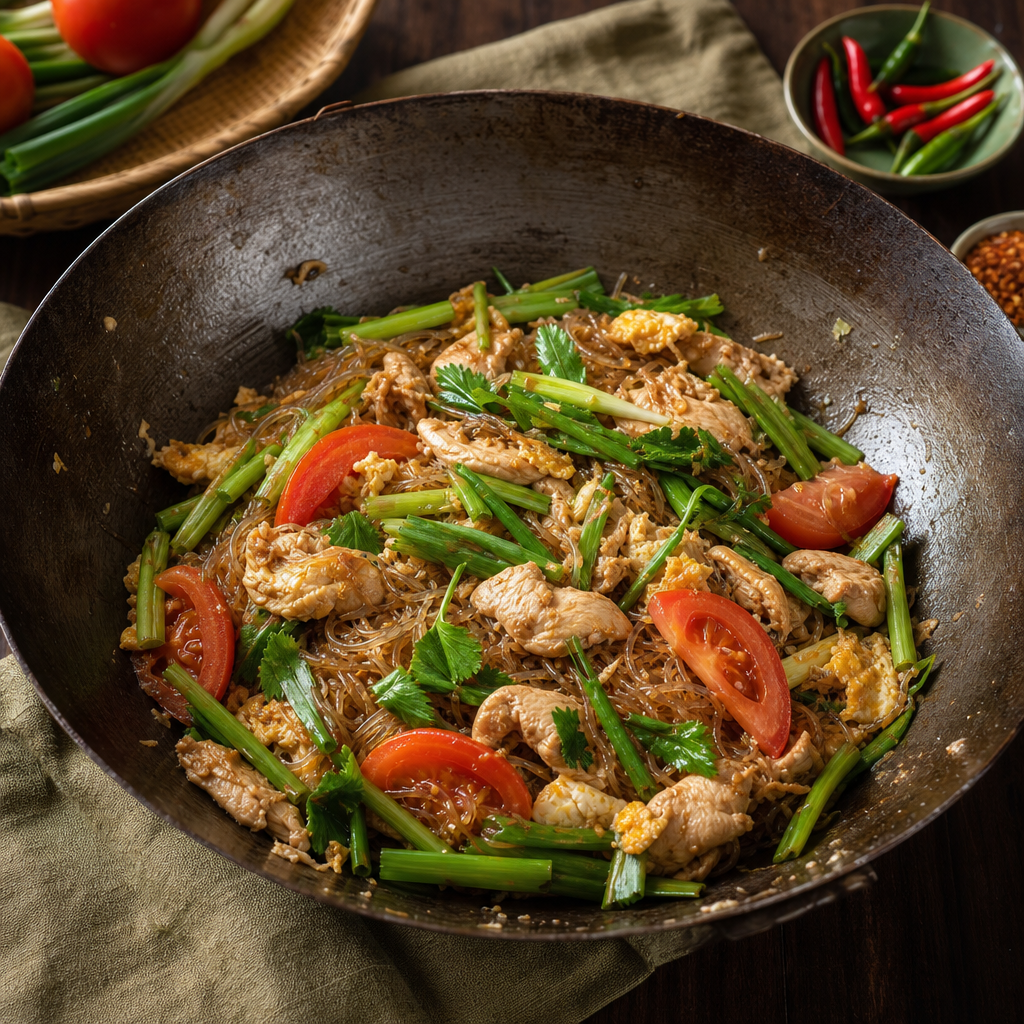
Add tomato, scallion, and Chinese celery. Toss for 30-45 seconds, only until the tomato edges soften and the herbs brighten.
Correct the finish
Taste a strand of noodle, not a piece of chicken. Add a few drops of fish sauce if flat, or a splash of water if the noodles tighten and clump; toss once more and plate immediately.
Common mistakes
- {'mistake': 'Boiling the glass noodles before stir-frying.', 'fix': 'Soak in room-temperature water until pliable, then finish in the wok. Pre-boiled noodles turn slick, break apart, and carry too much water.'}
- {'mistake': 'Adding tomato with the cabbage.', 'fix': 'Add tomato near the end. It should soften at the edges, not dissolve into the sauce.'}
- {'mistake': 'Using too much sauce to compensate for bland noodles.', 'fix': 'Drain the soaked noodles well and let them absorb a measured sauce in the wok. Excess liquid creates wet pad woon sen, not better seasoning.'}
- {'mistake': 'Cooking a large batch in one home skillet.', 'fix': 'Cook in batches above 4 servings. Glass noodles need surface area; piled noodles steam and fuse together.'}
- {'mistake': 'Scrambling the egg into the noodles too early.', 'fix': 'Set the egg against the hot wok first, then fold it through. The finished dish should show yellow curds.'}
What does not belong
- {'item': 'Tamarind paste', 'reason': 'Tamarind belongs in pad thai and some sour sauces. Pad woon sen gai is not a sweet-sour noodle dish.'}
- {'item': 'Ketchup or chili sauce', 'reason': 'Bottled sweet red sauce makes the dish sticky and Western-takeout sweet. It does not belong.'}
- {'item': 'Coconut milk', 'reason': 'Coconut milk does not belong in this stir-fry. It turns the sauce creamy and heavy, which is outside the dish.'}
- {'item': 'Curry paste', 'reason': 'Curry paste makes a different stir-fry. Pad woon sen gai is seasoned through garlic, egg, oyster sauce, fish sauce, soy, and white pepper.'}
- {'item': 'Rice vermicelli', 'reason': 'Rice vermicelli is not woon sen. Woon sen is mung bean starch noodle; the clear, springy texture is the point.'}