Drunken Noodles with Pork
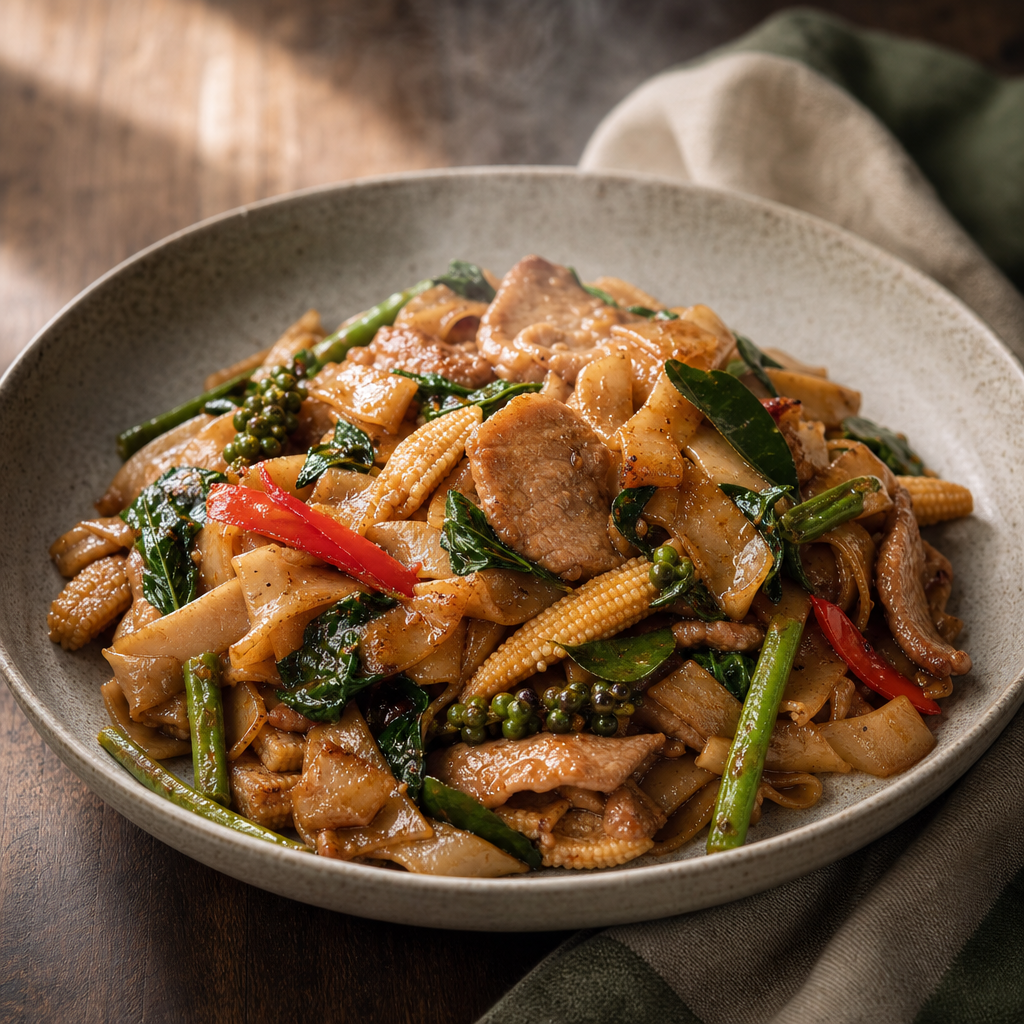
The dish in context
Pad kee mao (ผัดขี้เมา) means “drunk-style stir-fry,” a Thai category built around heat, garlic, basil, and aggressive aromatics rather than alcohol in the pan. In Thailand the format is flexible: it may be made with rice noodles, spaghetti, instant noodles, seafood, pork, or no noodles at all and served with rice. The restaurant version known internationally as drunken noodles usually uses fresh wide rice noodles, but the Thai grammar is closer to a fiery basil stir-fry than to pad see ew with extra chile. This pork version, pad kee mao moo (ผัดขี้เมาหมู), keeps the central Thai noodle-plate structure while using the herbs and rhizomes that keep the dish sharp.
Method 7 steps · 25 min
Loosen the noodles and mix the sauce
Separate the fresh rice noodles by hand into wide ribbons. Stir fish sauce, oyster sauce, light soy sauce, dark soy sauce, sugar, and water in a small bowl until the sugar dissolves.
Bruise the garlic and chiles
Pound the garlic and Thai bird chiles in a mortar to a coarse, wet crush. Do not make a smooth paste.
Sear the pork
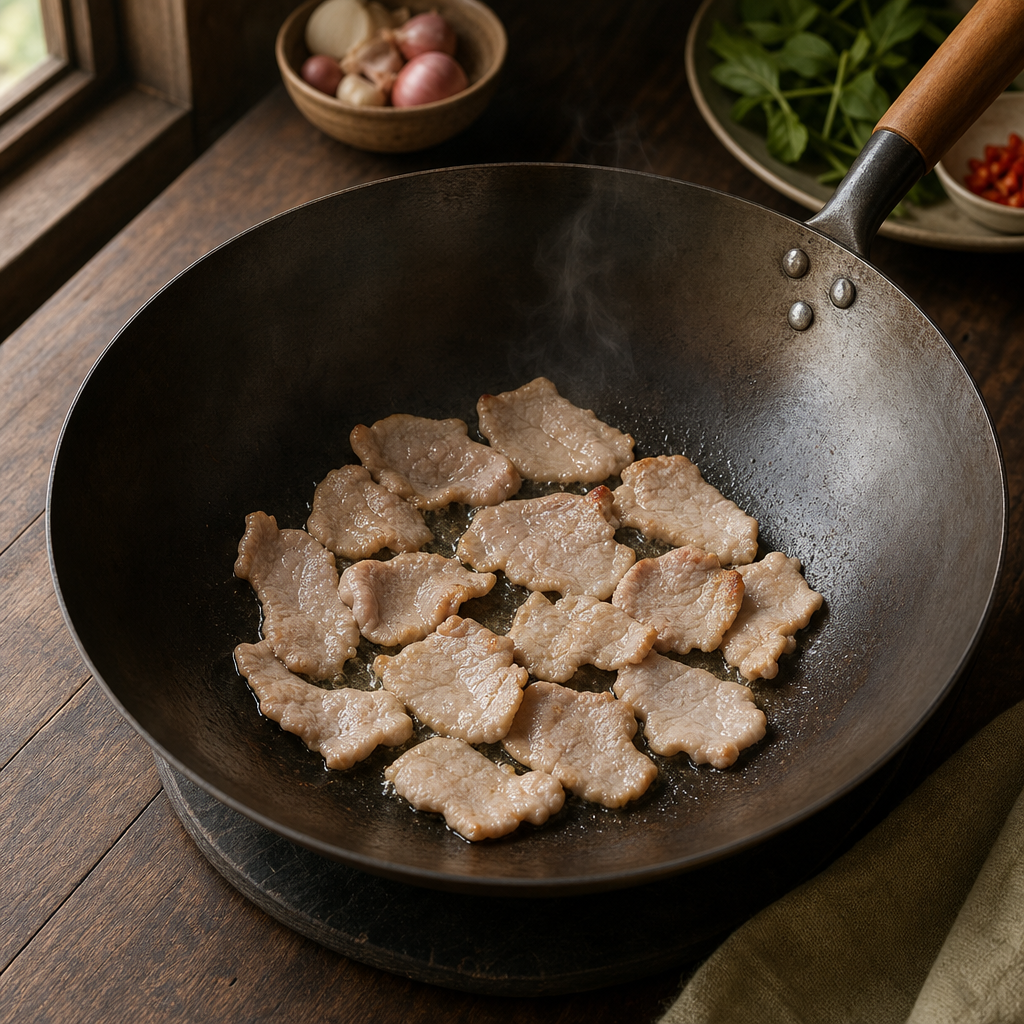
Heat the wok over high heat until a thread of oil shimmers on contact. Add the oil, then the pork in a single layer; sear 30 seconds before stirring, then cook until the outside loses its raw pink color.
Fry the aromatics
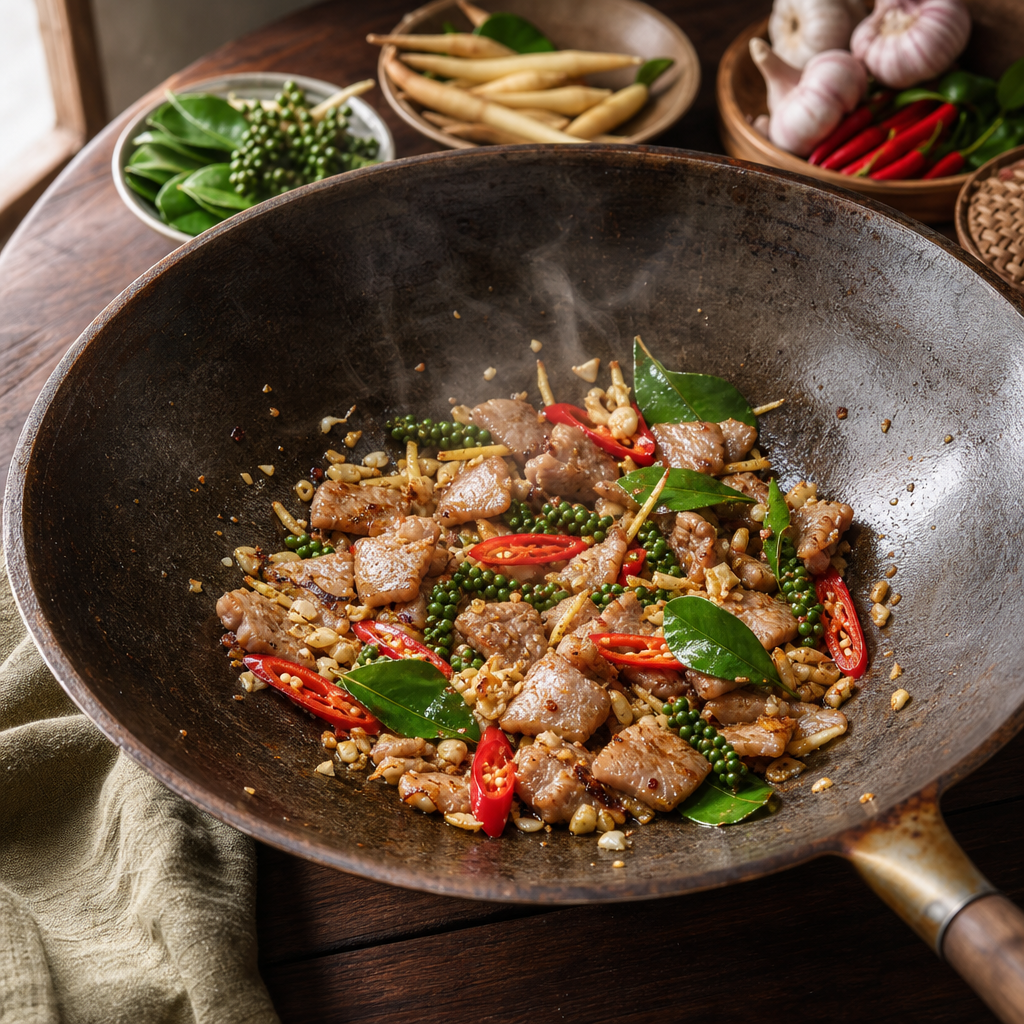
Add the crushed garlic and chiles, fingerroot, green peppercorns, makrut lime leaves, and sliced red chile. Stir-fry until the garlic smells sharp and nutty, 20-30 seconds; do not let it go dark brown.
Cook the vegetables
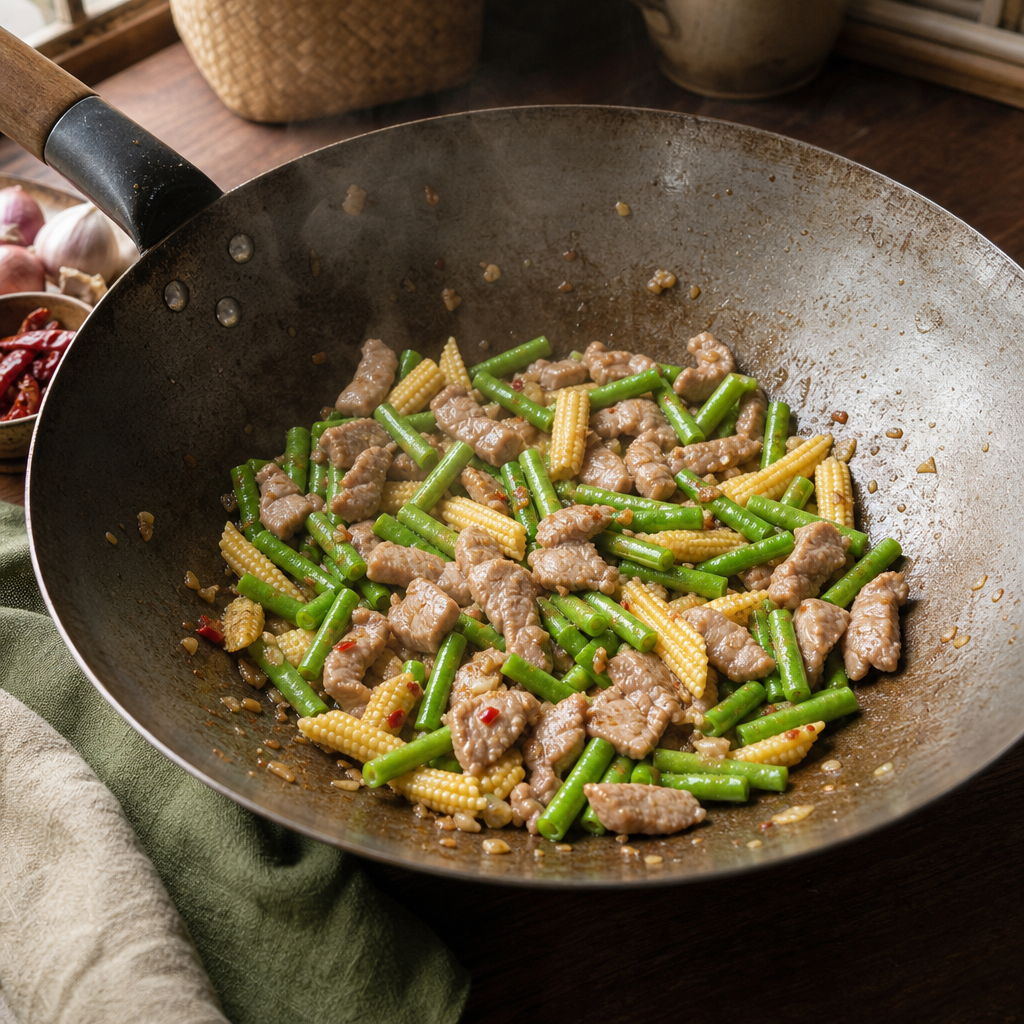
Add the long beans and baby corn. Stir-fry until their cut edges turn brighter and the beans lose their raw snap, about 45 seconds.
Stir-fry the noodles hard
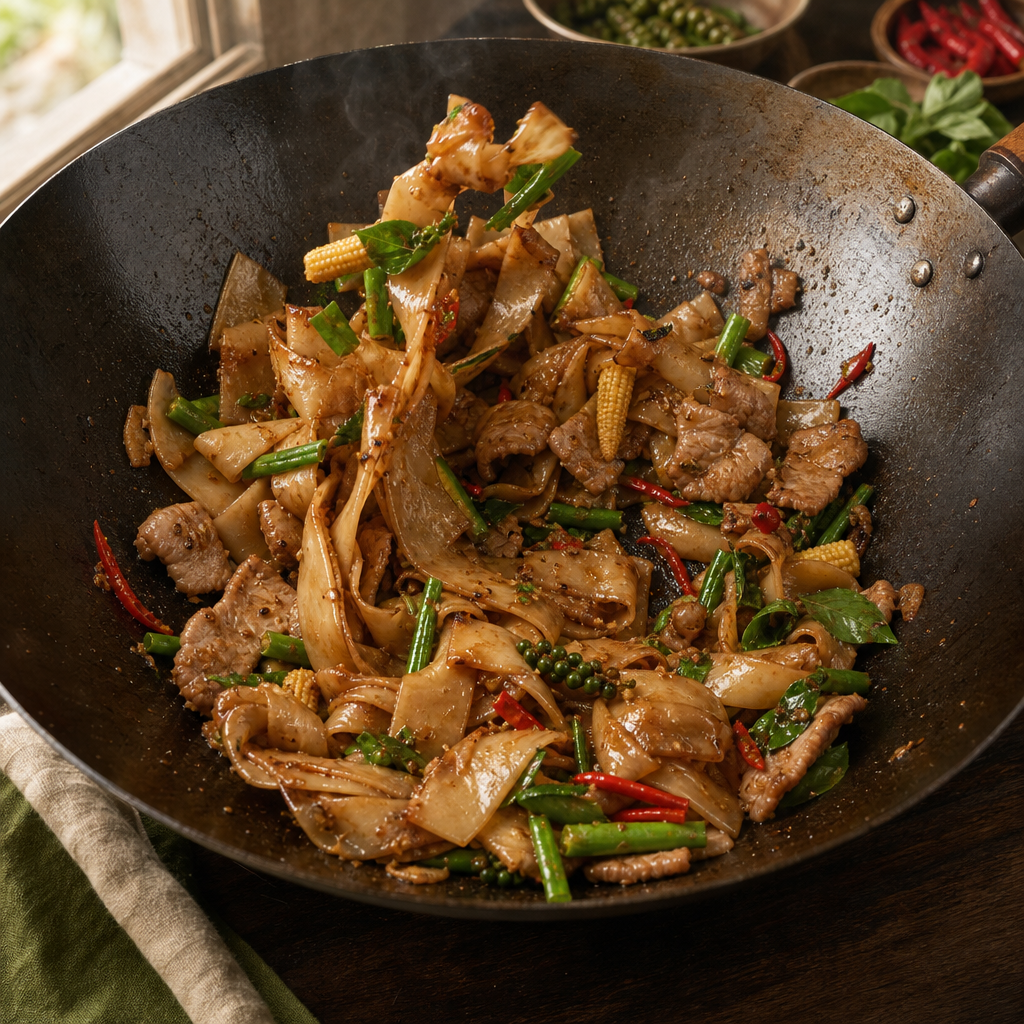
Add the noodles and pour the sauce around the sides of the wok, not into one puddle in the center. Toss, scrape, and fold until the noodles are evenly stained and some edges blister, 60-90 seconds.
Finish with basil
Turn off the heat, add the holy basil, and fold until the leaves collapse from residual heat. Transfer immediately to plates.
Common mistakes
- Treating pad kee mao as pad see ew with extra chile. The kee mao profile needs garlic, basil, fresh chile, and sharp aromatics, not a sweet soy base.
- Crowding the wok. Wet noodles cannot blister; they tear, steam, and taste flat.
- Using too much dark soy sauce. The noodles should be lightly stained, not black and syrupy.
- Adding basil too early. Basil cooked through the stir-fry stage turns dull and leaks water.
- Making it sweet. A pinch of sugar can round salt; sweetness should not register as a main taste.
- Skipping fingerroot and makrut lime leaf when they are available. Without them the dish loses the herbal volatility that separates kee mao from a plain chile-soy noodle stir-fry.
What does not belong
- Coconut milk does not belong in pad kee mao.
- Peanut sauce does not belong.
- Ketchup or tomato sauce does not belong.
- A thick cornstarch gravy does not belong; the stir-fry should finish dry and glossy.
- Large amounts of brown sugar do not belong. Pad kee mao is hot, salty, herbal, and savory, not sweet.
- Egg does not belong in this central Thai noodle version; adding it pushes the dish toward pad see ew or a general fried-noodle plate.
- Italian basil as the main herb does not belong unless there is no Thai basil or holy basil available. It reads soft and minty instead of peppery.
Adaptations
Replace pork with firm tofu or mushrooms, fish sauce with Thai-style vegan fish sauce, and oyster sauce with mushroom stir-fry sauce. Keep garlic, chiles, fingerroot, makrut lime leaf, and basil; those are the structure.
Pork must be replaced with halal chicken thigh or beef. Use halal-certified oyster sauce or mushroom stir-fry sauce.
Rice noodles are usually gluten-free, but soy sauces and oyster sauce often contain wheat. Use gluten-free tamari, gluten-free dark soy-style sauce, and a gluten-free oyster or mushroom sauce.
The dish is naturally dairy-free. Dairy does not belong in pad kee mao.
Replace oyster sauce with mushroom stir-fry sauce. Fish sauce is not shellfish, but use vegan fish sauce if avoiding all seafood.