Nam Prik Pao
The dish in context
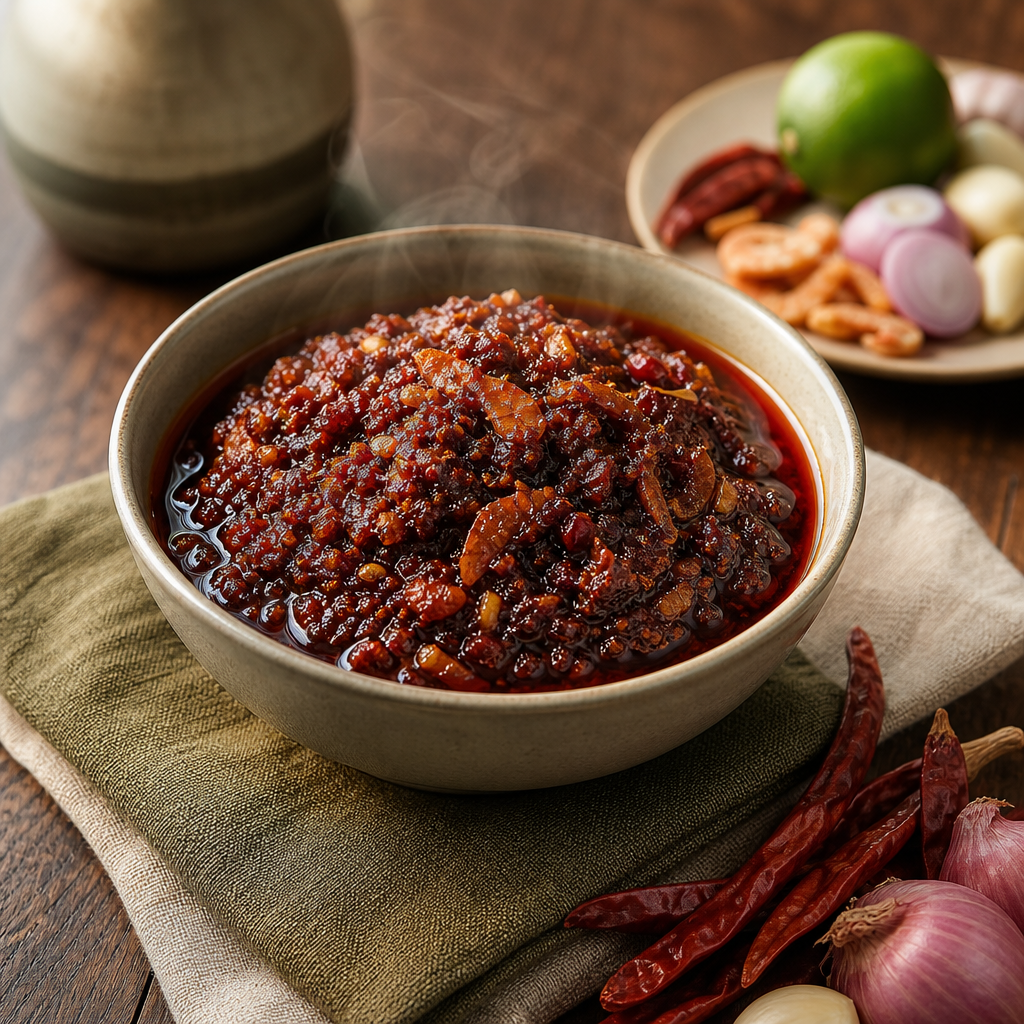
Nam prik pao (น้ำพริกเผา) sits in the larger Thai nam prik family, but it behaves more like a pantry chile jam than a fresh table dip. Older descriptions emphasize burning or dry-roasting dried chiles, garlic, and shallots before pounding; many modern household versions fry those aromatics instead, then cook the paste in the seasoned oil. Central Thai cooking uses it as a condiment and as a structural seasoning in dishes such as tom yum nam khon, stir-fries, fried rice, and salads. Commercial jars are common in Thailand because the process is oil-heavy, aromatic, and time-consuming, but the homemade version gives control over sweetness, shrimp intensity, and chile bitterness.
Method 8 steps · 75 min
Toast the dried chiles
Heat a dry wok over medium-low heat. Toast the mild dried chiles and hot dried chiles, turning constantly, until they darken slightly, smell smoky-fruity, and feel brittle, 2-4 minutes. Pull them before any patch turns black.
Fry the shallots
Add the oil to the wok and heat over medium. Fry the sliced shallots, stirring often, until pale golden and no longer steaming hard, 8-12 minutes. Lift them out with a slotted spoon and leave the oil in the wok.
Fry the garlic
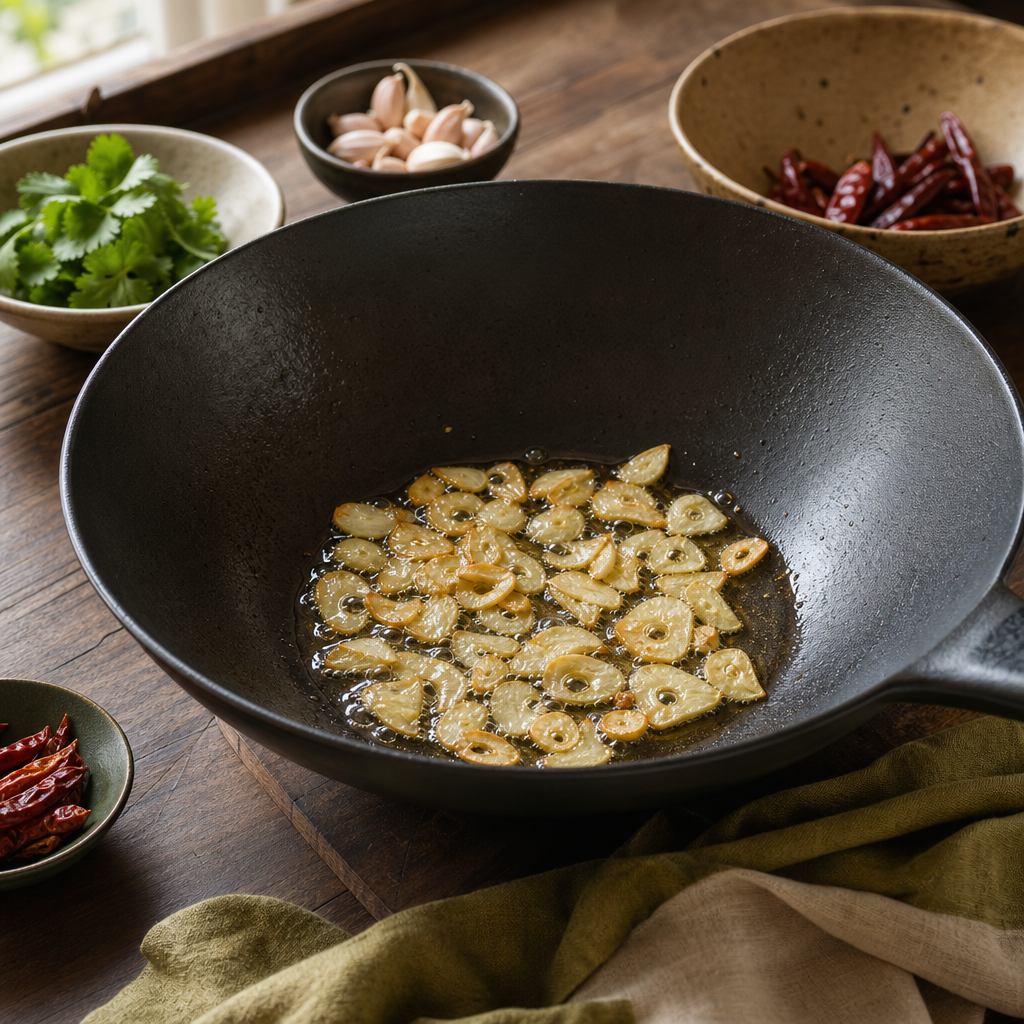
Fry the sliced garlic in the same oil until light golden, 2-4 minutes. Remove it when it is one shade lighter than the target color; it will continue to darken off heat.
Fry the dried shrimp
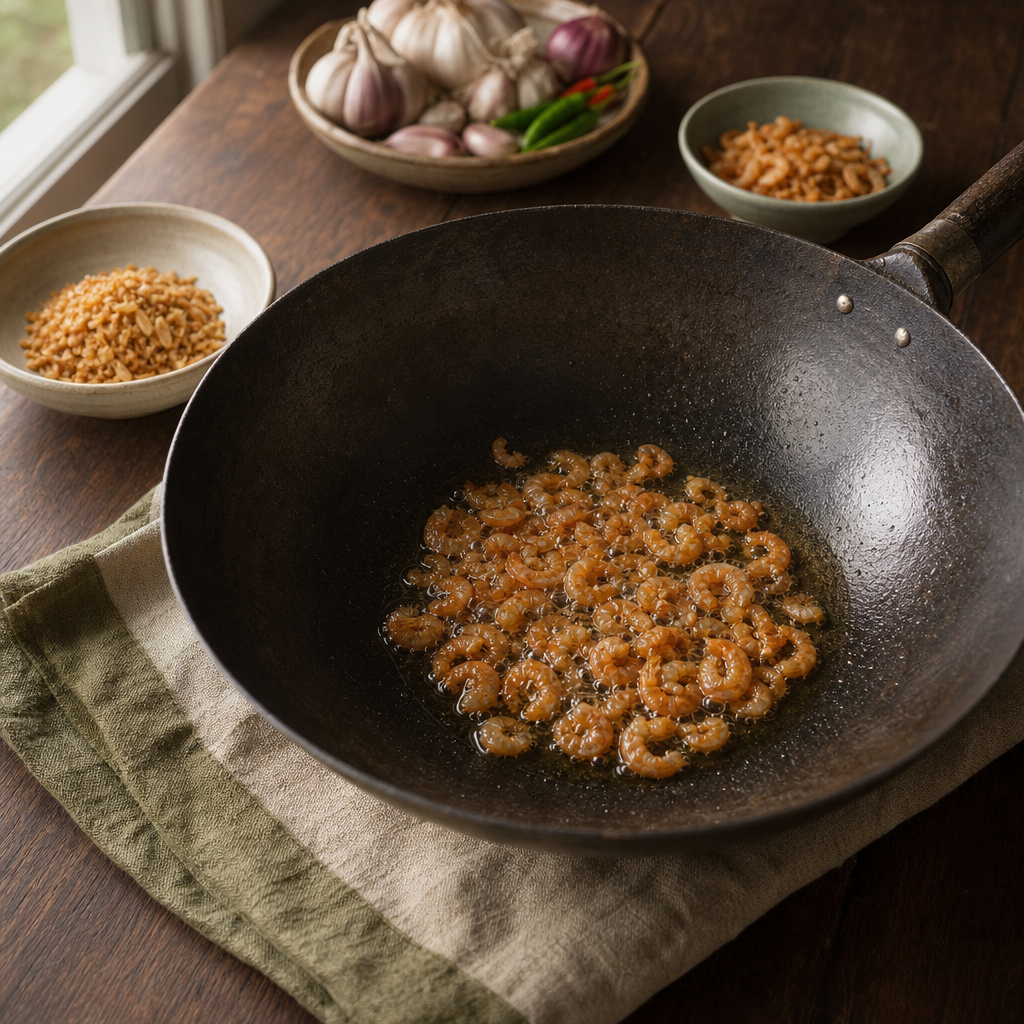
Add the rinsed, dried shrimp to the same oil and fry until they smell nutty and look slightly darker, 1-2 minutes. Remove them and reserve the oil.
Grind the solids
Grind the toasted chiles to flakes or powder in a spice grinder. Blend the chile, fried shallot, fried garlic, and fried shrimp with 30-60 ml water only if needed, scraping until the paste is coarse but cohesive.
Cook the paste in the seasoned oil
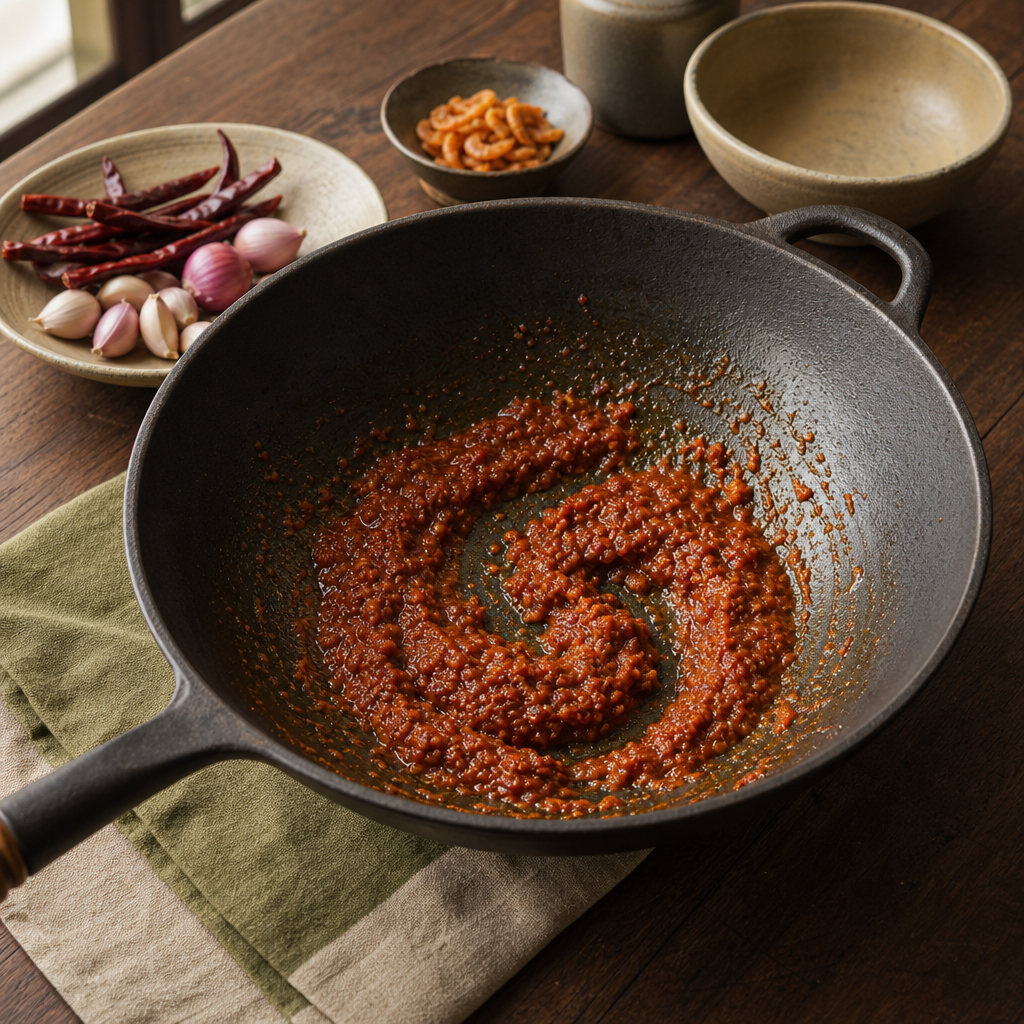
Return the reserved oil to the wok over medium-low heat. Add the blended paste and cook, stirring and scraping, until the oil stains deep red and begins to separate at the edges, 8-12 minutes.
Season and reduce
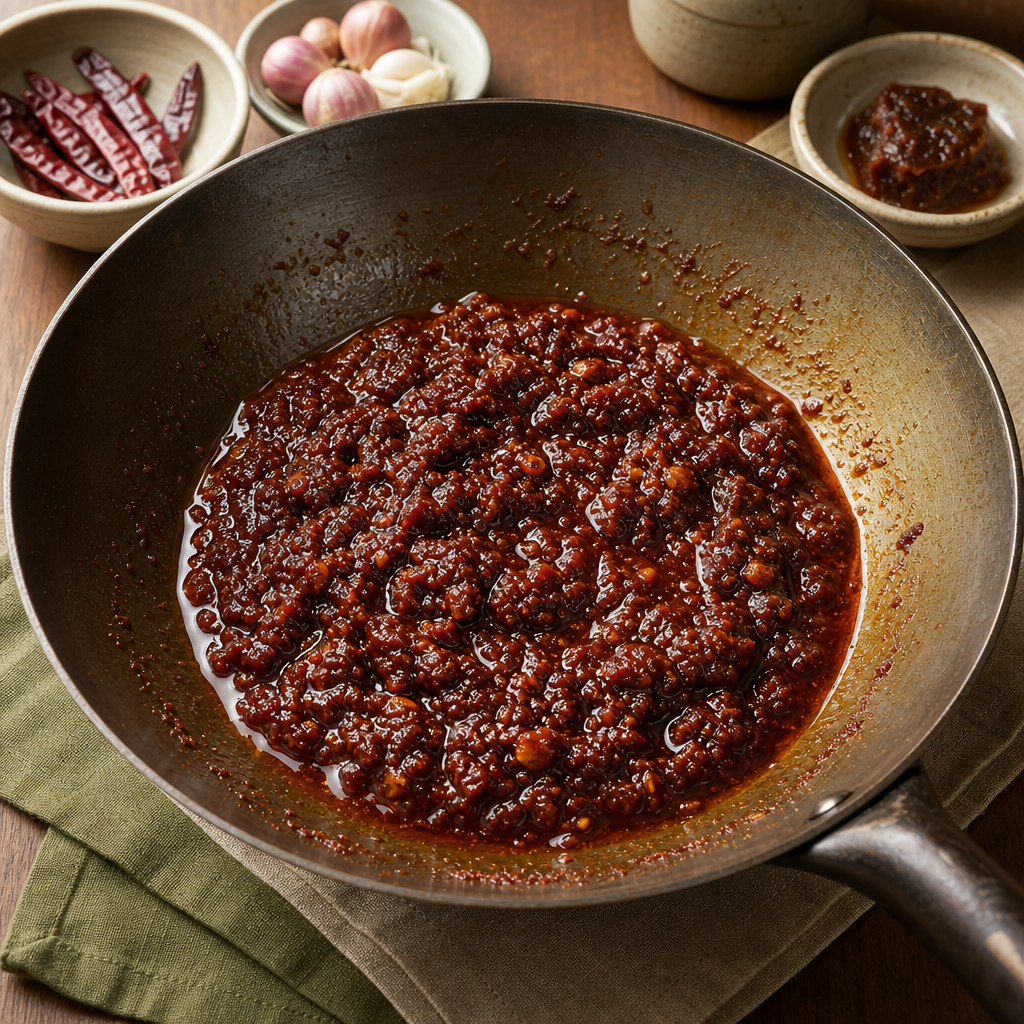
Add palm sugar, tamarind pulp, fish sauce, and salt. Cook over low heat, stirring often, until the paste turns glossy, dark brick-red, and thick enough that a spoon dragged through it leaves a slow-closing trail, 12-18 minutes.
Jar with its oil
Transfer the hot paste to a clean jar and spoon enough red oil over the surface to cover it. Cool, cap, and refrigerate.
Common mistakes
- {'mistake': 'Burning the dried chiles', 'why_it_fails': 'Black spots make the paste harsh and medicinal. Toast until smoky and brittle, not charred.'}
- {'mistake': 'Using too little oil', 'why_it_fails': 'Nam prik pao is an oil-cooked paste. A dry version tastes muddy, scorches easily, and loses the red oil that Thai dishes rely on.'}
- {'mistake': 'Blending raw shallot and garlic directly into the paste', 'why_it_fails': 'Raw alliums bring water and sulfur. Fry them first or the final jar tastes sharp instead of roasted.'}
- {'mistake': 'Making it taste like dessert', 'why_it_fails': 'Commercial jars can lean sweet, but sugar should round the chile and tamarind. If sweetness is the first thing noticed, the balance is off.'}
- {'mistake': 'Skipping dried shrimp without replacing umami', 'why_it_fails': 'Dried shrimp is part of the structure, not a garnish. Without it or a deliberate vegan umami replacement, the paste tastes hollow.'}
What does not belong
- {'item': 'sweet chili sauce', 'reason': 'Sweet chili sauce does not belong in nam prik pao. It gives sugar, vinegar, and starch-thickened gloss without roasted chile depth.'}
- {'item': 'tomato ketchup', 'reason': 'Ketchup does not belong. Its tomato acidity and cooked-spice profile pull the paste away from Thai chile jam and toward barbecue sauce.'}
- {'item': 'coconut milk', 'reason': 'Coconut milk does not belong in the condiment. Nam prik pao may later season coconut or evaporated-milk soups, but the jar itself is oil-based.'}
- {'item': 'lime juice', 'reason': 'Lime juice does not belong in the cooked paste. Tamarind supplies the sourness and survives cooking; lime turns dull and bitter when reduced.'}
- {'item': 'lemongrass or Thai basil', 'reason': 'Lemongrass and Thai basil do not belong in the household-standard base paste. They can be chef additions to a sauce built from nam prik pao, not the condiment itself.'}
- {'item': 'olive oil', 'reason': 'Olive oil does not belong. Its grassy bitterness competes with fried chile and dried shrimp.'}