Nam Prik Ong
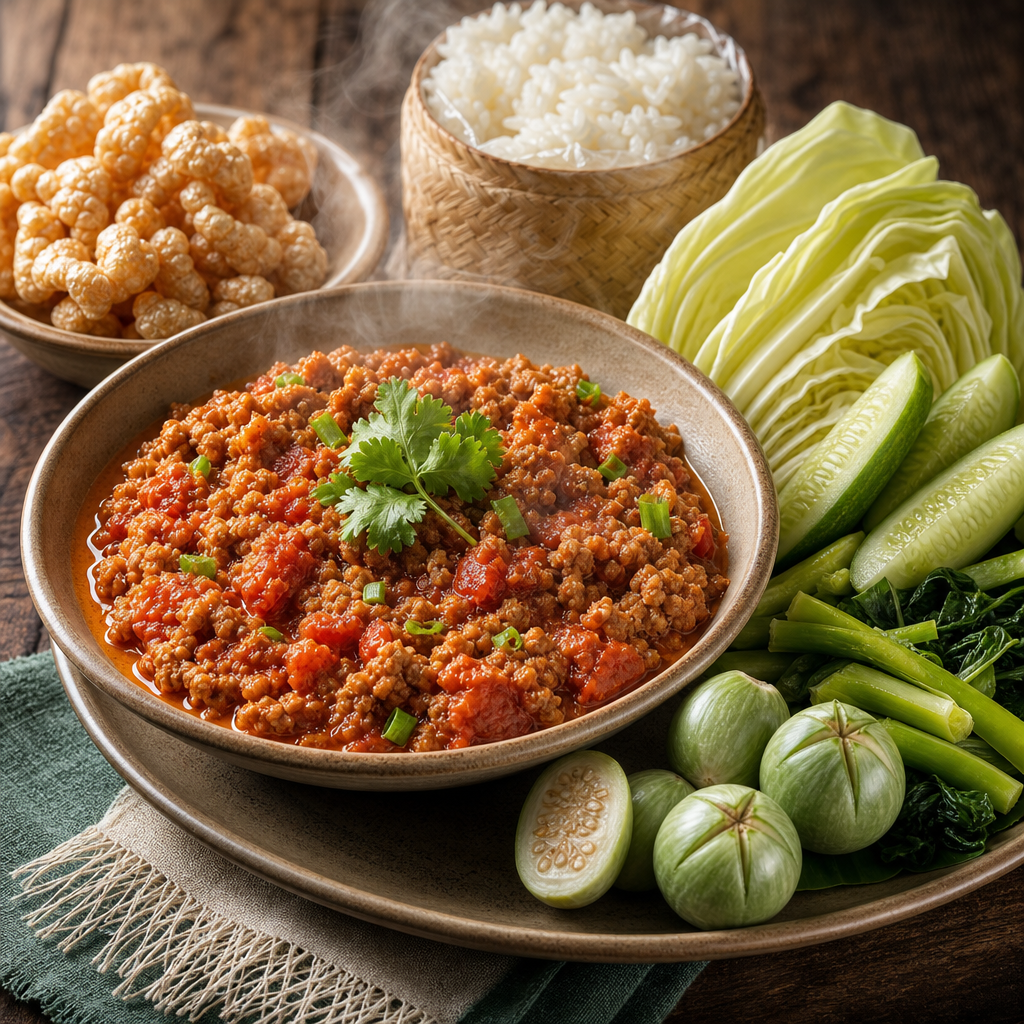
The dish in context
Nam prik ong (น้ำพริกอ่อง) is a northern Thai, Lanna-style cooked chile relish built from dried chiles, pork, tomatoes, shallots, garlic, and fermented seasonings. Thai government and educational sources group it with the well-known foods of the North alongside nam prik num, sai ua, khao soi, and kaeng hang le. It is eaten as part of a set rather than as a standalone sauce: vegetables, sticky rice, and often khaep mu (แคบหมู), crisp pork rinds, do the carrying. Household versions vary in fermented soybean paste, shrimp paste, tomato type, and garnish, but the red pork-and-tomato structure is stable across sources.
Method 7 steps · 45 min
Toast and soften the chiles
Toast the dried chiles in a dry wok or skillet over medium-low heat until they darken slightly and smell nutty, 45-90 seconds. Do not blacken them. Cover with hot water for 10 minutes if they are brittle, then drain well.
Pound the paste
Pound the chiles and salt to a coarse powder in a mortar. Add shallots, garlic, lemongrass, and shrimp paste, then pound to a coarse red paste with no large chile skins. A food processor can do the job, but stop before it becomes a purée.
Fry the paste
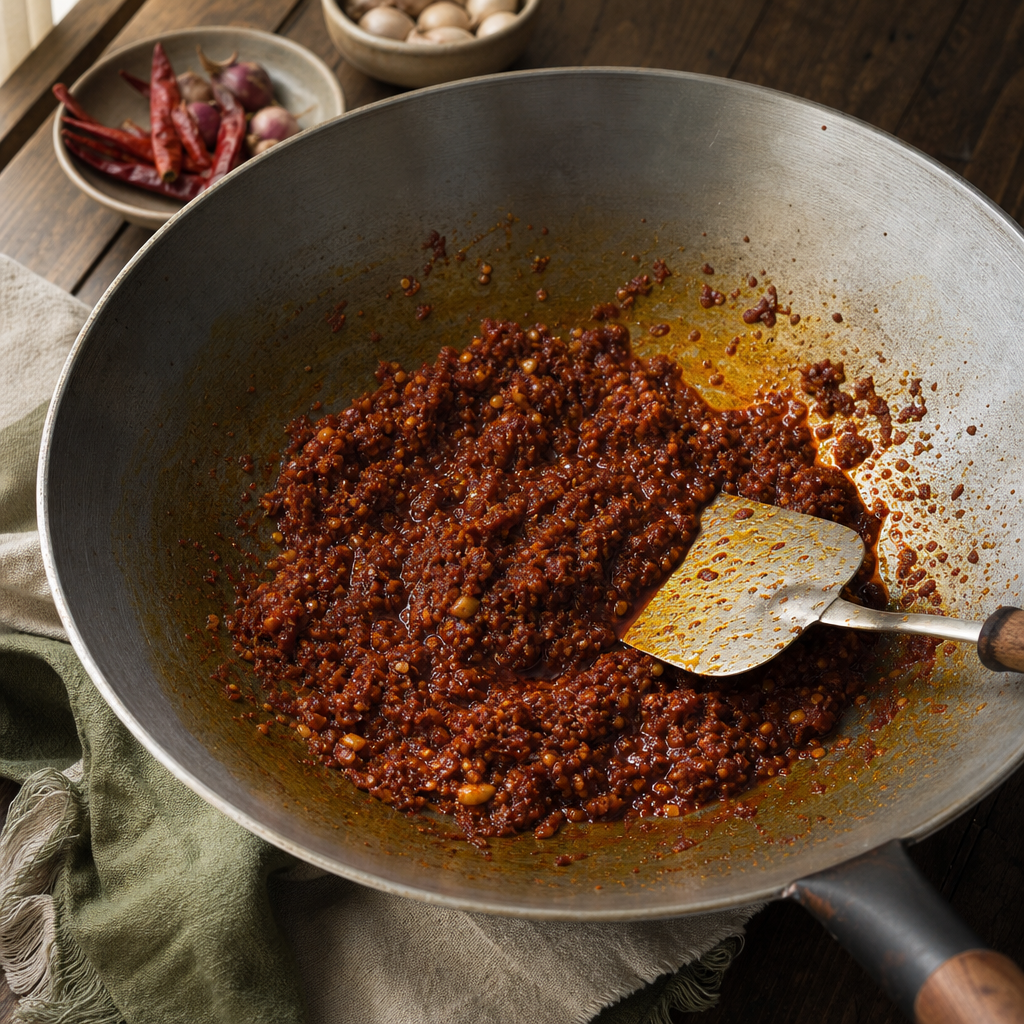
Heat the oil in a wok or wide skillet over medium heat. Add the paste and fry, stirring constantly, until the oil turns orange-red and the raw garlic-shallot smell is gone, 3-5 minutes.
Cook the pork
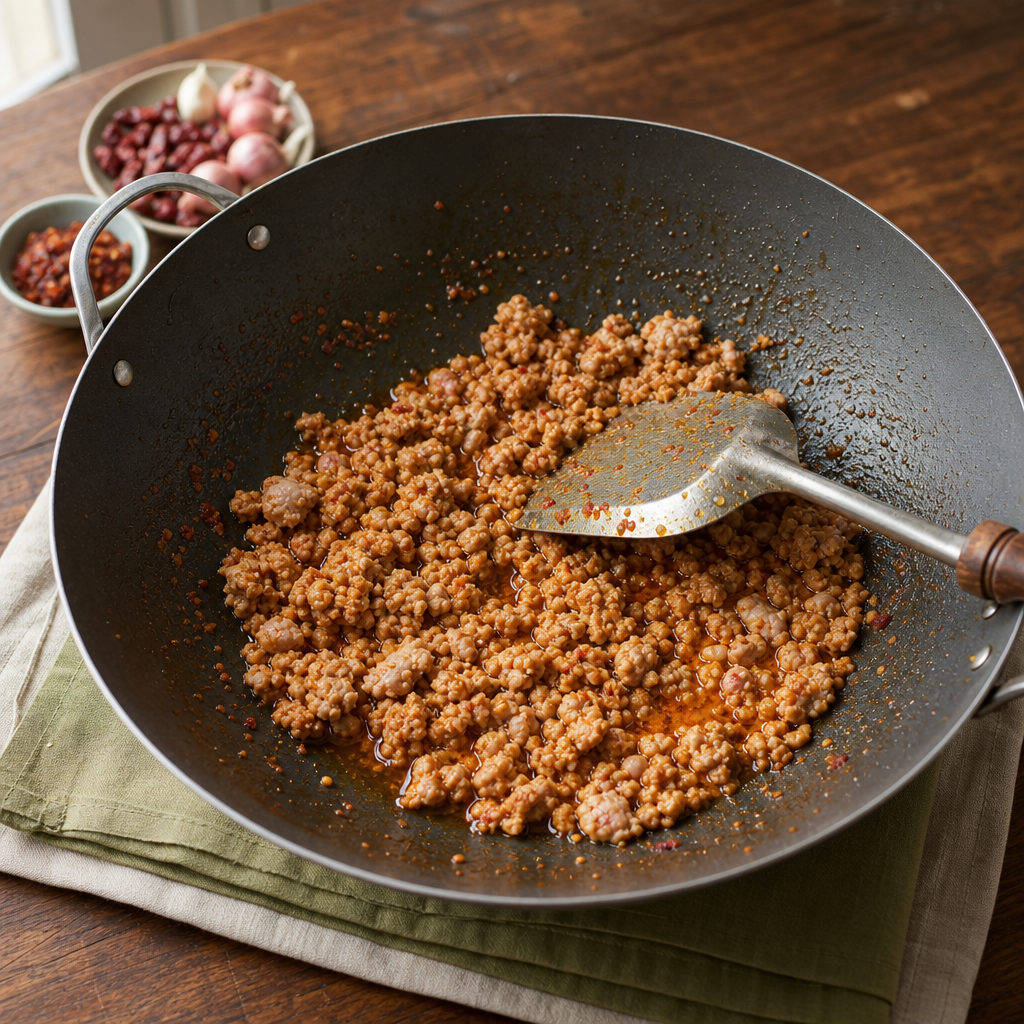
Add the ground pork and break it into small pieces with a spatula. Cook until the pork loses its pink color and the fat starts to mingle with the chile oil, 4-6 minutes.
Collapse the tomatoes
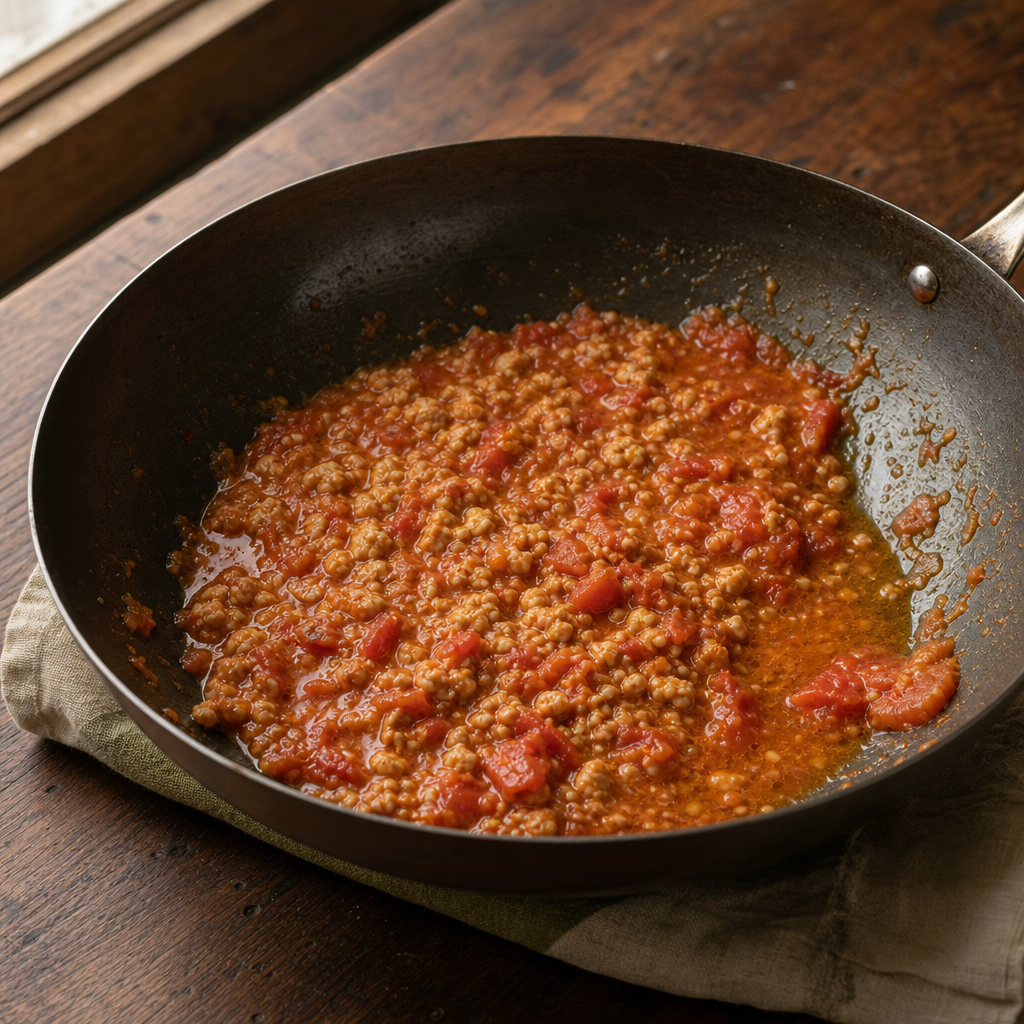
Add the tomatoes, fermented soybean paste, and water. Simmer over medium heat, pressing some tomatoes against the side of the pan, until the mixture is loose but not soupy and the oil stains the edges, 12-18 minutes.
Season and reduce
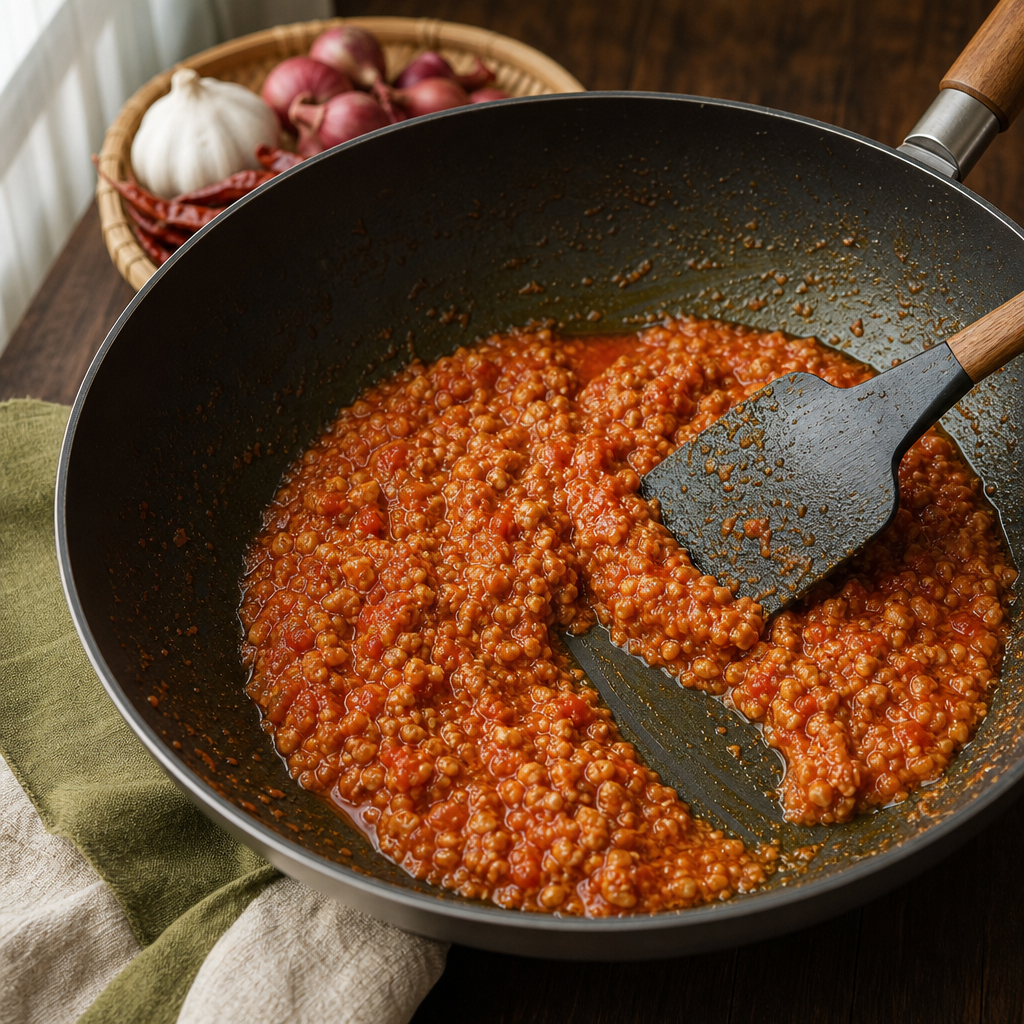
Stir in fish sauce and palm sugar if needed. Cook 2-4 minutes more, until the relish drags slightly when a spatula is pulled through it. Taste for salty, sour, and chile warmth; sweetness should stay in the background.
Finish and serve warm or room temperature
Turn off the heat and fold in cilantro and scallions if using. Serve warm or at room temperature with vegetables, sticky rice, and pork rinds.
Common mistakes
- {'mistake': 'Using canned tomato sauce as the base.', 'fix': 'Use fresh small tomatoes or cherry tomatoes and cook them down. Canned sauce gives a smooth pasta-sauce texture and the wrong cooked-tomato sweetness.'}
- {'mistake': 'Leaving the chile paste raw.', 'fix': 'Fry until the oil turns orange-red and the harsh garlic smell disappears. The paste needs direct fat contact before the pork and tomatoes dilute it.'}
- {'mistake': 'Making it sweet.', 'fix': 'Use palm sugar only to correct sharp tomatoes. The finished relish should read salty, savory, tomato-sour, and chile-warm, not sweet.'}
- {'mistake': 'Cooking it too wet.', 'fix': 'Reduce until a spatula leaves a short trail through the mixture. It should cling to cabbage and cucumber, not run off them.'}
- {'mistake': 'Serving it without vegetables.', 'fix': "Vegetables are part of the dish's structure. Without them, the relish becomes salty meat sauce."}
What does not belong
- {'item': 'coconut milk', 'reason': 'Coconut milk does not belong in nam prik ong. It dulls the chile paste and turns a northern relish into an unrelated creamy sauce.'}
- {'item': 'basil', 'reason': 'Holy basil or Thai basil does not define this dish. Adding basil pushes the aroma toward pad krapow or restaurant stir-fry.'}
- {'item': 'lime juice', 'reason': 'Lime is not the main acid here. Tomato supplies the sourness; lime makes the dip sharper and thinner.'}
- {'item': 'ketchup', 'reason': 'Ketchup does not belong. Its vinegar-sugar profile makes the relish taste like sweet tomato condiment instead of cooked chile paste.'}
- {'item': 'ginger or galangal', 'reason': 'Those roots belong to other Thai preparations. Nam prik ong gets its aromatic frame from dried chile, shallot, garlic, shrimp paste, and sometimes lemongrass.'}
Adaptations
Replace pork with finely chopped firm tofu, crumbled tempeh, or minced mushrooms; replace shrimp paste and fish sauce with fermented soybean paste plus vegan fish sauce or Thai thin soy sauce. The result is a vegan adaptation with the right red-tomato structure, but it will not have pork-fat roundness.
Replace pork with ground chicken thigh or beef and confirm the shrimp paste, fish sauce, and soybean paste are halal-certified. Omit pork rinds and serve with vegetables, sticky rice, or rice crackers.
Use gluten-free fish sauce and check fermented soybean paste; many contain wheat. If the soybean paste contains wheat, omit it and season with fish sauce and salt.
The standard dish contains no dairy. Coconut milk, cream, and butter do not belong.
Replace shrimp paste with fermented soybean paste and use fish sauce only if fish is acceptable. For strict shellfish-free cooking, confirm fish sauce production has no shellfish cross-contact or use vegan fish sauce.