Nam Prik Num
The dish in context
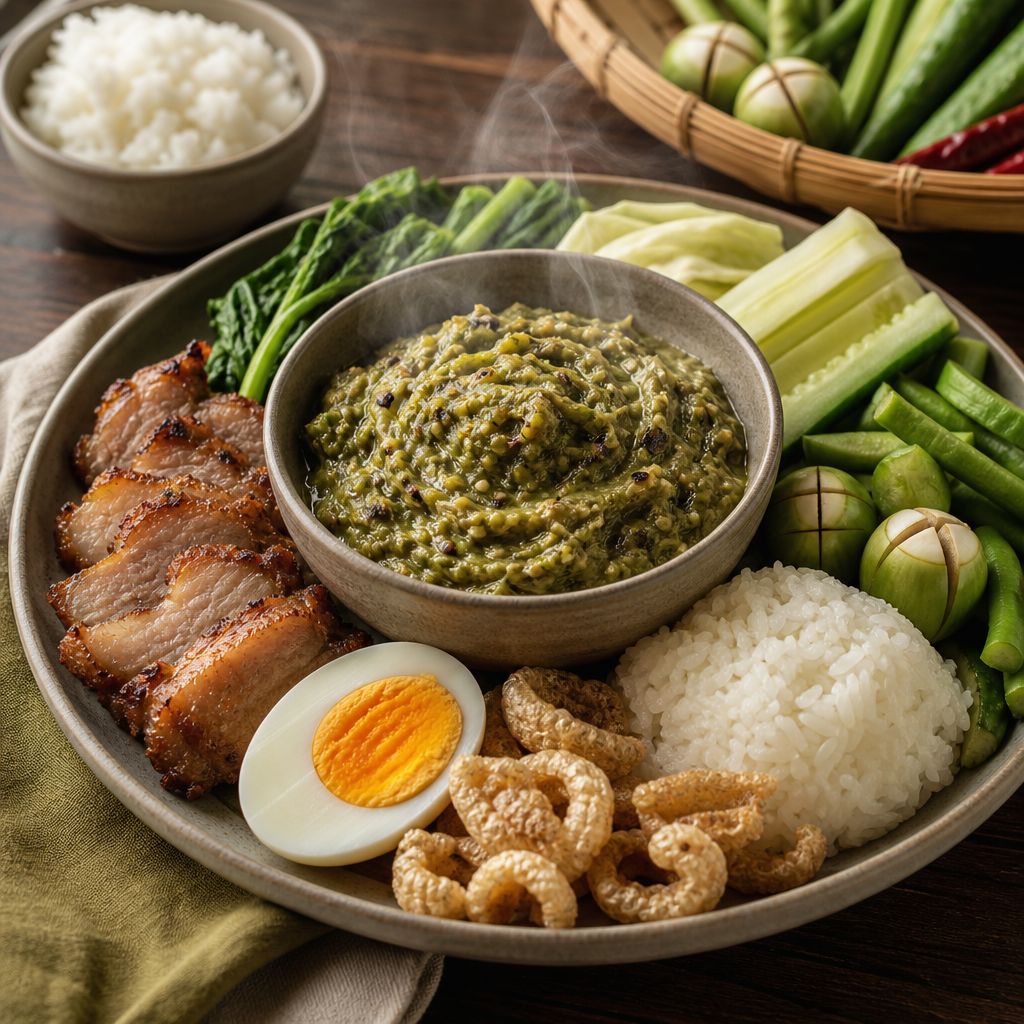
Nam prik num (น้ำพริกหนุ่ม) is a Lanna household chili dip from northern Thailand, built around young green chilies roasted with shallots and garlic. Thai cultural sources identify it as one of the region’s signature foods alongside khao soi and sai ua, and Chiang Mai commerce has made it a standard edible souvenir. Older household descriptions are spare: young chilies, garlic, shallots, and salt, pounded after roasting. Some northern cooks add tua nao (ถั่วเน่า), fermented soybean, or season with fish sauce or pla ra, but those are branch choices rather than the core grammar. The dip is eaten as part of a set with sticky rice and vegetables; pork rinds are now a common pairing, though not the only traditional one.
Method 7 steps · 35 min
Char the chilies and aromatics
Roast the green chilies, shallots, and garlic over charcoal, under a hot broiler, or in a dry cast-iron skillet. Turn until the chili skins are blistered with black patches and the shallots and garlic feel soft when pressed, 10-15 minutes depending on the heat source.
Steam and peel
Transfer the roasted vegetables to a bowl and cover for 10 minutes. Peel away the loose skins from the chilies, shallots, and garlic; leave a few char flecks attached, but discard hard black sheets of skin and the chili stems.
Toast the tua nao, if using
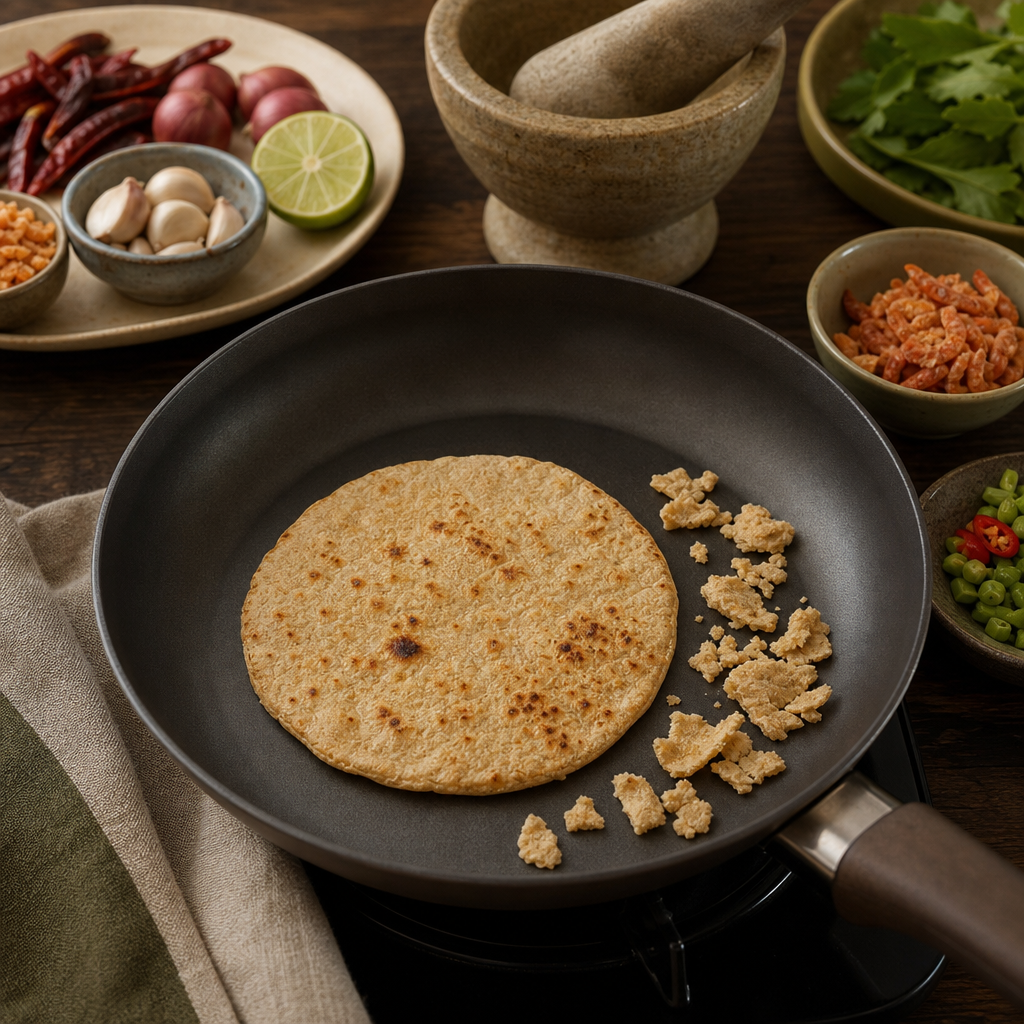
Toast the tua nao disk over low heat or in a dry pan until brittle and aromatic, 30-60 seconds per side. Crumble it before pounding.
Pound the seasoning base
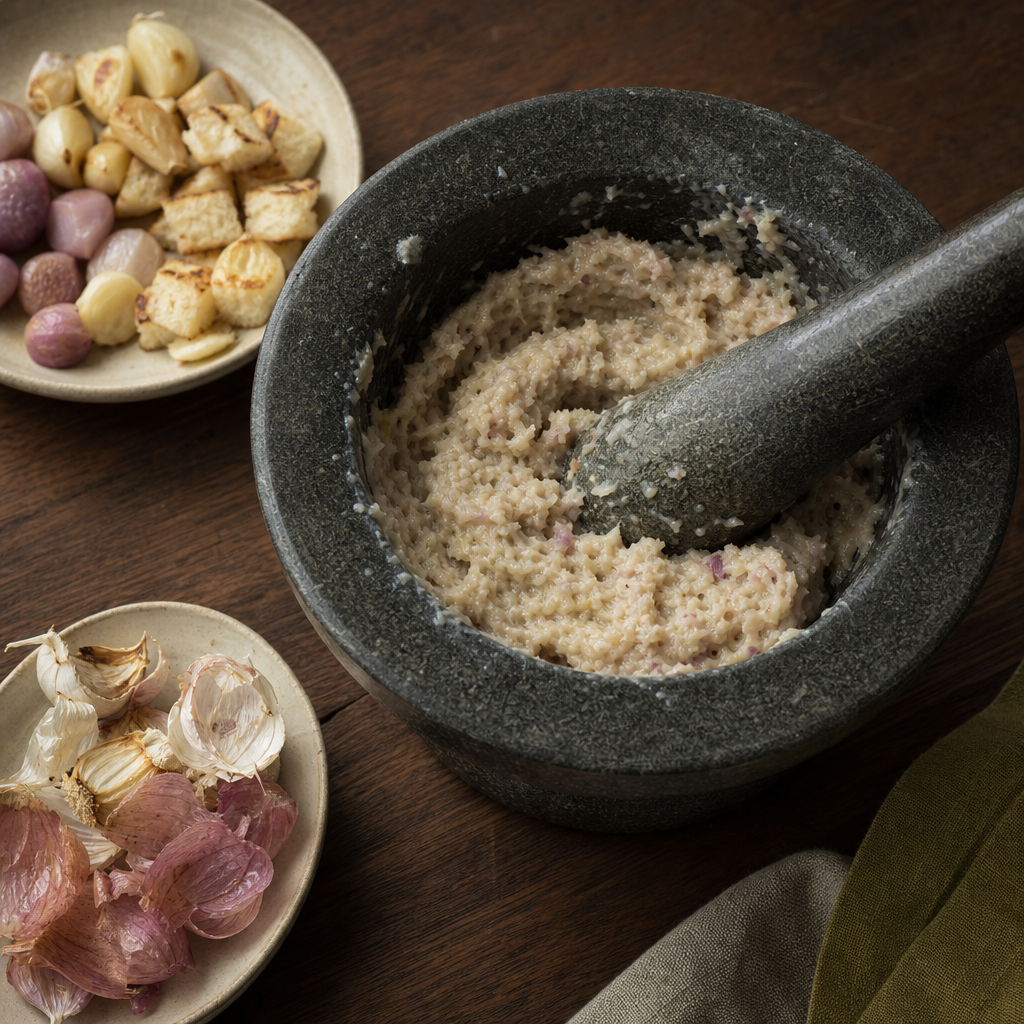
Pound the salt, toasted tua nao if using, roasted garlic, and roasted shallots in a mortar until the mixture is mostly smooth. Scrape the sides of the mortar as needed.
Pound in the chilies last
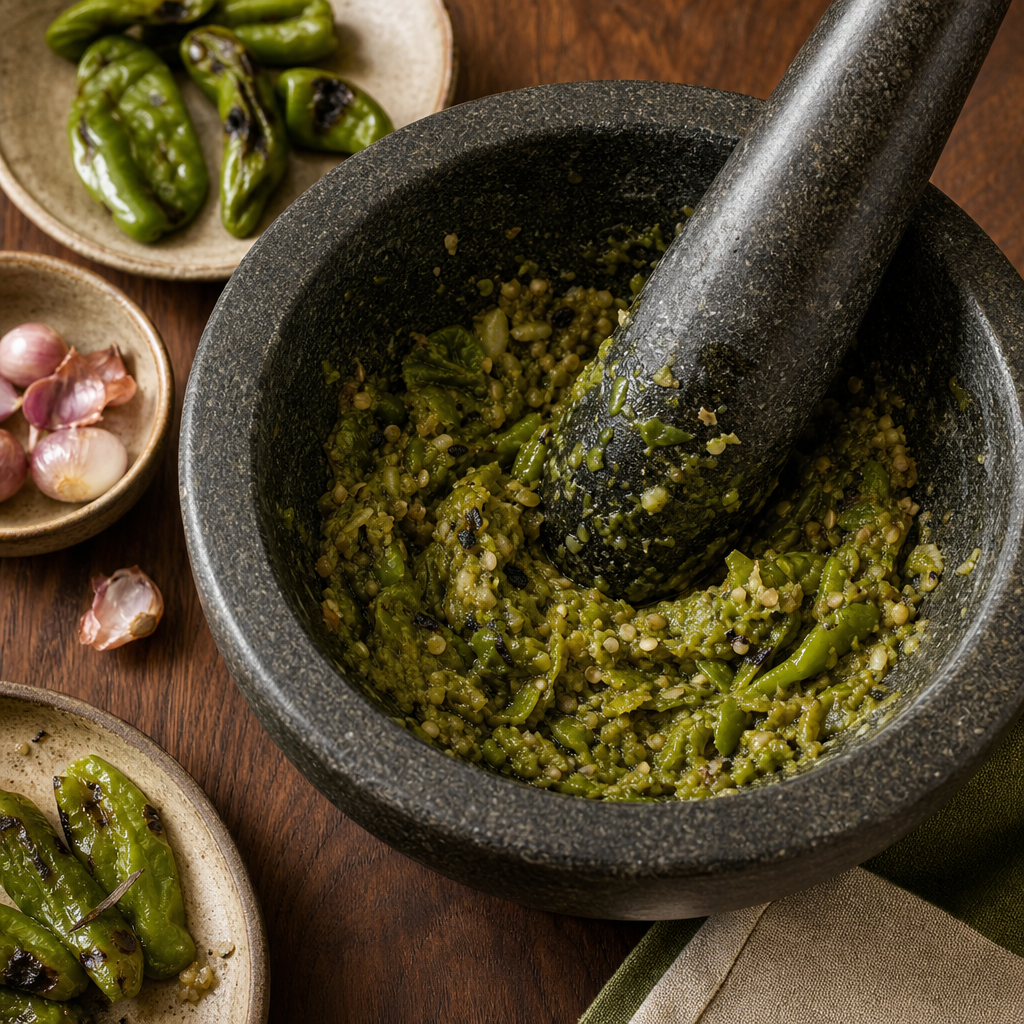
Add the peeled roasted chilies and pound with short, firm strokes until the dip is coarse and cohesive. Stop while visible green chili strands remain; do not make a puree.
Correct the salt and rest
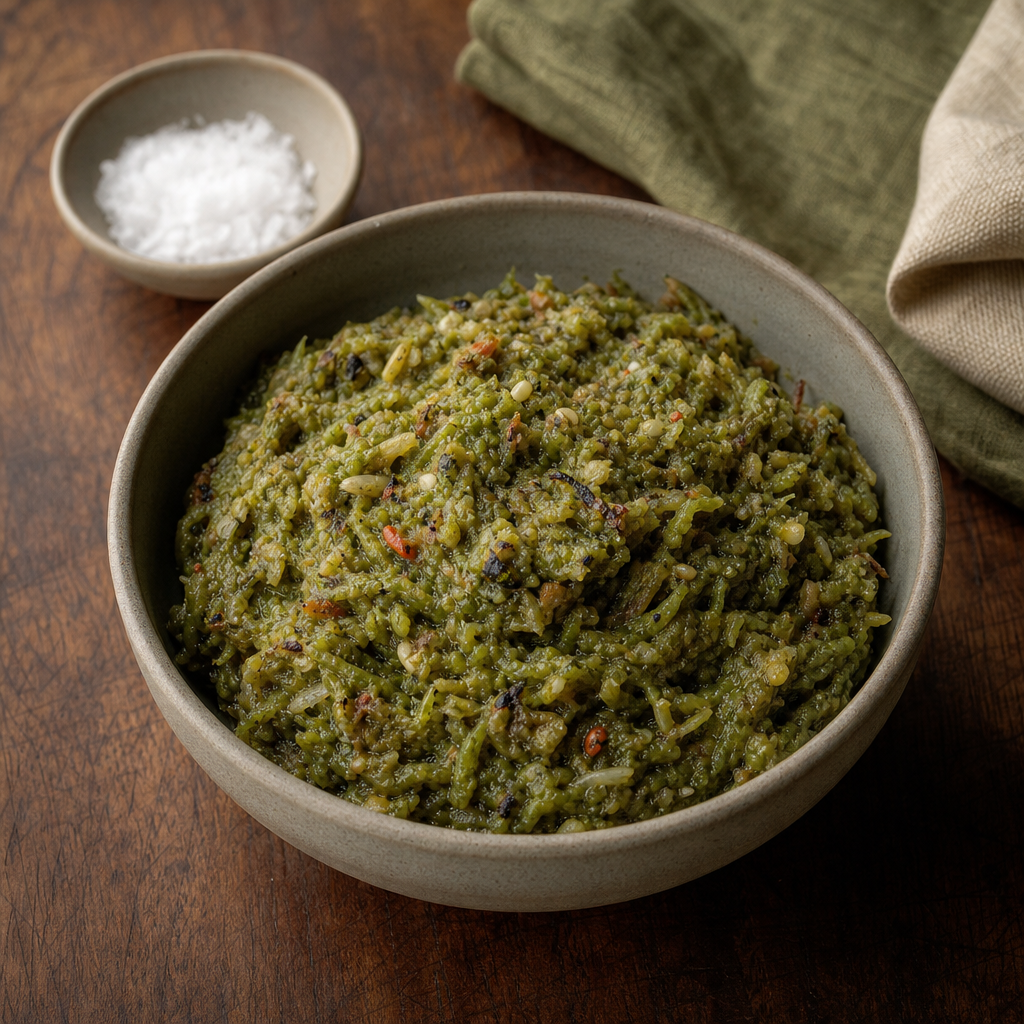
Taste and add a small pinch more salt only if the dip tastes flat. Rest 5 minutes before serving so the salt can dissolve through the roasted vegetables.
Serve as a dip
Serve at room temperature with sticky rice, blanched or raw vegetables, boiled egg, grilled fish or pork, and pork rinds if wanted. Store leftovers covered and refrigerated for up to 3 days.
Common mistakes
- Blending the paste smooth. Nam prik num should be coarse, fibrous, and spoonable, not a green puree.
- Using green bell pepper as the main chili. Bell pepper gives bulk but no correct heat or chili aroma.
- Skipping the roast. Raw chilies, raw garlic, and raw shallots make a sharp salsa, not น้ำพริกหนุ่ม.
- Rinsing peeled chilies under water. The smoke and roasted juices go down the drain.
- Oversalting early. The paste tastes less salty before it rests because salt has not dissolved through the roasted flesh.
- Burning the garlic cloves black inside. A little char on the skin is useful; bitter carbon in the flesh takes over the whole mortar.
What does not belong
- Sugar does not belong. Roasted shallot supplies the sweetness.
- Coconut milk does not belong. This is a northern roasted-chili dip, not a curry or soup.
- Tomato does not belong in the canonical version. It moves the dip toward another relish structure.
- Vinegar does not belong. The standard profile is roasted, salty, and green, not pickled.
- Lemon juice does not belong. Some households add lime, but lemon gives the wrong flat citrus note.
- A large amount of shrimp paste does not belong in the baseline version. It turns the dip brown, marine, and heavier than the northern green-chili structure.
Adaptations
The core dip is plant-based when seasoned with salt and optional tua nao. Serve with sticky rice, vegetables, and mushrooms instead of pork rinds or grilled meat.
The dip itself contains no pork or alcohol. Use halal accompaniments and avoid pork rinds.
The four-ingredient version is gluten-free. Check packaged tua nao for wheat or barley if using a commercial product.
Dairy has no role in this dish.
This version does not use shrimp paste or fish sauce. Do not add shrimp paste for a shellfish-free table.