Lasagne Bolognese
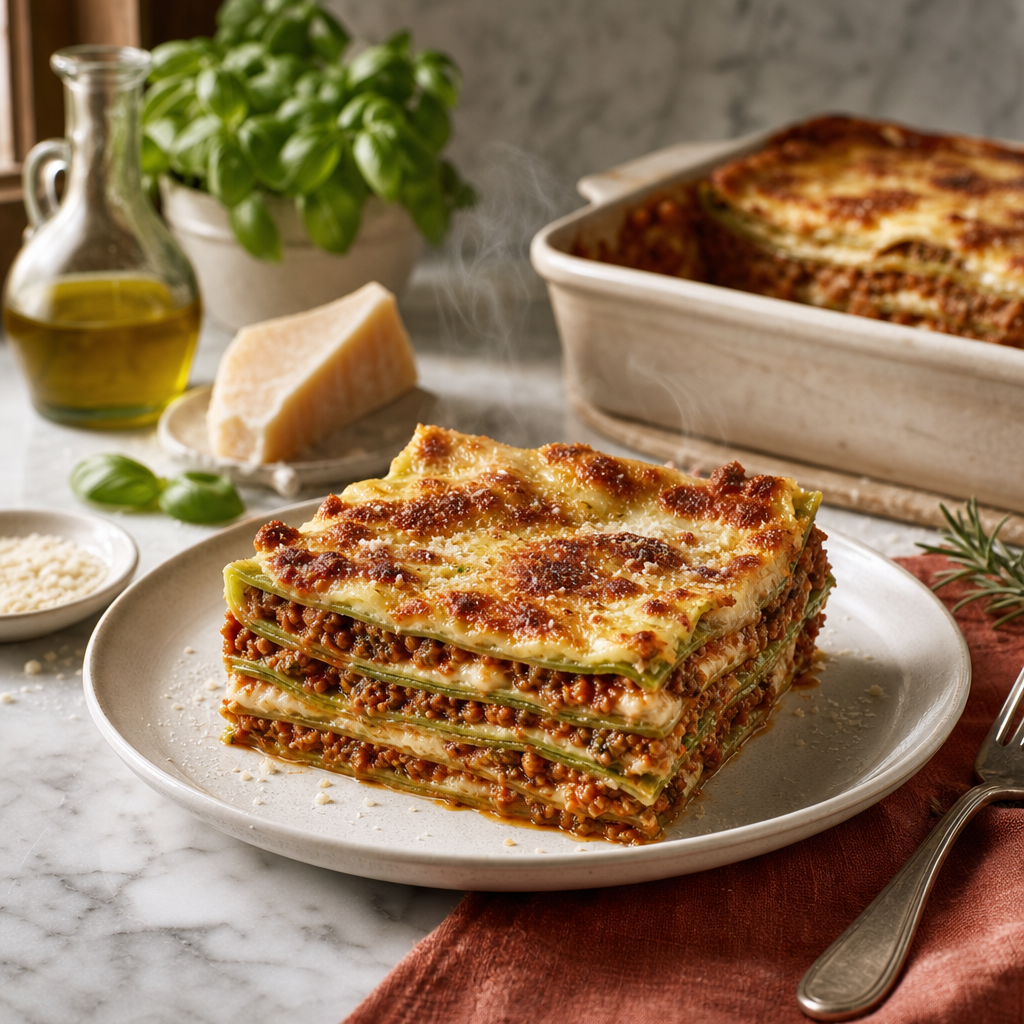
The dish in context
Lasagne alla Bolognese is the Emilia-Romagna version of layered baked pasta: spinach egg sheets, ragù alla Bolognese, besciamella, and Parmigiano-Reggiano. The green pasta is not decorative; it is part of the Bologna tradition and gives the finished dish its yellow-green cast under the sauce. Ricotta and mozzarella belong to other lasagne traditions, especially southern Italian and Italian-American versions. The Bolognese version is built thin, not stuffed: several restrained layers give a slice that cuts cleanly and eats as pasta, meat sauce, milk sauce, and cheese in balance.
Method 10 steps · 330 min
Build the soffritto
Melt the ragù butter with the olive oil in a wide heavy pot over medium heat. Add pancetta and cook until its fat turns translucent, 4-5 minutes. Add onion, carrot, celery, and a pinch of the ragù salt; cook until the vegetables are soft and no longer watery, 12-15 minutes, without browning hard.
Cook the meat dry
Add the beef and pork. Break the meat into fine crumbs and cook until it loses its raw color and the pot sounds like frying instead of simmering, 12-15 minutes. Let the moisture leave before adding liquid.
Add milk first
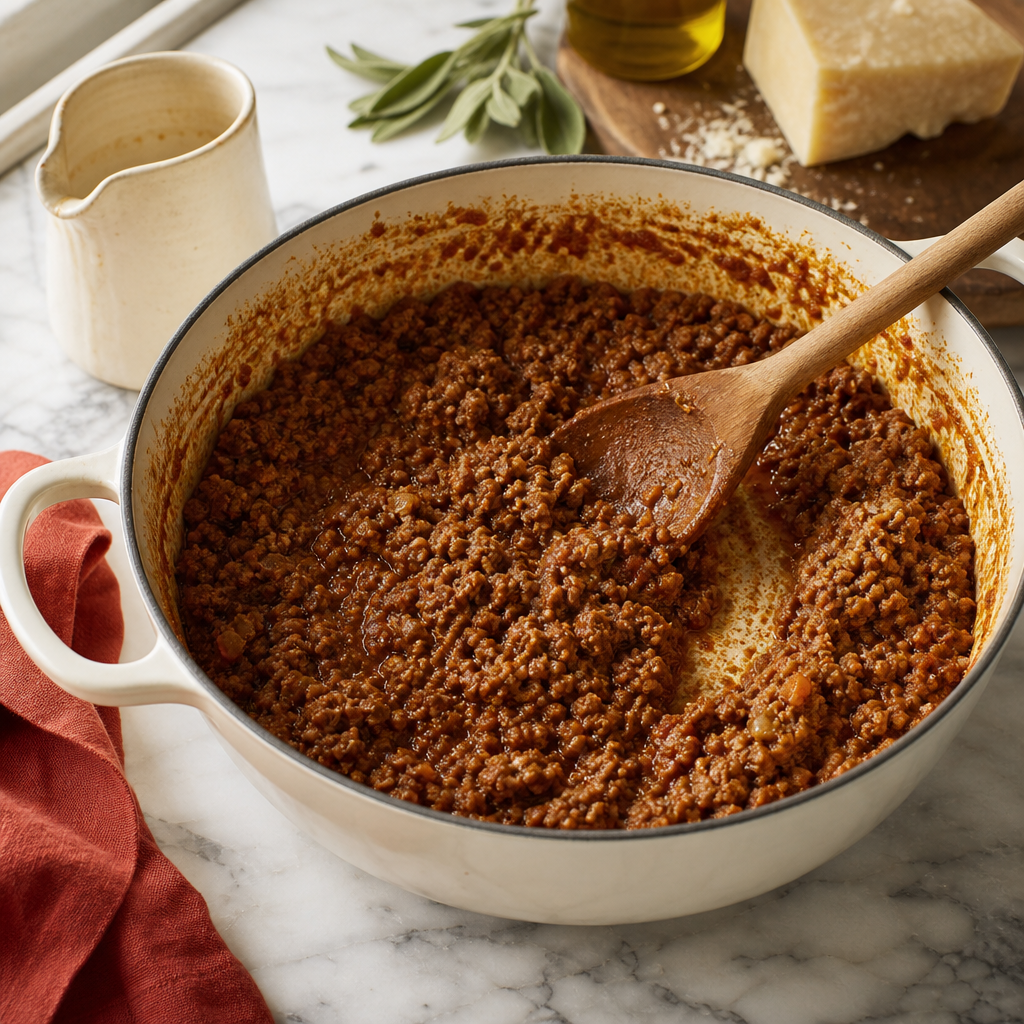
Pour in the milk for the ragù and simmer until it has mostly disappeared into the meat, 10-15 minutes. Scrape the bottom of the pot as it reduces.
Deglaze with white wine
Add the white wine and simmer until the raw alcohol smell is gone and the pot looks nearly dry again, 8-10 minutes. Keep the heat moderate; scorching now will follow the sauce for hours.
Simmer the ragù
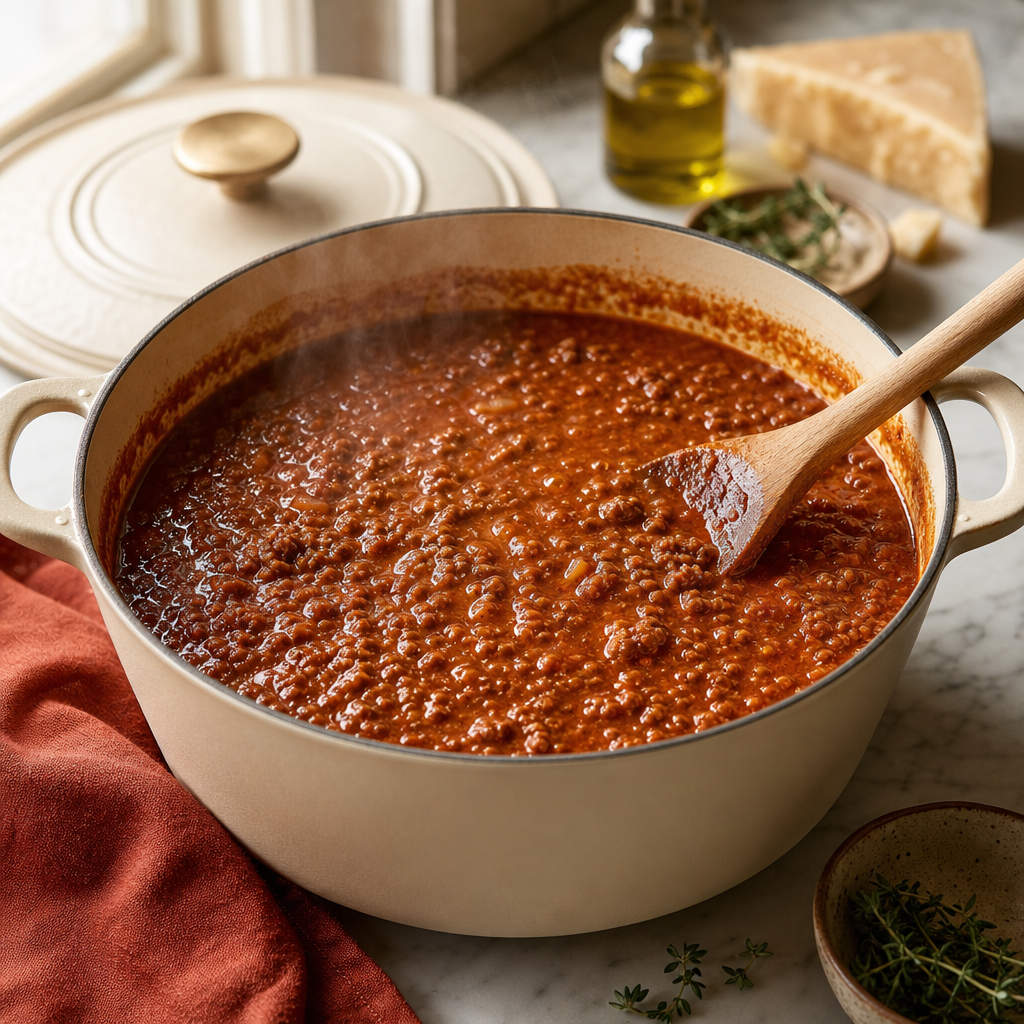
Stir in the passata, tomato paste, remaining ragù salt, and black pepper. Lower the heat to a bare simmer and cook uncovered or partly covered for 3 hours, stirring every 20-30 minutes. Add small splashes of water only when the bottom threatens to catch; the finished ragù should be moist and spoonable, not soupy.
Make the besciamella
Melt the besciamella butter in a saucepan over medium heat. Whisk in the flour and cook the roux for 90 seconds, keeping it pale. Whisk in the warm milk in a steady stream, then cook until the sauce coats a spoon but still flows, 8-10 minutes; season with salt and nutmeg.
Prepare the pasta sheets
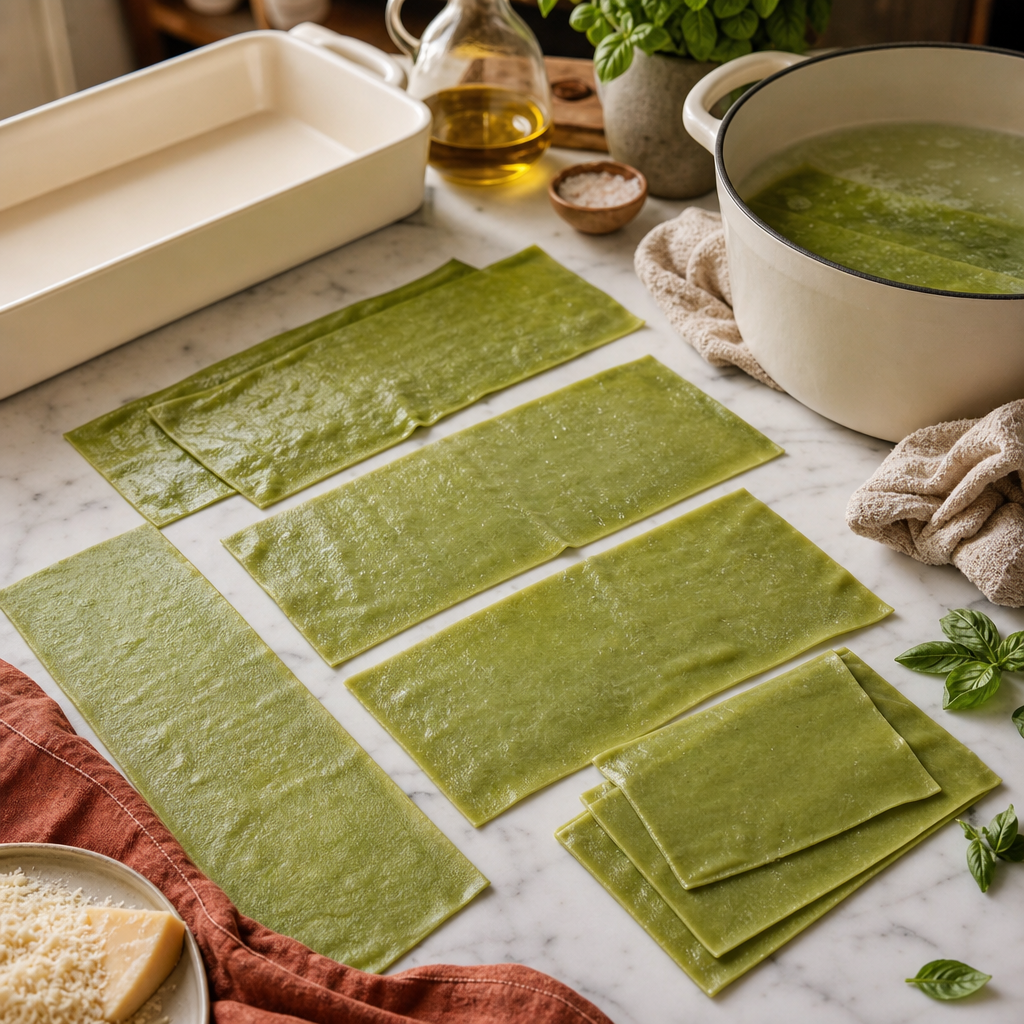
If using fresh spinach egg sheets, trim them to the pan and blanch in salted boiling water for 20-30 seconds if they are thick or floury; transfer to cold water, then lay flat on towels. Very thin fresh sheets can be layered without blanching if they are supple and not heavily dusted with flour.
Layer thinly
Heat the oven to 180°C. Butter the baking dish, spread a thin smear of besciamella on the base, then add pasta, a thin layer of ragù, a thin layer of besciamella, and a dusting of Parmigiano-Reggiano. Repeat for at least 5 layers, preferably 6-8, finishing with besciamella and Parmigiano-Reggiano on top.
Bake and brown
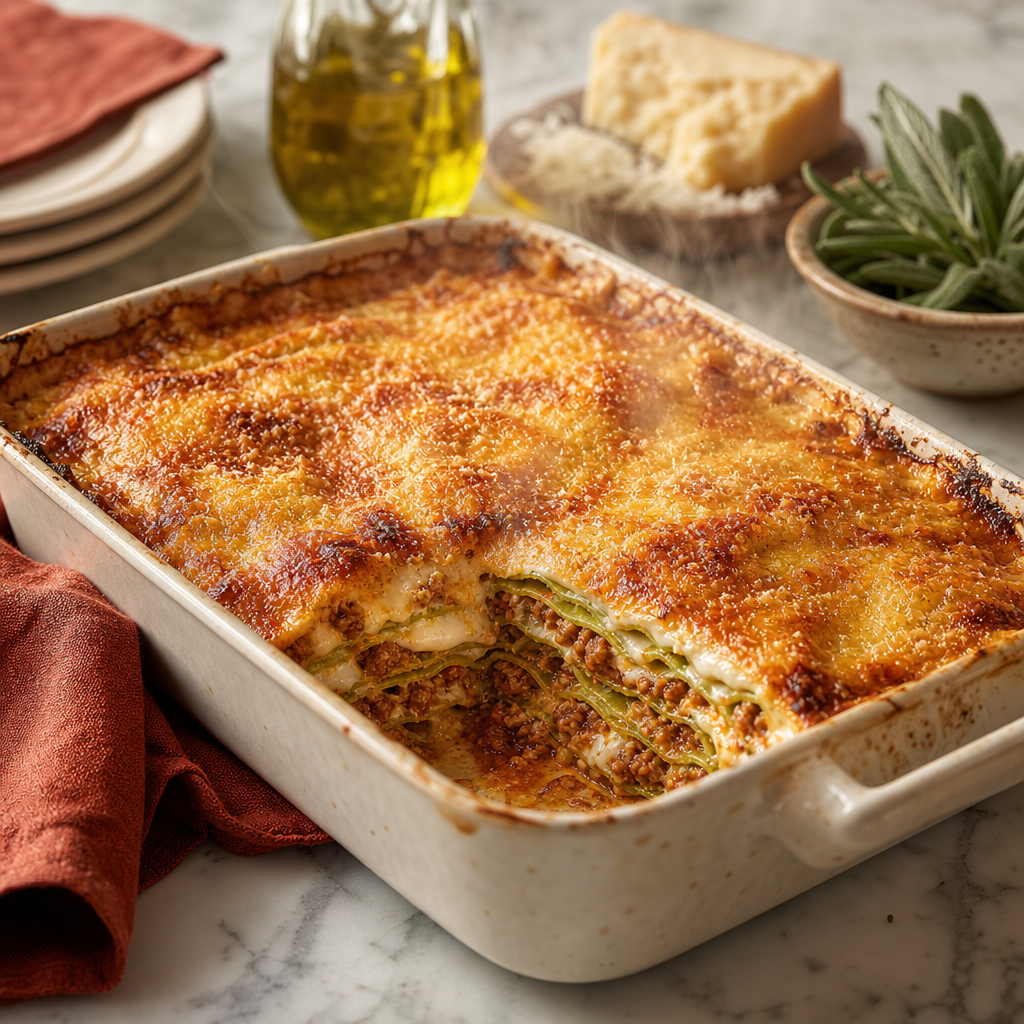
Bake uncovered until the edges bubble and the top is golden in patches, 35-40 minutes. If the top is pale after the center is hot, use the grill or broiler for 1-2 minutes and watch it without leaving the oven.
Rest before cutting
Rest the lasagne for 20-30 minutes before slicing. Cut squares with a sharp knife and lift with a flat spatula.
Common mistakes
- {'mistake': 'Using ricotta as a layer', 'fix': 'Leave it out. Ricotta makes a southern Italian or Italian-American structure, not Lasagne alla Bolognese.'}
- {'mistake': 'Adding mozzarella for stretch', 'fix': 'Use Parmigiano-Reggiano only. Stretchy cheese fights the fine layered texture.'}
- {'mistake': 'Making the ragù tomato-heavy', 'fix': 'Keep tomato restrained and meat-forward. The sauce should look brick-red-brown, not bright red.'}
- {'mistake': 'Skipping the milk in the ragù', 'fix': 'Add milk before wine and reduce it into the meat. It is a core Bolognese technique, not optional creaminess.'}
- {'mistake': 'Building three thick layers', 'fix': 'Build at least five thin layers. Thick layers steam unevenly and eat like filling with pasta separators.'}
- {'mistake': 'Cutting immediately after baking', 'fix': 'Rest 20-30 minutes. A clean square is impossible while the sauces are still boiling.'}
What does not belong
- {'item': 'Ricotta', 'reason': 'Ricotta does not belong in Lasagne alla Bolognese. It belongs to other lasagne traditions.'}
- {'item': 'Mozzarella', 'reason': 'Mozzarella does not belong in the canonical Bolognese version. It gives stretch and heaviness where the dish needs thin, creamy binding.'}
- {'item': 'Oregano, basil, or bay leaf in the ragù', 'reason': 'The herb base of Bolognese ragù is the soffritto. Dried Italian-herb seasoning pushes the sauce toward an Italian-American red sauce profile.'}
- {'item': 'Garlic-heavy tomato sauce', 'reason': 'Garlic marinara does not belong here. The sauce is a slow meat ragù, not a red sauce layered with meat.'}
- {'item': 'No-boil supermarket sheets without adjustment', 'reason': 'They often bake thick and starchy in this style. If used, increase besciamella and reduce the number of layers.'}