Khao Soi Nam Ngiao
The dish in context
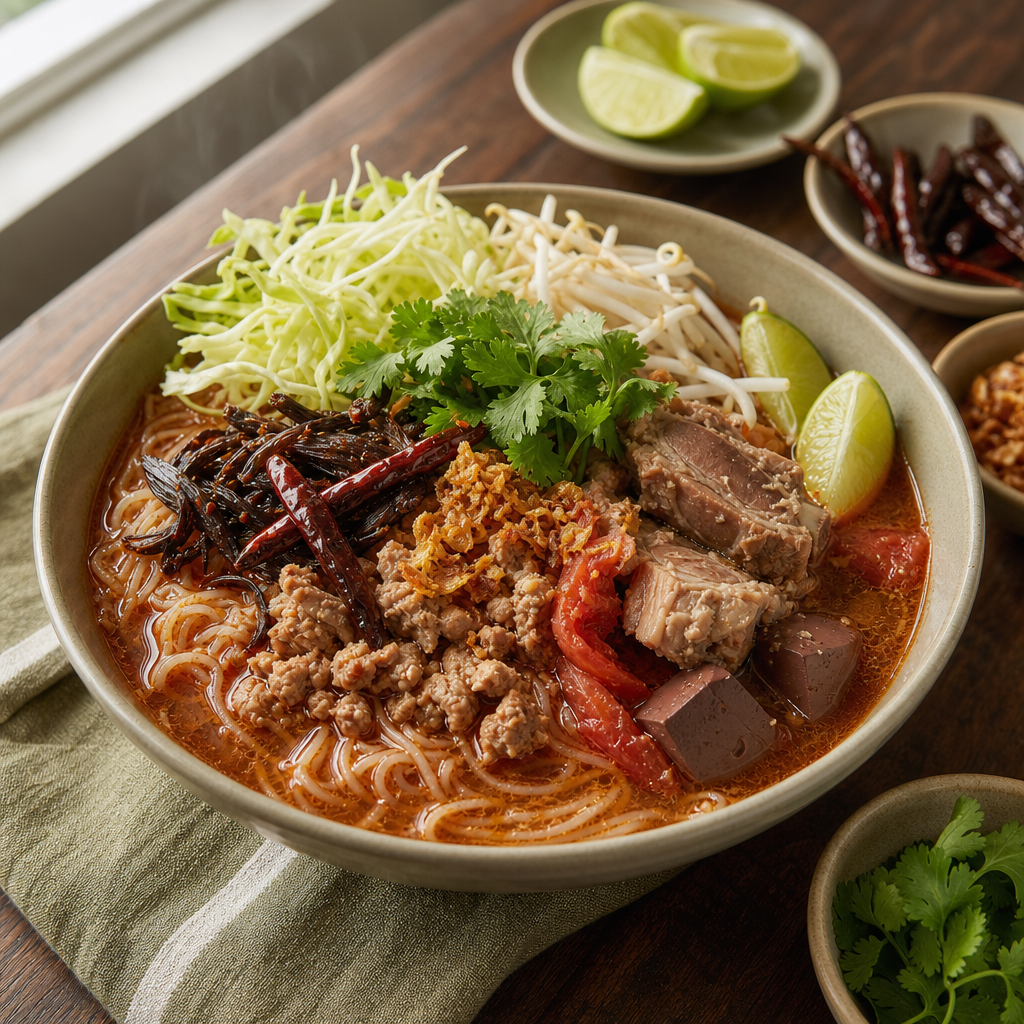
Khao soi nam ngiao belongs to the northern Thai and Tai Yai/Shan-influenced noodle family, but it is not the coconut curry khao soi that dominates English-language searches. In northern usage, khao soi can refer to cut rice noodles, and nam ngiao is the red broth built from tomato, pork, fermented soybean, dried chilies, and dried red cotton tree flower. The dish is strongly associated with Chiang Rai, Mae Hong Son, and neighboring northern provinces, with household versions shifting between khanom jeen rice vermicelli and wider hand-cut rice noodles. Pork ribs, minced pork, and pork blood are common; omitting the blood is a practical adaptation, not the Lanna standard.
Method 11 steps · 165 min
Soak the flowers and chilies
Cover the dried red cotton tree flowers with hot water for 30 minutes, then drain and pinch out any hard cores. Cover the dried chilies with hot water for 20 minutes until pliable, then drain. Keep the two soaks separate; the flower soaking water is usually tannic and does not belong in the broth.
Build the paste
Pound or grind the soaked chilies, shallots, garlic, lemongrass, galangal, cilantro roots, toasted tua nao, shrimp paste, and salt into a coarse red paste. Stop when no large lemongrass fibers remain. Add a spoonful of water only if the grinder stalls.
Blanch the ribs

Cover the pork ribs with cold water in a separate pot, bring to a boil, and simmer 3 minutes. Drain, rinse off foam, and wash the pot. Return the ribs to the clean pot with 2500 ml fresh water.
Start the pork broth
Bring the ribs and fresh water to a bare simmer. Cook uncovered for 45 minutes, skimming any foam that rises. The broth should tremble, not roll.
Fry the nam ngiao paste

Heat the oil in a wok or heavy pan over medium heat. Add the paste and fry 8-10 minutes, stirring often, until the oil stains red and the paste smells roasted rather than raw. If it catches before darkening, lower the heat; scorched chili turns bitter fast.
Cook the pork into the paste
Add the minced pork to the fried paste and break it into small, uneven granules. Cook 5 minutes until the pork loses its raw color and the paste clings to it. Do not brown it hard.
Marry paste, tomatoes, and broth
Scrape the pork-paste mixture into the simmering rib broth. Add the tomatoes and soaked red cotton tree flowers. Simmer 45-60 minutes, until the ribs are tender and the tomatoes have partly collapsed but still show red skins.
Add the blood cake late
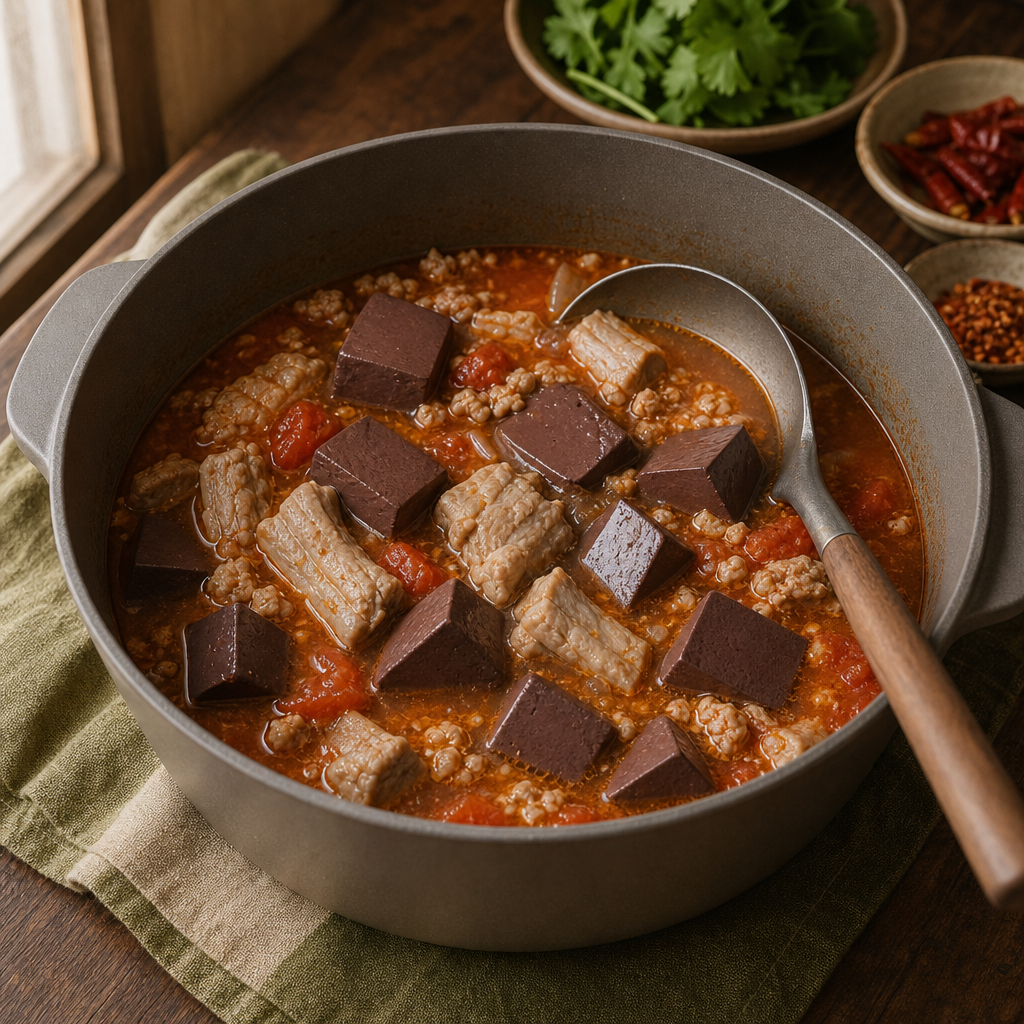
Add the pork blood cubes and simmer gently for 8-10 minutes. Stir with a wide spoon and avoid breaking the cubes. They should heat through and darken slightly, not crumble into the broth.
Season the broth
Season with fish sauce and palm sugar, then simmer 2 minutes and taste. The target is salty first, tomato-sour second, with fermentation underneath and no obvious sweetness. Add lime only at the table.
Prepare the noodles
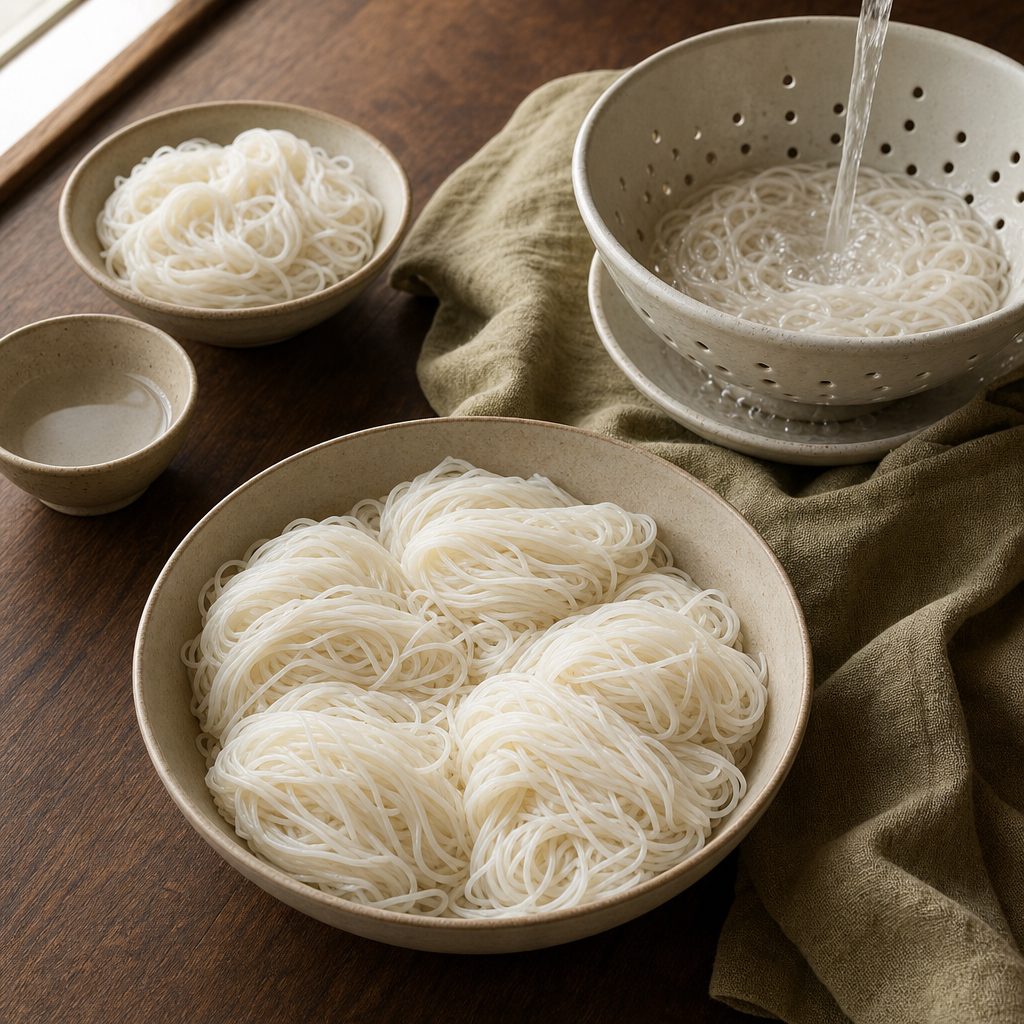
If using fresh khanom jeen, rinse briefly and drain. If using dried rice noodles, cook until flexible but not swollen, rinse under cool water, and drain well. Portion noodles into warm bowls.
Assemble the bowls
Ladle hot broth over the noodles, making sure each bowl gets rib, minced pork, tomato, flower, and blood. Top with fried garlic oil, cabbage, bean sprouts, and cilantro. Serve lime wedges and fried dried chilies on the side.
Common mistakes
- {'mistake': 'Using coconut milk because the name contains khao soi.', 'fix': 'Coconut milk belongs to northern coconut curry khao soi, not nam ngiao. This broth is tomato, pork, chile, and fermented soybean.'}
- {'mistake': 'Skipping dried red cotton tree flower.', 'fix': 'Dok ngio is not decoration. It gives the dish its northern identity and a specific tannic chew.'}
- {'mistake': 'Boiling the broth hard after adding blood cake.', 'fix': 'Simmer gently and stir wide. Hard boiling breaks the cubes and muddies the soup.'}
- {'mistake': 'Making the broth sweet.', 'fix': 'Palm sugar is a correction for sharp tomatoes, not a flavor direction. The broth should read salty, sour, and fermented.'}
- {'mistake': 'Adding lime juice to the pot.', 'fix': 'Lime goes into the bowl off heat. Boiled lime turns flat and can make the tomato acidity taste metallic.'}
- {'mistake': 'Treating tua nao as optional seasoning.', 'fix': 'Fermented soybean is structural. Without it, the soup loses the northern fermented backbone.'}
What does not belong
- {'item': 'coconut milk', 'reason': 'Coconut milk does not belong in nam ngiao. It confuses this dish with coconut curry khao soi.'}
- {'item': 'egg noodles and crispy noodle nests', 'reason': 'Those belong to the Chiang Mai coconut curry form. Khao soi nam ngiao uses rice noodles.'}
- {'item': 'curry powder', 'reason': 'Curry powder pushes the broth toward Muslim-influenced khao soi. Nam ngiao is built from dried chile paste, tomato, pork, and fermented soybean.'}
- {'item': 'peanut butter', 'reason': 'Peanut butter has no role here and makes the broth heavy and sweet.'}
- {'item': 'ginger as a straight replacement for galangal', 'reason': 'Ginger is a fallback only. Galangal has a sharper piney profile; 1:1 ginger makes the paste warm and round in the wrong direction.'}
- {'item': 'lemon juice', 'reason': 'Lemon juice tastes flatter and more perfumed in the wrong register. Use lime at the table.'}
Adaptations
Possible as a different adaptation, not a traditional bowl. Replace ribs with roasted mushrooms and firm tofu, use vegetable stock, replace fish sauce with soy sauce and salt, and use dark miso or extra tua nao for fermentation. Pork blood does not have a meaningful vegan substitute.
The standard dish is pork-based and includes pork blood. A halal version would need beef ribs, beef mince, no pork blood, and halal fish sauce or salt; that becomes a northern-style nam ngiao adaptation rather than the pork standard.
Rice noodles and the core broth are gluten-free if the fermented soybean, fish sauce, and shrimp paste are certified gluten-free. Check miso or soy-based substitutes; many contain wheat.
The dish is naturally dairy-free. Do not add coconut milk; it is not dairy, but it still does not belong.
Omit shrimp paste and use extra tua nao or dark miso. Confirm the fish sauce is safe for the diner or replace it with salt and a small amount of gluten-free tamari.