Khanom Jeen Saow Nam (Thai Rice Noodles with Pineapple-Ginger)
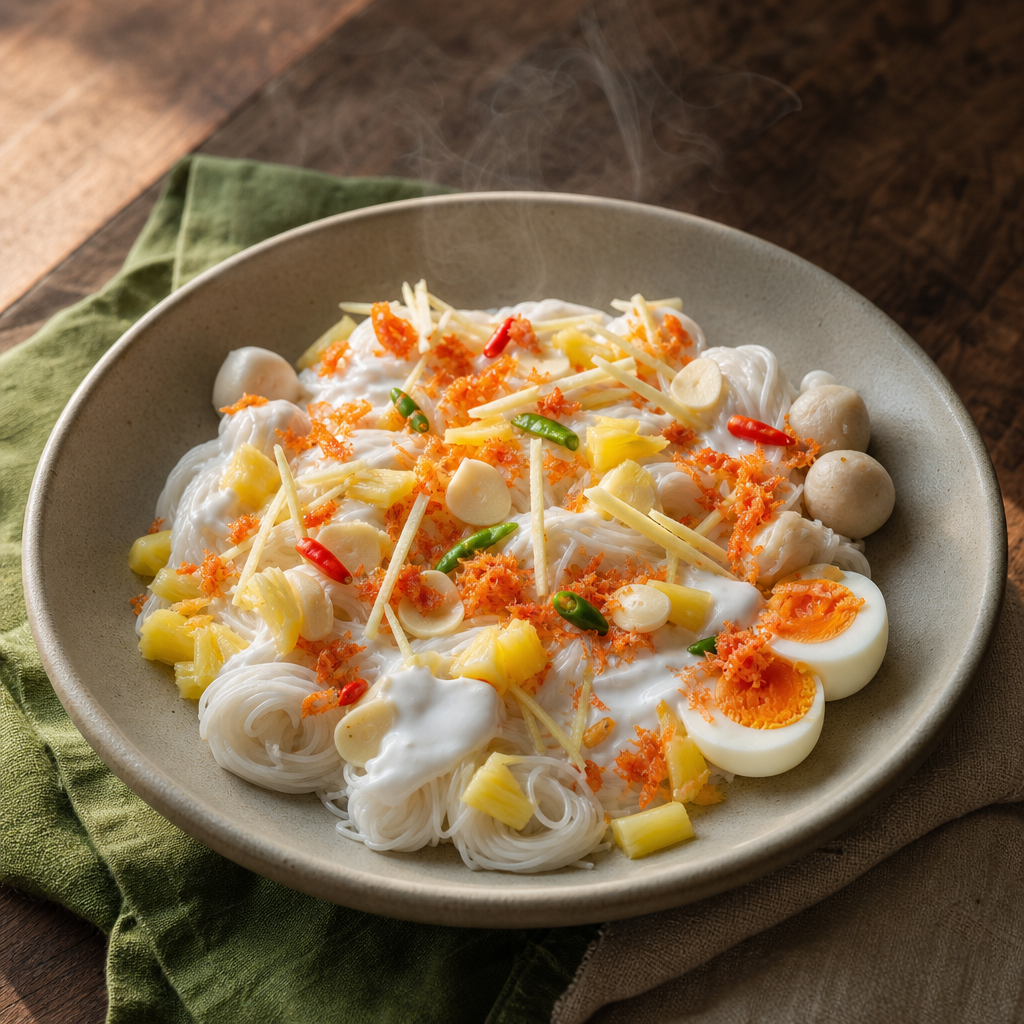
The dish in context
Khanom jeen saow nam is an old central Thai hot-weather noodle dish built on cool rice noodles, coconut milk, fruit, aromatics, and salty-sour seasoning. Thai culinary-school and press sources describe it as a classic cooling food, now less common than curry-topped khanom jeen. The dish belongs to the broader khanom jeen culture of fermented rice noodles, but it is not nam ya, nam prik, or any curry-based version. The central Thai grammar is specific: coconut milk is present, pineapple is structural, and the plate is seasoned at the table with fish sauce, lime, chilies, and sugar to balance the fruit and coconut.
Method 7 steps · 30 min
Salt the coconut milk
Heat the coconut milk and salt in a small saucepan over medium-low heat until it steams and looks uniform, 3-4 minutes. Do not boil it hard. Cool to room temperature, then chill if serving later.
Prepare the dried shrimp
Rinse the dried shrimp briefly, drain well, and pat dry. Pound in a mortar or pulse until coarse and fluffy, not paste-like.
Cut the fresh toppings
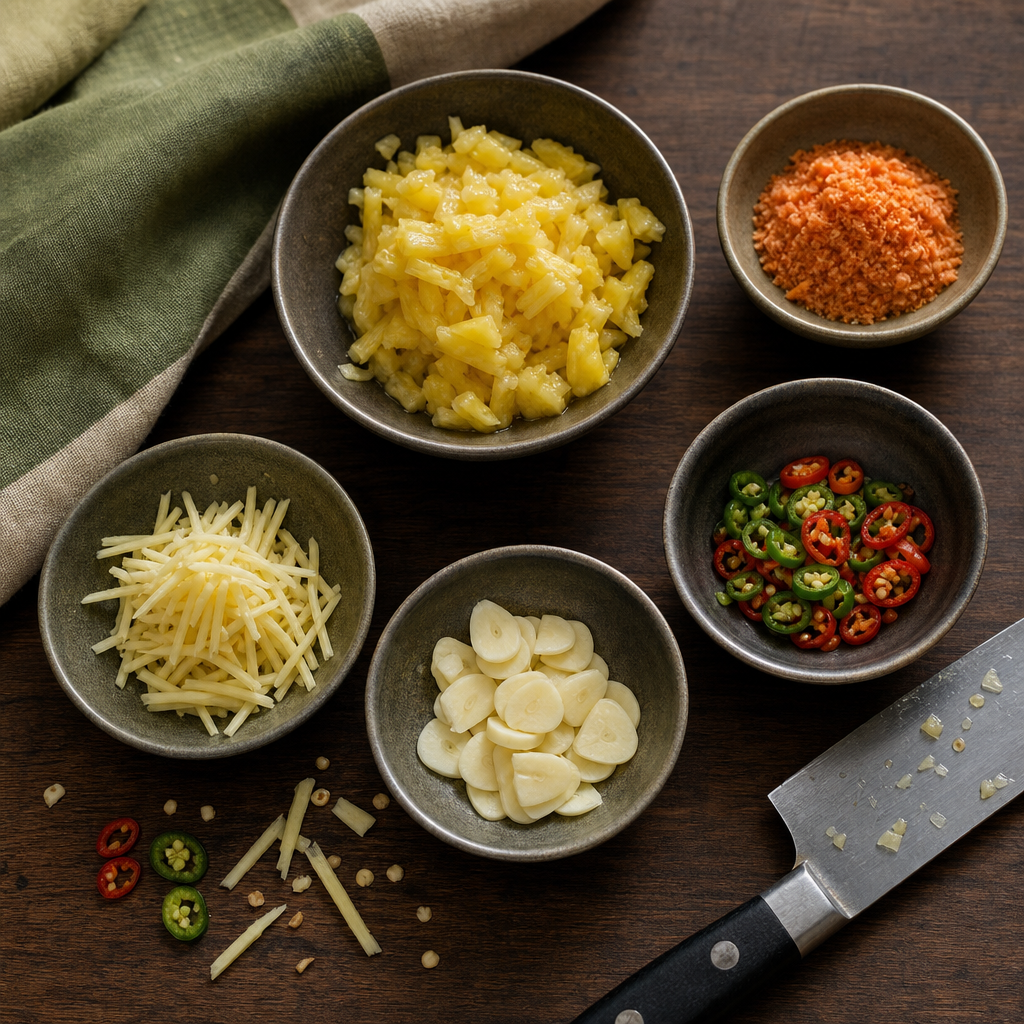
Chop the pineapple finely and keep its juice. Slice the garlic thin, cut the ginger into fine matchsticks, and slice the chilies. Hold each topping separately.
Prepare the optional protein
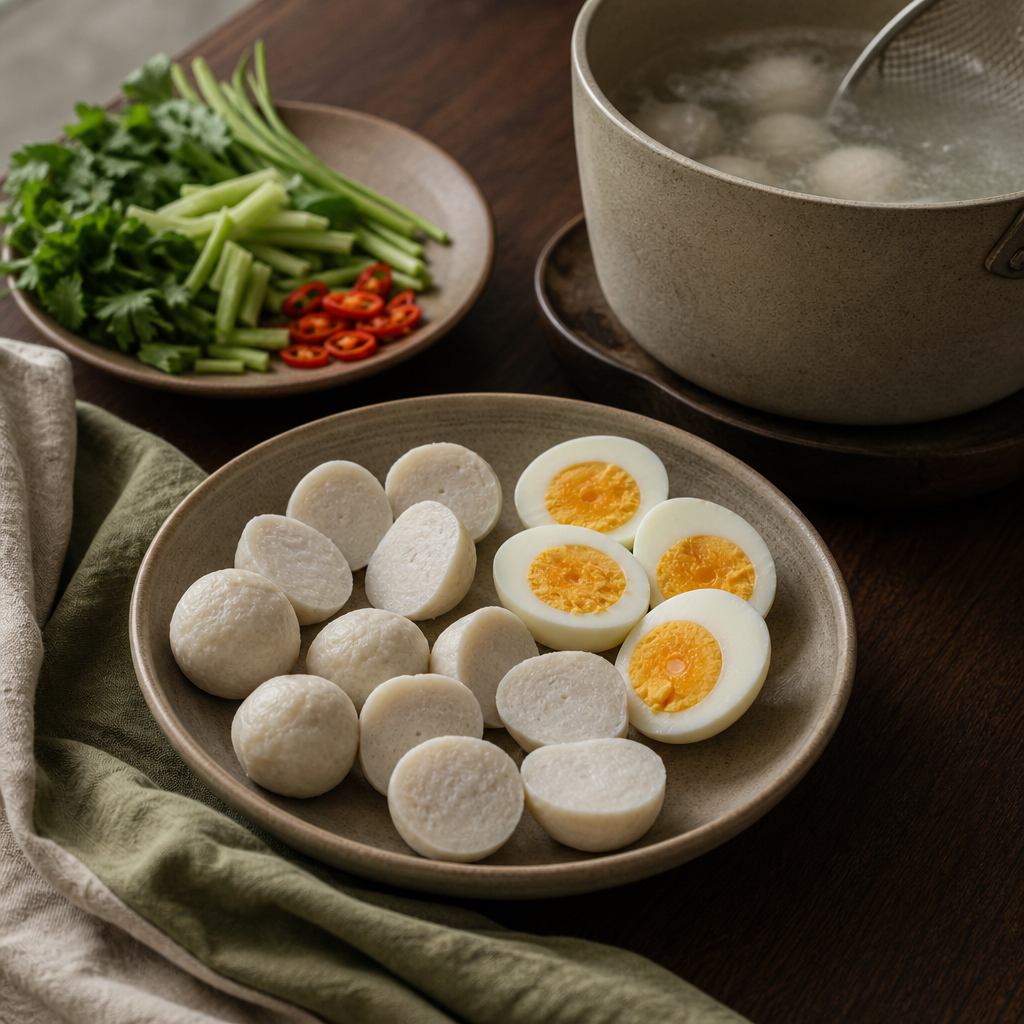
Blanch the fish balls in simmering water until hot through, 2-3 minutes, then halve them. Halve the boiled eggs if using.
Separate the noodles
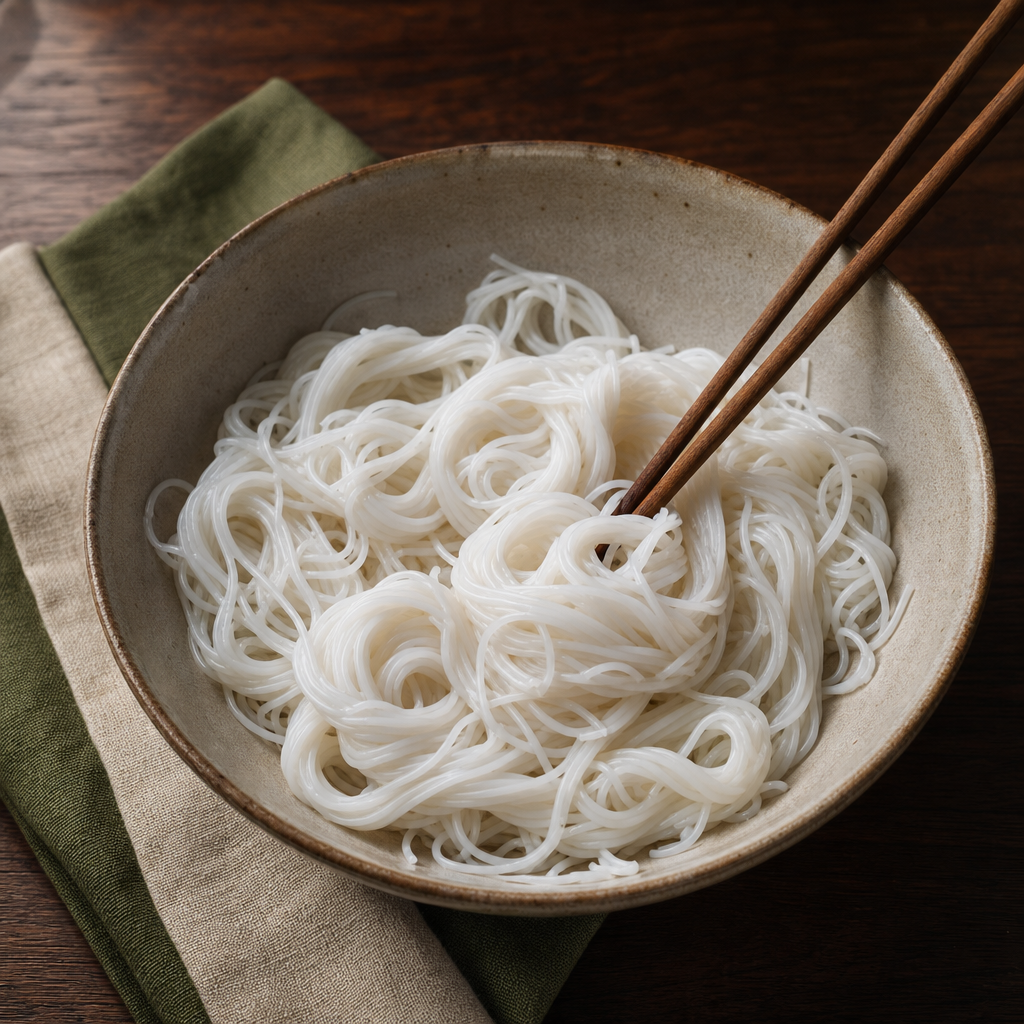
Loosen the khanom jeen gently with clean hands or chopsticks. If using refrigerated noodles, rinse quickly in cool water and drain until no water pools underneath.
Assemble the bowls
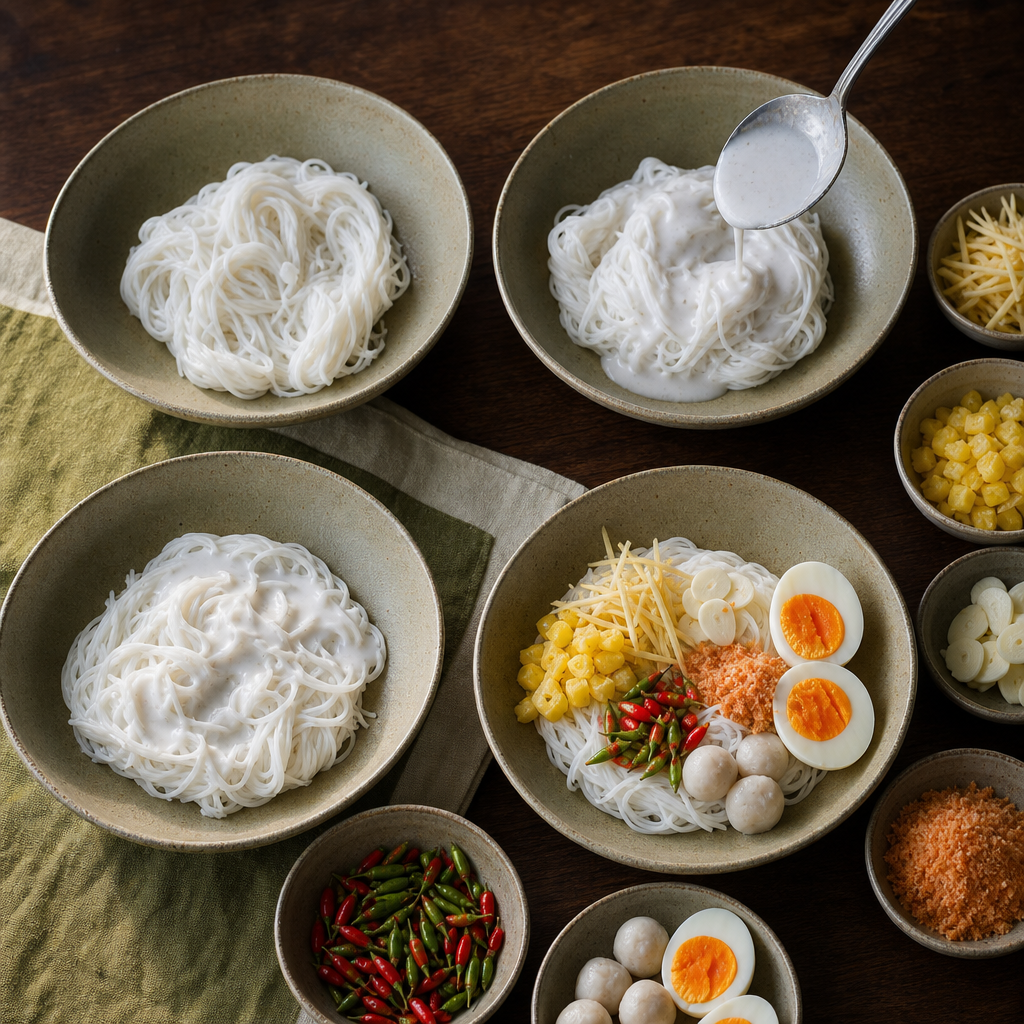
Divide the noodles among 4 shallow bowls. Spoon over salted coconut milk, then top with pineapple, ginger, garlic, dried shrimp, chilies, fish balls, egg, and cilantro if using.
Season at the table
Serve with lime juice, fish sauce, and palm sugar on the side, or season each bowl with about 1 tablespoon lime juice, 2 teaspoons fish sauce, and 1 teaspoon palm sugar. Mix lightly before eating.
Common mistakes
- {'mistake': 'Treating it like khanom jeen nam ya.', 'fix': 'Do not ladle curry over it. Saow nam is built from coconut milk and fresh toppings, with seasoning added late.'}
- {'mistake': 'Using sweetened coconut milk.', 'fix': 'Use unsweetened coconut milk and season it with salt. Sweetened coconut milk pushes the dish into dessert.'}
- {'mistake': 'Letting the assembled plate sit.', 'fix': 'Assemble close to serving. Pineapple juice, fish sauce, and coconut milk soften the noodles and dull the raw aromatics.'}
- {'mistake': 'Skipping dried shrimp without replacing the salt and savoriness.', 'fix': 'If dried shrimp is omitted, increase fish sauce carefully or use a shellfish-free marine substitute. Otherwise the dish tastes thin and sweet.'}
- {'mistake': 'Cutting ginger and garlic too thick.', 'fix': 'Slice both fine. Thick raw garlic burns; thick ginger turns fibrous and dominates each bite.'}
What does not belong
- {'item': 'curry paste', 'reason': 'Curry paste does not belong in khanom jeen saow nam. That turns the dish toward nam ya or another khanom jeen curry.'}
- {'item': 'chili jam', 'reason': 'Thai chili jam does not belong here. It darkens the coconut milk and adds roasted sweetness that fights the pineapple and ginger.'}
- {'item': 'lemongrass, galangal, and makrut lime leaves', 'reason': 'Those herbs belong to soups and curries, not this cool noodle assembly.'}
- {'item': 'canned pineapple syrup', 'reason': 'Syrup does not belong. The pineapple should give fruit acid and juice, not a candy-sweet coating.'}
- {'item': 'wheat noodles', 'reason': 'Wheat noodles do not belong. The soft fermented rice-noodle texture is the base structure of khanom jeen.'}
Adaptations
Use soy sauce and salt instead of fish sauce, omit dried shrimp, fish balls, and egg, and add toasted ground peanuts or toasted coconut for body. This is a vegan adaptation, not the traditional profile; the fermented marine salinity is missing.
Use halal-certified fish sauce, fish balls, and dried shrimp. The standard ingredient set contains no pork or alcohol.
The dish is naturally gluten-free if the fish sauce, fish balls, and any substitute noodles are certified gluten-free. Many commercial fish balls contain wheat starch; read the label.
The standard dish is dairy-free. Coconut milk is not dairy.
Omit dried shrimp and use extra fish sauce or toasted dried fish flakes if fish is acceptable. If all seafood is avoided, use soy sauce and salt; the dish becomes a nontraditional adaptation.