Crab Stir-Fried with Curry Powder
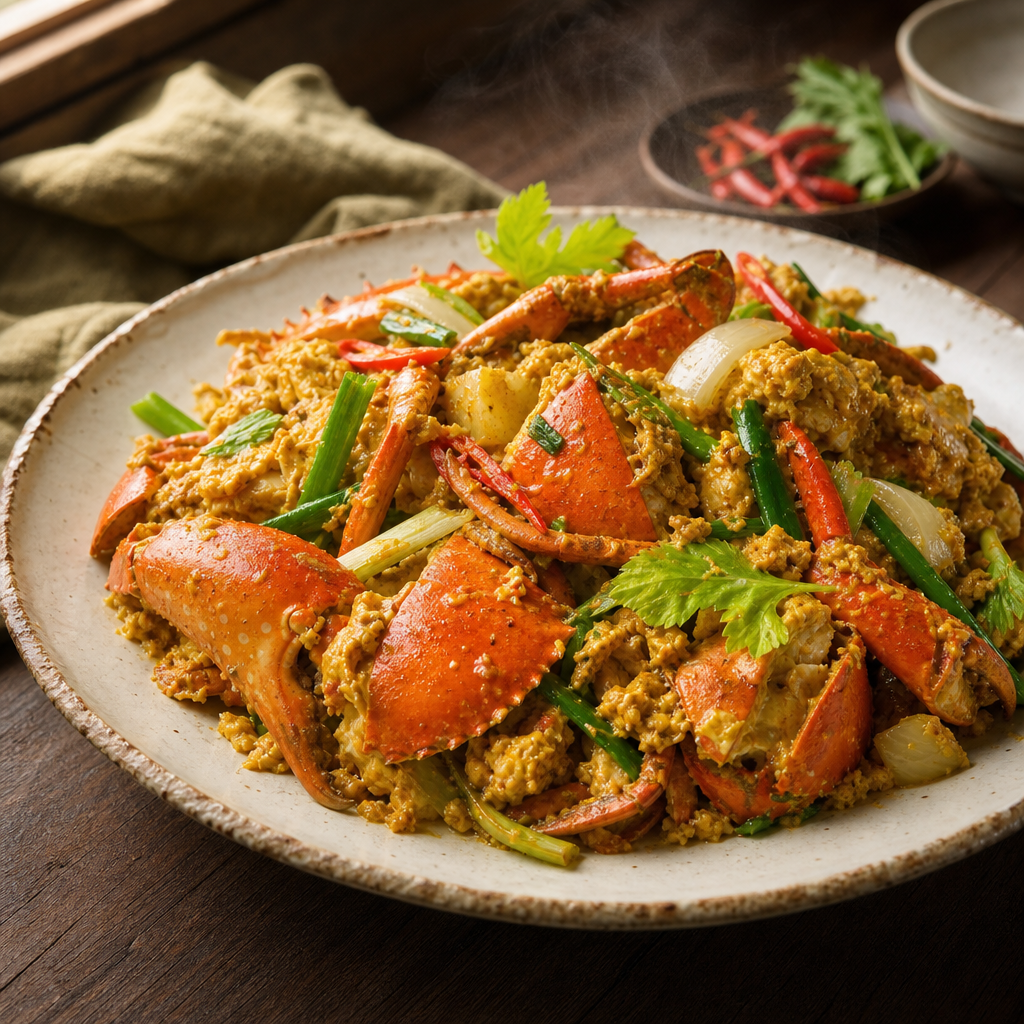
The dish in context
ปูผัดผงกะหรี่ is a central Thai restaurant dish shaped by Thai-Chinese wok cooking: high heat, seafood, egg, and a curry-powder sauce rather than a pounded Thai curry paste. Bangkok seafood restaurants, especially the long-running Chinese-Thai dining-room style, helped make the dish a status order built around whole crab. Household versions often use crab meat or blue swimmer crab, but the restaurant grammar is cracked shell-on crab tossed through a yellow egg sauce. The curry powder points to Indian spice trade influence, but the seasoning is Thai-Chinese: oyster sauce, light soy sauce, nam prik pao oil, evaporated milk, and scallion-celery aromatics.
Method 7 steps · 45 min
Clean and crack the crab
Scrub the crab, remove the top shell, gills, and apron, then cut the body into 4-6 pieces. Crack the claws and legs enough for sauce to enter, but keep the pieces intact.
Pre-cook the crab
Steam or boil the crab pieces until the shell turns orange and the meat is barely set, 5-7 minutes for blue swimmer crab or 8-10 minutes for larger mud or Dungeness pieces. Drain well and reserve 60 ml of clean cooking liquid if using it for the sauce.
Mix the curry-egg sauce
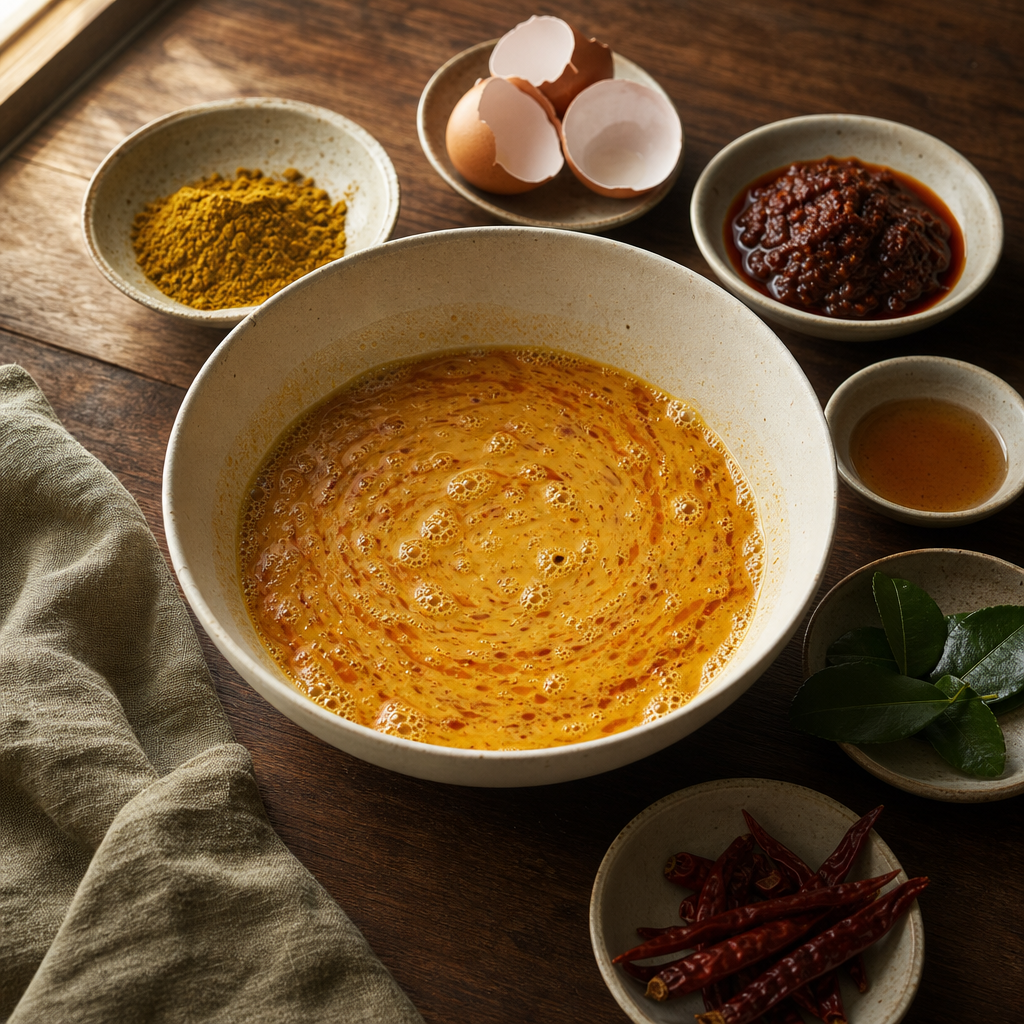
Whisk the eggs, evaporated milk, nam prik pao, nam prik pao oil, oyster sauce, light soy sauce, sugar, white pepper, curry powder, and stock until no dry yellow streaks remain.
Bloom garlic and curry powder
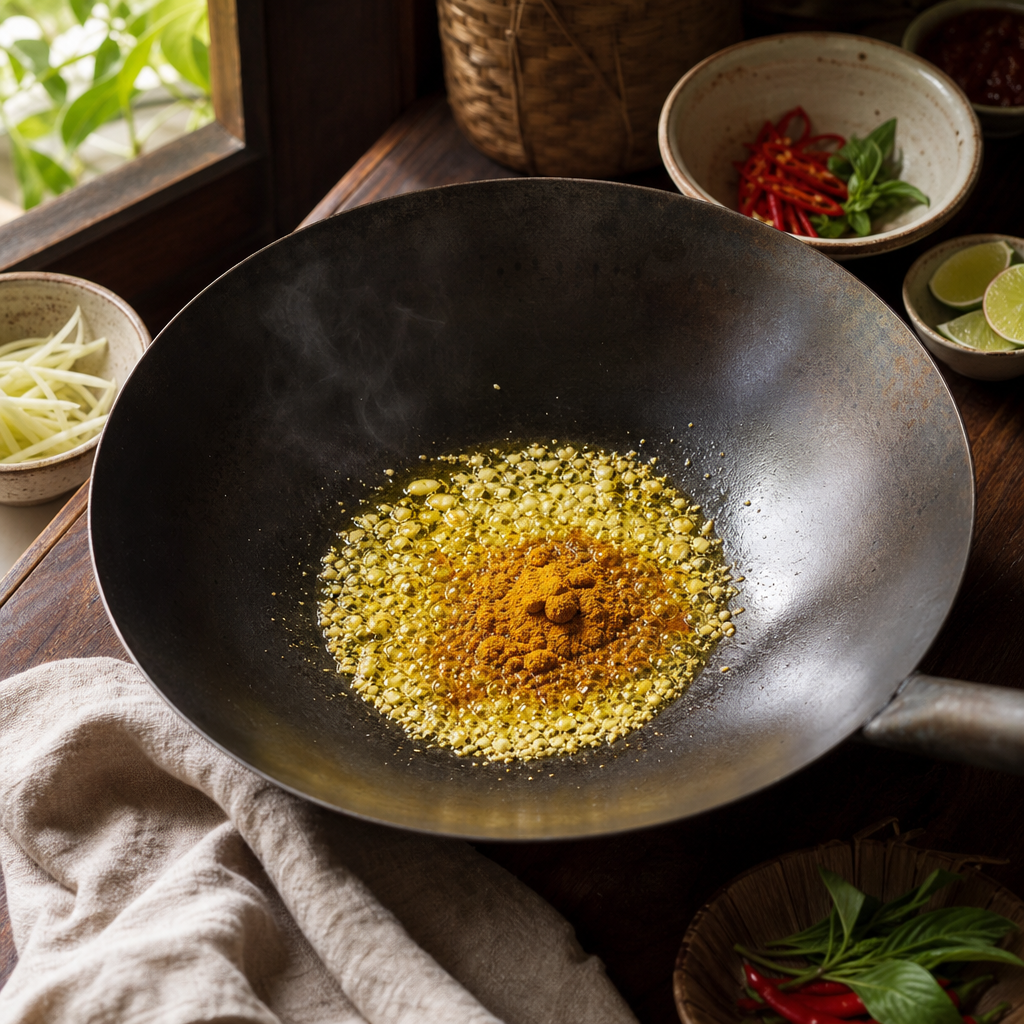
Heat the wok over medium-high heat until a drop of water skitters, then add the neutral oil and garlic. Stir for 10-15 seconds, then add 1 teaspoon of the mixed sauce from the bowl and stir until the oil stains yellow and smells toasted, not raw.
Coat the crab
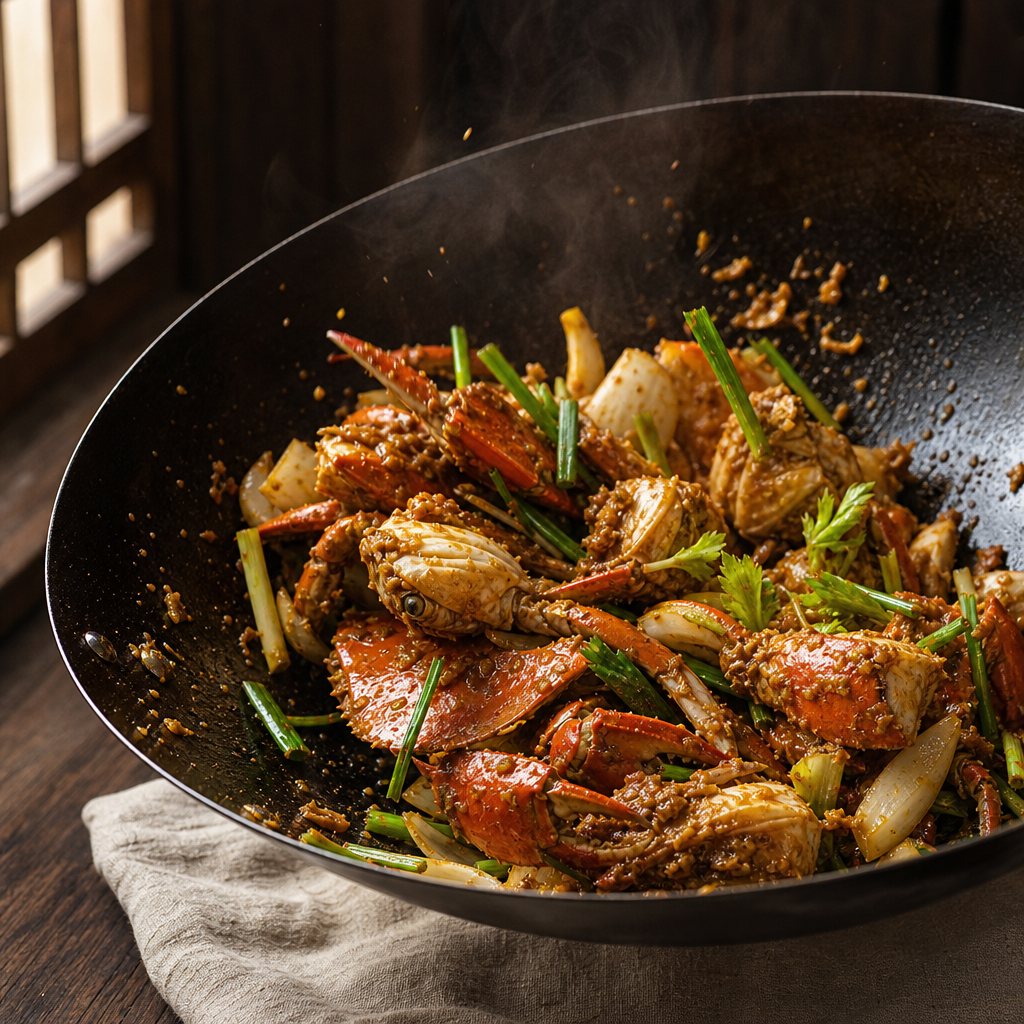
Add the pre-cooked crab and toss hard for 30-45 seconds. Add the onion wedges and Shaoxing wine, if using, and toss until the onion edges start to turn translucent but still hold shape.
Set the egg sauce
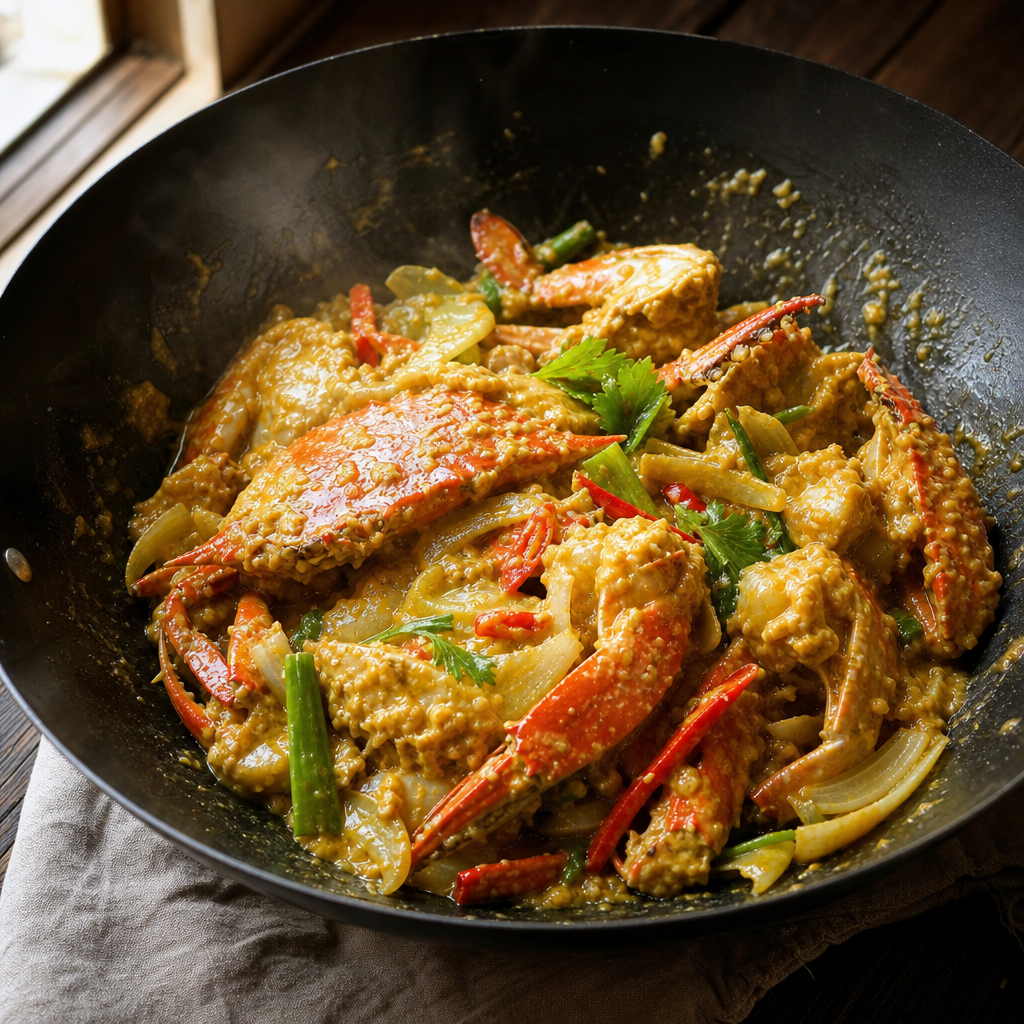
Lower the heat to medium, pour in the curry-egg sauce, and fold constantly with a wok spatula. Stop when the sauce turns glossy yellow and forms soft curds that cling to the crab, 45-75 seconds.
Finish with herbs
Add scallions, Chinese celery, and red spur chili. Fold 3-4 times until the greens slump but stay bright, then transfer to a platter immediately.
Common mistakes
- Adding the egg sauce over maximum heat. The sauce breaks into scrambled egg and oily liquid before it coats the crab.
- Using raw thick crab pieces in the wok. The shell may look cooked while the joint meat stays underdone.
- Letting curry powder hit dry metal. It scorches, turns bitter, and leaves gritty specks in the yellow sauce.
- Over-sweetening. A little sugar rounds the sauce; a sweet curry-cream profile is not the central Thai restaurant standard.
- Overloading the wok. Crowding traps steam, dilutes the sauce, and turns the dish from stir-fry into wet braise.
- Using thick Western celery stalks as the main green. The dish needs the leafy, herbal snap of Chinese celery.
What does not belong
- Coconut milk does not belong. This is an egg-and-evaporated-milk curry-powder stir-fry, not a coconut curry.
- Thai curry paste does not belong. The dish is built on dry curry powder, ผงกะหรี่, not red, yellow, or panang paste.
- Heavy cream does not belong. It coats the palate and hides the crab instead of setting into light egg curds.
- Fish sauce is not the primary salt here. Oyster sauce and light soy sauce define the Thai-Chinese profile.
- Bottled sweet chili sauce does not belong. It makes the sauce sticky, red, and sugary.
- Frozen imitation crab does not belong. It falls apart, tastes sweet, and gives no shell aroma.