Porcini Mushroom Risotto
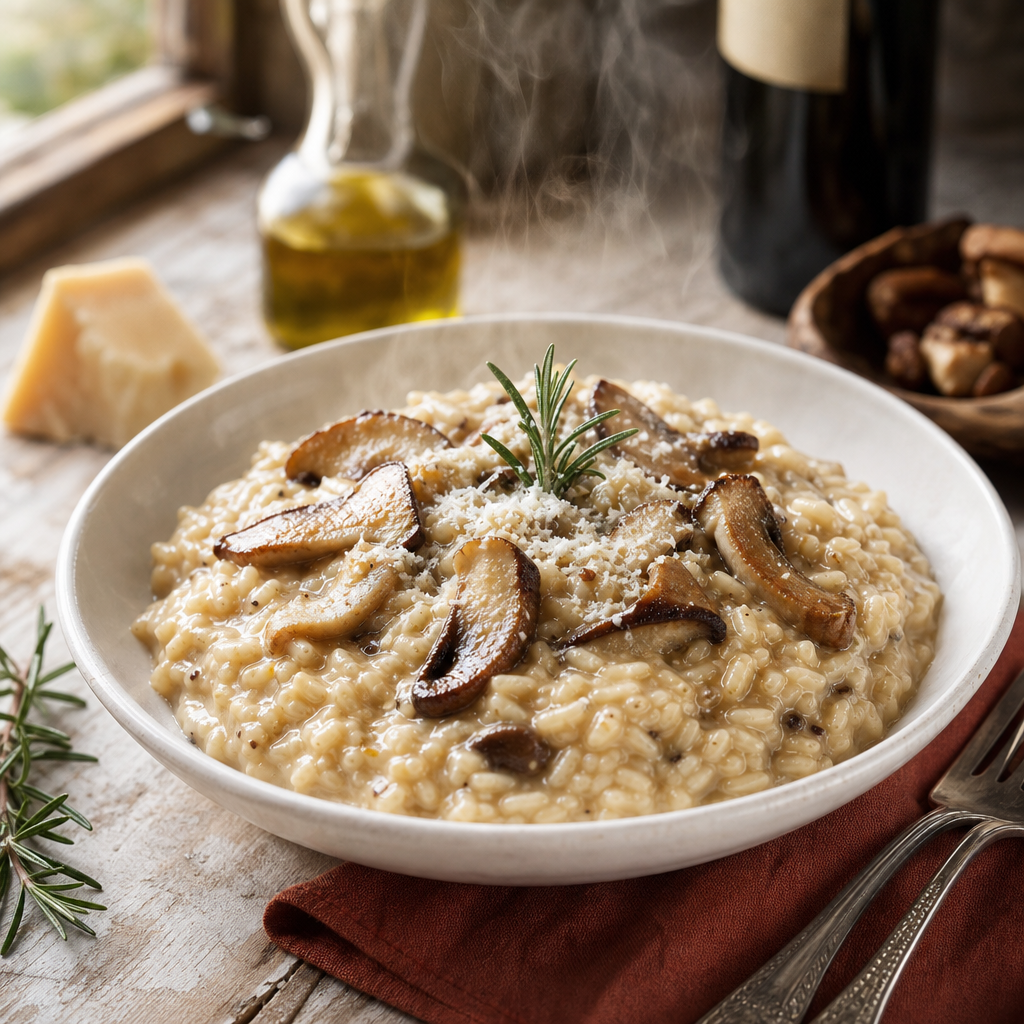
The dish in context
Risotto is a northern Italian rice technique, strongest in Lombardy, Piedmont, and the Veneto, where short-grain rice varieties such as Carnaroli, Arborio, and Vialone Nano are grown and used for starch-driven dishes. Porcini mushrooms are an autumn marker across much of Italy; fresh porcini are prized when available, while dried porcini are a standard pantry route because their soaking liquid carries concentrated mushroom aroma. The core method is not baked rice and not pilaf: hot stock is worked into toasted rice in stages, then the risotto is finished off heat with butter and Parmigiano-Reggiano. The target texture is all'onda, a loose wave that spreads slowly on a plate instead of sitting in a stiff mound.
Method 10 steps · 55 min
Soak and strain the porcini
Cover the dried porcini with 500 ml boiling water and soak for 20 minutes. Lift the mushrooms out, squeeze them lightly, and chop them coarsely. Strain the soaking liquid through a coffee filter, fine cloth, or paper-lined sieve; stop before the gritty sediment at the bottom goes in.
Heat the liquid
Combine the strained porcini liquid with the stock and bring it to a bare simmer in a saucepan. Keep it hot but not boiling hard.
Brown the mushrooms
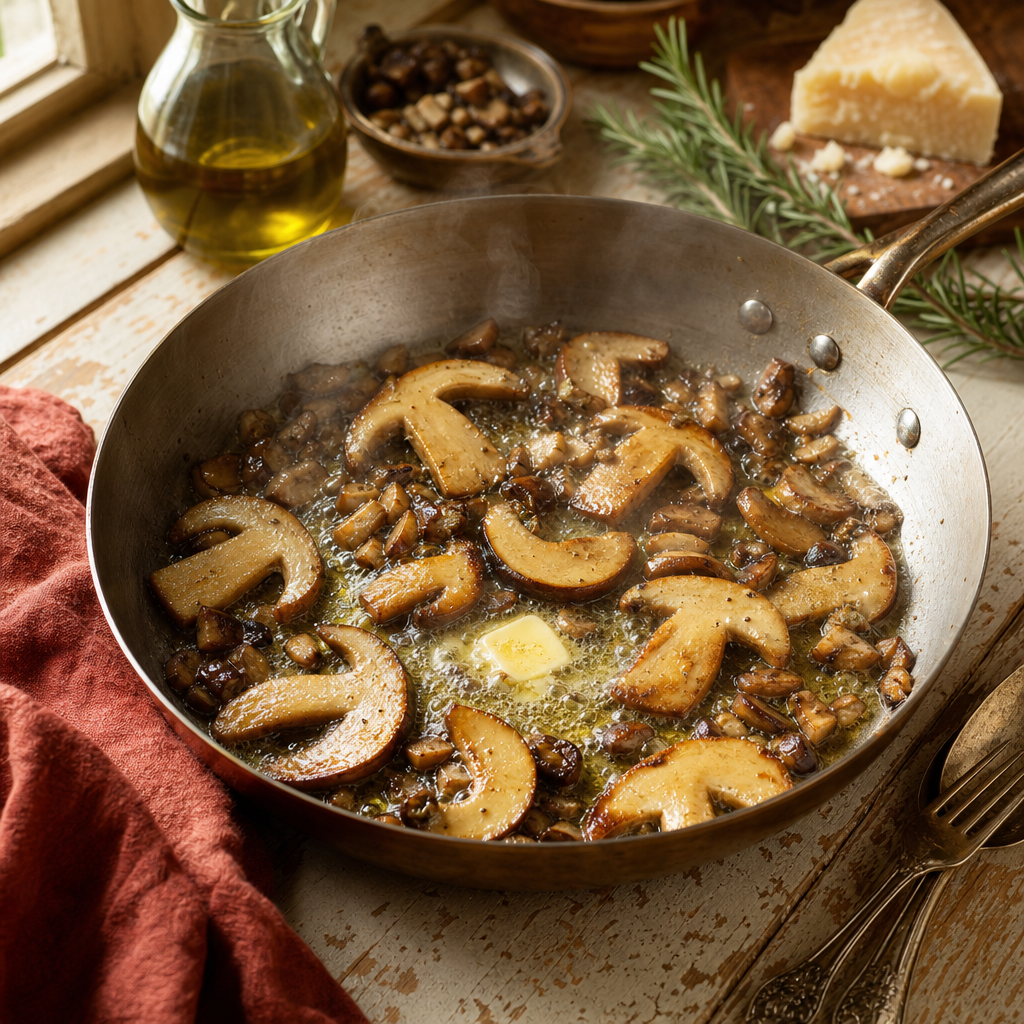
Heat 15 ml olive oil and 15 g butter in the risotto pan over medium-high heat. Add the fresh mushrooms, if using, plus the chopped soaked porcini and the crushed garlic clove. Cook until the mushrooms look glossy and browned at the edges, 5-7 minutes; salt lightly, discard the garlic, and transfer the mushrooms to a bowl.
Sweat the onion
Lower the heat to medium. Add the remaining olive oil, then the onion or shallot with a small pinch of salt. Cook until translucent and soft, 5-7 minutes, without browning.
Toast the rice
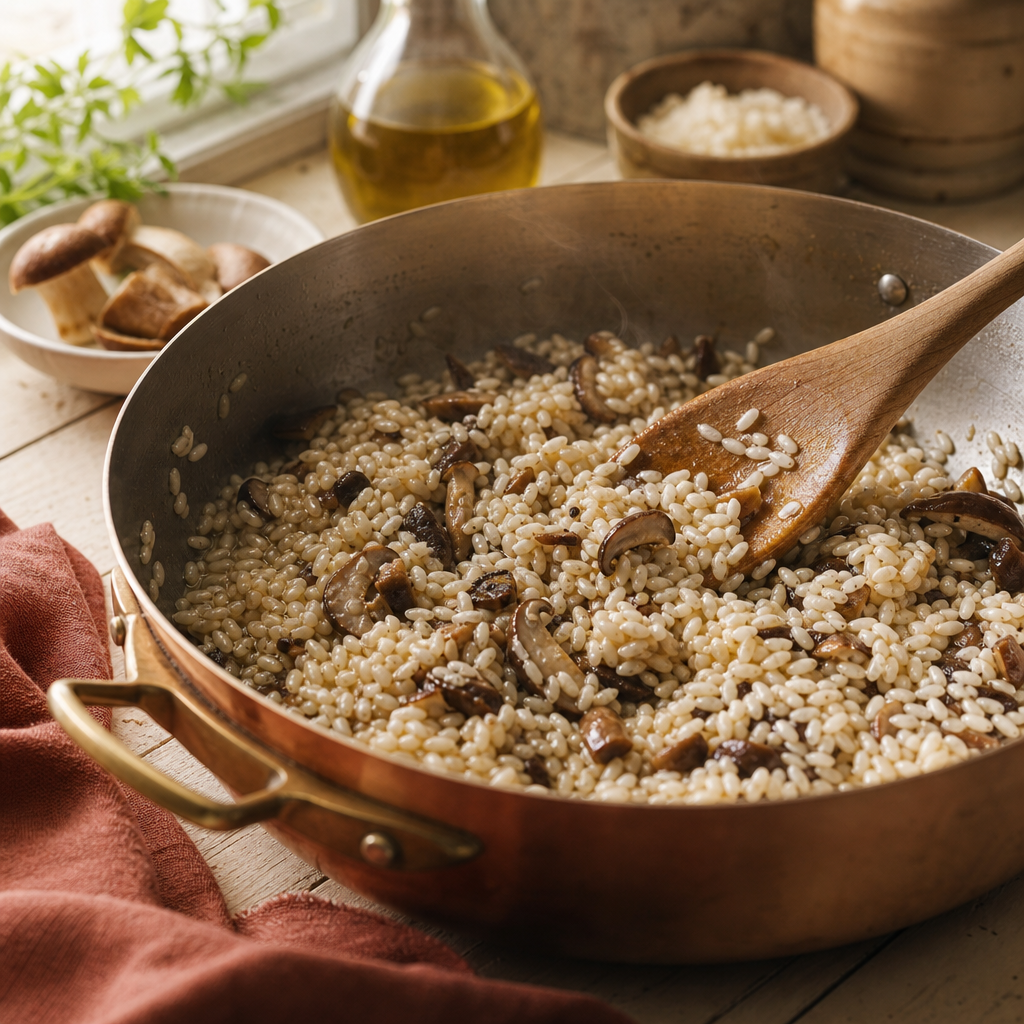
Add the rice and stir until every grain is coated and the outer edge of the grains turns slightly translucent, 2-3 minutes. The rice should sound dry and faintly glassy against the pan.
Deglaze with wine
Add the white wine and stir until the pan smells clean rather than alcoholic and the liquid is almost fully absorbed, about 1-2 minutes. If omitting wine, add a ladle of hot stock and the vinegar substitute here.
Build the risotto
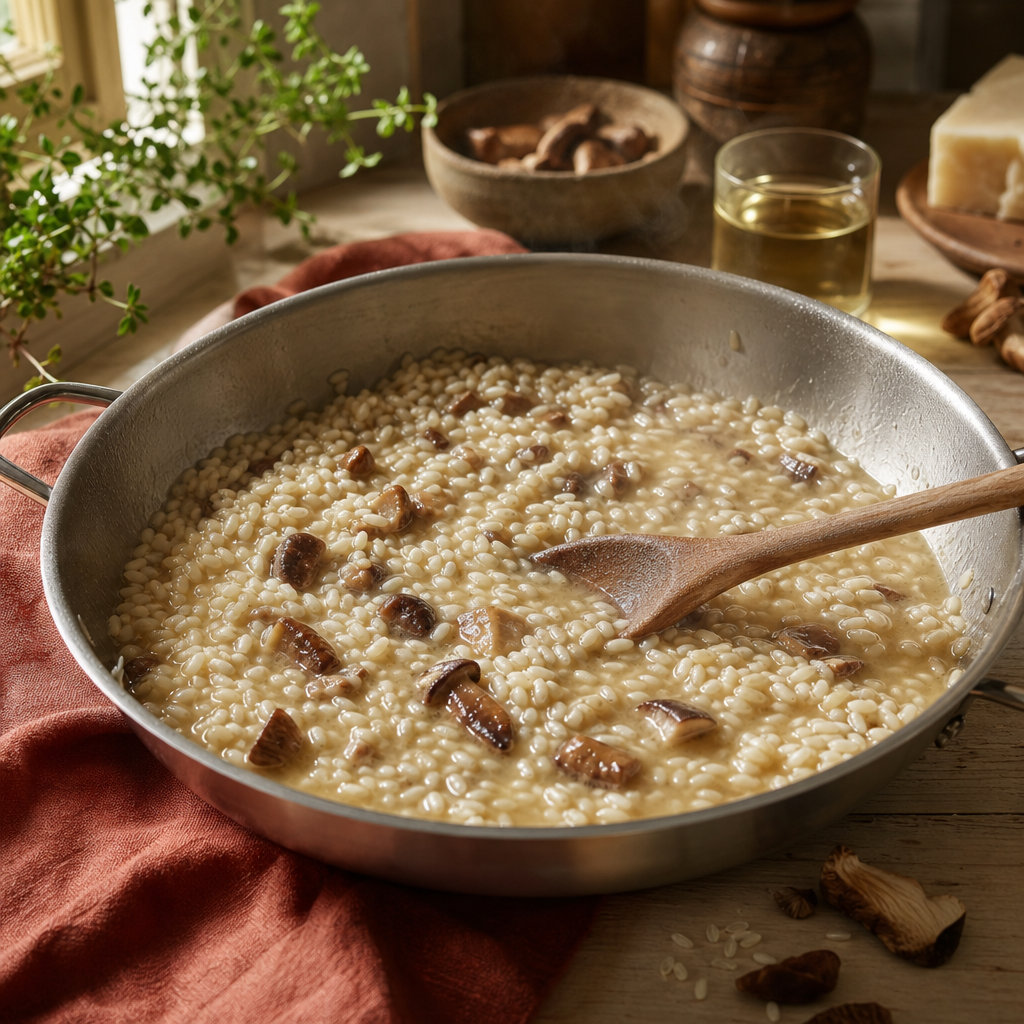
Add hot stock one ladle at a time, stirring steadily and adding the next ladle only when the previous one is mostly absorbed. Keep the rice at an active simmer, not a boil. Continue for 13-15 minutes before checking the grains.
Return the mushrooms
Fold the browned mushrooms back into the rice when the grains are still slightly chalky in the center. Continue adding hot stock in small amounts until the rice is al dente and the pan looks loose, 3-5 minutes more.
Mantecare off heat
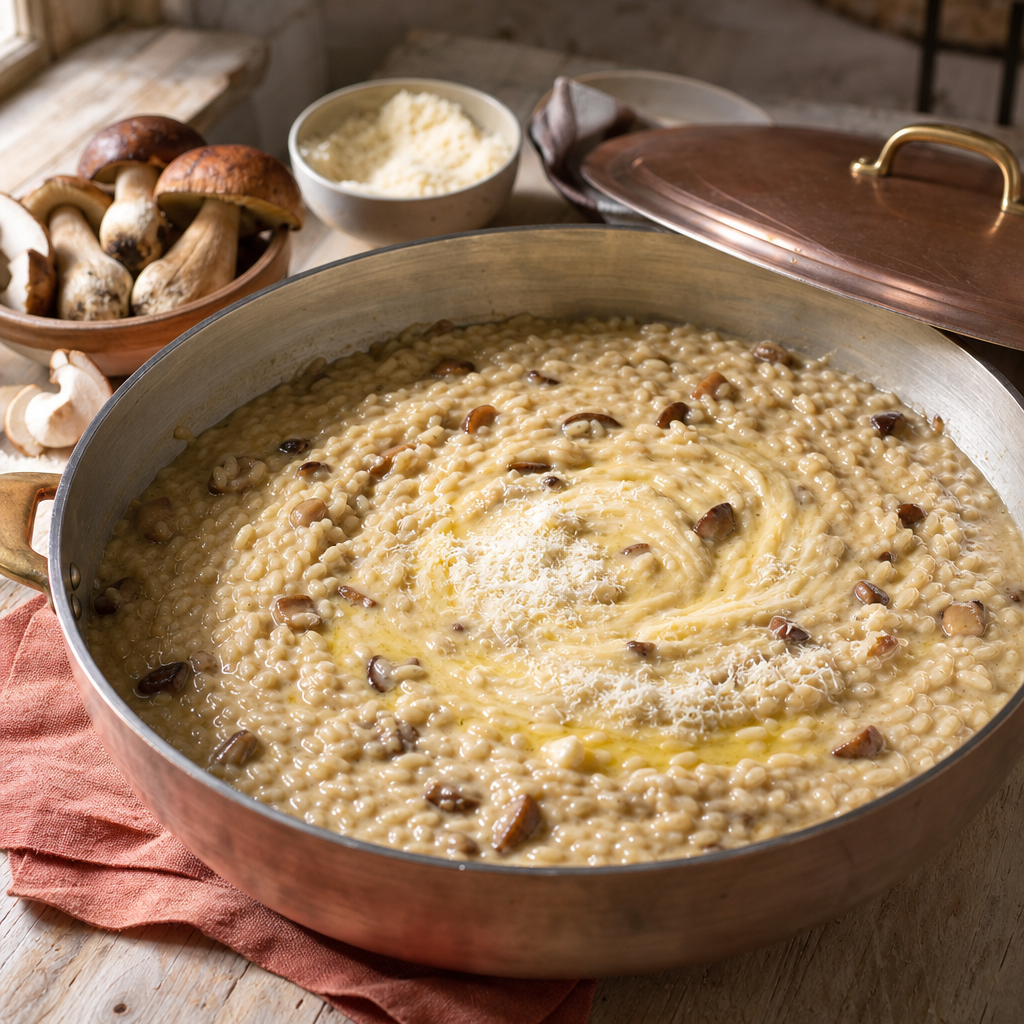
Turn off the heat. Beat in the remaining cold butter and the Parmigiano-Reggiano with firm strokes, then cover the pan for 1 minute. Stir again and adjust with a splash of hot stock if needed.
Serve all'onda
Spoon the risotto into warm shallow bowls or plates. It should spread slowly and ripple when the plate is tilted, not stand like a scoop. Finish with parsley and black pepper if using.
Common mistakes
- {'mistake': 'Using long-grain rice', 'fix': 'Use Carnaroli, Arborio, or Vialone Nano. Long-grain rice stays separate and cannot build the starch emulsion this dish requires.'}
- {'mistake': 'Adding cold stock', 'fix': 'Keep the stock and porcini liquid hot. Cold liquid interrupts the simmer and makes the outside of the grain soften unevenly.'}
- {'mistake': 'Treating the porcini soaking liquid as automatically clean', 'fix': 'Strain it through paper or cloth and leave the sediment behind. Porcini grit ruins the texture in one bite.'}
- {'mistake': 'Finishing over heat', 'fix': 'Add butter and Parmigiano off heat. Direct heat tightens the cheese and can split the emulsion.'}
- {'mistake': 'Serving it stiff', 'fix': "Risotto should move. Add hot stock in small splashes until it ripples all'onda."}
What does not belong
- {'item': 'cream', 'reason': 'Cream does not belong in porcini risotto. The creamy texture comes from rice starch, butter, and Parmigiano during mantecatura.'}
- {'item': 'basmati, jasmine, or other long-grain rice', 'reason': 'These grains stay separate by design. They cannot make the suspended starch sauce that defines risotto.'}
- {'item': 'pre-grated shelf-stable Parmesan', 'reason': 'Anti-caking starches and dry cheese granules turn the finish dusty instead of emulsified. Grate Parmigiano-Reggiano from a piece.'}
- {'item': 'heavy truffle oil', 'reason': 'Truffle oil often reads synthetic and covers the porcini. Fresh truffle shaved at the table is a separate luxury; bottled truffle perfume is not the base recipe.'}
- {'item': 'sweet wine or sugar', 'reason': 'Sweetness flattens the earthy bitterness of porcini. Use dry white wine or omit the wine.'}