Asparagus Risotto
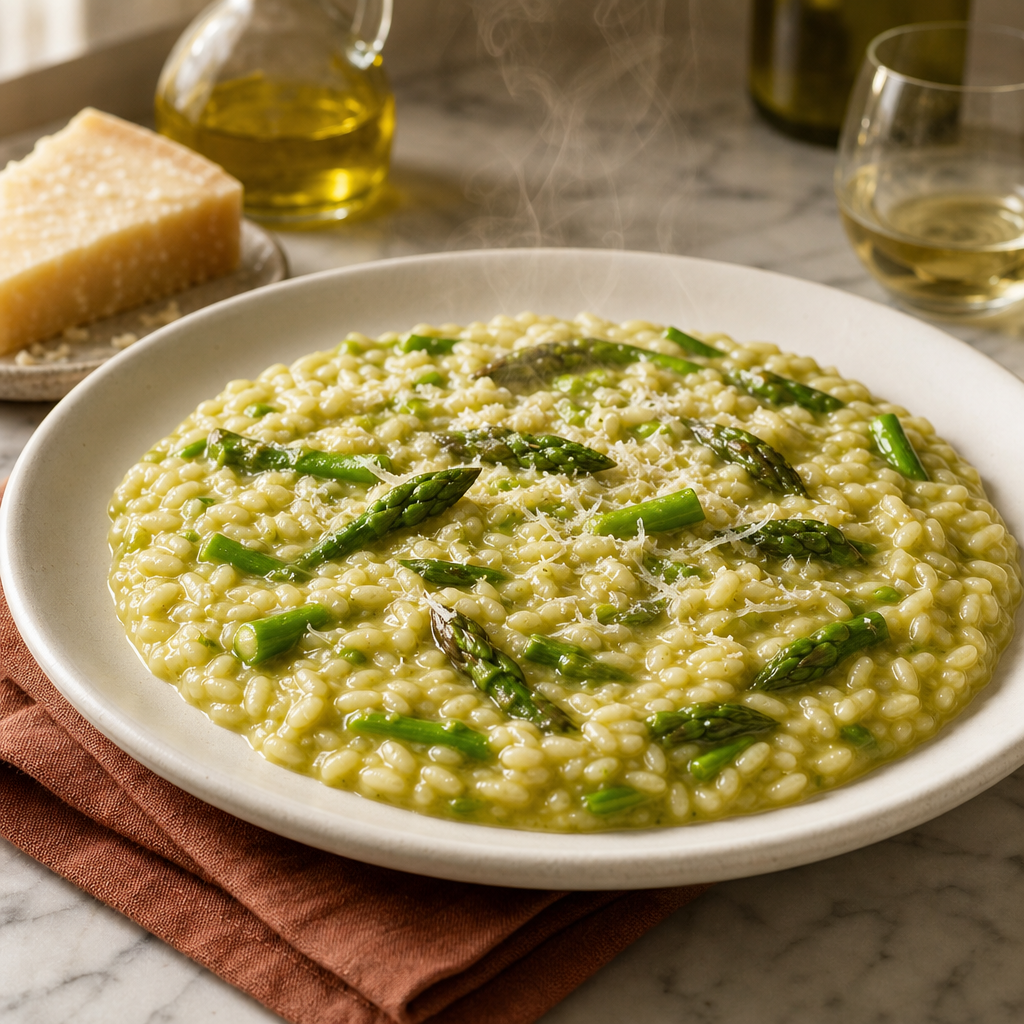
The dish in context
Risotto agli asparagi is a spring primo built on the northern Italian risotto method: short-grain rice toasted in fat, cooked gradually with hot stock, then finished off heat with butter and Parmigiano-Reggiano. Italian sources consistently treat the asparagus trimmings as useful, not waste; simmering the woody ends and peels in the stock gives the rice a stronger asparagus backbone without overcooking the tips. The dish is common across Lombardy, Veneto, and Emilia-Romagna, with local rice preferences shifting between Carnaroli, Arborio, and Vialone Nano. Cream appears in some restaurant and export versions, but it is not the traditional mechanism for risotto texture. Mantecatura is.
Method 9 steps · 45 min
Build the asparagus stock
Cut off the asparagus tips and reserve them. Slice the tender stalks into 5 mm rounds; keep the woody ends and any peelings. Simmer the woody ends in the vegetable stock for 15 minutes, then strain and keep the stock at a bare simmer.
Blanch the tips
Drop the asparagus tips into the hot stock for 60 seconds, then lift them out and set aside. They should turn bright green and still feel firm at the center.
Soften the onion
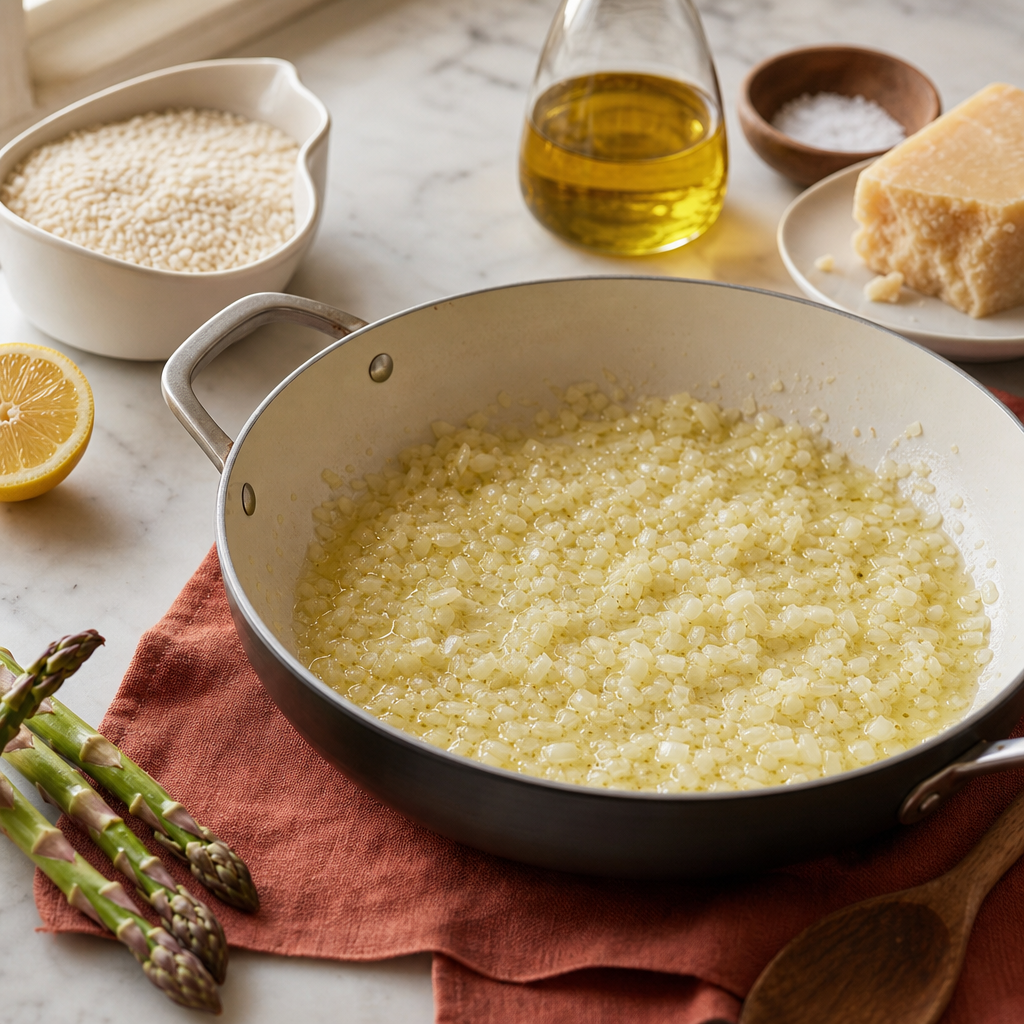
Melt 25 g butter with the olive oil in a wide pan over medium-low heat. Add the onion and a pinch of salt; cook until translucent and soft, 5-7 minutes, without browning.
Toast the rice
Add the rice and stir for 2 minutes, coating every grain in fat. The grains should feel hot to the touch and look slightly translucent at the edges.
Reduce the wine
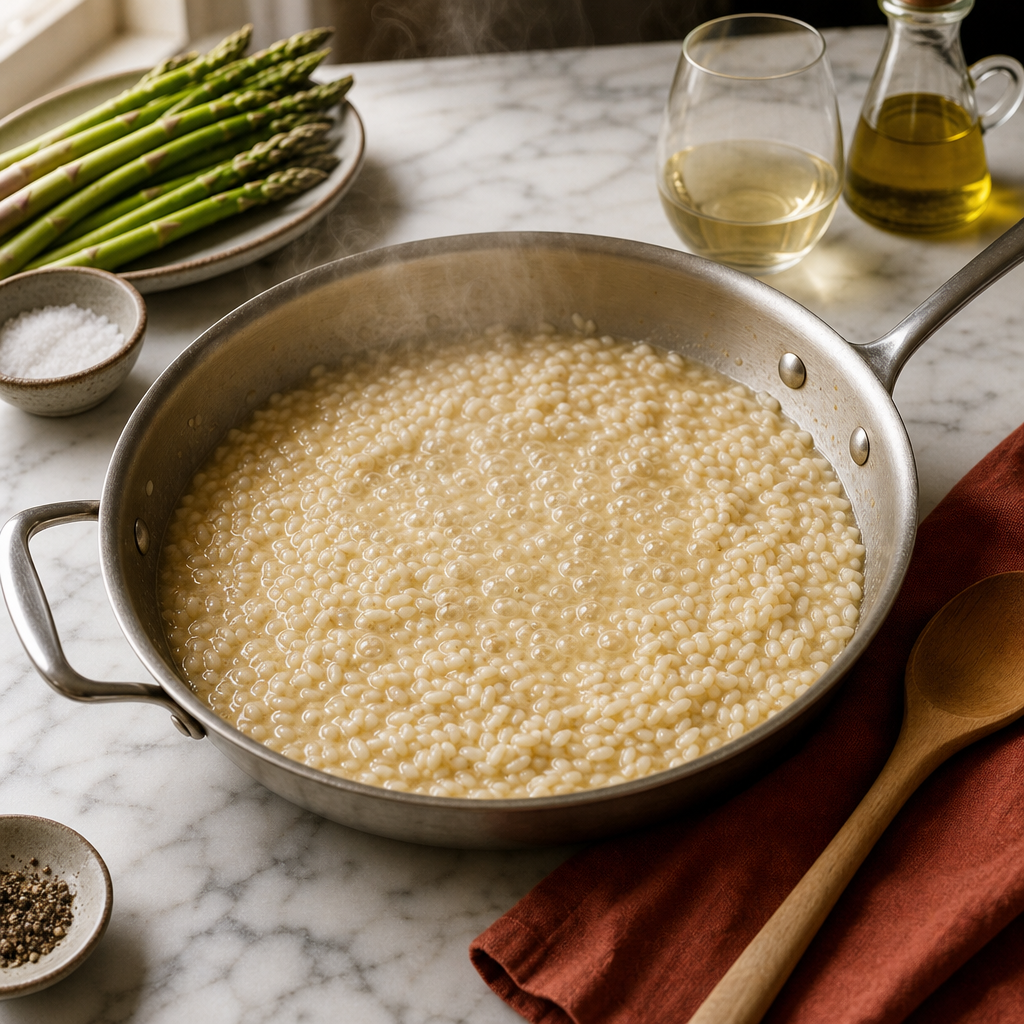
Add the white wine and stir until the pan no longer smells sharply alcoholic, about 90 seconds. Let the rice absorb nearly all of it before adding stock.
Cook with hot stock
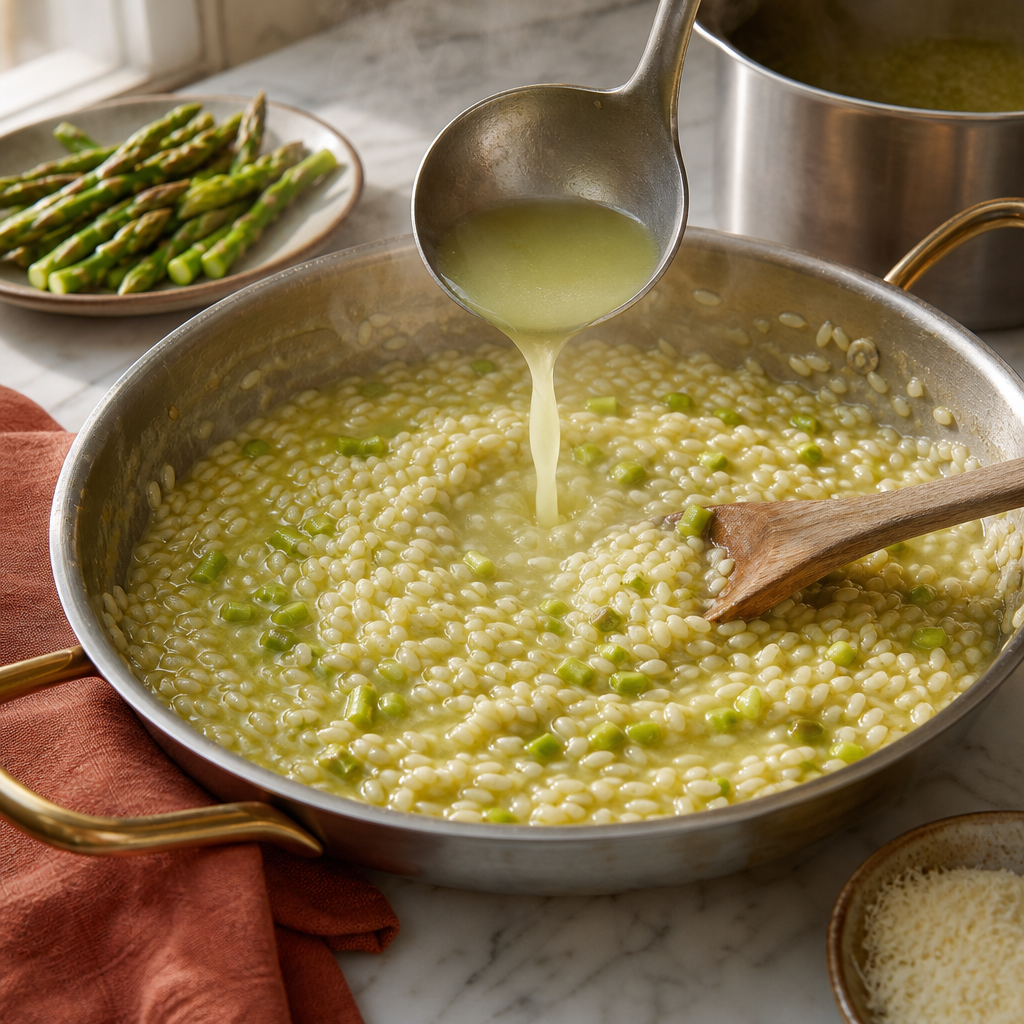
Add hot asparagus stock one ladle at a time, stirring steadily and adding the next ladle only when the previous one is mostly absorbed. After 10 minutes, add the sliced asparagus stalks. Continue cooking until the rice is al dente, usually 16-18 minutes from the first ladle.
Set the texture
When the rice is firm at the center but no longer chalky, add a final small ladle of stock and pull the pan off heat. Fold in the asparagus tips.
Mantecare off heat
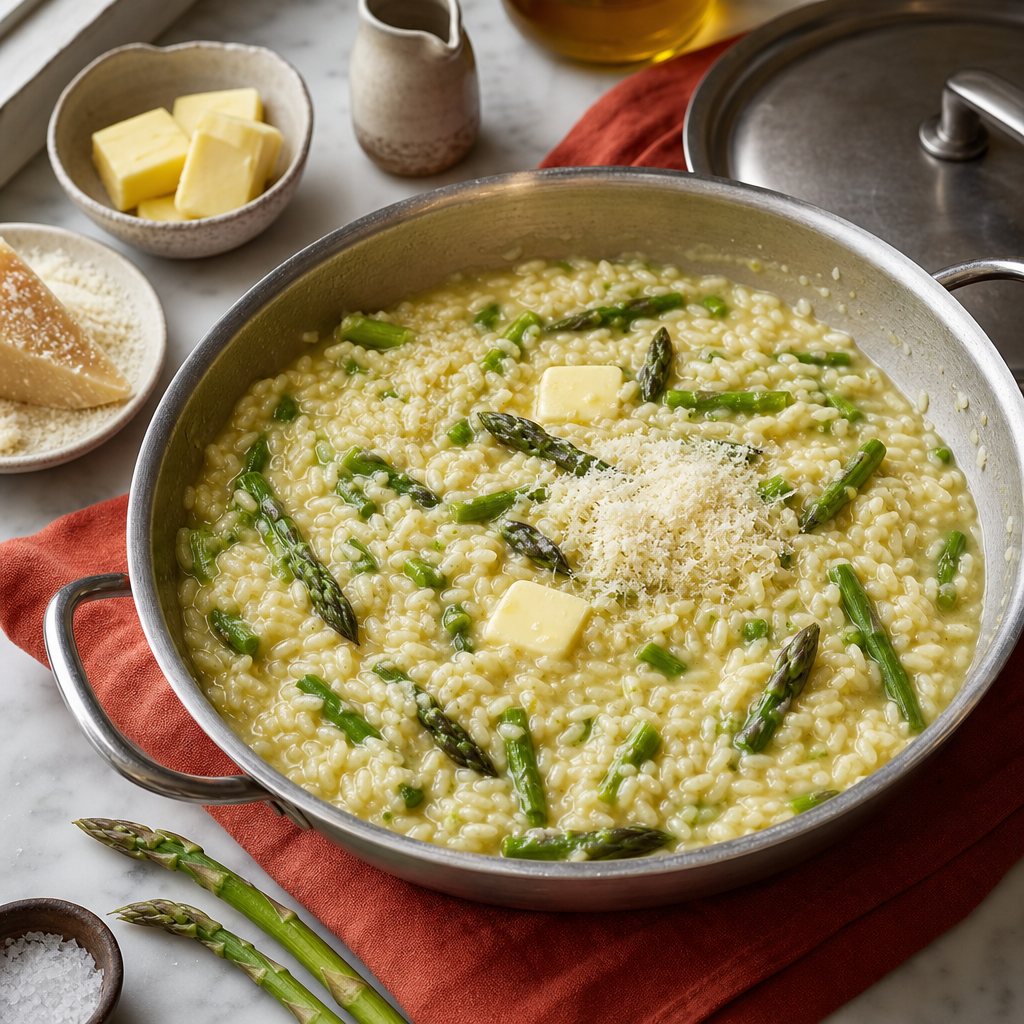
Add the cold butter and Parmigiano-Reggiano off heat. Stir hard for 45-60 seconds until glossy and fluid, then cover for 2 minutes. Loosen with a spoonful of hot stock if it no longer ripples when the pan is tilted.
Finish and serve
Season with salt and black pepper. Add lemon zest only if the asparagus tastes flat. Serve immediately on warm shallow plates; the risotto should spread slowly, not sit upright.
Common mistakes
- Using long-grain rice. Basmati, jasmine, and parboiled rice do not release the right starch and do not make risotto.
- Adding cold stock. Cold liquid stalls cooking and makes the grains cook unevenly.
- Dumping in all the stock at once. That makes boiled rice with asparagus, not risotto.
- Under-stirring. The creamy texture comes from starch released by agitation.
- Overcooking the asparagus tips. They should stay green and defined, not collapse into olive-colored fragments.
- Finishing over heat after adding Parmigiano. Cheese proteins seize and turn sandy.
- Serving it stiff. Correct risotto moves in a wave when the plate is tilted.
What does not belong
- Cream does not belong. The creaminess comes from rice starch, butter, and Parmigiano during mantecatura.
- Garlic does not belong in this version. It overwhelms asparagus and makes the base taste like a generic vegetable sauté.
- Chicken stock does not belong if the goal is a clean spring asparagus risotto. It adds meatiness where the dish needs green clarity.
- Mozzarella does not belong. It strings, clumps, and fights the all'onda texture.
- Heavy herbs do not belong. Rosemary, oregano, and dried Italian seasoning flatten the asparagus.