Pappardelle Cinghiale
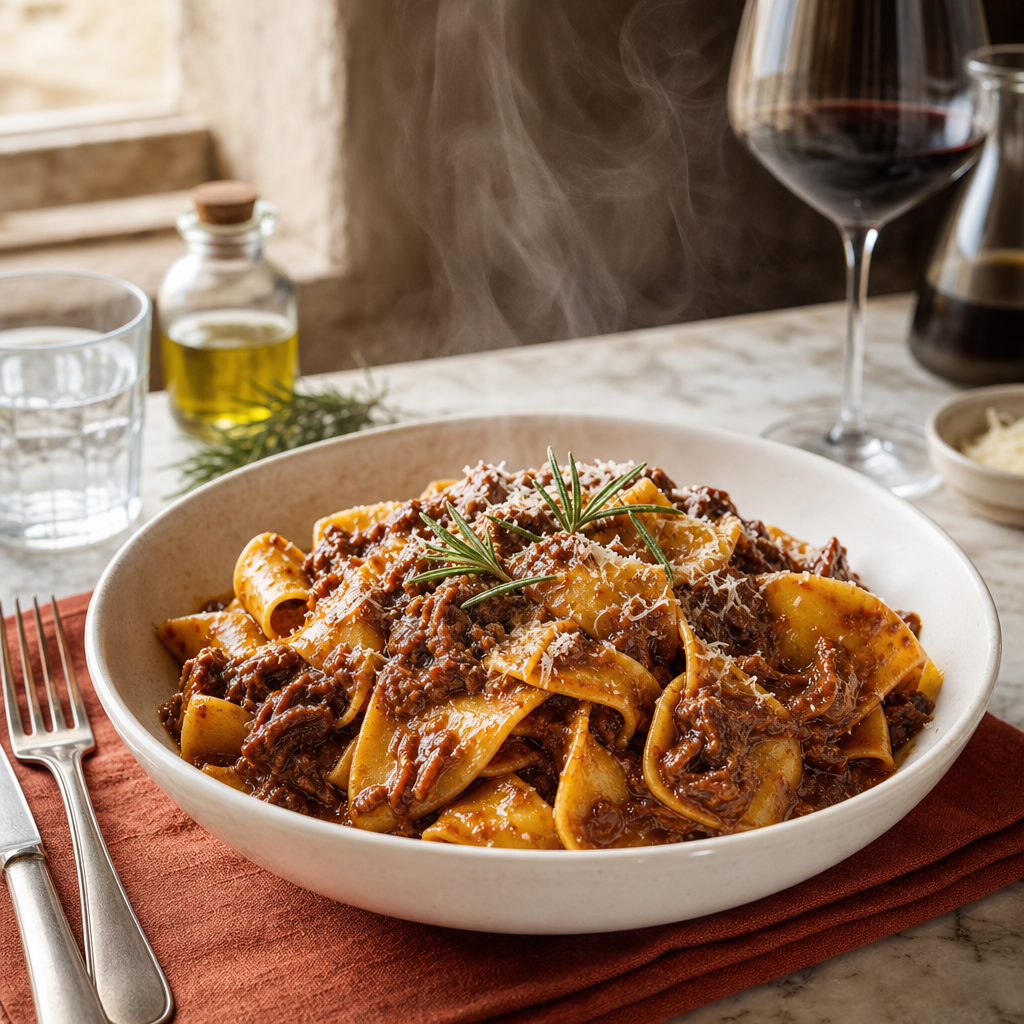
The dish in context
Pappardelle al cinghiale is tied especially to Tuscany's Maremma and other central Italian hunting territories where wild boar is common enough to shape the table. The pasta matters: broad egg ribbons catch a shredded game ragù better than narrow strands, and pappardelle itself is a Tuscan form. Sources divide between tomato-light red ragù and versions in bianco, without tomato; this version uses a restrained tomato base because it is the most widely recognized restaurant and home form outside the most local Maremman variants. The structure is not Bolognese: no milk, no fine mince, no soft meat sauce blanket. It is a wine-marinated game ragù with visible shreds of boar and a bitter-herbal edge from juniper, bay, rosemary, and sage.
Method 12 steps · 1110 min
Marinate the boar
Combine the boar, 750 ml red wine, rough-chopped onion, carrot, celery, juniper, bay, rosemary, sage, and peppercorns in a nonreactive container. Cover and refrigerate 12-24 hours, turning the meat once if it is not fully submerged.
Drain and dry
Lift out the meat and discard the marinade and spent vegetables. Pat the boar dry until the surface feels tacky rather than wet.
Brown the meat hard
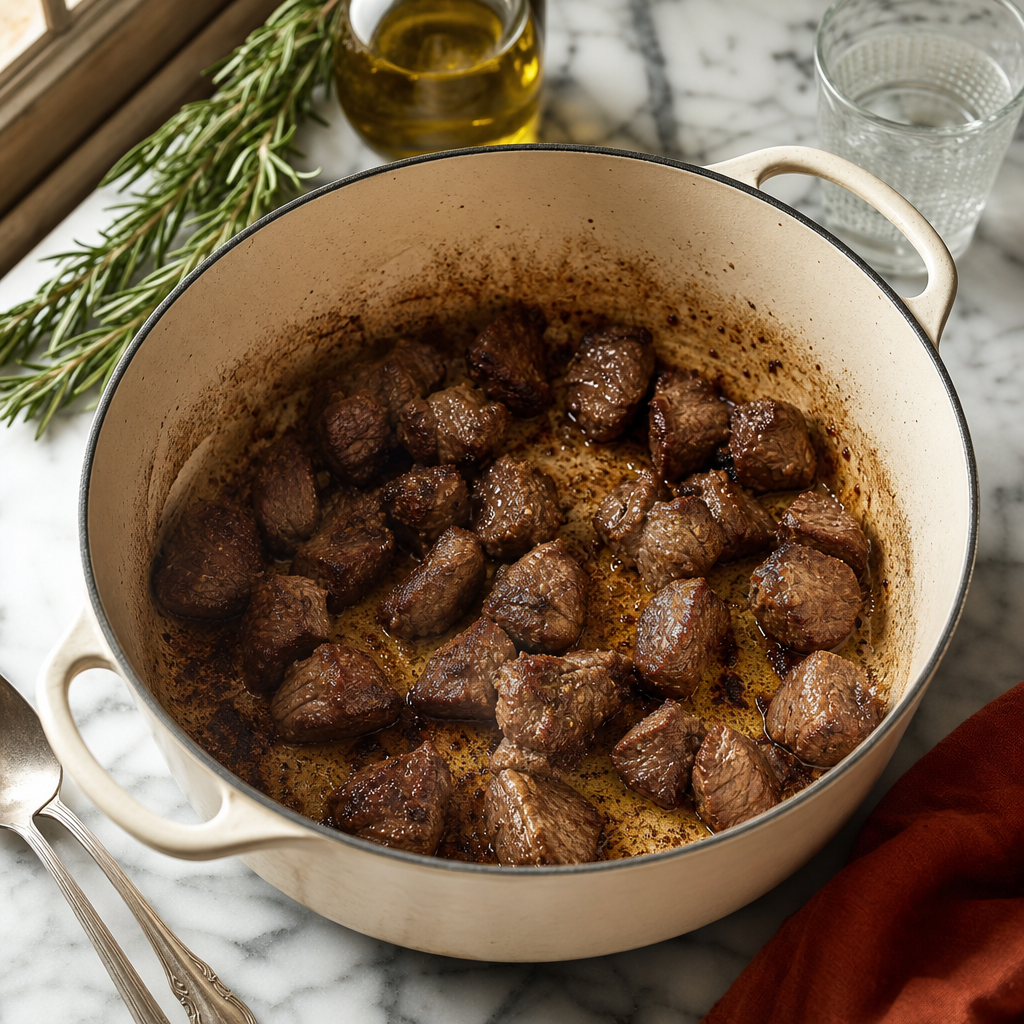
Heat the olive oil in a heavy Dutch oven over medium-high heat. Brown the boar in batches until the edges are dark brown, 3-4 minutes per side; move each batch to a tray and do not crowd the pot.
Cook the soffritto
Lower the heat to medium. Add the finely diced onion, carrot, celery, and the crushed garlic clove to the same pot with a pinch of salt; cook until glossy and lightly golden at the edges, 10-12 minutes.
Toast the tomato paste and deglaze
Stir in the tomato paste and cook until it darkens one shade, about 90 seconds. Add the 300 ml fresh red wine, scrape the pot clean, and reduce until the wine smells less alcoholic and the liquid is syrupy, 6-8 minutes.
Braise the ragù
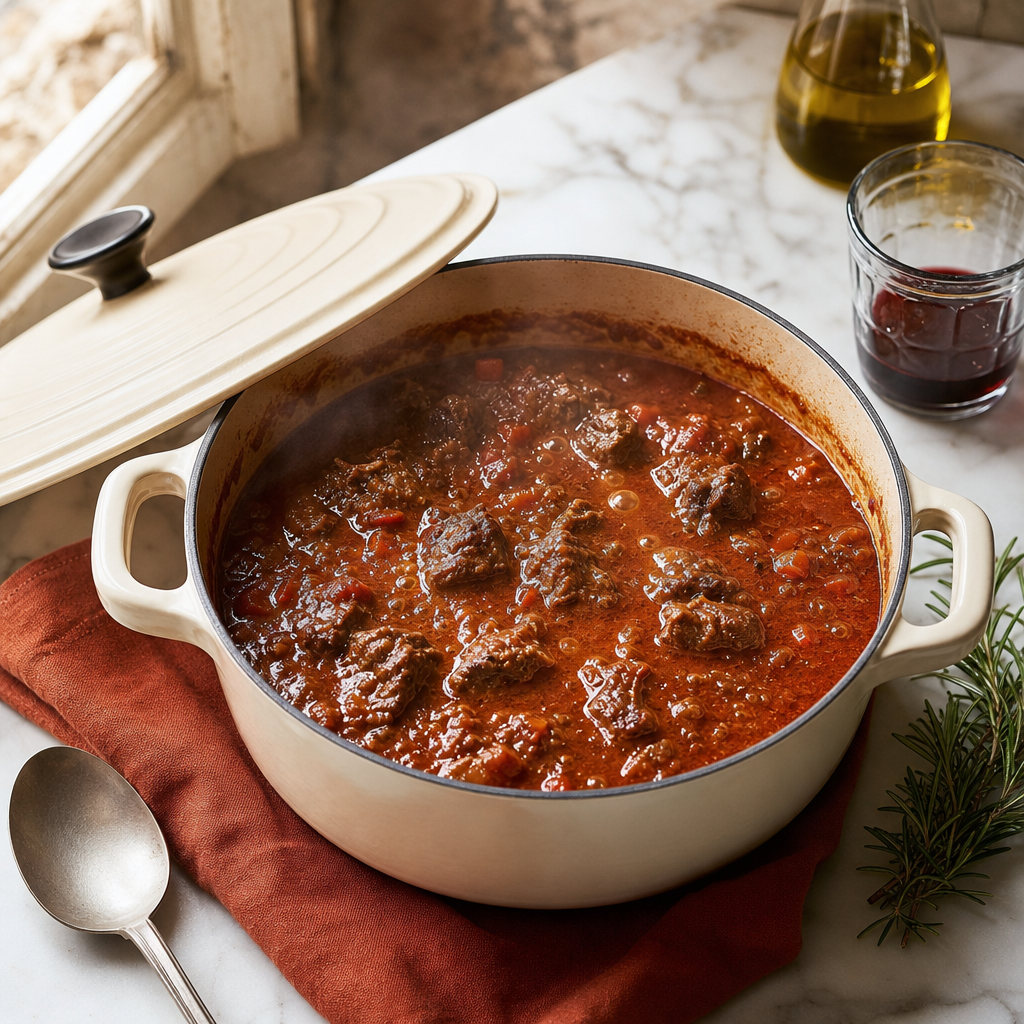
Return the boar and any juices to the pot. Add the passata, stock or water, 8 g of the salt, and black pepper; bring to a low simmer, cover partly, and cook 2 1/2-3 hours until the meat crushes easily against the side of the pot.
Make the pappardelle dough
While the ragù braises, mound the tipo 00 flour with the semolina, make a well, and add the whole eggs and yolks. Work into a shaggy dough, adding the water only if dry flour remains, then knead 8-10 minutes until smooth and resistant.
Rest the dough
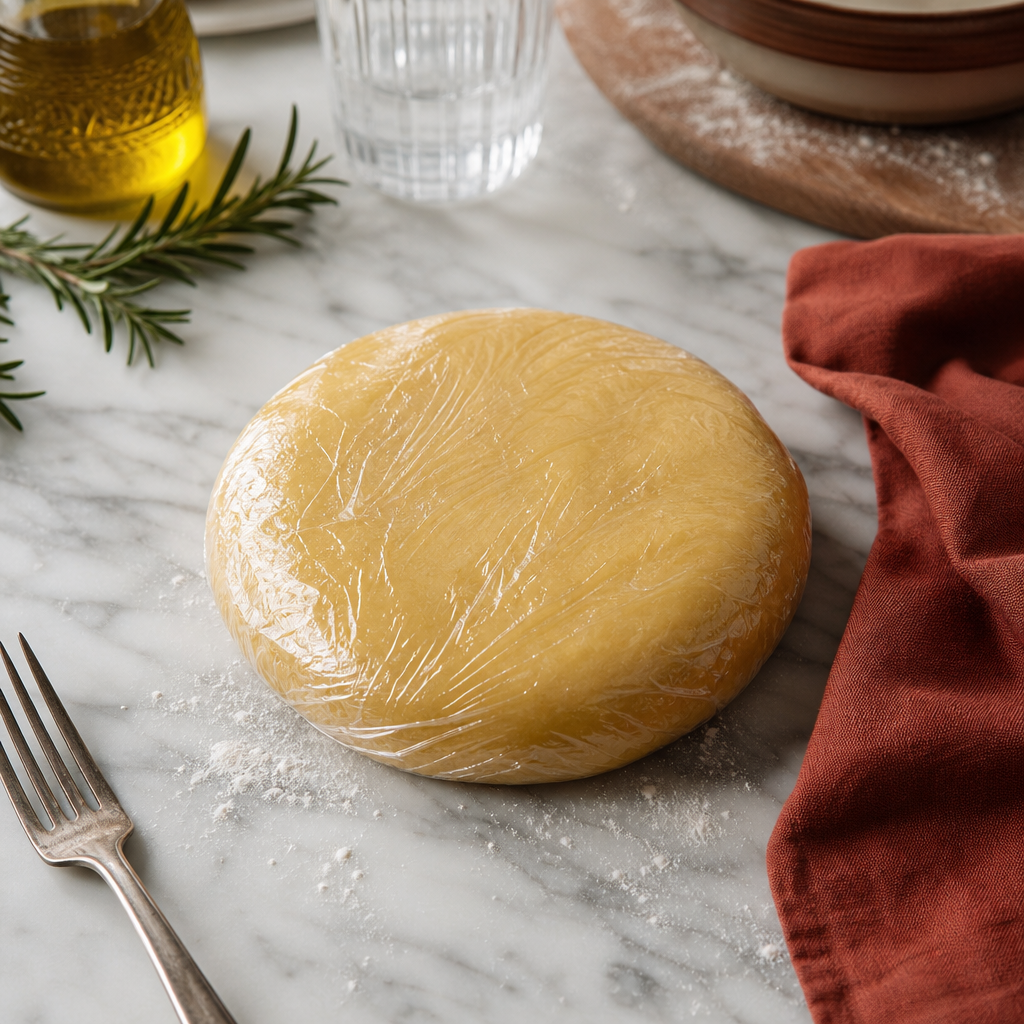
Wrap the dough tightly and rest at room temperature for 30 minutes.
Roll and cut the pappardelle
Roll the dough in sheets to about 1 mm thick, using flour as needed to prevent sticking. Cut ribbons 2-3 cm wide and dust lightly with semolina; lay loose or form small nests.
Shred and finish the ragù
Remove the bay leaves, rosemary stem, and garlic clove if visible. Shred the boar into rough fibers with two forks, return it to the sauce, and simmer uncovered until glossy and tight enough to leave a trail when stirred; correct salt.
Cook the pasta
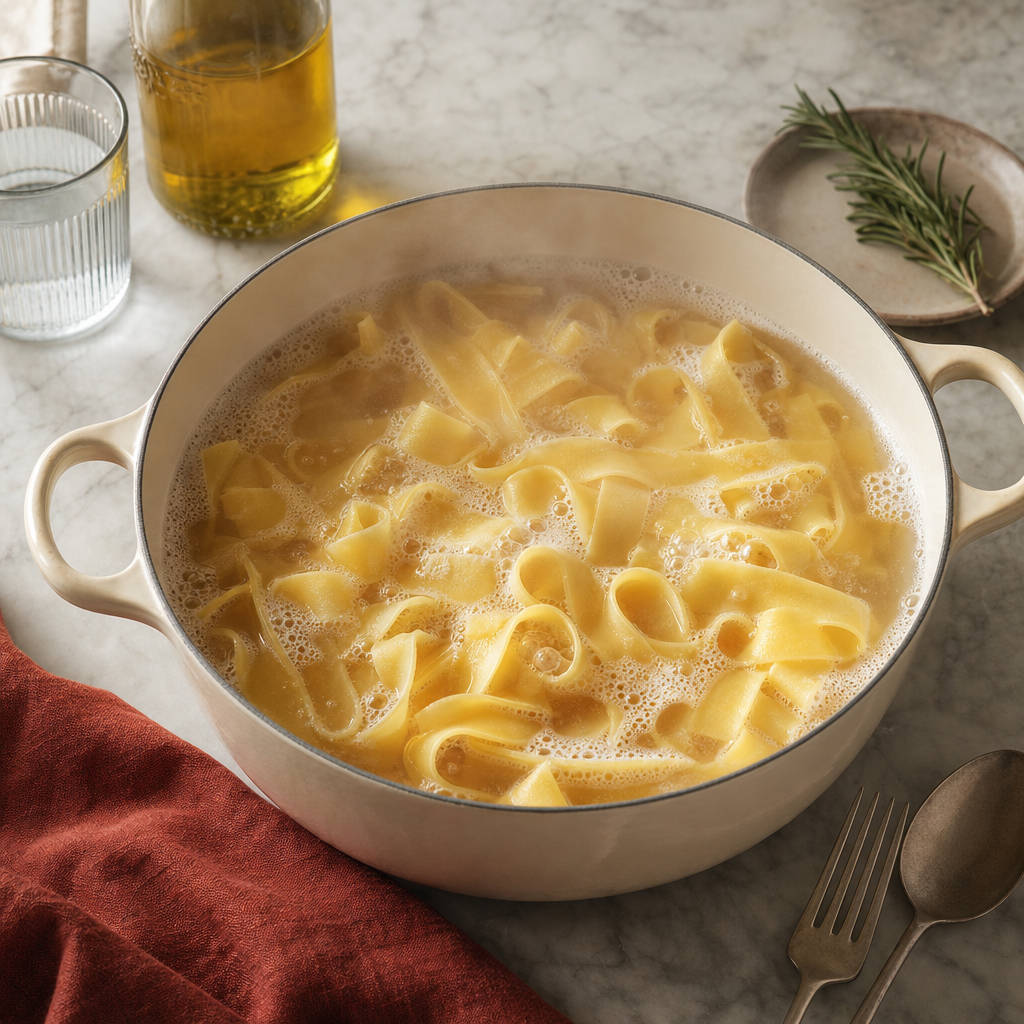
Boil a large pot of water and salt it at about 10 g salt per liter. Cook the fresh pappardelle until tender with a firm center, usually 2-4 minutes, then transfer directly to the ragù with tongs or a spider; reserve pasta water.
Toss, loosen, serve
Toss the pappardelle with the ragù over low heat for 60-90 seconds, adding splashes of pasta water until the sauce coats the ribbons in a thin glossy layer. Serve in warm shallow bowls with a restrained amount of Parmigiano-Reggiano.
Common mistakes
- {'mistake': 'Using ground pork and calling it cinghiale', 'fix': 'Use wild boar in chunks and shred it after braising. Ground pork makes a different ragù with a softer, sweeter profile.'}
- {'mistake': 'Cooking with the used marinade', 'fix': 'Discard it after marinating. Deglaze and braise with fresh wine so the sauce stays clean rather than metallic and murky.'}
- {'mistake': 'Making the sauce tomato-heavy', 'fix': 'Use tomato as a frame. The finished ragù should taste of wine, game, herbs, and browned meat before it tastes of tomato.'}
- {'mistake': 'Boiling the braise', 'fix': 'Hold a low simmer. Lean boar tightens under aggressive heat and becomes dry before the connective tissue dissolves.'}
- {'mistake': 'Cutting narrow pasta', 'fix': 'Cut 2-3 cm ribbons. The width is functional: it catches shredded meat and resists the weight of the ragù.'}
- {'mistake': 'Serving sauce on top instead of tossing', 'fix': 'Finish the pasta in the ragù with pasta water. The sauce must coat the ribbons, not sit as a mound.'}
What does not belong
- {'item': 'Cream or milk', 'reason': 'Cream does not belong in pappardelle al cinghiale. The sauce gets body from collagen, reduction, olive oil, and pasta starch.'}
- {'item': 'Sugar', 'reason': 'Sugar flattens the wine and game character. If the sauce tastes sharp, reduce it longer or use better tomatoes.'}
- {'item': 'Oregano and dried Italian seasoning', 'reason': 'This is not a generic red sauce. Juniper, bay, rosemary, and sage are the correct aromatic frame.'}
- {'item': 'Bacon as an equivalent to boar', 'reason': 'Bacon brings smoke and sweetness. It is not a substitute for cinghiale and will redirect the dish.'}
- {'item': 'A heavy cheese blanket', 'reason': 'Parmigiano is a finish. Too much cheese masks the game and makes the sauce salty before it makes it better.'}
- {'item': 'Dried spaghetti', 'reason': 'Spaghetti does not have enough surface or width for this ragù. Use pappardelle or, at minimum, another broad egg pasta.'}