Boat Noodles
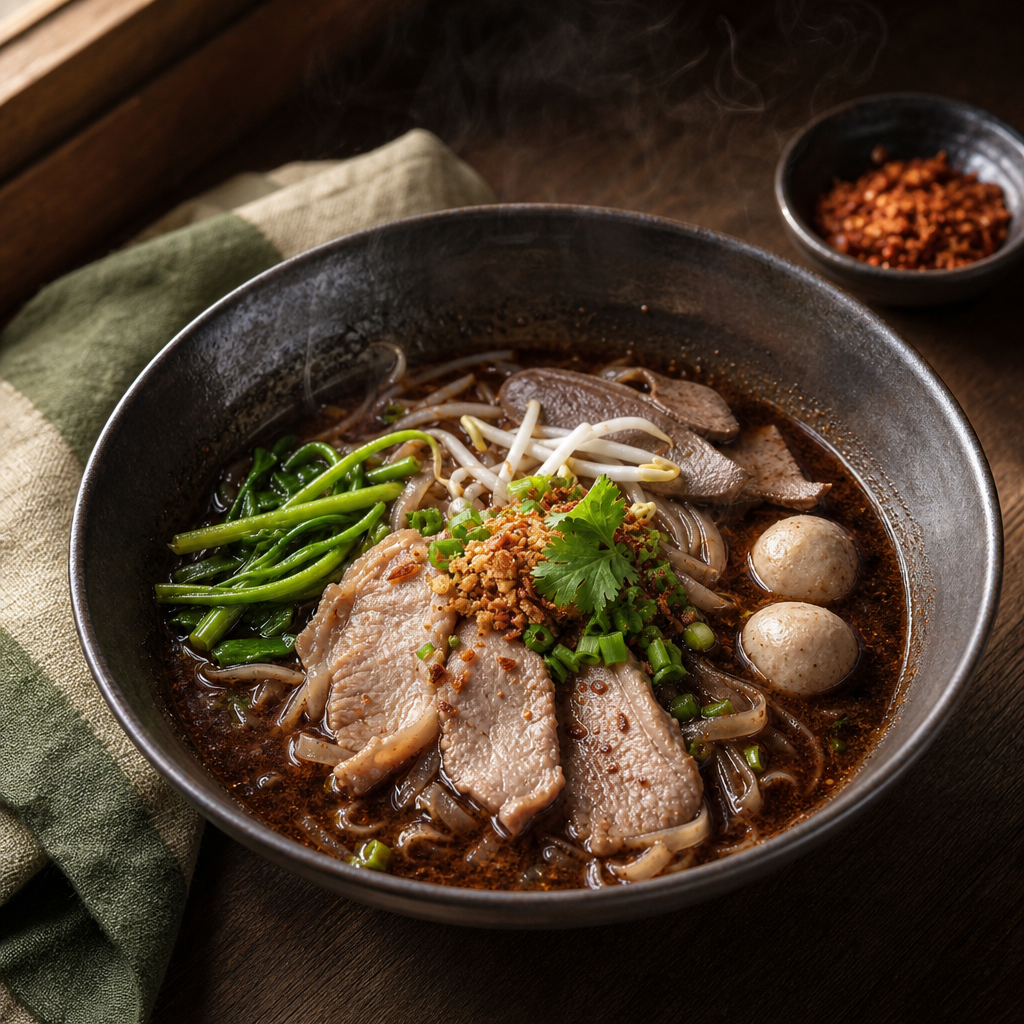
The dish in context
Kuay tiew reua (ก๋วยเตี๋ยวเรือ) is tied to central Thailand’s canal and river noodle trade, especially Bangkok and Ayutthaya, where vendors served small bowls from boats. The bowls stayed small because handling broth, noodles, and money from a narrow boat rewarded speed and portion control. Modern shops on land keep the concentrated broth, dark seasoning, blanched noodles, morning glory, bean sprouts, meatballs, sliced meat, and the optional-but-defining blood-thickened nam tok (น้ำตก) finish. Ayutthaya tourism sources treat boat noodles as a provincial marker alongside river prawns and roti sai mai.
Method 9 steps · 210 min
Blanch the bones
Cover the pork bones with cold water, bring to a hard boil for 5 minutes, then drain and rinse the bones and pot. Return the bones to the clean pot with 3500 ml fresh water.
Build the aromatic stock
Add coriander roots, garlic, white pepper, cassia, star anise, pandan, lemongrass, and galangal. Bring to a bare simmer, skim for the first 15 minutes, then simmer uncovered until the broth smells porky and spiced, 2 hours.
Season the broth
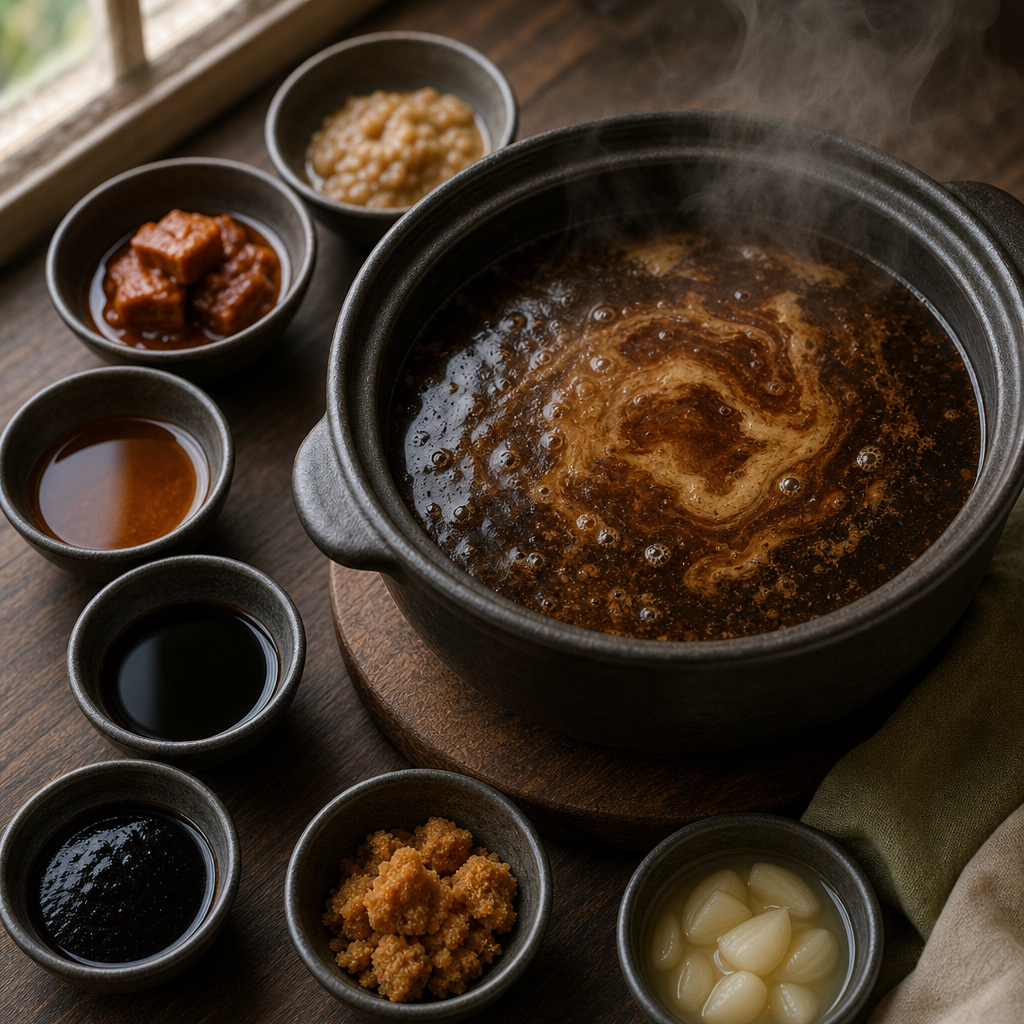
Stir in fermented bean curd, tao jiew, fish sauce, thin soy sauce, dark soy sauce, palm sugar, and pickled garlic brine. Simmer 25 minutes, then strain into a clean pot and keep hot.
Prepare the blood finish
Strain the fresh pork blood through a fine sieve into a bowl. Ladle in 180 ml hot broth while whisking, then hold it warm beside the stove; do not boil it hard.
Cook the toppings
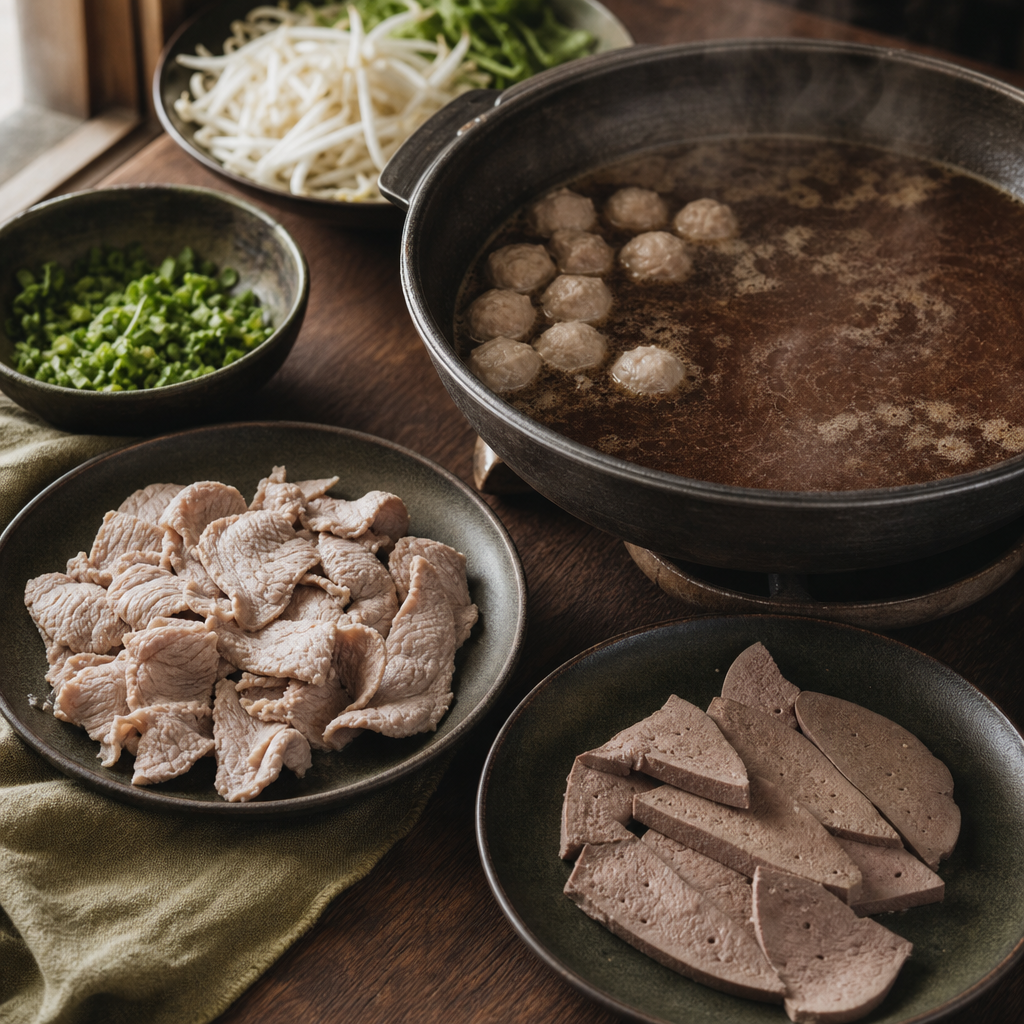
Poach pork balls in the hot broth until heated through, then hold them warm. Blanch sliced pork and liver in the broth in small batches until the pork loses its raw center and the liver is still faintly pink inside.
Blanch vegetables and noodles
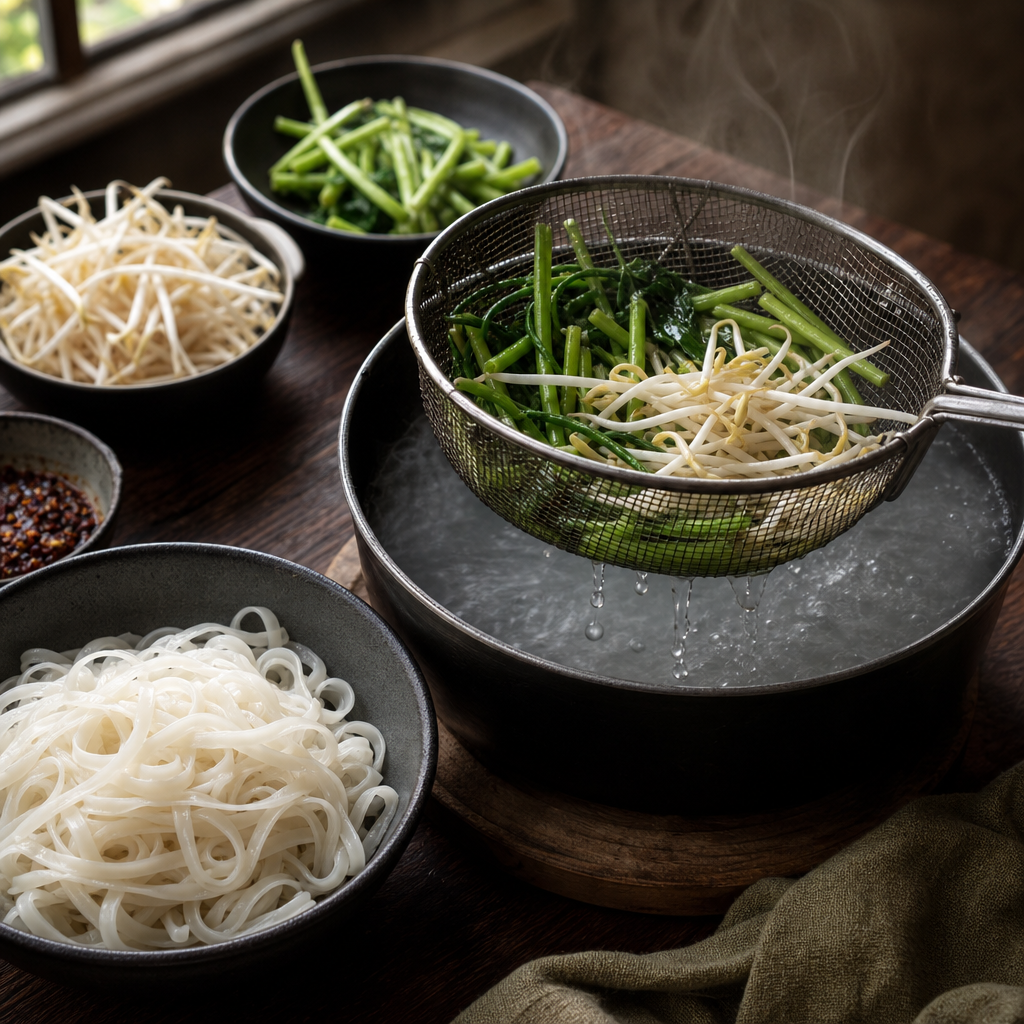
Bring a separate pot of water to a fast boil. In a noodle basket, blanch water spinach and bean sprouts for 10 seconds, then add sen lek and blanch until flexible and hot, 20-40 seconds depending on thickness.
Assemble each bowl
Put blanched vegetables and noodles into a small bowl. Add sliced pork, liver, pork balls, 1 tablespoon fried garlic with oil, herbs, and 180-220 ml hot broth.
Finish nam tok
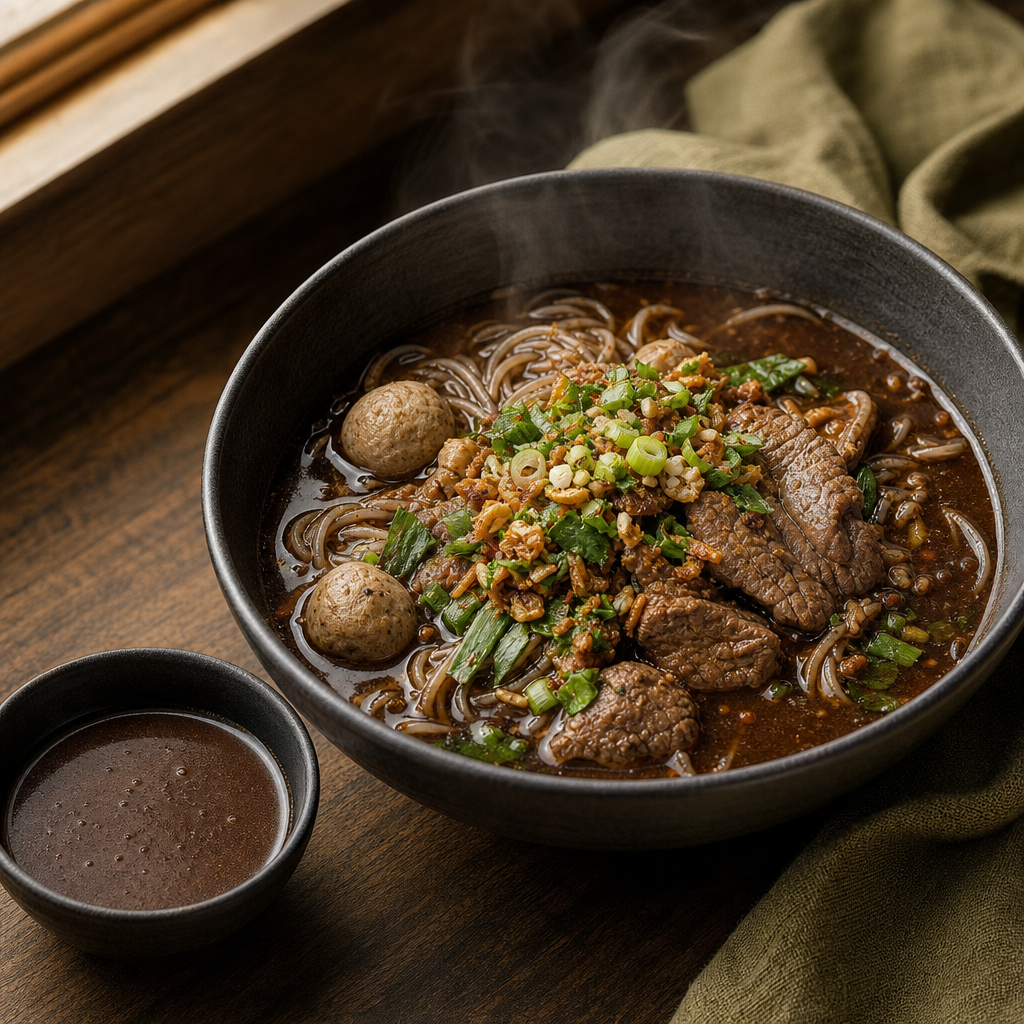
Stir 1-2 tablespoons tempered blood mixture into each hot bowl, or whisk the tempered blood into the service pot only for the bowls being served immediately. The broth should turn deeper brown and lightly opaque, not grainy.
Serve with table seasoning
Serve with roasted chili flakes, chili vinegar, fish sauce, and a small amount of sugar on the side. Correct each bowl at the table: heat, sourness, and salt should stay sharper than sweetness.
Common mistakes
- {'mistake': 'Boiling fresh blood hard in the pot.', 'fix': 'Temper it with hot broth and add it at service. Grainy brown flecks mean the proteins seized.'}
- {'mistake': 'Making the broth sweet.', 'fix': 'Use palm sugar only to round salt and spice. Boat noodles are not a sweet noodle soup.'}
- {'mistake': 'Using plain water with seasoning packets and calling it broth.', 'fix': 'Simmer bones long enough to extract gelatin. The spoon should feel lightly sticky after cooling a drop on a plate.'}
- {'mistake': 'Blanching noodles in the broth.', 'fix': 'Use a separate boiling-water pot. Rice starch dulls the broth and makes later bowls taste muddy.'}
- {'mistake': 'Serving it in a large ramen-style bowl.', 'fix': 'Use small bowls and concentrated broth. The traditional portion size is part of the dish’s structure, not nostalgia.'}
What does not belong
- {'item': 'coconut milk', 'reason': 'Coconut milk does not belong in kuay tiew reua. It turns a dark, spiced noodle broth into a different soup.'}
- {'item': 'cream or evaporated milk', 'reason': 'Dairy does not belong. The body comes from bones and blood, not milk fat.'}
- {'item': 'hoisin sauce', 'reason': 'Hoisin makes the broth sweet and sticky. Thai tao jiew or yellow bean sauce is the correct fermented soybean note.'}
- {'item': 'miso', 'reason': 'Miso does not belong. Its grainy sweetness and koji aroma pull the broth toward Japanese soup.'}
- {'item': 'ketchup', 'reason': 'Ketchup has no role here. Color comes from dark soy, fermented bean curd, long simmering, and blood.'}
- {'item': 'lime juice boiled in the pot', 'reason': 'Lime is not the structural acid for this broth. Use chili vinegar at the table if sourness is needed.'}