Mango Sticky Rice
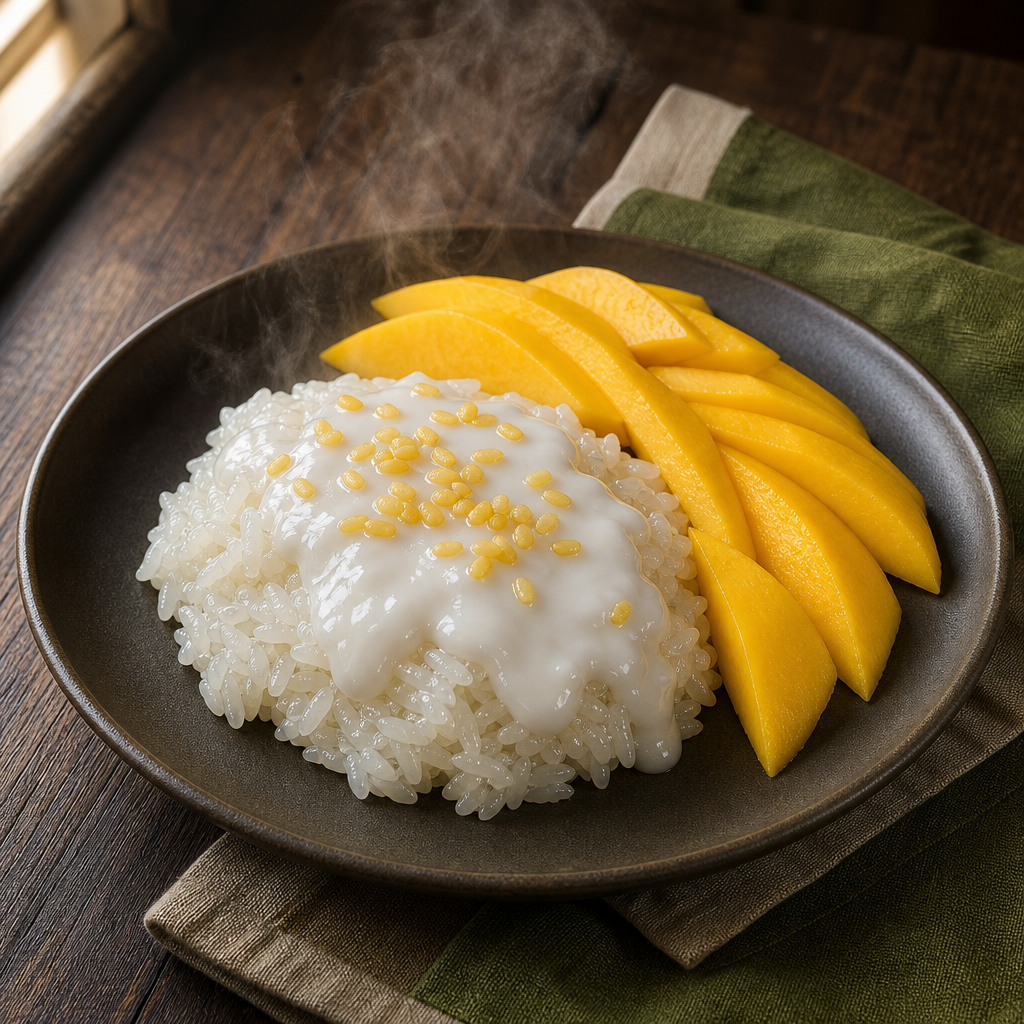
The dish in context
Khao niao mamuang (ข้าวเหนียวมะม่วง) is a central Thai dessert built from steamed glutinous rice, sweet-salty coconut milk, and ripe mango. Thai culinary sources commonly point to khao niao mun (ข้าวเหนียวมูน), sticky rice enriched with coconut milk, as the older technique; pairing it with mango became especially visible because mango season overlaps Thailand’s hot season. Nam dok mai (น้ำดอกไม้) and ok rong (อกร่อง) are the Thai mangoes most often named for the dish because they are aromatic, low-fiber, and sweet with a small acid edge. The dish is now sold year-round in Thailand, but it is still at its best when the mango is fully ripe and fragrant.
Method 8 steps · 390 min
Wash and soak the rice
Rinse the glutinous rice in several changes of cool water until the water shifts from milky to lightly cloudy. Cover with fresh cool water by at least 5 cm and soak 6 hours, or overnight. Drain for 10 minutes before steaming.
Steam the rice
Line a steamer with damp cheesecloth or a clean thin kitchen cloth. Spread the drained rice in a shallow layer, cover, and steam over actively boiling water for 25 minutes, flipping the rice once after 15 minutes if the layer is thick. The grains should look glossy and translucent at the edges, with no hard white center when pinched.
Make the coconut soak
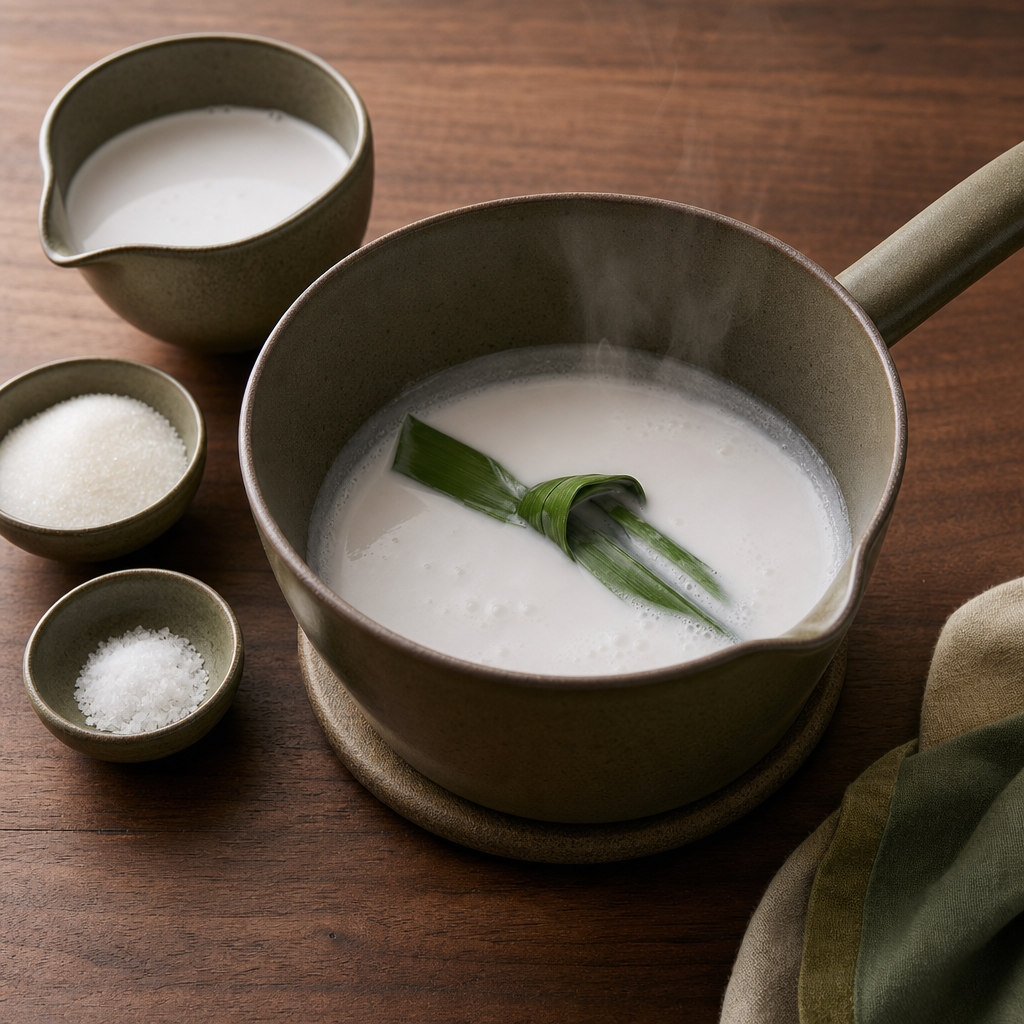
While the rice steams, combine 300 ml coconut milk, 70 g sugar, 3 g salt, and the pandan leaf if using in a small saucepan. Heat over medium-low, stirring until the sugar dissolves and the mixture is steaming; do not boil hard. Remove the pandan.
Mun the rice
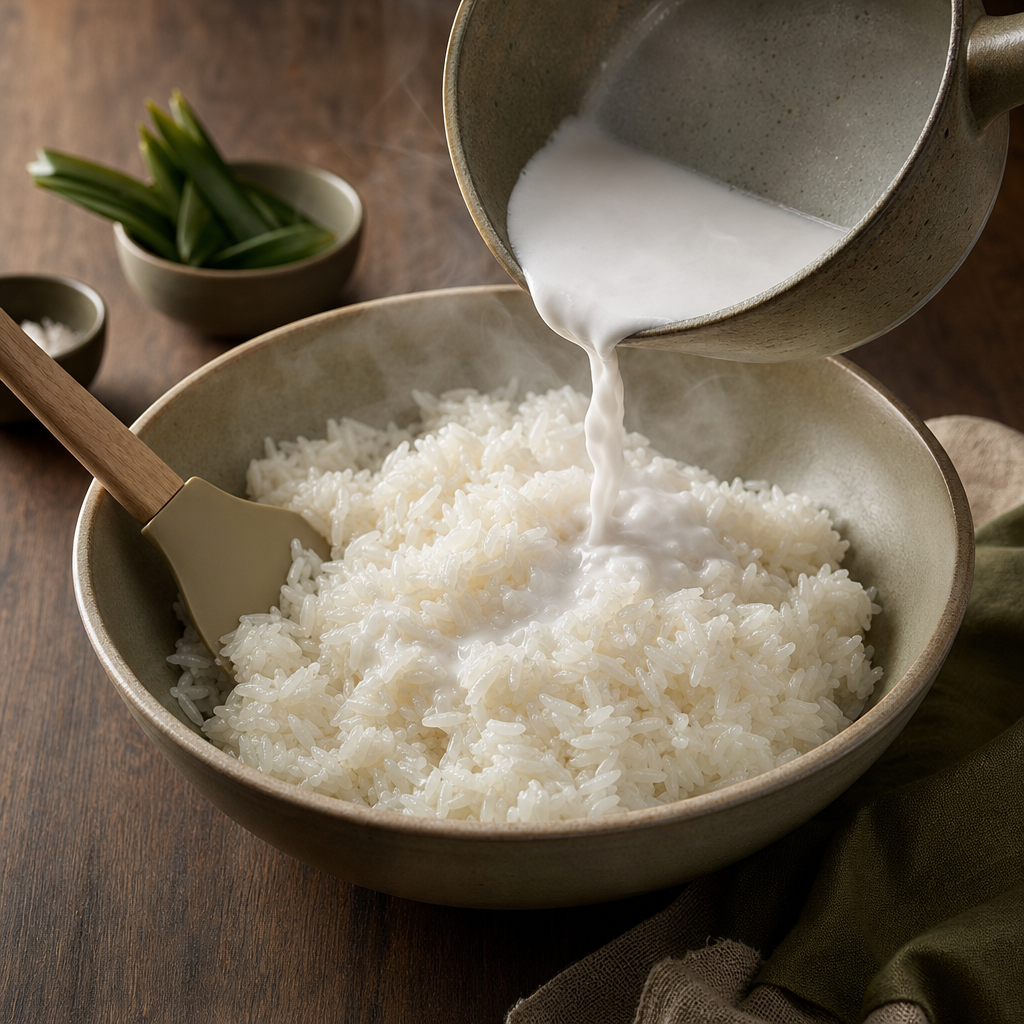
Transfer the hot steamed rice to a wide bowl. Pour the hot coconut soak over it, fold with a spatula until every grain is coated, then cover tightly and rest 20 minutes. Fold once, cover again, and rest another 10 minutes.
Make the salted coconut topping
Whisk the rice flour with 2 tablespoons of the remaining coconut milk until smooth. Add the rest of the coconut milk, 20 g sugar, and 2 g salt, then simmer over low heat for 2-3 minutes until lightly thickened. It should coat a spoon but still pour in a clean ribbon.
Toast the mung beans
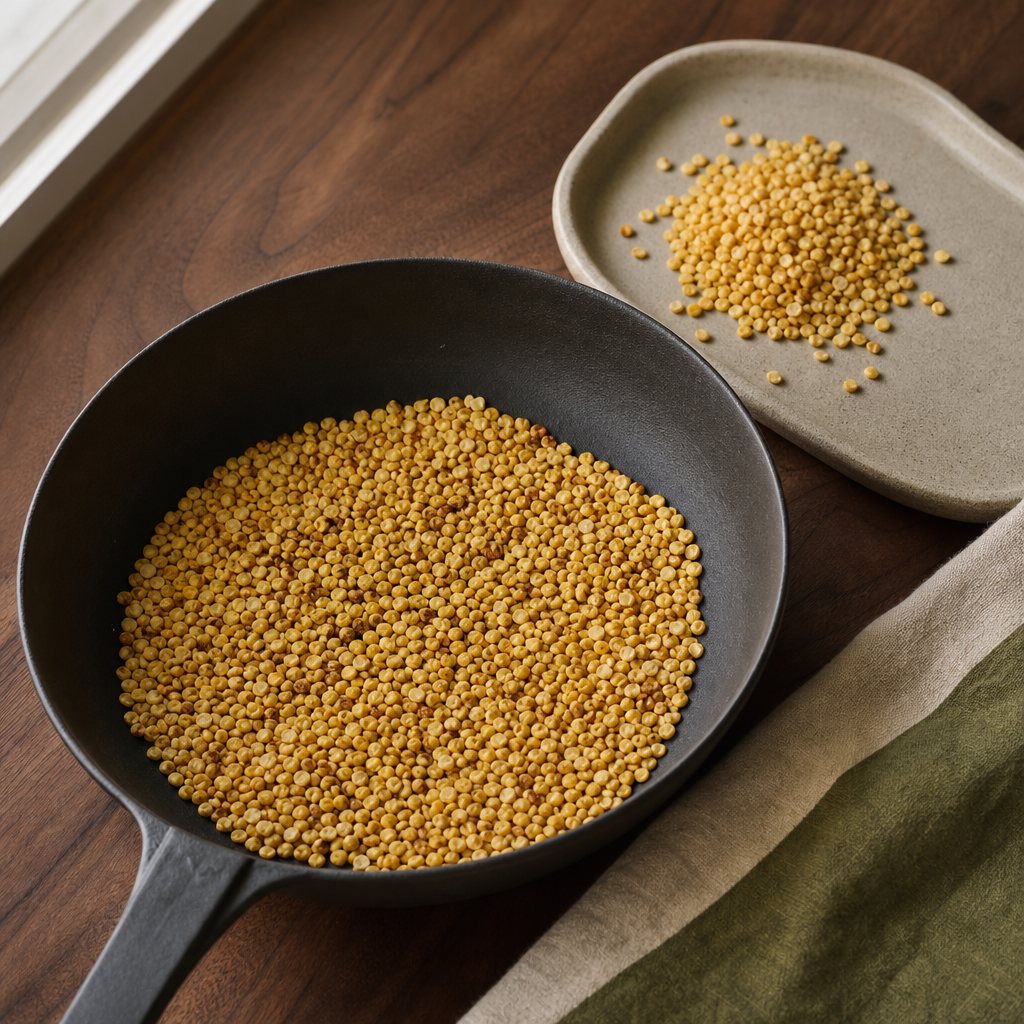
Toast the hulled split mung beans in a dry skillet over medium-low heat, shaking often, until deep yellow and crisp, 4-6 minutes. Cool on a plate so they stay crunchy.
Cut the mango
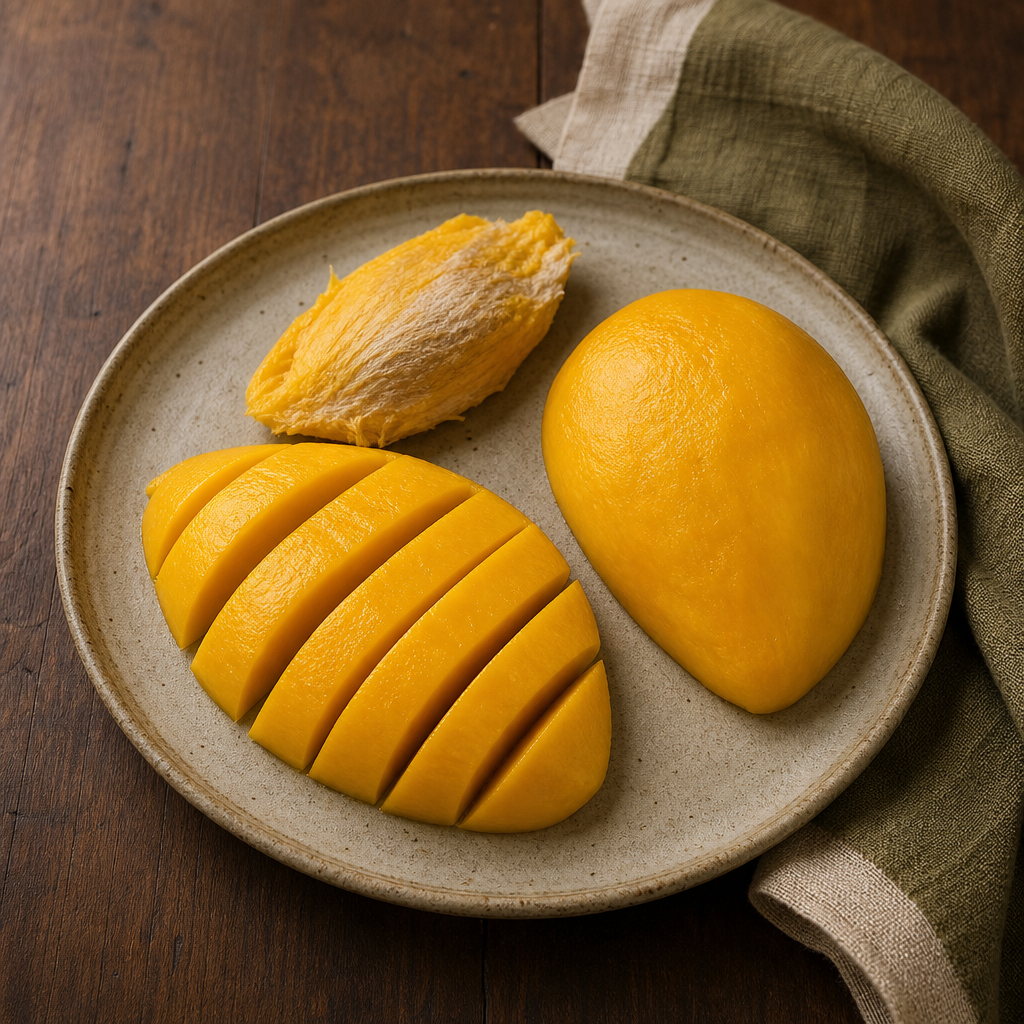
Peel the mangoes and cut thick slices from each cheek, following the flat side of the pit. Slice into neat wedges or crosswise strips. Use mango that yields to light pressure and smells sweet at the stem end.
Plate
Spoon the coconut sticky rice onto plates beside the mango. Pour a small spoonful of salted coconut topping over the rice, not over the whole plate. Scatter toasted mung beans or sesame seeds on the rice and serve warm or at room temperature.
Common mistakes
- {'mistake': 'Using jasmine rice, sushi rice, or arborio rice.', 'fix': 'Use Thai glutinous rice. The dessert depends on amylopectin-rich sticky rice; other rice varieties cook soft but do not produce the elastic chew.'}
- {'mistake': 'Boiling the rice like plain rice.', 'fix': 'Soak, drain, and steam it. Boiled sticky rice turns waterlogged before the center hydrates correctly.'}
- {'mistake': 'Adding cold coconut milk to hot rice.', 'fix': 'Heat the coconut soak until steaming before folding it into the rice. Matching heat keeps the fat fluid and the sugar dissolved.'}
- {'mistake': 'Making the coconut sauce only sweet.', 'fix': 'Use salt with confidence. The target is sweet coconut rice with a visible salty edge, not candy rice.'}
- {'mistake': 'Serving with hard or fibrous mango.', 'fix': 'Use ripe yellow mango with a floral smell at the stem. If the fruit is sour, wait; sugar on the mango does not fix the texture.'}
- {'mistake': 'Over-thickening the topping sauce.', 'fix': 'Stop when it coats a spoon and pours. A pudding-thick topping looks heavy and cools into paste.'}
What does not belong
- {'item': 'Dairy cream', 'reason': 'Dairy cream does not belong. Coconut milk is the fat, aroma, and structure of the dish.'}
- {'item': 'Condensed milk', 'reason': 'Condensed milk pushes the dessert toward caramel sweetness and covers the clean coconut-rice balance.'}
- {'item': 'Vanilla extract', 'reason': 'Vanilla does not replace pandan. It moves the dessert into Western rice pudding territory.'}
- {'item': 'Unripe green mango', 'reason': 'Green mango belongs with chili-salt dips and salads, not this dessert. Khao niao mamuang needs ripe yellow mango.'}
- {'item': 'Peanuts', 'reason': 'Peanuts do not belong on the standard central Thai plate. Use toasted mung beans or sesame seeds.'}
- {'item': 'Coconut flakes', 'reason': 'Dry coconut flakes add the wrong texture: papery, not crisp. The coconut component should be milk and cream.'}
Adaptations
The standard dish is plant-based when made with coconut milk, sugar, salt, rice, and mango.
No alcohol or animal-derived ingredients are present in the standard formula. Check packaged coconut milk for additives if certification is required.
Glutinous rice is gluten-free despite the name. It refers to sticky texture, not wheat gluten.
No dairy belongs in this dish.
No shellfish ingredients are used.