Khanom Krok (Thai Coconut Pancakes)
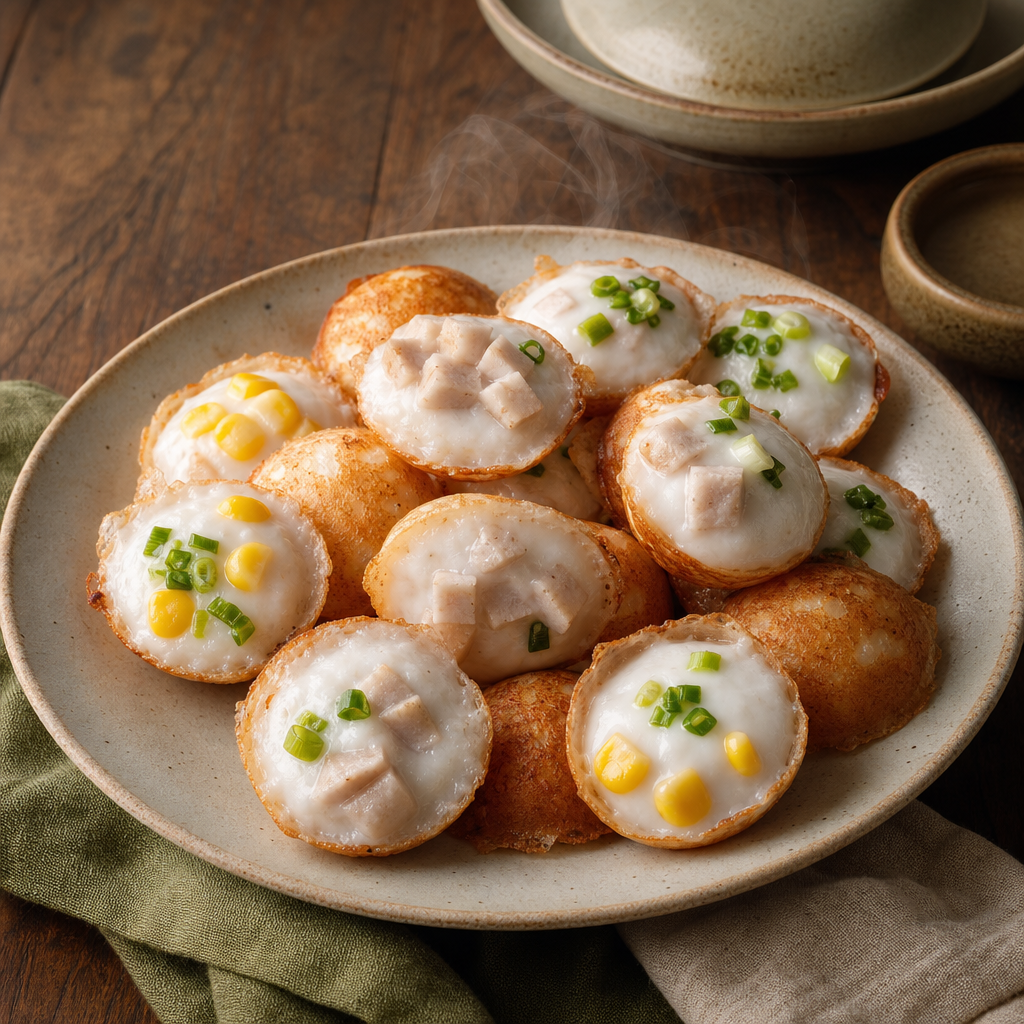
The dish in context
Khanom krok is a long-standing Thai coconut-rice sweet cooked in a dedicated cast-iron or metal pan with hemispherical wells. Thai cultural and educational sources describe the older structure as a rice batter made with coconut milk, sometimes enriched with cooked rice or grated mature coconut, then finished with a coconut-cream topping. It is common as a market snack and morning sweet rather than a plated restaurant dessert. Central Thai versions commonly use scallion, corn, taro, or pumpkin as toppings; modern shops also sell tea, pandan, and other flavored variants, but the coconut-rice form is the reference point.
Method 9 steps · 55 min
Blend the shell batter
Blend rice flour, cooked jasmine rice, thin coconut milk, clear limewater, water, palm sugar, and salt until smooth, 45-60 seconds. The batter should pour like light cream, not pancake batter.
Rest the batter
Rest the shell batter for 20 minutes, then stir from the bottom. If it has thickened to heavy cream, loosen with 1-2 tablespoons water.
Mix the coconut topping
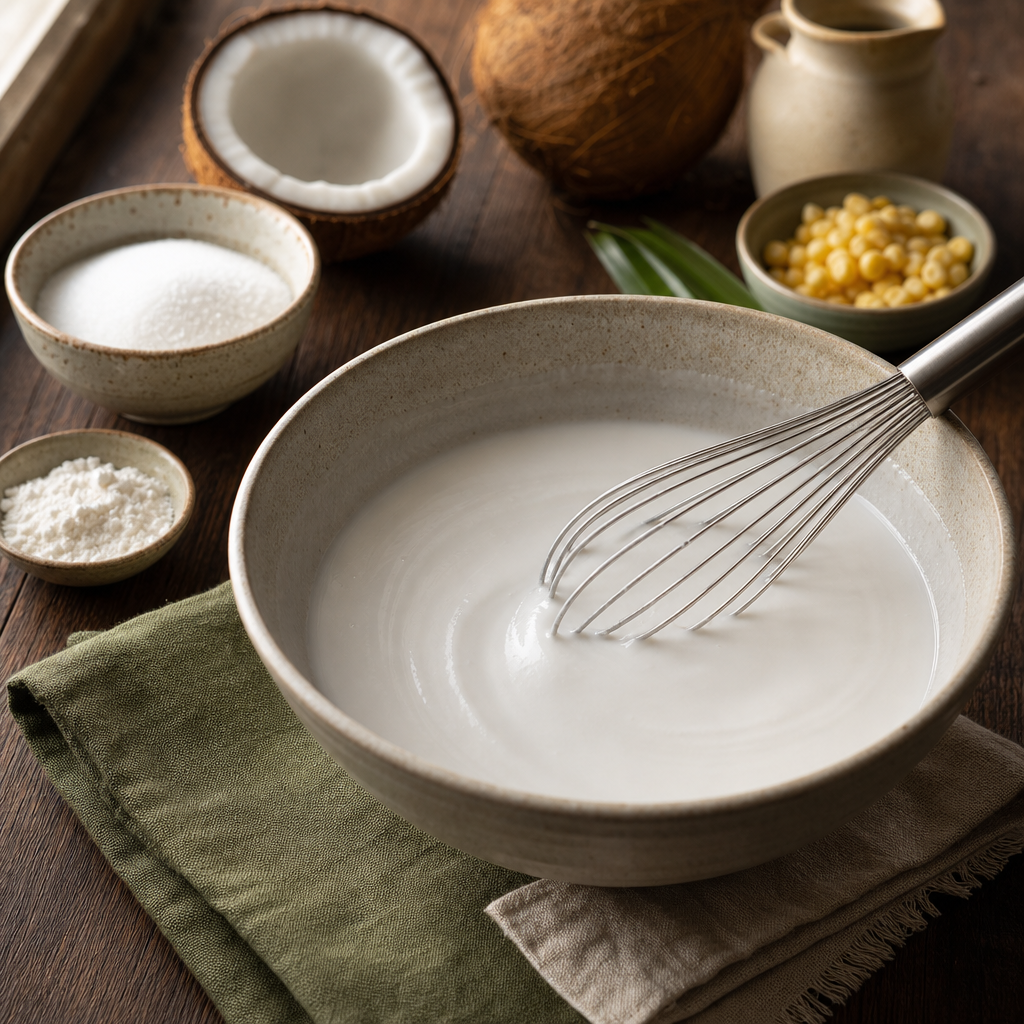
Whisk coconut cream, sugar, salt, and rice flour until the sugar dissolves and no dry flour remains. Keep this mixture separate from the shell batter.
Heat and oil the pan
Heat the khanom krok pan over medium heat for 4-5 minutes. Brush each well with a thin film of oil; the oil should shimmer but not smoke.
Add the shell batter
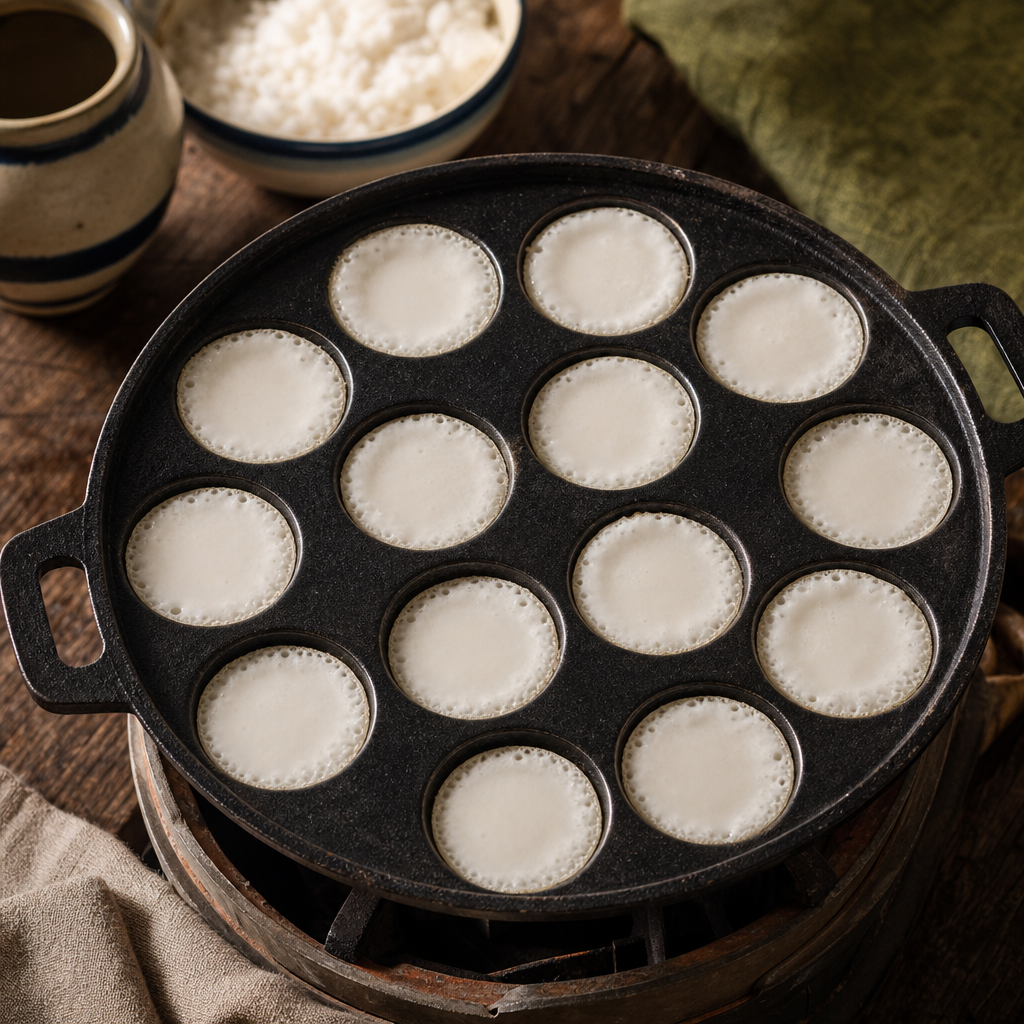
Fill each well about two-thirds full with shell batter. Let it cook uncovered for 45-60 seconds, until the rim turns opaque and begins to pull from the pan.
Add the coconut topping
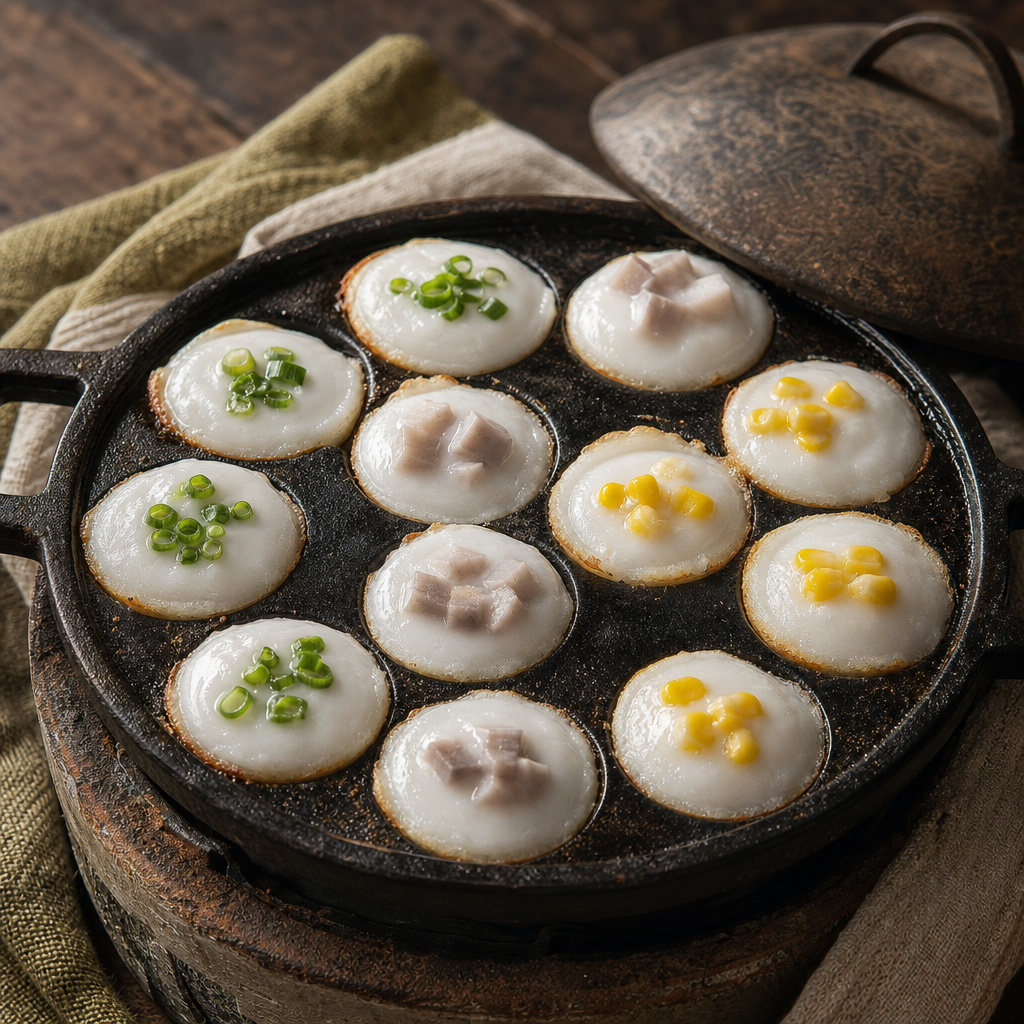
Spoon coconut topping into each well until nearly full. Cover the pan and cook 3-4 minutes, until the edges are golden and the centers are set but still glossy.
Add toppings
Uncover and scatter scallion, corn, or taro over the centers. Cover again for 30-45 seconds, only long enough to warm the toppings and finish the custard.
Release the cakes
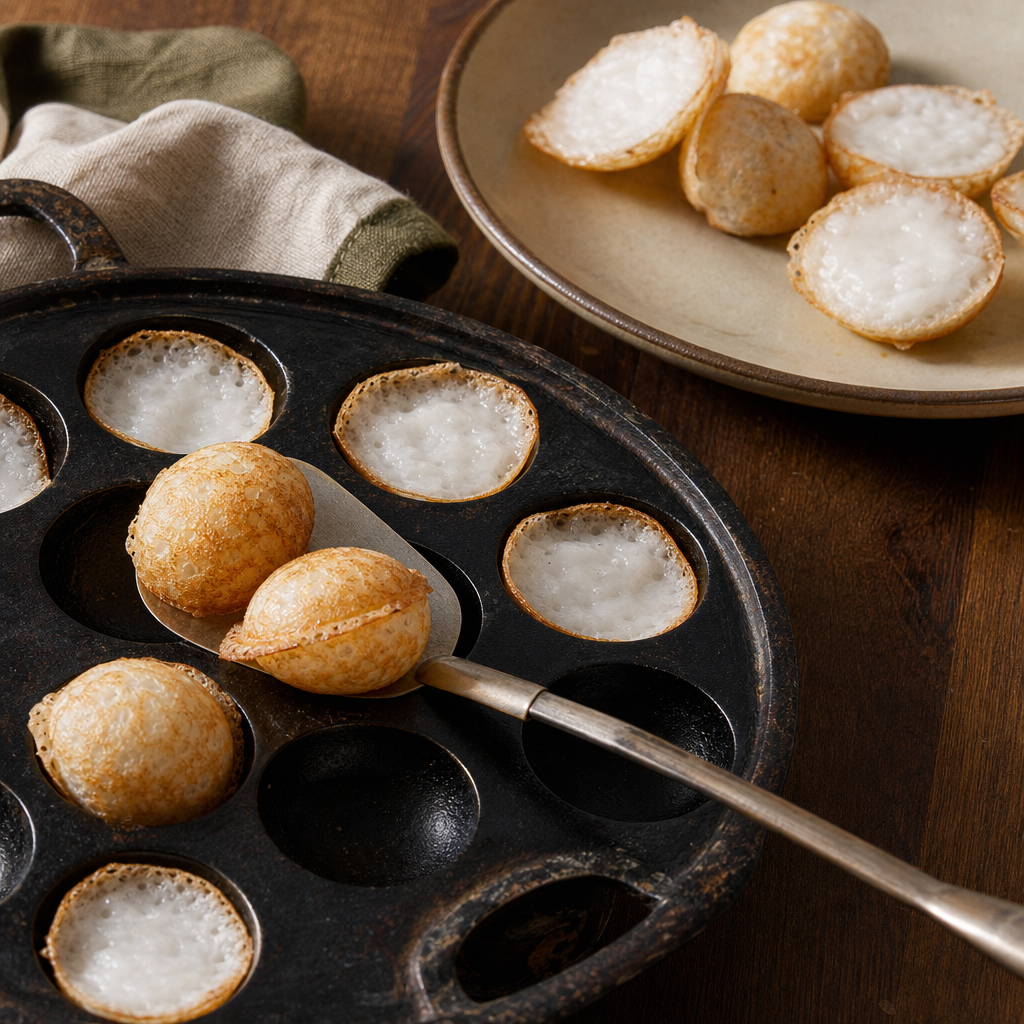
Lift each cake with a small spoon or offset spatula, sliding around the rim first. Pair two halves together if serving market-style, or serve as open half-moons.
Serve hot
Serve immediately, while the rims are still crisp and the centers are warm. If holding briefly, keep them uncovered on a rack; a closed container turns the shell soft.
Common mistakes
- {'mistake': 'Using one batter for both layers.', 'fix': 'Keep a thin rice-heavy shell batter and a richer coconut-cream topping. The two-layer structure is the point.'}
- {'mistake': 'Cooking in a cold pan.', 'fix': 'Preheat until a drop of batter sizzles on contact and turns opaque at the edge within seconds.'}
- {'mistake': 'Overfilling with shell batter.', 'fix': 'Fill the wells about two-thirds before adding topping. Full wells leave no room for the coconut cap.'}
- {'mistake': 'Letting the topping boil hard.', 'fix': 'Use medium heat and cover the pan. The center should set glossy, not split into oily coconut solids.'}
- {'mistake': 'Stacking finished cakes in a covered bowl.', 'fix': 'Hold them uncovered on a rack. Trapped steam erases the crisp edge.'}
What does not belong
- {'item': 'wheat flour', 'reason': 'Wheat flour does not belong in the standard rice-flour shell. It gives breadlike chew instead of a brittle rice edge.'}
- {'item': 'dairy milk as the main liquid', 'reason': 'Milk-based versions exist as adaptations, but coconut milk is the identity of khanom krok. Dairy milk shifts the aroma and browning.'}
- {'item': 'baking powder', 'reason': 'Khanom krok is not a leavened pancake. Puffiness from chemical leavening gives the wrong crumb.'}
- {'item': 'vanilla extract', 'reason': 'Vanilla does not belong in the traditional coconut-rice profile. It pushes the dessert toward Western custard.'}
- {'item': 'heavy syrup or condensed milk drizzle', 'reason': 'The sweetness is built into the coconut cream. Drizzles flatten the salt-coconut balance and soften the shell.'}
Adaptations
Traditional khanom krok uses coconut milk, rice, sugar, and plant toppings. Check sugar sourcing only if strict vegan processing standards matter.
The base recipe contains no alcohol or pork-derived ingredients. Use halal-certified packaged coconut milk if certification is required.
The recipe is rice-based and contains no wheat. Verify rice flour and canned coconut milk labels for cross-contact if cooking for celiac disease.
Coconut milk and coconut cream are required; dairy substitutions are not part of the standard dish.
No shellfish ingredients are used.