Thai Sour Curry with Mixed Vegetables
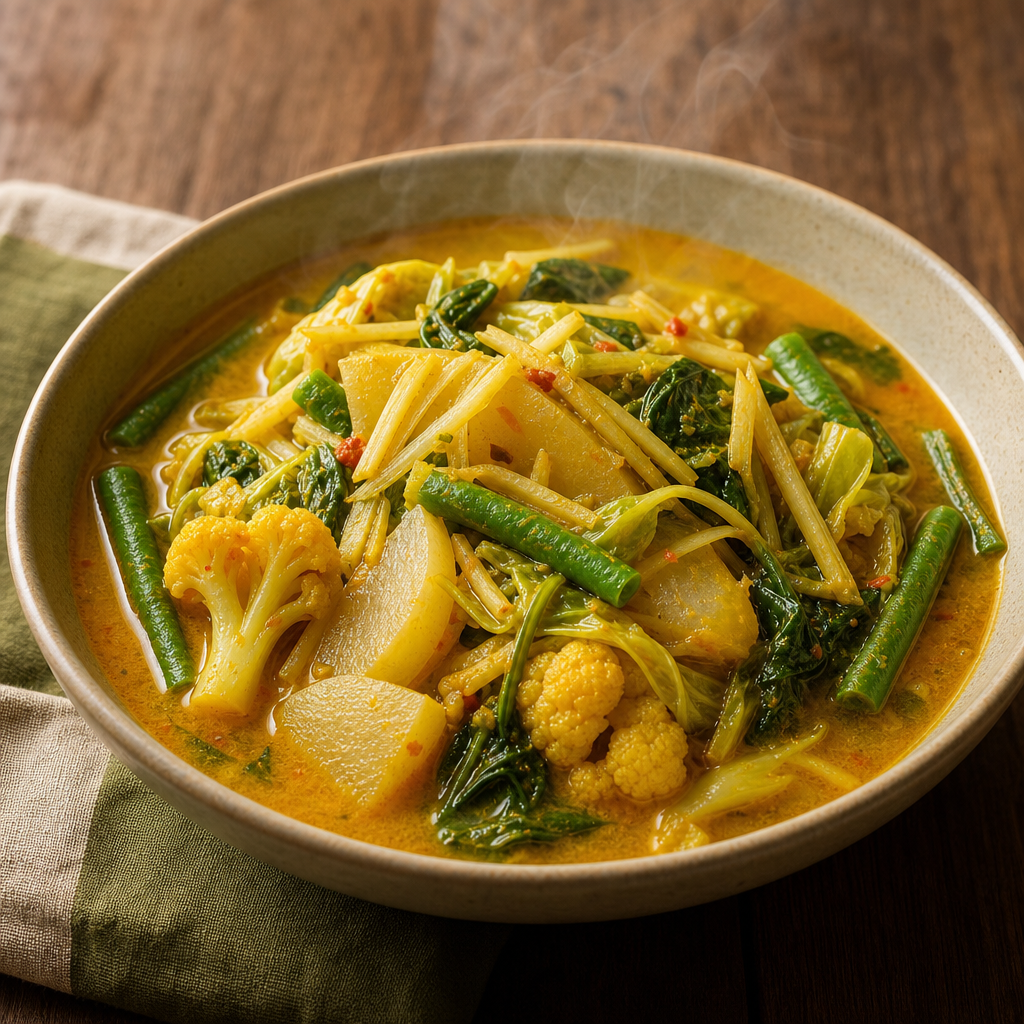
The dish in context
Gaeng som is a family of Thai sour curries, not one fixed dish. In the south, the curry often turns yellow from fresh turmeric and reads sharper, hotter, and less sweet than many central Thai versions. Mixed-vegetable versions use whatever firm vegetables suit sour broth: green papaya, daikon, long beans, cauliflower, cabbage, lotus stem, water mimosa, or seasonal greens. Shrimp, fish, or no added protein are all seen; the constant is a thin tamarind-forward broth with curry paste and shrimp paste, not coconut milk.
Method 7 steps · 45 min
Pound the curry paste
Drain the soaked dried chilies. Pound chilies, turmeric, shallot, garlic, lemongrass, and salt to a coarse paste, then pound in the shrimp paste until the paste stains the mortar yellow-orange and no hard turmeric pieces remain.
Start the sour curry broth
Bring the water to a steady boil. Add the curry paste and stir until fully dissolved, then simmer until the broth smells cooked rather than raw and the oil from the paste lightly stains the surface.
Cook the firm vegetables first
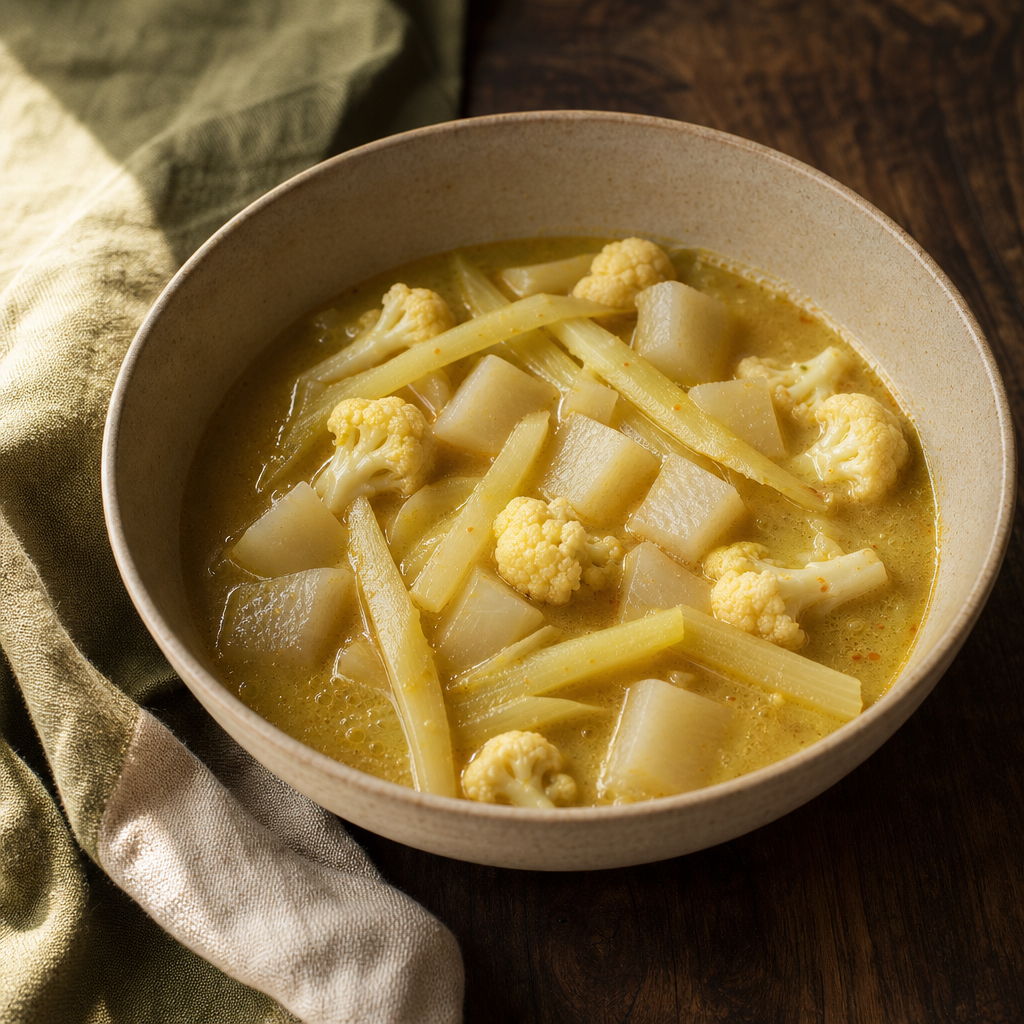
Add green papaya, daikon, and cauliflower. Simmer until a knife enters the papaya with light resistance; the pieces should bend at the edge but not collapse.
Season the broth

Stir in tamarind and fish sauce. Taste the broth with rice in mind: sour first, salty second, hot underneath; add the palm sugar only if the tamarind tastes metallic or the chile bitterness sticks.
Add the green vegetables
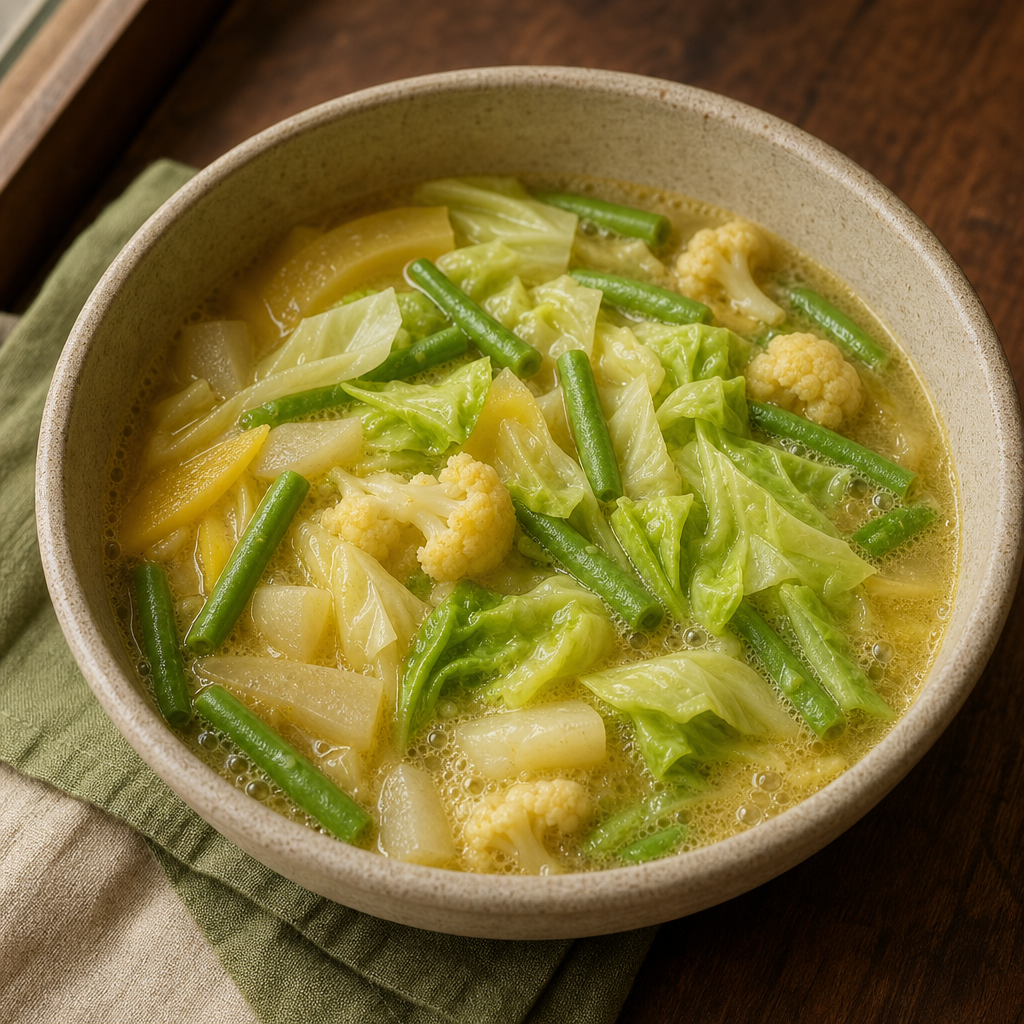
Add long beans and cabbage stems, simmer 2 minutes, then add cabbage leaves. Keep the boil active but not violent.
Cook the shrimp or fish

Add shrimp and simmer until they turn opaque and curl into a loose comma, not a tight C. If using fish, add the pieces in one layer and simmer without hard stirring until the centers turn opaque.
Rest and serve
Turn off the heat and rest the curry 3 minutes before serving with jasmine rice. The broth should be clear enough to see vegetable edges, yellow from turmeric, and sharply sour without a sugary finish.
Common mistakes
- {'mistake': 'Adding coconut milk', 'fix': 'Do not add it. Southern gaeng som is a thin sour curry; coconut milk turns it into a different dish and blunts the tamarind.'}
- {'mistake': 'Making the broth sweet', 'fix': 'Use palm sugar as a correction only. The finished curry should taste sour-salty-hot, not sweet-sour.'}
- {'mistake': 'Cooking all vegetables together', 'fix': 'Add firm vegetables first, greens late. Texture is part of the dish, not decoration.'}
- {'mistake': 'Leaving raw curry paste in the broth', 'fix': 'Boil the paste before seasoning. Raw garlic, turmeric, and shrimp paste make the curry smell sharp in the wrong direction.'}
- {'mistake': 'Stirring fish hard', 'fix': 'Add fish in one layer and simmer quietly. Broken fish clouds the broth and dries out.'}
What does not belong
- {'item': 'coconut milk', 'reason': 'Coconut milk does not belong in gaeng som pak ruam. It mutes the sourness and changes the dish category.'}
- {'item': 'curry powder', 'reason': 'The yellow color comes from turmeric in the curry paste, not commercial curry powder.'}
- {'item': 'Thai basil or holy basil', 'reason': 'Basil perfume fights the tamarind-turmeric profile. It belongs in other Thai dishes, not here.'}
- {'item': 'heavy sweetness', 'reason': 'Southern gaeng som is not a sweet curry. Sugar should round edges, not announce itself.'}
- {'item': 'cream, evaporated milk, or chili jam', 'reason': 'Those ingredients push the broth toward restaurant tom yum nam khon logic. This curry stays lean and sour.'}
Adaptations
Replace shrimp paste with fermented soybean paste plus kombu, replace fish sauce with Thai-style vegan fish sauce, and omit shrimp. This is a vegan adaptation, not the same fermented-seafood profile.
Use halal-certified shrimp paste and fish sauce, and choose shrimp or fish from a trusted source. The dish contains no pork or alcohol by default.
The dish is gluten-free if the fish sauce, shrimp paste, and any vegan substitutes are certified gluten-free. Do not use soy sauce as a shortcut.
The dish is dairy-free by structure. Dairy does not belong.
Omit shrimp and replace shrimp paste with fermented soybean paste plus kombu. Fish sauce may remain if fish is acceptable; for strict shellfish-free and seafood-free cooking, use vegan fish sauce.